Showing posts with label focus. Show all posts

Thursday, October 12, 2017

EXCUSE #2 : I COULD STEP ON SOMETHING SHARP.

Yes, you could. At least in the beginning, you could certainly step on something sharp and hurt yourself. But it is not nearly as big a concern as you think. Why?
Because when you start walking barefoot, you are hyper-vigilant. Barefoot walking and aware-foot walking. You have two eyes and you are using them to look for anything in your path. Over the first few weeks you'll know the location of every stick, stone, seam, and crack on your path. When you are barefoot, you are walking awarefoot. It is good. You'll be in the moment, incredibly focused and mindful of each step and everything before you. Your eyes will keep you safe as you scour the ground. 

  Soon enough, glass will become no more than a sharp pebble, something that you'll feel underfoot but that won't cut your feet. Over time you'll find it is not the glass that gets you, but sometimes a tiny thorn, or if you're in cactus country a barb or goathead.
Image result for goathead

⇧ Goathead 

⇩ "Touch-me-not"
Image result for touch me not plant

All of these are minor, sometimes requiring you to stop for a minute or a bit more. But none of them is the type of catastrophic injury we think about going barefoot walking outdoor.

FOOT NOTE
Keep a Sharp Eye Out for Rock Salt

We're often asked about the worst injury we've sustained when walking barefoot or running barefoot. we cut our feet while going barefoot on rock-salt-treated pavement in the winter. 

Image result for rock-salt-treated pavement

Image result for rock-salt-treated pavement


Image result for rock-salt-treated pavement

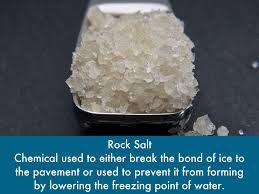
While salt id often applied on roads, sidewalk, and steps during winter to melt ice and keep people from slipping, rock salt wreaks havoc on bare feet, canine feet inclusive. See photo above.

  Why? Well, when it's dry, rock salt is sharp and hurts like the dickens.
Image result for rock-salt  sharp

  If it's wet, it acts as a meat-tenderizer, softening the skin, thus making our human feet susceptible to normally benign road hazard while walking barefoot. A piece of glass that normally would never bother a barefoot walker now poses a potential painful threat.


Tuesday, January 3, 2017

This Mom Grew Multiple $6-Figure Businesses From Home

If you’ve ever thought about working from home or starting a home-based business, you'll want to familiarize yourself with Carrie Wilkerson, also known as the Barefoot Executive. The Barefoot Executive is a website, community and bestselling book that she created to help work at-home professionals.

This Mom Grew Multiple 6-Figure Businesses From Home

The site quickly grew into an empire with tens of thousands of subscribers, leading her to become a sought-after speaker and sales trainer. While she built multiple businesses from home over the past 19 years, she was also raising four children, getting out of six figures of debt and losing more than 100 pounds. Named Internet Marketer of the Year in 2009, Wilkerson has been featured on Forbes.com and Fox Business News and has worked with clients such as Google, John C. Maxwell, Zig Ziglar and more.

Related: Here's How This Freelancer Made the Move to Business Owner

Clearly, she has a lot to teach us about success, so I visited her Texas home recently to ask how she built her powerful brand and how other entrepreneurs can build a successful empire from home.

1. Look for a need in your closest market.
Wilkerson got her entrepreneurial start at a direct sales company, but soon realized she could have a separate business offering a service to her fellow independent consultants. She began by asking those she knew if they could use an email newsletter. Eventually, she was making newsletters for 200 clients -- and that was with consultants from just one direct sales company.

“I started my business like everybody does -- with just who I knew. I sent out an email, I worked with one client for free for two months to get my systems down, my processes done in exchange for her recommendation and her referrals,” Wilkerson explains. “And it literally was like ... you tell two friends, and she tells two friends, and she tells two friends. So we grew by referral very rapidly. At one point, we were growing by 10 to 12 clients a day.”

Consider your current immediate community of fellow moms, marketers, engineers, whatever -- what is a need they have? Wilkerson says you don’t start an empire, you start with who you know and “grow into it.”

2. Truly commit.
Entrepreneurs are not known for patience. Sometimes, in an effort to move fast and wear many hats, they struggle with focus -- and focus is a key component in the stories of the successful people I interview. Wilkerson’s life changed when she committed to going all-in on her new service business for three months.

“[My husband said,] ‘Just give it a good Carrie Try for two to three months before you give up.’ And I think as entrepreneurial-wired people, we sometimes want it to work right now or not at all," she says. "At the end of three months, he was exactly right. We had [approximately] 70 clients on a recurring basis already by then, and we knew we were on to something.”

Most entrepreneurial people are creative, resourceful and efficient -- a force to be reckoned with when focused. Make sure you are truly giving your idea or business your full attention to get it off the ground.

3. Consider a service.
“Service businesses are probably your fastest path to fast cash," Wilkerson says. "Everyone has some kind of skill that they can generate money with.”

Wilkerson added an interesting point here, explaining she wasn’t passionate about creating email newsletters. She was passionate about why she was doing it: getting out of debt and being home for her kids. Unlike the standard “follow your passion” advice, Wilkerson advises that you need passion for why you do what you do as an entrepreneur, but not necessarily the what.

4. Create a strong brand.
Wilkerson started the Barefoot Executive website because she knew there were other aspiring work-from-home executives and entrepreneurs who needed guidance. She also knew that working from home can feel lonely, so she tried to create a community that solopreneurs lacked. Her subscriptions grew quickly, as did her Twitter following.

Related: Party of One: Setting Up Your Single-Person Corporation

Soon, she was receiving speaking and coaching gigs organically, and publisher Thomas Nelson reached out to her about writing her first book. The key was her recognizable, relatable brand. Wilkerson says your brand must be visible, known and serve an audience.

“Really know what your message is, what is your story? Being a good speaker or great writer is not enough," she says. "You have to know what your thing is and you have to be true to your thing.”

5. If you want balance, create boundaries.
For the work-from-home executive or the home-based entrepreneur, boundaries ensure success. First, you must train yourself to stick to policies, such as when you wake up, when you have closed-door time to write or when you have phone-free time to be with family. Second, you must train your family, friends and spouse. Make sure the boundaries you create with your loved ones are truly what’s best for your family. That way, you’ll believe in them enough to stand firm and say no when needed. Lastly, train your clients, vendors and staff. Wilkerson also recommends you use software and create systems to create boundaries that keep you from doing everything yourself, which won’t allow you to scale.

“You have to create what's important for your family -- whatever that family looks like, even if it's just you -- and then you have to be firm enough in that belief, that you can tell other people, 'that doesn't fit in my schedule right now, thank you for thinking of me, I can't do that right now,'” she says.

6. Foster real relationships.
“Real relationships matter, not the numbers of followers. ... People are still blown away when I send a thank you note. What a shame, people shouldn’t be shocked by that,” Wilkerson says. 

She says showing up online and at events, making connections and finding a small, genuine like-minded community have been vital to her success.

7. Don’t compare.
If you’re building a brand online, it’s difficult not to compare it to your colleagues and competitors, especially if you’re building a personal brand as a speaker or coach. Wilkerson doesn’t watch or read other people’s content. Comparison, she explains, only serves two purposes: It will either make you feel badly about how behind you are or inflate your ego because you’re ahead. Neither serve your business.

“My number one piece of advice is to not compare yourself to everyone else," she says. "You can defeat yourself. You can literally freeze yourself in your tracks, either with comparison or envy.”

8. Add massive amounts of value.
How did Wilkerson grow her speaking career to working with clients such as Zig Ziglar and Google? The answer is simple.

“Opportunities are rooted in the value you provide, in the work you’re doing.” she explains. In a social stat world where everyone wants to be an expert, Wilkerson says, “quit trying to be an influencer and try to serve” and everything else will fall into place. 

Sunday, January 1, 2017

THE FREEDOM TO LIVE!

THE FREEDOM TO LIVE! 


President Barack Obama
Focusing your life solely on making a buck shows a
certain poverty of ambition. It asks too little of 
yourself. Because it's only when you hitch your
wagon to something larger than yourself, that you
realize your true potential." - BARACK OBAMA 

IF YOU WON THE US-LOTTO for, say, $37 
million, what would you do? 

Yes, you'll buy the fancy car (or two), a big house 
(or two), and go on a world travel exotic vacation 
(or two). 

But after that - after you've explored the world 
and bought all the ice cream you could eat -
what will you do? 

Those who have achieved their goals are free to 
live a lifestyle that most people don't even know
exists.They aren't held by national borders or 
boundaries and move freely around the globe 
without the financial limitations and restrictions
of others. The ultimate freedom is to never worry
about where money is coming from. It just flows
to you. 

Occasionally we get a glimpse of this type of life 
when we see jet-setting celebrities. But most of 
those living a truly free life aren't like the 
celebrities, instead they are quiet and unassuming
. They have achieved everything they ever dream
-ed of and now spend their time enjoying every 
aspect of the world we live in and help millions 
of people around the globe. 

The fear and uncertainty that many people feel is 
not relevant to their income stream. Fortunes 
were made in every recession ever to hit the United 
States. As we move more toward an ever-
increasing global economy, new and upcoming 
entrepreneurs have a view toward opportunity - 
no matter where it comes from. The old days of
only being able to attract income in a local area
are gone. Now the world awaits us (you and me),
as Internet access has connected us, 


The Freedom to Live! 


people from all around the world, and opened up 
infinite creative possibilities. 

The principles that I've outlined in Attract Money 
Now will catapult you into this type of life. And it 
all starts with your thinking. You have to figure 
out where you are in your thought process right 
now. What limiting beliefs are standing in your 
way? Where did they come from and how do they
affect you? 

When I read a book or listen to an audio recording 
that really hits home, I take a few minutes to 
really think about what the author said. Do that
now. Are you willing to release the emotions you'
ve attached to money? Are you ready to release 
what you think it says about you? Let it go right 
now. Start at the beginning and make a decision 
to follow every step I've laid out, so you can 
receive the abundance and financial rewards that
await you. 

Start with your thinking. Be aware of all the 
negativity you're immersed in every day. It 
comes from movies, conversation, newspapers,
and negative people. Give yourself a break from
this constant stream of depressing news and fill
your mind with positive, uplifting concepts. Pay
attention to the three thieves and become aware
of how these old beliefs rob you of your future. 

Everyone thinks they understand money. Few
really do. You can step into the flow of wealth
and abundance as easily as you can step out of
it. This is the difference between a life of 
wonder, where you attract as much or more 
money than you need, and a life of struggle and
heartache. Always remember that you can
choose to step into the flow at any point as long
as you want to. There's no magic formula or 
secret decoder ring. Membership is open to
anyone who wants to join! 

I remember a friend of mine asking a wealthy 
person how he felt about taking risks in business. 
The wealthy man said, "I don't take risks." He 
went on to explain that he knows money is like
a river. He simply goes to the river and fills his
bucket. If he happens to spill some water - or
lose some money - he just goes back to the river
and refills his bucket. Where's the river? It's in
 his MIND. 

Please don't forget to give. Tithe 10% of your 
income and then take the next step and give 
beyond what you've ever given before. Open
the door wide to start the flow and circulation
of money through your life. Don't forget that
you'll receive in direct proportion to what you
give - so give a lot! 

Never deprive yourself of the things you want due 
to fear or guilt. Buy that new car or fancy lighter
if you choose! (Don't go into debt or ...


ATTRACT MONEY NOW! 

tap out your credit cards, though.) Life is to be 
enjoyed at every level, even if you don't have $1 
million in the bank. No matter where you are 
financially, the way you spend your money now 
will be reflected in what comes to you later. And 
while you're responsible to dig yourself out of 
whatever mess you are in, your attitude and how
you choose to spend your money will determine
what's attracted to you. Choose to spend in those
areas that give you pleasure and create positive
emotions, while you're getting your finances in
order. 

Asking for help will jump start your dreams. Don't 
hesitate to ask for help on your journey. Ask your 
mentors, as well as those who've achieved what 
you want to achieve. A mastermind group is a
great way to get the support and ideas you need to
get your new ideas and ventures off the ground.
Everyone wants the honor of being asked to help,
so don't hold out and try to do everything yourself.
You'll accomplish much more in less time if you
accept help from others. Asking the Divine, God 
or the Universe for help is also a great avenue to
increase your financial circulation. It gives you
an emotional release and opens your mind to
new and different opportunities. 

As you define your goals, spend time each day 
Nevillizing them. Imagine what it will be like when
you accomplish each and create an emotional 
connection. Hold this connection in your mind and
feel the emotions. This positive outpouring speeds
up the process. The more connected you are to 
your end result, the more focus, drive and 
creativity you'll have in completing it. When you
have your goals in mind, think like an entrepreneur.
See the options all around you to generate or 
increase the flow of money. 

We are social creatures, whom need contact, sup-
port and caring from others. As you grow, you'll 
have the opportunity to uplift everyone around 
you by sharing your experiences and ideals. Don't
overlook this opportunity to help those who need
it most. Remember that you were helped too. This 
will increase your circulation to the highest level, 
and it will allow you to have a positive impact on 
the world. 

EXIST IN GRATITUDE 

Everyday, I take time to say thanks and express my
gratitude for the gifts and opportunities I receive. 
The expression of gratitude is a liberating release 
of powerful emotion that you send out into the
universe. As we've discussed, the stronger the
emotion you attach to something, the more likely
you'll get an abundance of it in return. 


The Freedom to Live! 


Think and Grow Rich, by Napoleon Hill, 
As A Man Thinketh by James Allen and the 
Science of Getting Rich by Wallace D. Wattles, 
are brilliant works emphasizing the importance of 
gratitude. The most successful people constantly 
express their humble and sincere gratitude. 

The value of gratitude does not solely exist for
getting more in the future. Without gratitude,
you'll inevitably be dissatisfied with things. The
moment you permit your mind to become dis-
satisfied with your current circumstances, you'll
lose ground and slide back into your old ways. 
If you fix your attention on the negative circum
-stances in your life, that focus will stop the 
flow of money and other good things that can 
help you. This can be a vicious cycle. Existing 
in a mindset filled with gratitude keeps you positive. 

Whatever we focus on - we attract. Focus on the 
positive and be grateful. Bigger and better things 
will come your way. When you dwell on the 
negative and inferior or the worst-case scenario, 
you're sending negativity out and will continually 
attract negative results. On the other hand, if you 
focus on the positives in your life and express 
sincere gratitude, you'll attract better circumstances. 
This is an unaltered, permanent law of being, that is 
at work all the time. There's no pause,stop or rewind.
You can become aware of the power of gratitude 
and work with it for your personal benefit. Or you
can deny this power and work against it, which will
provide negative results. 

It's necessary for us to deliberately and intentionally
form the habit of being aware of and grateful for 
every good thing that comes to us. Then we have to
continually give thanks. It's reported that Albert 
Einstein said "thank you" hundreds of times a day 
to his predecessors and the Universe, recognizing
the inspiring and creative thoughts that came to 
him daily. Einstein understood the power and 
benefits of being grateful. You can use this power
to fill each day with positive emotions. 

Express gratitude for everything that has come to 
you throughout your lifetime. You even need to 
express gratitude for the hard times, negative events
and bad hair days. Why?Because these were lessons 
(big and small) that you've benefited from. 

In addition to being grateful for what you have now,
you can also send thanks for things that will happen
to you. I call this "Thanking Forward." "Thanking
Forward" is being grateful in advance, as if you 
already have what you want before it shows up. It's
a Nevillization of gratitude! 


ATTRACT MONEY NOW! 


Scientific studies have consistently proven that 
significant achievements are reached after just 30 
days of Nevillizing (or visualizing with feeling the 
end result) a goal, event or material thing. Stop and 
think about what you've done over the past 30 days?
Did it go by in the wink of an eye? Now, I want you
to imagine your goal over the next 30 days and see
the difference it'll make in your life. 

Express your gratitude in the morning often before
you get out of bed, during the day and after you lay
down to go to sleep. All of this will shift the energy
you're sending out, and even more significantly, the
energy you're attracting into your life. It's not a 
complicated or difficult process, nor should it seem
like work. I like to express my gratitude from my
hot tub each evening. It doesn't really matter when, 
where or how you do this - just that you do it. 

If you're not used to expressing gratitude, you may
need to adjust your schedule and set aside a few 
minutes throughout the day to do it. You may even
need to put a reminder up on the bathroom mirror,
kitchen refrigerator or your computer. Shortly after,
you'll do this naturally and find yourself consistent
-ly sending out positive gratitude thoughts. In turn, 
you'll receive astounding results from every 
direction. Do this process intentionally until it 
becomes habit. You'll be amazed at how quickly 
people, events and circumstances will be naturally
attracted to you, as well as how quickly your 
financial circumstances change for the better. 

Gratitude can transform your mindset from focus-
ing on you to focusing on others. As we previously
discussed early on - when you focus on others, you
open yourself up to a tremendous amount of circu-
lation. Saying thanks for everyone in your life and
the events that have transpired work together to 
keep you constantly aware that you need others. 
We're all connected and cherish feeling 
appreciation. 

THE POWER OF NOW 

Have you ever noticed that just about every TV in-
fomercial ends with a call to action? They all seem
to say, "Don't wait, act now!" This phrase is just as
applicable to you. Waiting to take advantage of an 
opportunity is a way to cheat yourself from attract-
ing additional income. Don't put it off or put this 
book down and think, "That's a great idea, I'll work
on it when I have time." You already have time, but
you're filling it with tasks that aren't really a 
number one priority. There's no better time than the
present. 

You're 100% responsible for your life and peace of 
mind. If you don't have peace of mind, you're 
wallowing in old limiting beliefs that are not 


The Freedom to Live! 

serving you. You must get your beliefs in order, so 
that you can attract money into your life. 

All the money in the world will not give you peace
of mind. So many people, maybe you, live in 
financial chaos. How many celebrities or wealthy 
people do you hear about who die sad and alone 
because they never found peace of mind? No other
person can give you peace. Running to teachers and
gurus for answers will not give you peace. Moving 
to a different location will not give you peace.
Peace does not come from outside you.It's 
obtained within you. The answers that you long for,
are already part of you. You just need to understand 
and practice them. Then you will lead the life you
've been longing for. Attaining peace is as simple as
this: Give peace and you'll receive peace. 

By the same token, if you express gratitude daily, 
you'll receive astounding rewards. The key is that 
you are thankful and express gratitude every 
moment of every day. Always turn the other cheek 
against adversity and misfortune. You must wish 
success on everyone else and show them love. 

Many people take the idea of giving to mean that 
whatever they send out comes back like a boome-
rang. While this is true for the most part, it doesn't 
mean that it will come back from the same source 
or in a scheduled amount of time. It only states that
you will receive equal (usually ten times more) to
what you have given. This applies to money, time, 
gratitude and caring. 

How often does a person truly give without the 
thought of getting something in return? When you 
give love, you expect love. When you give under-
standing to someone you expect someone to be 
understanding of you. When you give a gift you 
usually expect a gift back. You may even expect 
that the person you gave the gift to will like or 
respect you even more. Unfortunately, very few 
people will just give from the heart. 

When some people don't receive what they expect-
ed, or more, they have a tendency to feel hurt, 
hostile and even angry. Some twist things around 
and will quickly say that the Law of Attraction 
doesn't work and call it a sham. I feel sorry for 
these people. The anger and hostility are blocking 
their ability to attract, so they have no option other 
than spiraling downward. They will settle for a
mediocre life at best. 

Sometimes you may feel like you don't have a 
choice as to how your life will turn out. You do! 


ATTRACT MONEY NOW! 


One of my favorite scenes comes from the classic 
movie The Wizard of Oz. After the trials and 
tribulations that Dorothy faced on her journey she 
still hasn't found her way home. Glinda, the Good 
Witch of the North, tells Dorothy that she has 
always had the power inside her to get home. All 
she had to do was wish for it and she would return 
to her loved ones. I've always found this to be very 
symbolic of the journey many people take when 
they seek success. They try hard, only to find that it
was as simple as a thought. There is an old saying, 
"To Think Is to Create." This is how you start 
changing your life. You must be able to imagine it.
Then you'll attract the resources for it to come into 
being. 

So begins your journey of ultimate freedom. My 
friend and business colleague Peter Wink is another
great example of this. Peter had been dating many
women for years, never finding Ms. Right. Finally 
fed up one day, he wrote down exactly what he was
looking for in a woman. He wrote down exactly 
how she would look, talk, and carry herself. These 
were non-negotiable and he would never again 
bend on getting exactly what he wanted. He took 
this list and put it away in a drawer. The woman of
his dreams showed up less than a month later. He 
met her at a business meeting that he didn't even 
want to attend. He followed the universe as it gnaw
-ed at him to go to this meeting. They have now 
been together for eight years. It never would have 
happened if Peter had not set his goal, Nevillized it 
and took inspired action. By doing this he was final
-ly able to pick her out. This happens all the time! 

As you go through your plan, you'll reach the goals
you set. Then, you'll set new goals and strive 
toward them. So when do you know that you've 
finally made it? Hard to say. But when you do, take 
a deep breath and proclaim, "I've arrived!" This is 
different for every individual. Some have a 
particular benchmark. For some it's an amount of 
money. For others it may be a deadline. Then there
are some who leave it open-ended and just follow 
their gut instinct. Every time I complete a big goal, 
I set an even higher one. You may find this true of 
you as well. Once you find something you love do
-ing with passion, why would you ever stop? 

I think you will reach an abundant, fulfilling life 
much sooner than you realize once you start on 
your path to success. Few realize that success isn't 
a thing - it's an emotion. We feel successful — 
therefore we are successful. 

There are people perfectly content and happy 
working a mediocre job, raising their children and 
spending time with family. There is 


The Freedom to Live! 


no rule saying you have to be dissatisfied with any
of these elements of your life, or destitute on the
streets, to pursue long-term financial goals. This is 
merely a starting point. You can always improve. 
The path to success isn't about getting to a final 
point. It's about the journey. What will you 
discover about yourself and others as you go? What 
lessons will you learn and want to share with those 
who may one day approach you and ask you to 
mentor them? 

Journeying into an unknown territory is exciting 
and potentially frightening. It's this mixture of 
emotions that can confuse and distract you. Your 
mind will create fear as you strive toward your goal. 
If you let yourself dwell on that fear, it will mani-
fest itself in reality. 

You may have had the exhilaration and excitement 
of performing on stage. Even the most seasoned 
actor or singer can have butterflies in their stomach
before the curtain rises or the lights go out. It's 
almost as if the mind is giving a final warning 
before you get on stage. It's no different when 
you're striving toward big goals. It's scary and 
exciting at the same time. 


REACHING NEW HEIGHTS 


As you reach new heights of awareness and success,
 you'll also find that your life needs balance. It's not
 just about money.Money isn't the main priority and
never should be. There are other considerations like
family, health and your own emotional well-being.
Have you ever had a problem with your inner ear?
If you have, then you know what it feels like to feel
off balance. The world seems to spin and you
become disoriented. Disorientation can feel
exhilarating in the short-term. You never want to be
out of balance. A well-balanced life involves both
physical and emotional aspects. Living a well-
balanced life means balancing your goals while
taking time to enjoy the journey. If you want to live
a fulfilling, meaningful life, you have to make
adjustments and some tough choices. 

It would be very easy to live a balanced life in an
ideal world. What if you could sit down and write
the story of your life, as you want to live it? What
would you be like? What kind of possessions and
finances would you have? What would make you
happy? You have control over much of what will
happen in your life. You're not a helpless puppet
manipulated by people around you. You are able to 
make choices and decisions that will shape your
future. 

In the real world you're tasked with numerous
demands on your time and resources. You may feel
overwhelmed at times. When this 


ATTRACT MONEY NOW!


occurs, you must make decisions about what you
can and cannot do. These decisions are based on
the goals you have, how you rank/ prioritize these
goals and how well you follow what you think is
right for you. 

Back in rougher days, I used to wonder if I had
what it takes to be a success. Now I know I do.
And so do you! I want you to stand in front of your
mirror everyday and say aloud, "I have what it
takes!" 

Trust me - you do! Soon you'll know it too. Repeat
the words "I have what it takes" over and over.
Type them up and hang them on your refrigerator,
wall or computer. Look at them each day and
believe in yourself. Self-talk is powerful, but most
of us talk ourselves down, not up. Be a cheerleader
for yourself. Encourage yourself. 

Embrace the changes in your life with a great,
positive attitude. Read the Optimist Creed every
day. Breathe it in. Commit to yourself that you will
do whatever it takes to attain your goals and live the
life you've always dreamed about. 

Also, remember to stay patient. Change doesn't
happen overnight and this will take time. Don't rush
through your plan. You'll end up skipping steps and
becoming frustrated. Remember that this is about 
the journey.You don't get to the top of the mountain
in one day. You get there step-by-step with dogged
persistence. 

Take time to appreciate who you are today and who
you want to become. Someday you'll look back and
be proud of the decisions that you're making today,
as well as the changes you're implementing. 

Listen and think before you speak. A big part of
learning is to be quiet and let others teach you. You
never know what you may miss if you're talking
instead of listening. Others may have valid input
and they want to give it to you. Let them. 

Don't fear change or uncertainty. Have faith in your
ability to solve any problem that you'll encounter.
Get the facts, do your homework and courageously
move forward. Don't let "risk" keep you from the
glorious rewards awaiting you. 

Wealth is often hiding under what you fear to do.
Face your fears and take inspired action. Dare
something worthy - and begin it today. The result
will be a new flow of money! That's how you
attract money now! 


The Freedom to Live! 


THE FREEDOM TO LIVE! 
TRUTHS & TAKE AWAYS 

STEPS TO ATTRACTING MONEY INTO YOUR LIFE: 

Step 1: Alter How You Think 

Step 2: Give Without Expectation 

Step 3: Prosperous Spending 

Step 4: Ask for Help 

Step 5: Nevillize Your Goals 

Step 6: Think Like an Entrepreneur 

Step 7: Help Your Community & Your World 


ATTRACT MONEY NOW! 


ACTION STEPS 

Work on becoming a mental magnet for money by
reading books, listening to audio recordings,
attending events designed to help you think more
powerfully and prosperously, and/or getting a 
Miracles Coach. 

Give money weekly to wherever you received
inspiration. Buy things that excite you without
going into debt. Pray for guidance and ask others
for help. 

Imagine attracting money now and what it feels
like to be wealthy. 

Listen for complaints and find ways to turn them
into products or services. 

Volunteer to help a cause or person you believe in. 


{AFTERWORD} 


TAKE INSPIRED 
ACTION NOW! 


CONGRATULATIONS! YOU NOW KNOW the
seven steps to attract money now. 

But now that you know them, what will you do next? 

Answer: You do whatever you're inspired to do to
begin the process of attracting money now. In other
words, don't sit on your butt and wait for money to
rain on you. Take inspired action RIGHT NOW. 

Many people have the information on what to do
and how to do it. The challenge is that they don't
implement it. If you keep on doing what you've
always done, you'll always have the results you
have right now. Isn't it time for a big change? Isn't
that time now? Don't you deserve the wealth and
happiness you've been longing for? 

Money is a powerful, positive tool. It's a vehicle for
accomplishing great things. You can help yourself,
your family, your friends, your community and the
world. With money, you can buy fun toys for your
-self. Admit it, you'd enjoy that. You'll also be
able to make a difference in areas you care about.
All you need is money. And now, with the seven-
step formula I've revealed to you, you can attract 
money now. 

I've done my part. I've written Attract Money
Now and put all the tools in your hands. The
next steps are yours.  

God speed to you. 
With love, 


Friday, December 30, 2016

M1ND | An Ounce of Genius

M1ND | An Ounce of Genius


(View and Ready To Be ) Begin Your Day With An open M1ND ! (Exclusively From Jeunesse) 

Introducing the latest product in the Jeunesse Youth Enhancement System: M1ND. Formulated with the exclusive ingredient CERA-Q™, which is clinically proven to support memory and focus.


I strongly recommend this M1ND supplement for busy mind and high demanding netizens , today. 


Soong See Choo
International Healthy Wealth Networker
SMS / Whatsapp (65) 9733 0932 

Sunday, November 27, 2016

Positive Affirmations: 101 Life-Changing Thoughts To Practice Daily

Positive Affirmations: 101 Life-Changing Thoughts To Practice Daily

Over thirty years ago, I came across the book You Can Heal Your Life, by Louise Hay. The book is about self-healing through the use of positive affirmations that correspond with different illnesses and ailments.
I was intrigued by the book at the time, but also skeptical about Ms. Hay’s claims that our thoughts and lack of self-love contribute to disease and that positive affirmations can help heal us. Although I understood how affirmations could support positive thinking, I didn’t believe they could change the cells and chemistry in my body.

Now I know that science supports the power of positive affirmations. Affirmations are basically a form of auto-suggestion, and when practiced deliberately and repeatedly, they reinforce chemical pathways in the brain, strengthening neural connections.

Says David J. Hellerstein, M.D., a Professor of Clinical Psychiatry at Columbia University, “In brief, we have realized that ‘neuroplasticity,’ the ongoing remodeling of brain structure and function, occurs throughout life. It can be affected by life experiences, genes, biological agents, and by behavior, as well as by thought patterns.”


Neuroscience now proves that our thoughts can change the structure and function of our brains. (If you want to learn more about this fascinating science, check out the book The Brain That Changes Itself: Stories of Personal Triumph from the Frontiers of Brain Science** by Norman Doidge, M.D.)

By practicing positive thought patterns (affirmations) repetitively, we actually create neuroplasticity in the area of the brain that processes what we are thinking about. The key is repetition so you flood your brain with the positive thought.

When practicing affirmations, choose one or two to focus on for several weeks. Say the affirmation out loud in a confident voice several times a day and before you go to bed. To add more power to the affirmation, write it down as you speak it. Be sure your affirmations are in the present tense, as though they are a current reality.

Here are 101 positive affirmations you can practice to rewire your brain and change your life:


Happiness 

1. Happiness is my birthright. I embrace happiness as my set point state of being.

2. I feel joy and contentment in this moment right now.

3. I awaken in the morning feeling happy and enthusiastic about life.

4. I can tap into a wellspring of inner happiness anytime I wish.

5. By allowing myself to be happy, I inspire others to be happy as well.

6. I have fun with all of my endeavors, even the most mundane.

7. I look at the world around me and can’t help but smile and feel joy.

8. I find joy and pleasure in the most simple things in life.

9. I have an active sense of humor and love to share laughter with others.

10. My heart is overflowing with joy.

11. I rest in happiness when I go to sleep, knowing all is well in my world.

Love Relationship

12. My partner and I share a deep and powerful love for each other.

13. I respect and admire my partner and see the best in him/her.

14. I love my partner exactly how he/she is and enjoy his/her unique qualities.

15. My partner and I share emotional intimacy daily through talking and touch.

16. I have healthy boundaries with my partner.

17. My partner and I have fun together and find new ways to enjoy our time together.

18. My partner and I communicate openly and resolve conflict peacefully and respectfully.

19. I am able to be fully myself and completely authentic in my love relationship.

20.  I communicate my desires and needs clearly and confidently with my partner.

21. I want the best for my partner and easily go out of my way to support him/her.

Success

22. I expect to be successful in all of my endeavors. Success is my natural state.

23. I easily find solutions to challenges and roadblocks and move past them quickly.

24. Mistakes and setbacks are stepping stones to my success because I learn from them.

25. Every day in every way, I am becoming more and more successful.

26. I feel successful with my life right now, even as I work toward future success.

27. I know exactly what I need to do to achieve success.

28. I see fear as the fuel for my success and take bold action in spite of fear.

29. I feel powerful, capable, confident, energetic, and on top of the world.

30. I have an intention for success and know it is a reality awaiting my arrival.

31. I have now reached my goal of _______ and feel the excitement of my achievement.

32. Today I am successful. Tomorrow I will be successful. Every day I am successful.

Confidence

33. When I breath, I inhale confidence and exhale timidity.

34. I love meeting strangers and approach them with boldness and enthusiasm.

35. I live in the present and am confident of the future.

36. My personality exudes confidence. I am bold and outgoing.

37. I am self-reliant, creative and persistent in whatever I do.

38. I am energetic and enthusiastic. Confidence is my second nature.

39. I always attract only the best of circumstances and the best positive people in my life.

40. I am a problem solver. I focus on solutions and always find the best solution.

41. I love change and easily adjust myself to new situations.

42. I am well groomed, healthy and full of confidence. My outer self is matched by my inner well being.

43. Self confidence is what I thrive on. Nothing is impossible and life is great.

45. I always see only the good in others. I attract only positive confident people.

confidence affirmations

Self-Esteem

46. I approve of myself and love myself deeply and completely.

47. I am unique. I feel good about being alive and being me.

48. I trust myself and know my inner wisdom is my best guide.

49. I have integrity. I am totally reliable. I do what I say.

50. I act from a place of personal security.

51. I fully accept myself and know that I am worthy of great things in life.

52. I choose to be proud of myself.

53. I find deep inner peace within myself as I am.

54. I fill my mind with positive and nourishing thoughts.

55. My confidence, self esteem, and inner wisdom are increasing with each day.

56. My immune system is very strong and can deal with any kind of bacteria, germs and viruses.

Health

57. Every cell in my body vibrates with energy and health.

58. I am completely pain free, and my body is full of energy.

59. I nourish my body with healthy food.

60. All of my body systems are functioning perfectly..

61. My body is healing, and I feel better and better every day.

62. I enjoy exercising my body and strengthening my muscles.

63. With every breath out, I release stress in my body.

64. I send love and healing to every organ of my body.

65. I breathe deeply, exercise regularly and feed only good nutritious food to my body.

66. I pay attention and listen to what my body needs for health and vitality.

67. I sleep soundly and peacefully, and awaken feeling rested and energetic.

68. I am surrounded by people who encourage and support healthy choices.

Peace

69. My world is a peaceful, loving, and joy-filled place to live.

70. I sow the seeds of peace wherever I go.

71. I surround myself with peaceful people.

72. My work environment is calm and peaceful.

73. I breath in peace, I breath out chaos and disorder.

74. My home is a peaceful sanctuary where I feel safe and happy.

75. In all that I say and do, I choose peace.

76. I release past anger and hurts and fill myself with serenity and peaceful thoughts.

77. Peace descends all around me now and always.

78. I send peace from myself into the world.

79. I respond peacefully in all situations.

Mindfulness

80. I am grounded in the experience of the present moment.


81. I am focus and engaged in the task at hand.

82. All is well right now.

83. I am grateful for this moment and find joy in it.

84. I gently and easily return to the present moment.

85. I observe my thoughts and actions without judging them.

86. I am fully present in all of my relationships.

87. Life is happening in this moment.

88. I accept and embrace all experiences, even unpleasant ones.

89. I observe my emotions without getting attached to them.

90. I meditate easily without resistance or anxiety.

91. I release the past and live fully in the present moment.

Inner calm

92. Calmness washes over me with every deep breath I take.

93. Every day I am more and more at ease.

94. Being calm and relaxed energizes my whole being.

95. All the muscles in my body are releasing and relaxing.

96. All negativity and stress are evaporating from my body and my mind.

97. I breath in relaxation. I breath out stress.

98. Even when there is chaos around me, I remain calm and centered.

99. I transcend stress of any kind. I live in peace.

100. I am free of anxiety, and a calm inner peace fills my mind and body.

101. All is well in my world. I am calm, happy, and content.


Have you used positive affirmations in your life? If so, how have they impacted you? What are some of your favorite affirmations? Please share

(**The Brain That Changes Itself: Stories of Personal Triumph from the Frontiers of Brain Science** by Norman Doidge, M.D.)
This book is about the revolutionary discovery that the human brain can change itself, as told through the stories of the scientists, doctors, and patients who have together brought about these astonishing transformations. Without operations or medications, they have made use of the brain’s hitherto unknown ability to change. Some were patients who had what were thought to be incurable brain problems; others were people without specific problems who simply wanted to improve the functioning of their brains or preserve them as they aged. For four hundred years this venture would have been inconceivable because mainstream medicine and science believed that brain anatomy was fixed. The common wisdom was that after childhood the brain changed only when it began the long process of decline; that when brain cells failed to develop properly, or were injured, or died, they could not be replaced. Nor could the brain ever alter its structure and find a new way to function if part of it was damaged. The theory of the unchanging brain decreed that people who were born with brain or mental limitations, or who sustained brain damage, would be limited or damaged for life. Scientists who wondered if the healthy brain might be improved or preserved through activity or mental exercise were told not to waste their time.
A neurological nihilism—a sense that treatment for many brain problems was ineffective or even unwarranted—had taken hold, and it spread through our culture, even stunting our overall view of human nature. Since the brain could not change, human nature, which emerges from it, seemed necessarily fixed and unalterable as well.
The belief that the brain could not change had three major sources: the fact that brain-damaged patients could so rarely make full recoveries; our inability to observe the living brain’s microscopic activities; and the idea—dating back to the beginnings of modern science—that the brain is like a glorious machine. And while machines do many extraordinary things, they don’t change and grow.
I became interested in the idea of a changing brain because of my work as a research psychiatrist and psychoanalyst. When patients did not progress psychologically as much as hoped, often the conventional medical wisdom was that their problems were deeply “hardwired” into an unchangeable brain. “Hardwiring” was another machine metaphor coming from the idea of the brain as computer hardware, with permanently connected circuits, each designed to perform a specific, unchangeable function.
When I first heard news that the human brain might not be hardwired, I had to investigate and weigh the evidence for myself. These investigations took me far from my consulting room.
I began a series of travels, and in the process I met a band of brilliant scientists, at the frontiers of brain science, who had, in the late 1960s or early 1970s, made a series of unexpected discoveries. They showed that the brain changed its very structure with each different activity it performed, perfecting its circuits so it was better suited to the task at hand. If certain “parts” failed, then other parts could sometimes take over. The machine metaphor, of the brain as an organ with specialized parts, could not fully account for changes the scientists were seeing. They began to call this fundamental brain property “neuroplasticity.”
Neuro is for “neuron,” the nerve cells in our brains and nervous systems. Plastic is for “changeable, malleable, modifiable.” At first many of the scientists didn’t dare use the word “neuroplasticity” in their publications, and their peers belittled them for promoting a fanciful notion. Yet they persisted, slowly overturning the doctrine of the unchanging brain. They showed that children are not always stuck with the mental abilities they are born with; that the damaged brain can often reorganize itself so that when one part fails, another can often substitute; that if brain cells die, they can at times be replaced; that many “circuits” and even basic reflexes that we think are hardwired are not. One of these scientists even showed that thinking, learning, and acting can turn our genes on or off, thus shaping our brain anatomy and our behavior—surely one of the most extraordinary discoveries of the twentieth century.
In the course of my travels I met a scientist who enabled people who had been blind since birth to begin to see, another who enabled the deaf to hear; I spoke with people who had had strokes decades before and had been declared incurable, who were helped to recover with neuroplastic treatments; I met people whose learning disorders were cured and whose IQs were raised; I saw evidence that it is possible for eighty-year-olds to sharpen their memories to function the way they did when they were fifty-five. I saw people rewire their brains with their thoughts, to cure previously incurable obsessions and traumas. I spoke with Nobel laureates who were hotly debating how we must rethink our model of the brain now that we know it is ever changing.
The idea that the brain can change its own structure and function through thought and activity is, I believe, the most important alteration in our view of the brain since we first sketched out its basic anatomy and the workings of its basic component, the neuron. Like all revolutions, this one will have profound effects, and this book, I hope, will begin to show some of them. The neuroplastic revolution has implications for, among other things, our understanding of how love, sex, grief, relationships, learning, addictions, culture, technology, and psychotherapies change our brains. All of the humanities, social sciences, and physical sciences, insofar as they deal with human nature, are affected, as are all forms of training. All of these disciplines will have to come to terms with the fact of the self-changing brain and with the realization that the architecture of the brain differs from one person to the next and that it changes in the course of our individual lives.
While the human brain has apparently underestimated itself, neuroplasticity isn’t all good news; it renders our brains not only more resourceful but also more vulnerable to outside influences. Neuroplasticity has the power to produce more flexible but also more rigid behaviors—a phenomenon I call “the plastic paradox.” Ironically, some of our most stubborn habits and disorders are products of our plasticity. Once a particular plastic change occurs in the brain and becomes well established, it can prevent other changes from occurring. It is by understanding both the positive and negative effects of plasticity that we can truly understand the extent of human possibilities.
Because a new word is useful for those who do a new thing, I call the practitioners of this new science of changing brains “neuroplasticians.” What follows is the story of my encounters with them and the patients they have transformed.


"The power of positive thinking finally gains scientific credibility. Mind-bending, miracle-making, reality-busting stuff...with implications for all human beings, not to mention human culture, human learning and human history."
− THE NEW YORK TIMES

"Fascinating. Doidge’s book is a remarkable and hopeful portrait of the endless adaptability of the human brain."
− OLIVER SACKS, MD

"Brilliant...Doidge has identified a tidal shift in basic science...The implications are monumental."
− THE LONDON TIMES

"Superb. Brilliant. I devoured it."
− V.S. RAMACHANDRAN, MD, PHD

"Doidge... is a master ... at explaining science to the rest of us. Doidge is the best possible guide. You don’t have to be a brain surgeon to read it, just curious about your brain. Buy this book. Your brain will thank you."
− THE GLOBE AND MAIL

"Lucid and absolutely fascinating. It satisfies in equal measure the mind and heart."
− THE CHICAGO TRIBUNE

"Doidge turns everything we thought we knew about the brain upside down."

− PUBLISHER’S WEEKLY

"Brilliant...Doidge has identified a tidal shift in basic science...The implications are monumental."
− THE LONDON TIMES
"Superb. Brilliant. I devoured it."
− V.S. RAMACHANDRAN, MD, PHD
"Doidge... is a master ... at explaining science to the rest of us. Doidge is the best possible guide. You don’t have to be a brain surgeon to read it, just curious about your brain. Buy this book. Your brain will thank you."
− THE GLOBE AND MAIL
"Lucid and absolutely fascinating. It satisfies in equal measure the mind and heart."
− THE CHICAGO TRIBUNE
"Doidge turns everything we thought we knew about the brain upside dowto be explained in layperson’s terms, no easy task 
“Doidge leads the field in an extraordinary era for 
popular-science books about the brain…. This has 
to be explained in layperson’s terms, no easy task, 
but there’s a host of neurologists, psychologists, 
cognitive scientists and journalists explaining and 
interpreting the latest research….Two years ago, 
when the journal Cerebrum at the Dana Foundation 
in the US updated its list of great books about the 
brain for the general reader, it found there were 
already 30,000 brain-related books in English (and 
the total would no doubt be higher now). Aided by 
scientific advisers and readers, it produced a new list 
– with The Brain That Changes Itself at No. 1.”
- The Melbourne Age, March 31, 2012 
“Only a few decades ago, scientists considered the
brain to be fixed or ‘hardwired’ and considered most 
forms of brain damage, therefore, to be incurable. 
Dr. Doidge, an eminent psychiatrist and researcher, 
was struck by how his patients’ own transformations 
belied this and set out to explore the new science of 
neuro plasticity by interviewing both scientific 
pioneers in neuroscience, and patients who have 
benefited from neuro rehabilitation. Here he 
describes in fascinating personal narratives how the 
brain, far from being fixed, has remarkable powers 
of changing its own structure and compensating for 
even the most challenging neurological conditions. 
Doidge’s book is a remarkable and hopeful portrait 
of the endless adaptability of the human brain.” — 
Oliver Sacks, M.D. Author of The Man Who 
Mistook His Wife For a Hat.

“Brilliant…Doidge has identified a tidal shift in 
basic science and a potential one in medicine. 
The implications are monumental.”
— London Times


“Superb. Brilliant. I devoured it.”
— V.S. Ramachandran, M.D., Ph.D., 
Director of the Center for Brain and Cognition,
 University of California, San Diego 
Author of Phantoms in The Brain

“One of the best books of 2008.”
—The Guardian


“In bookstores, the science aisle generally lies well 
away from the self-help section, with hard reality 
on one set of shelves and wishful thinking on the 
other. But Norman Doidge’s fascinating synopsis of 
the current revolution in neuroscience straddles this 
gap: the age-old distinction between the brain and 
the mind is crumbling fast as the power of positive 
thinking finally gains scientific credibility. Mind-
bending, miracle-making, reality-busting stuff…a 
kind of word-made flesh outcome far more 
characteristic of Lourdes than the National Institutes 
of Health… with implications for all human beings, 
not to mention human culture, human learning and 
human history.”
— The New York Times, Science Times

“Lucid and absolutely fascinating…engaging,
 educational and riveting. It satisfies, in equal 
measure, the mind and the heart. Doidge is able to 
explain current research in neuroscience with 
clarity and thoroughness. He presents the ordeals 
of the patients about whom he writes—people born 
with parts of their brains missing, people with 
learning disabilities, people recovering from strokes
—with grace and vividness. In the best medical
 narratives—and the works of Doidge… join that 
fraternity—the narrow bridge between body and 
soul is traversed with courage and eloquence.”
— Chicago Tribune


“Doidge tells one spell-binding story after another as 
he travels the globe interviewing the scientists and 
their subjects who are on the cutting edge of a new 
age. Each story is interwoven with the latest in brain 
science, told in a manner that is both simple and 
compelling. It may be hard to imagine that a book so 
rich in science can also be a page-turner, but this one 
is hard to set down.”
— Jeff Zimman, Posit Science, e-newsletter

“Doidge… slowly turns everything we thought we 
knew about the brain upside down.”
— Publisher’s Weekly


“A rich banquet of brain-mind plasticity, 
communicated in a brilliantly clear writing style.”
—Jaak Panksepp, Ph.D., 
Bailey Endowed Chair of Animal Well-Being 
Science, Washington State University; 
Head, Affective Neuroscience Research, 
Falk Center for Molecular Therapeutics, 
Northwestern University; 
Distinguished Research Professor of Psychobiology, 
Emeritus, Bowling Green State

”This book is like discovering 
that the earth isn’t flat.”
—Gretel Killeen, Sun Herald, 
“The Books That Changed Me”


“The Brain That Changes Itself…is without 
question the most important book of the year, 
and maybe the most important book 
we have ever read.”
— Kiril Sokoloff, 13D Research Inc.

“Brilliant…This book is a wonderful and engaging 
way or re-imagining what kind of creatures we are.”
—Jeanette Winterson, novelist, 
OBE, Order of the  British Empire, 
Guardian, Best Book of 2008


“In the intrepid tradition of Oliver Sacks, 
Norman Doidge embarks on a fantastic voyage 
through the labyrinth of the human brain.”
—Simon Hughes, AFR, 
Australia Financial Review Magazine

“A masterfully guided tour through the burgeoning 
field of neuroplasticity research.”
— Discover Magazine


“A riveting, essential book. Doidge covers an 
impressive amount of ground and is an expert guide, 
a sense of wonder always enriching his skill as an 
explicator of subject matter that in less able hands 
could be daunting or even impenetrable. These 
stories are most emotionally satisfying. Doidge 
addresses how cultural influences literally “shape” 
our brain. [And] it becomes clear that our response 
to the world around us is not only a social or 
psychological phenomenon, but often a lasting 
neurological process.”
— Montreal Gazette, Liam Durcan, M.D.,
  Neurologist & Novelist


“Doidge provides a history of the research in this 
growing field, highlighting scientists at the edge 
of groundbreaking discoveries and telling 
fascinating stories of people who have benefited.”
— Psychology Today


“With example after fascinating example, 
Dr. Norman Doidge shows how patients have 
overcome deficits caused by trauma, strokes, 
prenatal problems, and disease. The stories are as 
instructive as they are inspiring.”
— Barnes & Noble: From Our Editors

“It takes a rare talent to explain science to the rest of 
us. Oliver Sacks is a master at this. So was the late 
Stephen Jay Gould. And now there is Norman 
Doidge. A terrific book. You don’t have to be a brain 
surgeon to read it—just a person with a curious mind. 
Doidge is the best possible guide. He has a fluent and 
unassuming style, and is able to explain difficult 
concepts without talking down to his readers. The 
case study is the psychiatric literary genre par 
excellence, and Doidge does not disappoint. What 
makes neuroplasticity so exciting is that it completely 
upends how we look at the brain. It says that the 
brain, far from being a collection of specialized parts, 
each fixed in its location and function, is in fact a 
dynamic organ, one that can rewire and rearrange 
itself as the need arises. It is an insight from which 
all of us can benefit. People with severe afflictions 
— strokes, cerebral palsy, schizophrenia, learning 
disabilities, obsessive compulsive disorders and the 
like — are the most obvious candidates, but who 
among us would not like to tack on a few IQ points 
or improve our memories? Buy this book. Your brain 
will thank you.”
— Jessica Warner, Ph.D., Globe and Mail


“Readers will want to read entire sections aloud and 
pass the book on to someone who can benefit from it. 
[Doidge] links scientific experimentation with 
personal triumph in a way that inspires awe for the 
brain, and for these scientists’ faith in its capacity.”
— Washington Post

“A hymn to life.”
— Panorama Italy


“The most readable and best general treatment of 
this subject to date.”
— Michael M. Merzenich, Ph.D., 
Francis Sooy Professor, 
Keck Center for Integrative Neurosciences
University of California at San Francisco

“Perfect for fans of Oliver Sacks”
—Quill & Quire


“Norman Doidge’s book is beautifully written and brings life and clarity to a variety of neuropsychiatric problems that affect children and adults. With case histories that read like excellent short stories to illustrate each syndrome… 

It reads a bit like a science detective story and is fun
…and manages to humanize an often baffling area of 
science and controversy. It is aimed at the well-
educated lay reader-you do not need a Ph.D. to 
benefit from the wisdom imparted here.”

— Barbara Milrod, M.D. Psychiatry, 
Weill Medical College, 
Cornell University, New York

“A panoramic examination of plasticity’s profound 

implications. Injured or dysfunctional cells and 
circuits can indeed be regenerated and rewired; the 
location of a given function can, astonishingly, 
move from one place to another. The body’s lifespan 
may not have to outpace its mental lifespan…
Everything that you can see happen in a young brain 
can happen in an older brain. Deterioration can be 
reversed by 20 to 30 years.”

— Toronto Daily Star


“An eloquently written book about the boundless 

potential of the human brain. In addition to being a 
fascinating, informative and emotionally powerful 
read, it has the potential to enlighten parents about 
the incredible learning-enhancing opportunities now 
available to them and their children. Addresses 
learning disabilities in a unique way and could 
revolutionize the way educational issues are 
addressed.”

— The Jewish Week

“Why isn’t this book on the top of the bestseller list 
of all time? In my mind the recognition that the brain 
in plastic and can actually change itself with exercise 
and understanding is a huge leap in the history or 
mankind, far greater than landing on the moon. Clear, 
fascinating, and gripping. Dr. Doidge gives new hope 
to everyone from the youngest to the oldest among us.”
— Jane S. Hall, International Psychoanalysis

“For years, the conventional wisdom has been that 
the human brain remains fixed after early childhood, 
subject only to deterioration. Children with mental 
limitations or adults suffering from brain injury can 
never hope to attain brain normality. Not so, says 
Doidge. He outlines the brain’s ability to reorganize 
itself by forming new neural connections throughout 
life. Through numerous case studies, he describes 
stroke victims who have learned to move and speak 
again, senior citizens who have sharpened their 
memories, and children who have raised their IQs 
and overcome learning disabilities, among others. 
The science, he predicts, will have ramifications for 
professionals in many fields, but especially for 
teachers of all types.”— Education Week

“Astonishing. This book will inevitably draw 
comparisons to the work of Oliver Sacks. Doidge 
has a prodigious gift for rendering the highly 
technical highly readable. It’s hard to imagine a 
more exciting topic–or a better introduction to it.”
— Kitchener Waterloo Record


“Norman Doidge has written a fascinating, 
highly readable account of the new brain science.”
 —John Cornwell, Literary Review, England


“You really should read this book…this remarkable 
work will lead us to see ourselves in a new light.”
—Mail on Sunday, England

“An owner’s manual for the brain, giving advice on 
how to maintain intellect and reasoning functions as 
we grow older, Doidge's book gives the reader hope 
for the future. I highly recommend this book to 
anyone who enjoys stories of triumph against all 
odds. Extremely engrossing, and always informative.”
— Curled Up With a Good Book


“An ‘essential primer’ for anyone who wants to 
better understand their own brains and the 
considerable advances in neuroscience of the past 
two decades.”
—Gordon Farrer, Melbourne Age

“A fascinating glimpse into a new field … The Brain 
That Changes Itself could signal an important 
medical shift we’re in the midst of right now.
—Drew Turney, Sun Herald


“Anyone who has read Norman Doidge’s brilliant 
The Brain That Changes Itself, in which the author 
makes a convincing case for our brains being far more 
“plastic” and malleable than previously supposed, 
will suspect that our predispositions can be changed 
through experience”
—Andrew Smith, The Sunday Times, UK

“Doidge has a knack for translating scientific jargon 
into plain English … This is an enjoyable read, an 
impressive translation of neuroscience for a lay 
audience. It will interest anyone who wants to know 
more about how the brain works.”
—Winnipeg Free Press


"The Brain That Changes Itself by Norman Doidge 
provides a fascinating overview of the emerging 
science of neuro-plasticity—the study of the capacity 
of the brain to alter and reorganize itself under the 
influence of learning and experience. Through a rich 
tapestry of narratives about patients with some of the 
most intractable neurological and psychological 
disorders, and scientists with their inspiring, some-
times paradoxical cures, Doidge has accomplished a 
rare feat. He has written a book that accurately 
conveys cutting-edge scientific discoveries while 
simultaneously engaging both scientific and popular 
audiences.This book is in the same league as other 
popular and influential neuroscience books such as 
Antonio Damasio’s Descartes’ Error, Oliver Sacks’s 
The Man Who Mistook His Wife for a Hat, and 
Joseph LeDoux’s The Emotional Brain.”
—Douglas Watt and Eric A. Fertuck, 
in Neuro-Psychoanalysis 

“A remarkable book … a highly readable 
exploration of a branch of science that has the 
potential to change all our lives.”
—Hobart Mercury


“Fascinating synopsis of the revolution in neuro-
science shows that the age-old distinction between 
the brain and the mind is crumbling fast as the 
power of positive thinking finally gains scientific 
credibility.”
—National Post holiday book guide

“This is a fascinating book which alters the way we 
look at our brains, human nature, and human potential.”
—Suzy Wilson, South East Advertiser


“A book that everybody should read… 
it is nothing short of miraculous. Get it!”
—Yoko Ono, Yoko Reads Book Recommendations

“The Brain That Changes Itself  by Norman Doidge 
shows us that at last neuroscience has caught up with
what mystics and meditation have taught for centuries
 — the brain is infinitely changeable. Forget 
mechanics: the brain is not a machine, nor is it a 
computer made of meat. This book is a wonderful 
and engaging way of re-imagining what kind of 
creatures we are.”
—Jeanette Winterson, The Guardian, 
Best Books of 2008