Monday, June 28, 2021

Part 2 : Human body's many cries for water

Dehydration and some chronic pains.  

Water Shortage and Rationing 

{Brain Regulator General "histamine"} (Almost all pain medications cut this connection) {Subordinate Regulators "prostaglandins" "kinins" } {SIGNAL PAIN Water Rationing Signal} :- 

• Dyspepsia-Heartburn 

• Rheumatoid

• Pain Back pain 

•Anginal pain - heart 

•Headaches 

Figure 4: There are two components to the sensution of pain. One is local and the other is central nervous system-registered. At an early phase, the locally registered pain can be alleniated with painkillers. After a certain threshold is reached, the brain becomes the direct center for monitoring its perpetuation until hydration of the body takes place.

 In their own right, these pain-killers (analgesics) can cause fatal side effects, apart from the damage that is caused by the ongoing dehydration that is temporarily silenced without removing the root cause of these pains-dehydration. Very often, these analgesics cause gastrointestinal bleeding. A few thousand people die every year from this complication of frequent analgesic intake. It is now (1994) clear that over-the-counter pain-killers can in some people cause liver and kidney damage and act as people killers. 

The scientific background for the above views is already available to scientists in pain research. This brief is intended to brush aside the professional resistance of the AMA ( The American Medical Association, founded in 1847 and incorporated in 1897, is the largest association of physicians—both MDs and DOs—and medical students in the United States.The AMA's mission is "to promote the art and science of medicine and the betterment of public health.")  and the NIH (National Institute of Health) which are aware of my findings and have, contrary to their oath and obligations to the society, refused to propagate it to the ultimate benefit of the public. This "view shift" on the role of water in the body can work wonders in the future practice of clinical medicine—which is why these professional bodies, who gain by the perpetuation of their past ignorance, have not engaged in the dissemination of information about the problems associated with lack of sufficient water in the human body. The moment medical professionals adopt this paradigm shift, the present form of "ignorance of the human body based medical practice" will transform to a thoughtful, preventive approach to health care. More importantly, simple physiology-based cures to early disease emergence will become available well before irreversible damage can establish. 

DYSPEPTIC PAIN 

A newly recognized emergency thirst signal of the human body. Dyspeptic pain is the most important signal for the human body. It denotes dehydration. It is a thirst signal of the body. It can occur in the very young, as well as in older people. Chronic and persistently increasing dehydration is the root cause of almost all currently encountered major diseases of the human body. Of the dyspeptic pains, that of gastritis, duodenitis, and heartburn should be treated with an increase in water intake alone. When there is associated ulceration, attention to the daily diet to enhance the rate of repair of the ulcer site becomes necessary. 

According to Professor Howard Spiro of Yale University, it is generally understood that 12 percent of those with dyspepsia develop ulceration in their duodenum after six years, 30 percent after 10 years and 40 percent after 27 years. It is the dyspeptic pain that is of significance, although the condition develops importance once the ulceration is viewed through the endoscopic examination. It seems that medical practice is becoming more and more a visually oriented discipline rather than the perceptive and thought-based art that it was at one time. It is the pain associated with these differently classified conditions that forces the person to consult a medical practitioner. It is this pain that is now getting much attention even though many different jargons are attached to the local conditions seen through the endoscope. The common factor is the dyspeptic pain. The local tissue change is the descriptive explanation for the changes brought about by the basic common factor, namely the initiating dehydration. 

How am I able to make such claims? I have treated with only water well over 3000 persons with dyspeptic pain who had other distinguishing characteristics to classify them according to those jargons. They all responded to an increase in their water intake, and their clinical problems associated with the pain disappeared. The report of my new way of treating dyspeptic pain with water was published as the editorial article in the Journal of Clinical Gastroenterology in June of 1983. 

At a certain threshold of dehydration, when the body urgently calls for water, nothing else can substitute. No medication other than water is effective. One of the many patients I treated with water stands out and proves this fact. He was a young man in his middle twenties. He had suffered from peptic ulcer disease for a number of years before the crisis time, when I met him. He had the usual diagnostic procedures performed on him and received the label of "duodenal ulcer." He had been given antacids and brand name cimetidine medications. 

Cimetidine is a form of very strong medication that blocks the action of histamine on its "2nd" type receiver points, generally known as "receptors" in the body, and, in this case, known as histamine 2 or Hz receptor. It just happens that some cells in the stomach that produce the acid are sensitive to this medication. However, many, many other cells in the body that do not produce acid are also sensitive to this blocking action of the medication. That is why this medication has many other side effects, (including impotence in the young) and has proven extremely dangerous in the chronically dehydrated older age group. 

The first time I set eyes on the young man was at eleven one evening in the summer of 1980. He was in such pain that he was almost semiconscious. He was lying folded in the fetal position on the floor of his room. He was groaning steadily, unaware of his environment and the worried people around him. When I talked to him, he did not respond. He was not communicating with those around him. I had to shake him to get a response. I asked him what was the matter. He groaned, "My ulcer is killing me." I asked him how long he had had the pain. He said his pain started at one in the afternoon, immediately after his lunch. The pain increased in intensity as time passed. I asked him what he had done to get relief and if he had taken any medication. He replied that he had taken three tablets of cimetidine and one whole bottle of antacid during this time. He indicated that he got absolutely no relief, even with this amount of medication, in the ten hours since his pain first started. 

When so much medication cannot relieve the pain of peptic ulcer disease, one automatically becomes suspicious of "acute abdomen," something that might possibly need surgical exploration. Maybe his ulcer had perforated! I had seen and assisted in the operation of patients with perforated peptic ulcers. Those persons were devastated—very much like the young man before me. The test is very simple; such patients develop a very rigid abdominal wall, almost like a wooden board. I felt for the rigidity of the wall of the abdomen in this young man. Fortunately, he had not  perforated.  His abdominal  wall  was soft,  but tender  from  the  pain. He  was  lucky  he  had  not  perforated,  although if  he  had  continued  like  this,  the  acid  would  have  punched  a  hole  through  his now  inflamed  ulcer. 

The  arsenal  of  medications in  such  circumstances is  very  limited.  Three  cimetidine  tablets of  300  milligrams  each and  one  full  bottle  of  antacid  could  not  relieve  the  pain.  Often,  such  cases  would  end  on  the  operating  table  of  a knife-happy  surgeon.  Because  of  my  extensive  experience  with  the  pain-relieving  property of  water in  dyspeptic pains,  I gave  this  man  two  full glasses of  water—one  pint.  At  first  he  was reluctant  to  drink  the  water. I  told  him  he had  taken  the  usual  medications  without  any result.  He  should  now  try  "my  medication"  for  this  disease. He  had  no choice.  He  was in  severe  pain  and  did  not know what  to  do  about  it.  I  sat  in  a  corner  and  observed  him  for  a  few minutes. 

I  had  to  leave  the  room,  and  when  I  returned  in  about fifteen  minutes,  his pain  had  become  less  severe  and  his groans stopped.  I  gave  him  another  full  ,glass of  water—half a  pint. In  a  few  minutes,  his pain  disappeared completely  and  he  started  taking  notice  of  the  people  around  him.  He  sat  up  and  began  to  move  toward  the  wall  of the  room. With  his back  to  the  wall,  he  started  to  conduct  conversations with  his visitors who  were  now  more surprised  than  he  at  the  sudden  transformation  that  three  glasses  of  water  had  brought  about! For  10  hours,  this man had  suffered  from  pain  and  taken  the  most  potent  and  advanced  medicines  for  the  treatment  of  peptic  ulcer disease  without  any relief.  Now,  three glasses of water  had produced an obvious and absolute relief in about 20 minutes. 

If  you  refer  to  Figure  4  on  page  23  and  compare  the  statements  in  the  model  on  pain  with  the  experience  of  the above  patient,  you  will  recognize  the  brain  component  to  the  intensity of  signaling thirst in the body.  After a certain threshold,  local painkillers will  not  be  effective.  The  antacid  and  HI  blocking  agent  cimetidine  did  not produce  even  a reduction  in  the  pain  felt  by  the  young  man.  It  was  water  alone  that registered  the  right  message  with  the  brain  to abort  its  call for  water,  since  there  was  now an  unmistakable  signal of  its  adequate  presence  in  the  body. The  same mode  of  pain  registration  is operative  in  other  regions that  signal  dehydration  in  any  particular individual.  People  with rheumatoid  joint  pain  should  be  aware  of  this  particular  phenomenon  of  pain  registration  at  the  brain  when  there  is severe  dehydration. 

I  had  another  occasion  to  test  whether  the  abdominal  pain  registration  for dehydration  was  time-dependent  or water volume-dependent.  This  time,  a  man  was  carried  by  two  other  persons into  the  clinic where  I was working  at  the time.  The  patient  could  not  walk;  he  was  lifted  from  under  his arms by  two  other  persons. He,  too,  was  a  peptic ulcer patient  in  extremely  severe  upper  abdominal  or dyspeptic pain.  After  examination  to  see  that  he  had  not  perforated, I  gave  the  patient  one  full  glass  of water  every  hour.  He  did  not  achieve  total  relief in  20  minutes,  or  even  one  hour and  20  minutes.  He  recovered  after he  had  taken  three  glasses of  water.  On  the  average,  it  takes less severe  cases about  eight  minutes  to  achieve  total  pain  relief. 

It  has been  shown  experimentally  that, when  we  drink  one  glass of  water,  it immediately  passes into the intestine and  is  absorbed.  However,  within  one  half-hour,  almost the  same  amount  of  water is  secreted  into  the  stomach through  its glandular  layer  in  the  mucosa.  It  swells  from  underneath  and  gets  into  the  stomach, ready  to  be  used  for food  breakdown.  The  act  of  digestion  of  solid  foods  depends  on  the  presence  of  copious  amounts of  water.  The acid  is  poured  on  the  food, enzymes  are  activated,  and  the  food  is broken  down  into  a  homogenized  fluid  state  that can  pass into  the  intestine  for  the  next phase  of digestion. 

The  mucus covers the  glands'  layer  of  the  mucosa,  which  is  the  innermost layer of  the  structure  of  the  stomach  (see Figure  5).  Mucus consists of  98  percent  water  and  two  percent the  physical  "scaffolding" that  traps water.  In  this "water  layer"  called  mucus, a  natural buffer  state  is  established.  The  cells  below secrete  sodium  bicarbonate  that  is trapped  in  the  water  layer.  As the  acid  from  the  stomach  tries  to  go  through  this protective  layer,  the  bicarbonate neutralizes it. 

The  outcome  of  this action  is a  greater  production  of  salt  (sodium  from  the  bicarbonate  and  chlorine  from  the  acid). Too  much  salt  alters  the  water-holding  properties of  the  "scaffolding" material  of  mucus.  Too  much  acid neutralization  and  salt  deposits  in  this mucus layer  would  make  it  less  homogeneous  and  sticky  and  would  allow  the acid  to  get to  the  mucosal  layer,  causing  pain. 

[ Stomach And Duodenum. Esophagus, Lesser curve, Greater curve, Gastric mucosa, Valve between stomach and duodenum: This valve is known as the pyloric sphincter. It controls the flow of partially digested food out of the stomach and into the duodenum (first part of the small intestine). It is also part of the end portion of the stomach which acts like a pump to move stomach contents out but also ensures that large food particles remain for further digestion. The stomach is a J-shaped organ in the upper belly (abdomen). It’s part of the digestive system. It’s between the end of the food pipe (esophagus) and the start of the first part of the small bowel (duodenum).
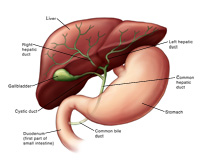
The stomach is much like a bag with a lining. The stomach is made of these 5 layers:

  • 1. Mucosa. This is the first and innermost layer or lining. It contains the glands that release digestive juices. These are called hydrochloric acid and pepsin. This is where most stomach cancers start. Note: Water is needed in order to  produce enough hydrochloric acid.

  • 2. Submucosa. This second layer supports the mucosa. It is rich in blood vessels, lymphatic vessels, and nerves.

  • 3. Muscularis. The third layer is made of thick muscles. They help to mix food with the digestive juices.

  • 4. Subserosa. This layer contains supporting tissues for the serosa.

  • 5. Serosa. This is the last and outermost layer. It’s the lining that wraps around the stomach to confine it.

After you chew and swallow food, it enters your stomach from the food pipe. At this point, pepsin and hydrochloric acid are released. Your stomach muscles create a rippling motion, which combines the food with the digestive juices. After about 2 to 3 hours, partly digested food moves into the small intestine. This is where it’s broken down further, and over time, absorbed into your body.

The natural design in the resection of water through the mucus layer seems to be the process of "back-washing" the mucus layer and getting rid of the salt deposits. This is a most efficient design for rehydrating the mucus layer from the bottom when new mucus is also secreted. This refreshed, thickened and sticky mucus barrier is the natural protective shield against the acid in the stomach. Naturally, the efficiency of this shield depends on a regular intake of water, particularly before the intake of different solid foods that would stimulate the production of acid from the glands in the stomach wall. Thus, water provides the only natural protection against the acid in the stomach, from base upward. Antacids are designed to attach to the acid in the stomach itself— an inefficient protection. We should begin to realize that in the same way we have a "hunger pain" signal, we also have a "thirst pain" signal in the body. It is unfortunate they call it "dyspepsia" and treat it with all sorts of medications until there is local duodenal or stomach tissue damage from the metabolic complications of dehydration. The use of antacids for the relief of this pain is generally the accepted form of treatment. These substances are non-prescription slow poisons that one can buy even in the supermarkets.

 Significant research conducted in Sweden has shown that the outcome is the same in those who do not have an actual ulcer and yet have the classical dyspeptic pain, whether or not they use a placebo, an antacid, or even the agent that blocks the action of histamine. In other words, neither antacid nor the stronger medication are all that effective. It is at this stage of body physiology, now generating signals of dehydration, that one should be prudent and refrain from the use of any form of medication. 

Water is most probably the only effective substance to give relief. After all water, and only water, is what the body wants, needs, and is calling for. If we search accurately for other signs, there would be more indicators of dehydration. Do not imagine that dyspeptic pain is the indicator of an isolated and localized phenomenon. In any case, dyspeptic pain is a signal of dehydration—a thirst signal—of the body, even if there is an associated ulcer. If water is taken and it relieves your pain, with adequate food intake/ the ulcer is bound to repair itself in due time. It is now said that ulcers are the result of infections. My researched opinion is that the variety of curved bacteria, blamed for causing ulcerations, are commensals, bacteria that naturally dwell in the intestines. They may take an unfair advantage from the immune system suppression that is the direct outcome of dehydration. You see, the normal intestinal bacteria cohabitate with us and produce much of the vitamins needed by the body. They contribute to our well-being when we are strong. In dehydration, particularly at the site of the valve between the stomach and the duodenum many histamine producing nerves exist. This particular curved bacterium benefits from the growth hormone effects of histamine. at the same time that these nerves are restrictively monitoring the rate of flow of the strongly acidic content of the stomach into the intestine. In any case, not all ulcer sites show the presence of "helicobacters." Also, an infinite number of people may have helicobacter in their intestines and not suffer from ulcers! 

Antacids that contain aluminum are dangerous. They should not be freely used for a condition that will respond to an increase in water intake. Excessive aluminum in circulation has been very strongly implicated as a precipitating factor on top of other considerations in Alzheimer-type disease. It is imperative to understand this relationship between taking aluminum-containing antacids for a long period of time and its possible accumulative toxic side effect of brain damage in Alzheimer's disease. No amount of genetic study will undo the toxic side effect of a metal used in medications to deal with a simple signal of thirst under a wrong paradigm. Most antacids contain between 150-600 milligrams of aluminum in every spoonful of the liquid, or in each tablet that is chewed. 

The island of Guam has much aluminum ore in its soil (normally the case for some regions in the Western Pacific— Guam island, Kii peninsula in Japan, Western New Guinea, and others). The drinking water of the island was heavily contaminated with aluminum. During the time this contamination was not recognized and remained in the drinking water, a disease similar to Alzheimer dementia was prevalent on the island. Even the younger people on the island seemed to suffer from the disease. A number of years ago this problem was recognized and the water purified. It has been noticed that the younger people seem not to be afflicted any more. It is now taken for granted that it was the aluminum toxicity in the drinking water that caused an Alzheimer-type of dementia on the island of Guam. 

Histamine blocking agents are also not suitable for long-term use. They have many side effects. These include dizziness and confusion states in the elderly. Enlarged breasts appear in men after a few weeks of taking this medication. Low sperm count in some male patients and loss of libido have also been noted. Nursing mothers or pregnant women should not use this type of medication to treat the thirst signals of the body—the child's and the mother's. Brain capillaries respond to dehydration by dilating if histamine stimulates them. These antihistamines will block the capillary dilating action of histamine when the brain has to tabulate more information than normal, such as when under the pressure of stress. The brain will get less blood supply when antihistamines are used for dyspeptic pain treatment. 

The primary cause of Alzheimer's disease is chronic dehydration of the body. In my opinion, brain cell dehydration is the primary cause of Alzheimer disease. Aluminum toxicity is a secondary complication of dehydration in areas of the world with comparatively aluminum-free water. Caution: In the technically advanced Western societies aluminum sulphate is at times used in the process of water purification for delivery into the city water supplies. In prolonged dehydration, the brain cells begin to shrink. Imagine a plum gradually turning into a prune. Unfortunately, in a dehydrated state, many, many functions of brain cells begin to get lost, such as the transport system that delivers neurotransmitters to nerve endings. One of my medical friends took this information to heart and started treating his brother who has Alzheimer's disease by forcing him to take more water every day. His brother has begun to recover his memory, so much so that he can now follow conversation and not frequently repeat himself. The improvement became noticeable in a matter of weeks. 

It should be recognized that although pain is localized to the region of the stomach, the dehydration is established all over the body. Not recognizing dyspeptic pain to be a thirst signal calling for water will, later in Me, cause the human body many irreversible problems. Of course, a stomach tumor could cause a similar pain. However, that pain will not disappear with water. It will continue to recur. In case there are repeated pains even when water intake has been regulated for a number of days, it would be prudent to consult a physician for assessment of the condition. If the pain is from gastritis and duodenitis, or even peptic ulcerations, regular intake of water is a must in the daily routine and dietary adjustments for the treatment of the conditions. 

COLITIS PAIN 

Colitis pain, felt in the lower left part of the abdomen, should initially be viewed as another thirst signal for the human body. It is often associated with constipation, itself caused by persistent dehydration. One of the main functions of the large intestine is the process of taking water out of the excrements so that too much of it is not lost in the waste matter after food digestion. When there is dehydration, the residue is naturally devoid of the normal amount of water necessary for its easier passage. Also, by slowing down the flow and further squeezing the content, even the final drops of water will be drawn away from the solid residue in the large gut. Thus, constipation will become a complication of dehydration in the body. With added food intake, more solid waste will be packed into the intestine and increase the burden for passage of its hardened waste content. This process will cause pain. Colitis pain should initially be considered as a thirst signal of the body. With adequate water intake, the left lower abdominal pain that is associated with constipation will disappear. Eating an apple, a pear, or an orange in the evenings will help reduce constipation in the next day. 

FALSE APPENDICITIS PAIN 

A severe pain can sometimes appear on the right lower abdominal region. It can mimic an inflammation of the appendix and present some similarity to the pain of early appendicitis. Other distinguishing characteristics are not seen; there is no rise in body temperature; there is no guarding and tenderness in the abdominal wall and no feeling of nausea. One or two glasses of water will relieve this lower right abdominal pain. One glass of water can serve as a diagnostic tool in this particular condition. 

HIATUS HERNIA 

You often come across the classical dyspeptic pain that the doctor has diagnosed as hiatus hernia (hiatal hernia). Hiatus hernia means displacement of the upper part of the stomach through the gap of the diaphragm (the esophageal hiatus) into the chest cavity. This would be an unnatural location for the stomach to be in. With a part of the stomach in the chest, food digestion becomes painful. The acid in the stomach will freely push upward and touch the unprotected wall of the esophagus. It causes the pain of heartburn. 

Normally, the content of the upper part of the stomach is sealed off and cannot pass upward into the esophagus when food is being digested. The normal direction of intestinal contractions is downward, from the mouth to the rectum. Furthermore, there are two valves that prevent the regurgitation of food upward. One valve is located in the wall of the tract between the esophagus and the stomach. This valve only relaxes when food is going into the stomach. 

The other trap valve is located outside of the tract in the diaphragm, where the esophagus passes through its hiatus to join the stomach. This "trap valve" is synchronized to relax every time the food that is being swallowed in the esophagus has to pass through it. At other times, it is tight and does not permit the content of the stomach to pass upward. This is the normal state of affairs for the two "valves" that prevent the passage of food from reversing direction and passing upward. 

The intestinal tract, from the mouth to the rectum, is a long tube. Different parts of it have developed special physical and functional attributes to make the process of food digestion and the evacuation of its waste products a well-integrated and smooth operation. There are many, many local hormones that make this operation possible. Local hormones are chemical messengers that signal and time the next stage of the process to "kick in." They cause the necessary enzymes to be secreted to further the breakdown and subsequent absorption of the active materials in food. 

Early in the process of digestion, acid is secreted in the stomach to activate the enzymes and help in the breakdown of solid proteins such as meat and hard-to-digest foods. Normally, the liquefied but highly acidic content of the stomach is pumped into the first part of the intestine. There is a valve between the stomach and the intestine. It is called the "pyloric valve." The operation of this valve is regulated by the message system from either side of the "tract." It is one thing for the stomach to wish to empty its content into the intestine; it is another thing for the intestine to be ready to receive this highly corrosive and acidic gastric content.

The pancreas is a gland that secretes insulin to regulate blood sugar. It also pours some essential digestive enzymes into the intestine. The pancreas has, at the same time, the physiological responsibility of rendering the intestinal environment alkaline before the acid from the stomach can reach the intestine. The most important function of the pancreas is its constant role of manufacturing and secreting of a "watery bicarbonate solution"—the alkaline solution that will neutralize the acid that enters the intestine. To manufacture the watery bicarbonate solution, the pancreas will need much water from the circulation. In dehydration, this process is not very efficient. For this reason, the pyloric valve will not receive the dear signals to open and allow stomach acid to pour into the intestine. This is the first step in the production of the dyspeptic pain, the initial thirst indicator of the human body. When we drink water, depending on the volume of water that enters the stomach, a hormone/ neurotransmitter called "motilin" is secreted. The more water we drink, the more motilin is produced by the intestinal tract and can be measured in blood circulation. The effect of motilin on the intestinal tract, as its name implies, is to produce rhythmic contractions of the intestines— peristalsis—from its upper parts to its lower end. Part of this action would involve the timely opening and closing of the valves that are in the way of flow of the intestinal content. 

Thus, when there is enough water in the body for all the digestive processes that depend on the availability of water, the pancreas will produce its watery bicarbonate solution to prepare the upper part of the intestinal tract to receive the acidic content of the stomach. Under such ideal circumstances, the pyloric valve is also allowed to open for the evacuation of the content of the stomach. Motilin has a major "transmission" role in coordinating this action. Motilin is a satiety hormone secreted when water extends the stomach wall. 

The problem begins when there is not enough water in the body for these digestive events to take place in a coordinated manner. In no way will the system allow the corrosive acid content of the stomach to reach the intestine if the mechanism to neutralize it is not effective. The damage would be irreparable. The walls of the intestines do not possess the same protective layer against acid that is available to the stomach. The first thing that happens is the reversal of the strength of contraction in the valves on either side of the stomach. The pyloric valve will constrict more and more. 

The ring valve between the esophagus and the stomach and the external "valve" of the diaphragm will become more relaxed. Initially, some of the acid may flow into the esophagus when the person is lying down and produce a type of pain that is often called heartburn. It's located near the heart , but it's not the heart that gets burned. 

In some, the laxity of the "valve" in the diaphragm may be such that a portion of the stomach may pass through it into the chest and achieve the title of hiatus hernia. When the valves reverse their mode of operation for the normal flow of the stomach content, in effect they are preparing for another eventual and unavoidable outcome: the evacuation of the stomach content through the mouth. If the stomach content cannot go into the intestine and it cannot indefinitely remain in the stomach, there is only one other way out—through the mouth. For this action to take place, the intestinal tract is capable of reversing the direction of its contractions. The reversal of the contractions is called "anti-peristalsis." 

One of the most misunderstood and upsetting conditions that is a complication of severe dehydration is bulimia. People who suffer from bulimia—the most notable of them is Princess Diana, who has been devastated with this problem and whose marriage to Prince Charles was destroyed because of this antisocial problem—suffer from constant "hunger." When they eat, they cannot retain the food and have an instant uncontrollable urge to vomit— thus, their antisocial life-style. In these people, their sensation of "hunger" is, in fact, an indicator of thirst, and their urge to vomit is the protection mechanism that is explained above. If bulimics begin to rehydrate their body well and drink water before their food, this problem will disappear. In my opinion, because of the repeated corrosive effect of the regurgitating acid on the unprotected esophageal tissue, there is a strong relationship between heartburn of early life and eventual cancer of the lower end of the esophagus. 

Dyspeptic pain, no matter what other pathological label is attached to it, should be treated by regular intake of water. The current treatment practice and the use of antacids and histamine-blocking agents is not to the benefit of a chronically dehydrated person whose body has resorted to crying for water. A.B. is herself engaged in the promotion of alternative medicine. She is very strongly into chelation therapy. She has compiled other people's information and written a popular book on chelation. However, she had herself suffered for many years from excruciating pains from her hiatus hernia. Her husband, himself a most delightful author, tells me that A.B. could hardly sit through a meal and not suffer from such severe pains as to be able to complete her food and enjoy sitting down for a chat. At times, they would have to leave the restaurant because the pain would not allow her even a short respite to finish her meal. 

A.B. tells me she hardly drank any water. Only after H.B. had by chance come across my book and read it, did they finally understand A.B.'s problem. She began drinking water. As she increased her water intake, she noticed her pain was less severe. In a matter of days it disappeared completely, never to come back. The husband and wife now enjoy going out to eat. My wife and I ate with them a few times. It appears her hiatal hernia and its pain are ancient history. It is interesting to note that even chelation, her pet treatment procedure for so many conditions, could not help her. It should become clear that the hidden merits of chelation therapy in most cases is in its required high-volume water intake during the actual treatment procedure. However in the past, increased water intake was not a routine recommendation for in-between the treatment sessions. But, as a result of my talks and reviews of my book in their favorite Journal of Townsend Letter for Doctors, most practitioners of "Alternative Medicine" are now recommending increased water intake by their patients. Chelation therapy is most effective in extracting toxic metals out of the body. 

In Summary:

 Dyspeptic pain is a thirst signal associated with chronic or severe dehydration in the human body. It could also exist in conjunction with other thirst pains of the body. Take a look at Mr. Liguori's letter on page 92. As you can see, Mr. Liguori had both the pain of hiatal hernia and also anginal pain. With increased water intake, one pain has disappeared and the other has diminished significantly in only one week of increased water intake. At the time of the final writing of this page, his pain seems to have completely cleared up. "The worst sin toward our fellow creatures is not to hate them, but to be indifferent to them: that's the essence of inhumanity." George Bernard Show, 1897.

Sunday, June 27, 2021

Human body's many cries for water

 The body has many more than the one "dry mouth" indicator of water shortage. Equally obvious, the greatest tragedy in medical history is the fact that medical professionals have not understood the human body's variety of calls for water. They have traditionally resorted to using chemicals and "procedures" to deal with chronic dehydration of the ...

Back pains are among the body's many cries for water, from which Dr. Batmanghelidj's book has appropriately taken its title ' YOUR BODY'S MANY CRIES FOR WATER'. The horrific wheezing of an asthmatic, which is one of the most embarrassing and distressing things anyone can witness, is similarly the body crying for water. 

Dehydration is the underlying cause of many chronic "diseases." Proper intake of water , salt and minerals can prevent these illnesses and even reverse the damage already done. So-called "modern" medicine still... 

I suggest reading this book- 'Your Body's Many Cries for Water' to start learning about how dehydration impacts your performance in life and sports. We can all start drinking more water throughout the day (filtered clean water) to own our health by taking a preventative approach to our personal health care.

非常感谢您与人们分享这个简单的水疗配方。Thank you very much for sharing this simple Water Cure Formula with the people. 


https://theinnozablog.blogspot.com/search?q=Water+cure&m=0 


Chronic cellular dehydration painfully and prematurely kills. Its initial outward manifestations have until now been labeled as diseases of unknown origin. 

PREFACE 

One of the more obvious reasons why medicine has become so complicated and costly is the fact that the research and production of pharmaceutical products—and eventually their patient evaluation—has become monumentally expensive. To boost the sale of regularly and heavily advertised products, not only do highly paid medical representatives present their sales pitch, but doctors are also enticed into promoting the drugs by the "perks" offered. Patients continue to use them because they are not cured. They are not supposed to be cured! They are only treated! This is the ideal way that commercialism in medicine can thrive. This is not the only shameful loose end in medicine. Techniques-oriented advancements in medicine are made possible as a result of "gadgets" production. This, too, adds to the cost of medicine. Teaching hospitals and research institutions depend heavily on funding from the industrial side of the health care system. Thus, research in medicine has traditionally been directed according to the wishes of health care industrialists who release funds for their own profit-generating projects. Now comes a moment of great rejoicing. It has been discovered that the human body possesses a variety of sophisticated indicators when it runs short of water—emergency indicators of dehydration and thirst. The body has many more than the one "dry mouth" indicator of water shortage. Equally obvious, the greatest tragedy in medical history is the fact that medical professionals have not understood the human body's variety of calls for water. They have traditionally resorted to using chemicals and "procedures" to deal with chronic dehydration of the body. A monumental mistake, but a blatant fact! The unkindest cut of all is the way the mainstream medical community still prefers to adhere to business as usual and ignores the good news. Fundamentally, this basic ignorance of the manifestations of the water needs of the human body is the primary reason for the high cost of health care in our society, without a hope of Improvement in the way it is presently designed—a very bad design that only serves its operators and not the health-care-needing public. If you will look at the letters exchanged with the American Medical Association (AMA), printed at the end of the book, you will realize that well before the publication of this book, the AMA was invited to become the harbinger of the good news, "you are not sick, you are thirsty," to the public. Their ultimate silence clearly exposes their flagrant violation of public trust. The National Institute of Health (NIH), the most advanced center of medical research in the world, has failed society even more miserably. Firstly, why has it not studied the medicinal effects of water? Why has it not separated the possible positive impact of water taken to swallow a pill from the "medication" itself? Why has it not studied what happens to a person who does not regularly drink water? These are their initial mistakes. Why do you think the NIH converted these mistakes into a sting operation? In May of 1989, I wrote to Dr. James Mason, Assistant Secretary of Health and Human Services, explaining that a paradigm change that looked at water needs of the body would expose many solutions to the health problems of our society. I sent him much supportive material which he referred to Dr. John T. Kalberer, NIH Coordinator for Health Promotion and Disease Prevention, to review and discuss with me; obviously the right Office for the evaluation of my physiology-based revolutionary views. Not so! I was invited to visit with Dr. Kalberer. After one hour's discussion, Dr. Kalberer informed me that the NIH was not in a position to handle my "broad" medical views. He explained that the NIH could not fund research in other than university settings. I indicated that the reason for my contact with Dr. Mason and himself was to explain dehydration as the cause of so many degenerative diseases of the human body, so that the NIH could begin its study and take the result to the public. He then told me that the NIH was only interested in molecular aspects of biological and pharmaceutical research. He indicated my views were so broad based that they did not fit into the way the research institution functioned. When he realized I was unhappy with his pronouncement, he advised me to continue my work and publish my views. He told me this would be the only way they would get heard. I did not give up. Every time a health article appeared in the newspapers based on pronouncements from someone at the NIH, I wrote a letter and explained the basic problem. I even wrote to the Office of Scientific Integrity at the NIH and complained about some pieces of misinformation that would have established only a particular product on the medical market. I did not hear from them, but the issue appears to have died and the photogenic spokesman seems not to hold court as often as before. For a while, I became excited when Dr. Bernadine Healy became the director of the NIH. She appeared to be the right type of person who would change the NIH. As an MD/scientist, she obviously understood what I was saying. She referred me to Stephen Groft, Ph.D., who had just become a temporary director of the newly established Office of Alternative Medicine until a permanent MD director could be found. He seemed a very sincere person. After a long meeting and having provided him with some of my published materials, he invited me to make a short presentation at the first Alternative Medicine Conference to be convened by the NIH. His temporary position was too temporary to do any good. Dr. Joseph Jacobs took over. He is a doctor of medicine with Native Indian culture and influence. I am positive that Dr. Groft had passed my information and materials to him. The next Alternative Medicine Conference was convened by Dr. Jacobs and his second in command, and I was at that time to be introduced to them by Dr. Groft. Naturally, at that moment, Dr. Jacobs did not have the time to conduct a serious discussion. It was agreed that he take a look at what I had sent the Office and for us to meet at a time soon. At our meeting in his office, I asked him if he had looked at what I had previously sent to their Office. He began to make the excuse that he was short of time, and at the same time, they were changing office location and he had not had the opportunity to see what I had sent. I told him if he were not aware of the content of the materials I had sent, this meeting was a waste of his time and mine and we should defer our discussion until he had read the information I had provided. I got up to leave. I had to cut through his "prima donna" stance. He told me he would take a look at what I had sent, but since we were both intelligent professionals, there was not much that could not be clarified in one hour's discussion. He invited me to sit down and explain my views. I did. Before I left, he asked me for another set of supportive materials. I had them in my case and gave them to him. Among the materials supplied was a copy of the first edition of this book. I explained to him that this information is becoming public knowledge. I invited him for the sake of society and advancement of medical science to begin the study of its topic through his Office. I did not hear from Dr. Jacobs or see him until the next Alternative Medicine Conference. Nothing about chronic dehydration was on the agenda. Even when Col. Robert Sanders, who is very well versed with the topic, made a five-minute philosophic presentation on dehydration, no steps were taken to put the issue before the Advisory Board. It became clear that the Office of Alternative Medicine had its own agenda, and serving the public was not on its list of priorities. According to Rita Mae Brown, "The definition of insanity is doing the same tiling over and over again and expecting the results to be different." One would assume that according to this definition, I am one of the insane ones. I often think myself to be a simpleton. I question myself: Why do I spend time and personal resources to bring about a science-based transformation of medicine in, of all places, America? In the next breath I console myself by thinking I am privy to vital health and wellness information that has to reach the innocent and trusting people who become sick and do not know they are only thirsty for water. With this thought I go the next stretch of my weary way. In the meantime, Dr. Bernadine Healy left the NIH. She is a medical doctor. The NTH is a "science" institution. Obviously there must have been a conflict of purpose; she had to leave. Nobel Laureate Harold Varmus took over. Once again, on the 23rd of November 1993, I wrote to him. I started my letter, "Welcome to the position that you can now make a greater contribution to advancement of medical science and our society. Today's Washington Post article on you prompted me to write this letter and bring a breakthrough of significance in medical science to your attention. 'It is chronic dehydration that is the root cause of most major diseases.' I have in the past tried to get the NIH to take a serious look at this simple 'paradigm shift' and make the future practice of medicine patient-friendly!" I sent him one of my books and some supportive materials. To this date, February 1995, I have not heard from this gentleman, not even a letter of thank you. Obviously, the only way to take the message of "dehydration" to the public was to write. That I did. After sending letters to various journals and newspapers and not hearing from them, I decided, in 1989 to create our own journal at the Foundation for the Simple in Medicine. We called it Science in Medicine Simplified. A special issue and a regular issue of the journal were published in a period of one year and freely distributed to some research centers and medical libraries at some universities. We also applied to the National Library of Medicine for the journals to be indexed in the Index Medicus computer system so that their content could be accessed by other researchers. We appealed to them to afford us an equal opportunity to present our "paradigm shift" researched views in medicine. They got back to us and said two volumes of a publication was not enough, but once another volume was put out and we were sure there was going to be continuity, they would consider indexing the journals. The third volume of the journal was in the works at this stage and, when it was published in 1991, we sent our application and two volumes of each publication to the NLM. Journals are evaluated two to three times a year for their possible inclusion in the Index Medicus. The committee consists of mainly NIH scientists. When they met at the end of the year and reviewed our new information in medicine, we were refused. They did not want to give us an equal opportunity for our views to be heard. The NIH "thinkers" did not wish our new thoughts to enter the scientific arena and eventually reach the public. We were deftly censored. This is when I decided to write the first edition of this book and go public. About six months after the NLM refusal, my book was out and being reviewed. I now had a simple language explanation of where mainstream medicine had gone wrong. This was the book I sent, in addition to the scientific publications, to Drs. Healy, Groft and Jacobs at the NIH. I wanted them to know I did not need them for my views to reach the public. I had realized that the NIH was self-servingly satisfied with the insanity of conducting and repeating the same types of research without finding a cure for any of the degenerative diseases of the human body. In April of 1993, there was an International Bio-Oxidative Medical Conference in Reston, Virginia. I was invited to speak following the President of the Association. This is one of the conferences convened by the practitioners of Alternative Medicine. I was introduced to one of the NIH Scientific Secretariats, Dr. Edmund Sargent Copeland, who was invited to review the conference. After my talk on the role of histamine as the main water regulator of the body, he very graciously discussed how I could succeed in getting my views evaluated. I sent him most of my published materials. We met at their Westbard Avenue office. He did his best to get me invited by the program manager of their lectures to speak before their members. The invitation never came. It is obvious my thoughts are a threat to the continuation of some of the NIH approaches to medical research. Naturally, my views will not be allowed to echo within the NIH walls. They want me automaton-like to present my findings in a way that is acceptable to them only. That is how they have it their own way. I have tried to give you detailed information about my efforts to get the people who are entrusted with the responsibility of looking after the nation's health interests to work on your behalf. As you see, they chose their own advantageous way of business as usual. It is now clear that the institutions that use your tax dollars and a major portion of your hard-earned income do not care one iota for your health and well-being. It is now obvious that those who purport to be solution seekers are promoters of your problem. From here on, you, the readers of the information in this book, have to become a part of the force behind the transformation of the health care system in America. Obviously, funding for the evaluation of water as a natural medicine seems not to be readily available. Furthermore, even if funds were to be made available, research of the topic seems not attractive enough to the universities and nationally recognized research centers. And yet, to show others, patient response to treatment with water as a natural medicine in diseases produced by chronic dehydration is necessary. It is necessary to convince the clinicians within the health care system to change their present approach to treatment. Students in medical schools are not taught anything about the many roles of water in the human body. The way I see it, we will need many "simple and direct" observations, like those whose letters are published in this book, to report their findings before the mainstream medical practitioners would abandon their method of treatment. Their present method is only suited to promotion of chemical products. "Double-blind randomized trials" are only suited to the evaluation of one chemical product to another, less-known substance. This particular methodology is not suited to the clinical evaluation of "deficiency disorders," in this case the effects of water on the variety of dehydration-produced diseases. Physiological states of each individual's body determines the initial symptoms and complications of dehydration. That is why these symptom-producing dehydration states have traditionally been labeled as many different disease conditions. When you are into the book, you will understand what I am saying. You will also read some letters whose writers had more than one of the early signs of recently recognized water shortage in the body. We are now at the dawn of a new era in medical science. 'It is chronic water shortage in the body that causes most of the diseases of the human body." The original design of the human body is more complete than you can Imagine. If we have not known how to maintain it until now, it is our own fault. We have not stopped to think, if the body is mainly water, where will it get its top-up if we don't drink water on a regular basis? We now know when it is calling for its urgent intake. We need to dwell on this information. Pushing water is not a personal gimmick. There is no hidden agenda to its promotion. If you share this information with your loved ones, you are its beneficiaries. At present this book is the only source of easy-to-read-and-understand information on chronic dehydration. You need to read it a few times and understand the profoundness of the indispensable role of water in the human body. If you do this, you will become a healer too. In this book, you will also get to learn that "fluids" and "water" are not necessarily the same. You will learn about the detrimental effects of diet sodas. If you find the information in this book useful, please raise your voice and cry out against the dark and ugly side of medicine as it is practiced at present. Doctors are supposed to be healers. They have taken an oath to serve mankind. It is true that the "business of America is business," but my business-minded colleagues have no right to obstruct the simple message of 'you are not sick, you are thirsty," from reaching a wider cross-section of the public. They have no business converting the pain and suffering of their fellow man into accumulative commercial practices that we have noticed in the recent past. I most humbly acknowledge that not all doctors put their own gain before the welfare of those who seek their honest advice. You only need to take a look at the number of doctors in the small list of reviews of the book to see this fact. Only a very small minority, unfortunately in steering positions, have shed a bad light on our sacred profession. However, "when light comes, darkness has to go." When people begin to understand that water by itself is the best natural medicine in many "disease" conditions of the body, the black sheep in the sacred profession of medicine will take their business elsewhere. Traditionally, doctors have been thinkers and philosophers. It is only recently that they have been forced to memorize pre-digested information to get through the curriculum in teaching hospitals. In reality, books are created to store information, and the brain is designed to "think." Once we get rid of the burden of having to remember so much misinformation generated around the conditions that are complications of chronic dehydration, the new doctors will once again become scholars and thinkers. That is when their pronouncements will be truly respected and worth their weight in gold, and no less than surgeons' scale of fees. In the hope of a new era of bright lights in medicine, I wish the readers of this book luck for their indispensable part in the transformation of the present structure of medicine. Each letter that is published in the book is but a sample of what "water as medicine" can do in millions who present similar outward manifestations of chronic dehydration. The arrogant and the ignorant in medical practice will label these letters as "anecdotal" and brush them aside. Infinitely greater in number, seeing eyes connected to thinking brains will recognize in each one of them the new truth, 'you are not sick, you are thirsty," that heralds an end to the present medical sting against the public. This book is intended to be read as a "novel" about the love relationship of water and the human body. It is not designed to be read for "soundbites." This is the reason why it does not have an index. I would like to thank my wife Xiaopo for her loving support and help. I would like to thank Col. Robert T. Sanders for his tireless efforts in the past five years at getting my views on chronic dehydration to be heard by the people he thinks might wish to help in its spread. I would also like to thank all of those who have been exuberant supporters and have encouraged me to continue and not get tired. Finally, I would like to thank Mrs. Dorothy Heindel for her editorship of all of my manuscripts and books. 

F. Batmanghelidj, M.D. February 1995 

Introduction 

DON'T TREAT THIRST WITH MEDICATIONS The significant problems we have cannot be solved at the same level of thinking with which we created them."-Albert Einstein

 In December of 1990, Dr. Louis Sullivan, the Secretary of Health and Human Services, reported a rise of 11 percent in the cost of providing health care to the nation. This cost is estimated to reach $1.6 trillion by the year 2000 and to consume 28% of the GNP by the year 2010, if allowed to continue the present trends. The Washington Post, in one of its recent health care analyses, has estimated the 1994 health care costs would reach $1,029.6 billion. Of this amount, $934.8 billion is personal health care costs incurred by the public. The federal government is said to be responsible for only $94.8 billion of expenditure. However, this vast expenditure becomes taxable income for the 9.5 million people employed at present in the health care system in America. It is clear that the government stands to gain from the rise in the health care costs of the nation. Thus, there exists a conflict of interest between the needs of the public and the intention of the government to preserve its income base. In light of this understanding, we can see why the government would not be interested in taking steps to reduce the health care costs of the American people, even though they are by now aware of the basis of the problem. It becomes obvious that the people are responsible for their own health. They have to protect themselves from commercial considerations of the health care operators and the government that wishes to maintain health care costs at present levels. 

You see, the health care crisis of America that will bankrupt the nation if permitted to continue in its present trend, is not caused by the way it is operated. Nor is it entirely the result of greed-based pricing. It is caused by a most primitive mistake in the basic premise in the science of physiology that is foundation to all medical and scientific knowledge of the human body. It is caused because the public and the professionals don't yet know when the human body is thirsty for water! 

This situation does not need to remain, or become as desperate as it seems. Very extensive clinical observations on dyspeptic pain and evaluative research into the physiology of chronic pains show a simple and fundamental solution to the health care problem of the nation is available. The beauty of this solution is that it is entirely science based. It involves a new physiologic understanding of the human body. The new information about the human body, as you must have guessed from the title of the book, follows. 

WHY "MEDICINE" DOESN'T CURE DISEASE Medical professionals of today do not understand the vital roles of water in the human body. Medications are palliatives. They are not designed to cure the degenerative diseases of the human body. In this book, we will discuss the role of water in the body and how a brief understanding of this topic can transform the health needs of our society. We will learn how preventive medicine can become the main approach to health care in any society. In this book, and in the discussions that follow, the hero is water. We will look at every explanation with the view that water is the primary substance and the leading agent in the routine events that take place in the human body. With the primary role of water in mind, we will look at some disease conditions. The missing role of water in physiological situations that will eventually become disease conditions will be discussed. In the "diseases" that will be discussed, a possible initial role of water metabolism disturbance will need to be excluded before we assume these conditions to have been caused through other processes. This is the true meaning of a preventive approach to health care. We should first exclude the simpler causes for disease emergence in the body and then think of the more complicated. The simple truth is that dehydration can cause disease. Everyone knows that water is "good" for the body. They seem not to know how essential it is to one's well-being. They do not know what happens to the body if it does not receive its daily need of water. After this short book is read, you will have a clearer understanding of this issue. 

The solution for prevention and treatment of dehydration-produced diseases is water intake on a regular basis. This is what we will define in this book.  We will discuss why, in a majority of cases, the conditions that will be mentioned are  to  be  viewed  as dehydration-produced  disorders. If,  by  the  simple  intake  of  an  added  amount of  water  every  day you  can  get  better,  you  will  not need  to  worry. You  should  seek  professional  help  if  the  adjustment to  dietary  needs of  your body  does  not  help  and  a  medical problem  continues to  trouble  you.  What  is offered here is the  needed knowledge  for disease  prevention  and  cure  of dehydration  diseases. 

At  the  end  of  the  book,  when  the  relationship  of  chronic dehydration  and  disease  emergence  has become  clear  to the  reader,  information  will be  provided  on  the  needed  adjustments to  daily water  intake, and  the  complementary diet  to  prevent  "dehydration  diseases," or  even cure them,  if a  totally irreversible situation  has  not  developed. 

THE BASICS 

When  the  human  body  developed  from  the  species  that were  given  life  in  water,  the  same  dependence  on  the  life giving  properties of  water  were  inherited.  The  role  of  water  itself  in  the  body  of  living  species,  mankind  included,  has not  changed  since  the  first  creation  of  life  from  salt  water  and  its  subsequent adaptation  to  fresh  water. When  life  on  land  became  an  objective  for  advancement beyond  the  immediate  vicinity  of  water  supply  (even beyond  amphibian  life)—the  stressful  adventure  beyond  the  known  boundaries—a  gradually  refined  body  water preservation  system  had  to  be  created  for  further  species  development.  This process of  temporary  adaptation  to transient  dehydration  also  became  inherited  as a  well-established  mechanism  in  the  human  body  and  is  now the infrastructure  to  all  operative  systems within  the  body  of  modern  humans. For  the  earlier  water-dwelling  species,  adventure  beyond  their known  boundaries would  constitute  great stress, because  they would  dry up.  This  "stress  "  would  establish  a  dominant  physiology for  crisis  management of  water. In the  now "stressed"  humans,  exactly  the  same  translation  and  the  physiology  of crisis management of  water becomes established.  The  process  primarily  involves a  strict  rationing  of  the  water  "reserves"  of the  body.  It  is assumed  that  water  supply  for  the  immediate  needs  of the  body  will  be  limited.  Management of  the  available reserves of  water in  the  body  becomes the  responsibility  of a  complex system. This complex multi-level  water  rationing  and  distribution  process remains in  operation  until  the  body receives unmistakable  signals that  it has gained  access  to  adequate  water  supply.  Since  every  function of  the body is monitored  and  pegged  to  the  flow of  water, "water  management"  is  the  only  way  of  making  sure  that adequate amounts  of  water  and  its  transported  nutrients first reach  the  more  vital  organs that will have to  confront  and  deal with  any  new "stress."  This mechanism  became  more  and  more  established  for  survival  against  natural  enemies and  predators.  It  is the  ultimate  operative  system  for survival in fight  or  flight  situations.  It is  still the  operative mechanism  in  the  competitive  environment  of modern  life  in  the  society. 

One  of  the  unavoidable  processes in  the  body water  rationing  phase  is  the  complete  cruelty  with  which  some functions are  monitored  so  that  one  structure  does not  receive  more  than  its predetermined  share  of  water.  This  is true  for  all  organs  of the  body.  Within  these  systems  of water  rationing, the  brain  function  takes absolute  priority over  all  the  other  systems—the  brain  is 1/50th  of  the  total body  weight,  but  it  receives  18 - 20  percent  of  blood circulation.  When  the  "ration  masters"  in  charge  of body water  reserve  regulation  and  distribution  become  more  and more  active,  they  also  give  their  own  alarm  signals  to  show  that  the  area  in  question  is short  of  water,  very  much  like the  radiator  of  a  car  giving  out  steam  when  the  cooling  system  is not adequate  for  the  uphill  drive  of the  car. In  advanced  societies,  thinking  that  tea,  coffee,  alcohol,  and  manufactured  beverages are  desirable  substitutes for the  purely  natural water needs  of the  daily  "stressed"  body  is  an  elementary  but  catastrophic mistake. It  is true  that these  beverages contain  water,  but  what  else  they  contain  are  dehydrating  agents.  They  get  rid  of  the  water  they  are dissolved  in  plus some  more  water  from  the  reserves  of the  body! Today, modern  life-style  makes  people dependent  on  all  sorts  of  beverages that  are  commercially  manufactured.  Children  are  not  educated  to  drink  water; they become  dependent  on  sodas and  juices.  This is a  self-imposed  restriction  on  the  water  needs of  the  body.  It  is not  generally  possible  to  drink  manufactured  beverages in  full  replacement  of  the  water  needs of  the  body.  At  the same  time,  a  cultivated  preference  for the  taste  of  these  sodas will  automatically  reduce  the  free  urge  to  drink  water when  sodas are  not  available. 

Currently, practitioners of medicine are  unaware of the many chemical roles of  water in the body. Because dehydration  eventually causes loss of some  functions, the various sophisticated  signals given by operators of the body's  water rationing program during severe  and lasting dehydration have been  translated as indicators of unknown  disease conditions of the  body.  This is the most basic mistake that has deviated clinical medicine. It has prevented  medical practitioners from being able to  advise  preventive  measures or offer  simple  physiologic  cures for some  major  diseases in  humans. 

With  the  appearance  of  these  signals, the  body  should  be  provided  with  water  for these  rationing  systems  to distribute.  However,  medical  practitioners  have  been  taught  to  silence  these signals with chemical products. Of course  they  have  zero  understanding  of  the  significance  of  this most gross error. The various signals  produced  by these  water  distributors are  indicators of  regional thirst  and drought of the body. At the onset, they can be relieved by  an  increased  intake  of  water  itself,  yet  they  are  improperly  dealt  with  by  the  use  of  commercial  chemical  products until  pathology  is established  and  diseases are  born. It  is unfortunate  that  this  mistake  is  continued  until  the  use  of more  and  more  chemicals  to  treat  the  other  developing  symptoms  and  complications of  dehydration  becomes unavoidable,  and  then  the  patient dies.  The  irony?  They say the  patient  died  of  a  disease.  What a  clearance  for  their conscience! 

The  error  in  silencing  the  different signals of  water  shortages of  the  body  with  chemical  products is  immediately detrimental to the cells of the body of the person being treated. The established signal-producing chronic dehydration also has a permanently damaging impact on subsequent descendants of the person. I take pleasure in bringing to your attention a breakthrough knowledge in medicine that can benefit every person who may fall ill, and especially the elderly. In short, my paradigm change in basic human applied science will establish a physiology-based approach to future human research and simplify the practice of medicine all over the world. The immediate outcome of this paradigm shift will be to the health advantage of the public. It will expose the newly understood signs of dehydration in the human body. It will also decrease the costs of falling ill. 

THE PARADIGM THAT NEEDS TO BE CHANGED : What is a paradigm and how does it change? A paradigm (para-dime) is the most basic understanding on which new knowledge is generated. As an example, the earlier understanding was that the Earth is flat. The new understanding is that the Earth is round. The roundness of the Earth is the basic paradigm to the design of all maps, globes, recognition of stars in the sky, and calculations for space travel. Thus, the earlier paradigm for holding the Earth to be flat was inaccurate. It is the correct understanding of the Earth as a sphere that has made advancement in many fields of science possible. This change in paradigm is basic to our progress in many fields of science. The shift in that paradigm and the transformation it brought about did not occur easily. Adoption of a fundamentally significant new paradigm in the science of medicine is more difficult even if the outcome is highly desirable and desperately needed by the society. 

THE SOURCE OF ERROR IN MEDICINE 

The human body is composed of 25 percent solid matter (the solute) and 75 percent water (the solvent). Brain tissue is said to consist of 85 percent water. When the phase of inquiry into the workings of the body began, because the scientific parameters and a very broad knowledge of chemistry had already become well-established, it automatically became the assumption that the same understandings that were developed within the discipline of chemistry applied to the body's solute composition. 

It was therefore assumed that the solute composition is the reactive regulator of all functions of the body. At the very onset of research into the human body, the water content of the body was assumed to act only as a solvent, a space filler, and a means of transport—the same views that were generated from the test-tube experiments in chemistry. No other functional properties were attributed to the solvent material. The basic understanding in today's "scientific" medicine—which has been inherited from an educational programs established at the dawn of systematic learning —also regards solutes as regulators and water as only a solvent and a means of material transport in the body. The human body is even now regarded as a large "test tube" full of solids of different nature and the water in the body as a chemically insignificant "packing material." 

In science, it has been assumed that it is the solutes (substances that are dissolved or carried in the blood and serum in the body) that regulate all the activities of the body. This includes the regulation of its water (the solvent) intake, which is assumed to be well-regulated. It is presumed, because water is freely available and one does not have to pay for it, that the body has no business in falling short of something that is available! Under this erroneous assumption, all the human applied research has been directed toward identification of one "particular" substance that can be held responsible for causing a disease. Therefore, all the suspected possible fluctuations and variation of elemental changes have been tested without a clear-cut solution to a single disease problem. Accordingly, all treatments are palliative and none seems to be curative (except for bacterial infections and the use of antibiotics). Hypertension is not generally cured; it is treated during the lifetime of a person. Asthma is not cured; inhalers are the constant companion of the afflicted. Peptic ulcer is not cured; antacids have to be nearby all the time. Allergy is not cured; the victim is always dependent on medication. Arthritis is not cured, it eventually cripples, and so on. 

Based on this preliminary assumption of the role of water, it has become a practice to regard the "dry mouth" as a sign and sensation of body water needs, which is further assumed to be well-regulated if the sensation of "dry mouth" is not present, possibly because the substance water is abundant and free. This is an absurdly erroneous and confusion-generating view in medicine and entirely responsible for the lack of success in finding permanent preventive solutions to disease emergence in the body, despite so much costly research. 

I have already published an account of my clinical observations when I treated more than 3000 peptic ulcer sufferers with water alone. I discovered for the first time in medicine that this "classical disease" of the body responds to water by itself. Clinically, it became obvious that this condition resembled a thirst "disease." Under the same environmental and clinical settings, other "disease" conditions seemed to respond to water by itself. Extensive research has proven my clinical observations that the body has a variety of most sophisticated thirst signals— integrated signal systems during regulation of the available water at times of dehydration. 

The combination of my clinical and literature research has shown that the paradigm that has until now governed all human applied research must be changed if we wish to conquer "disease." It has become clear that the practice of clinical medicine is based on a false assumption and an inaccurate premise. Otherwise, how could a signal system for water metabolism disturbance be missed or so blatantly ignored for such a long time? At the moment, the "dry mouth" is the only accepted sign of dehydration of the body. As I have explained, this signal is the last outward sign of extreme dehydration. The damage occurs at a level of persistent dehydration that does not necessarily demonstrate a "dry mouth" signal. ¹Earlier researchers should have realized that, to facilitate the act of chewing and swallowing food, saliva is produced even if the rest of the body is comparatively dehydrated. 

Naturally, chronic dehydration of the body means persistent water shortage that has become established for some time. Like any other deficiency disorder such as vitamin C deficiency in scurvy, vitamin B deficiency in beri-beri, iron deficiency in anemia, vitamin D deficiency in rickets, or you name it, the most efficient method of treatment of the associated disorders is by supplementation of the missing ingredient. Accordingly, if we begin to recognize the health complications of chronic dehydration, their prevention, and even early cure, becomes simple. The remedy is timely and proper rehydration. 

Although my scientific views in medicine were peer reviewed, before I presented my paradigm change information as a guest lecturer at an international cancer conference in 1987, Dr. Barry Kendler's letter on page 12 (printed by his kind permission) further confirms the validity of my scientific views on chronic dehydration as a disease producer. As you will see, he has even studied some of the important references that I have referred to to explain that chronic dehydration is the root cause of most major degenerative diseases of the human body; the diseases whose cause was not clear until now. Referring to any medical text-book, you will see over a thousand pages of verbiage, but when it comes to giving the reasons for the major diseases of the human body, the statement in all cases is uniform and very brief: "Etiology unknown!" 

[ A letter from :

College of Mount St. Vincent Manhattan College

Dear Dr. Batmanghelidj: 

I had the opportunity of reading some of your publications concerning the significance of adequate hydration and the role of chronic dehydration in the etiology of disease. While perusing this material, I carefully examined many of the references that you had cited, especially in your paper publised in Anticancer Research  (1987:7:971) and in your subsequent paper in Volume 1 of Science in Medicine Simplified. 

Every referrence that I checked was properly used to support your hypothesis that a paradigm shift from a solute-based to a solvent-based body metabolism is warranted. I conclude, based upon study of your revolutionary concept, that its implememtation by health care professionals and by the general public, is certain to have an enormous positive impact both on well-being and on health care economic. Accordingly, I will do all that I can to publicise the importance of your findings. 


Yours truly, 

(SIGNATURE)

Barry S. Kendler, Ph.D.

Associate Professor of Biology, Manhattan College.

Adjunct Faculty Member Graduate Nutrition Program, New York Medical College ]

Note: Read https://journals.lww.com/jcnjournal/pages/author.aspx?firstName=Barry&middleName=S.&lastName=Kendler

THE NEW PARADIGM 

"A new scientific truth is not usually presented in a way to convince its opponents. Rather, they die off, and a rising generation is familiarized with the truth from the start." – Max Planck

The  new  scientific  truth  and  level  of  thinking  about  the  human body  that  will empower people  to become practitioners of  preventive  medicine  for  themselves  is as follows:  It is  the  solvent—  the  water  content—that regulates  all  functions of  the  body,  including  the  activity  of all  the  solutes (the  solids) that  are  dissolved  in  it.  The disturbances  in  water  metabolism  of  the  body (the  solvent  metabolism)  produces a  variety  of signals,  indicating  a "system"  disturbance  in  the  particular functions associated  with  the  water  supply  and  its rationed  regulation. Let  me  repeat:  every function  of  the  body is monitored  and  pegged  to  the  efficient  flow  of  water.  'Water  distribution" is  the  only  way  of  making  sure  that  not only an  adequate  amount  of  water,  but its transported  elements (hormones, chemical  messengers and  nutrients) first  reach  the  more  vital organs. In  turn,  every  organ  that produces a substance  to  be  made  available  to  the  rest  of  the  body will  only  monitor  its own  rate  and  standards of production and release  into  the  "flowing  water,"  according  to  constantly  changing  quotas set  by the  brain. Once  the  water itself reaches  the  "drier"  areas,  it  also  exercises its  many  other most vital  and  missing  physical  and  chemical  regulatory actions. 

Within  this  view,  water  intake  and  its priority  distribution  achieve  paramount  importance. The  regulating neurotransmitter  systems (histamine  and  its subordinate  agents)  become  increasingly  active  during  the  regulation  of water requirements  of the  body.  Their  action  should  not be  continuously  blocked  by  the  use  of medication. Their purpose  should  be  understood  and  satisfied  by  drinking  more  water.  I  have  made  exactly  the  same  statements to  a body  of  scientists  that  had  gathered  from  all  over  the  world  in  Monte  Carlo  in  1989  for a  conference  on  the  topic of inflammation,  analgesics,  and  immune  modulators. 

The  new  paradigm  permits  an  incorporation  of  the  "fourth  dimension  of time"  into  scientific  research.  It  will  facilitate an  understanding  of  the  damaging  effect of  an  establishing  dehydration  that  persists and  continues to  increase during  any duration  of time.  It will  make  it  possible  to  forecast  the  physiological events that  will  lead  to  disease states at  some  later  years,  including  what  at  present  appears as  genetic  disorders.  It will  transform  the  present "shot-in-the-dark,  symptoms-treating"  approach  to  the  practice  of  medicine  into  a  scientifically  accurate  medical  art; it  will make  preventive  forecasting  possible.  It  will  establish  excellent  health  and  reduce  health  care  costs to individuals  and  to  any  society  that fosters  its spread. 

Since  water shortage  in  different  areas  of  the  body  will manifest  varying  symptoms,  signals,  and  complications  now labeled  as diseases,  people  may  think  water  could  not  be  offered  as a  natural  solution.  Water  cures  so  many diseases?  No  way! 

Speaking  thus,  they  shut  their  minds  to  the  new  possibility of  preventing  and  possibly  even  curing  so  many different "diseases"  that are  dehydration  produced.  It  does not  occur to  them  that  the  only remedy  for  conditions  that  come about when  the  body  begins to  get dehydrated  is  water  and  nothing  else.  A  number of  sample  testimonials are published  in  different  sections of  this book to  open  the  eyes  of  skeptics to  the  fact  that the  greatest  health  discovery of  all  times is  that water is  a  natural  medication  for  a  variety of  health  conditions. Water  Regulation  at  Different  Stages  of  Life.

 There  are  basically three  stages to  water  regulation  of  the  body  in  the  different phases of  life.  One,  the  stage  of  life of  a  fetus in  the  uterus of  the  mother  (left  of  B in  Figure  1).  Two, the  phase  of  growth  until full  height  and  width  is achieved  (approximately  between  the  ages of  18  to  25).  Three,  the  phase  of  life  from  fully  grown  to  the  demise  of the  person.  During  the  intrauterine  stage  of  cell  expansion, water for  cell  growth  of the  child  has to  be  provided  by the  mother.  However,  the  transmitter  system  for  water  intake  seems  to  be  produced  by the  fetal tissue,  but  registers its effect  on  the  mother.  The  very first indicator  for  water  needs of  the  fetus and  the  mother  seems  to  be  morning sickness  during  '  the  early  phase  of  pregnancy.  Morning  sickness  of  the  mother-to-be is a thirst signal  of  both  the fetus and  the  mother.

Water regulation at different stages of life: Body Water and Age. WATER↑↓ Influence of Life-Style, Tea, Coffee, & Alcohol;  Birth, 20, 40, 60, 80, Years of Life ;  Water intake and thirst sensations. 

Figure 1: There are basically three stages to water regulations of the body in the different phases of life. 

• One, the stage of life of a fetus in the uterus of the mother (to the left of B in the diagram). 

•Two, the phase of growth until full height and width is achieved (approximately between the ages of 18 to 25 years). 

•Three, the phase of life from fully grown stage to the demise of the person. During the intrauterine stage of cell expansion, water for cell growth of the child has to be provided by the mother. 

IT SHOULD BE THOROUGHLY UNDERSTOOD.

It is now becoming obvious that because of a gradually failing thirst sensation, our body becomes chronically and increasingly dehydrated, from an early adult age. With increase in age, the water content of the cells of the body decreases, to the point that the ratio of the volume of body water that is inside the cells to that which is outside the cells changes from a figure of 1.1 and becomes almost 0.8 (see Figure 2). This is a very drastic change. Since the "water" we drink provides for cell function and its volume requirements, the decrease in our daily water intake affects the efficiency of cell activity. It is the reason for the loss of water volume held inside the cells of the body. As a result, chronic dehydration causes symptoms that equal disease when the variety of emergency signals of dehydration are not understood—as they are until now not understood. You see, these urgent cries of the body for water are treated as abnormal and dealt with by the use of medications. 

The changing ratio of the water content in cells to the water outside cells: Vertical axis:  1.3, 1.0, 0.7, against horizontal axis: 20, 30, 40, 50, 60, 70, 80 Years.

 Figure 2: A gradual and steady loss of sensitivity of the thirst sensation and insufficient water intake will alter the ratio of the amount of water held inside all the cells to the volume of water held outside the cells of the body. The water we drink wil keep the cell volume balanced and the salt we take will maintain the volume of water that is held outside the cells and in circulation.

The human body can become dehydrated even when abundant water is readily available. Humans seem to lose their thirst sensation and the critical perception of needing water. Not recognizing their water need, they become gradually, increasingly, and chronically dehydrated with progress in age (see Figures 1 & 2). Further confusion lies in the idea that when we're thirsty, we can substitute tea, coffee, or alcohol-containing beverages. As you will see, this is a common error. 

The "dry mouth " is the very last sign of dehydration. The body can suffer from dehydration even when the mouth may be fairly moist. Still worse, in the elderly, the mouth can be seen to be obviously dry and yet thirst may not be acknowledged and satisfied. 

 WATER HAS OTHER IMPORTANT PROPERTIES 

Scientific research shows that water has many other properties besides being a solvent and a means of transport. Not having paid attention to the other properties of water in the regulation of different functions in the body has produced the pitiful confusions that are infrastructure to our so-called, science-based modern medicine.

 •Water has a firmly established and essential hydrolytic role in all aspects of body metabolism—water-dependent chemical reactions (hydrolysis). Similar to the chemical powers of water that make a seed grow and produce a new plant or a tree: the power of water that is used in the chemistry of life. 

• At the cell membrane: the osmotic flow of water through the membrane can generate "hydroelectric" energy (voltage) that is converted and stored in the energy pools in form of ATP and GTP—two vital cell battery systems. ATP and GTP are chemical sources of energy in the body. The energy generated by water is used in the manufacture of ATP and GTP. These particles are used as "cash flow" in elemental exchanges, particularly in neurotransmission. 

• Water also forms a particular structure, pattern and shape that seems to be employed as the adhesive material in the bondage of the cell architecture. Like glue, it sticks the solid structures in the cell membrane together. It develops the stickiness of "ice" at higher body temperature. 

• Products manufactured in the brain cells are transported on "waterways" to their destination in the nerve endings for use in the transmission of messages. There seem to exist small waterways or microstreams along the length of nerves that "float" the packaged materials along "guidelines," called microtubules (see Figure 3). 

• Proteins and the enzymes of the body function more efficiently in solutions of lower viscosity; this is true of all the receptors (receiver points) in the cell membranes. In solutions of higher viscosity (in a dehydrated state), proteins and enzymes become less efficient (possibly includes the recognition of thirst of the body). It follows that water itself regulates all functions of the body, including the activity of all the solutes it carries around. The new scientific truth (paradigm shift)—"Water, the solvent of the body, regulates all functions, including the activity of the solutes it dissolves and circulates" —should become the basis of all future approach to medical research. 

When the body is dehydrated, apart from the establishment of a "locked-in" drive for water intake, a rationing and distribution system for the available water in the body becomes operative according to a predetermined priority program—a form of drought management.

 It is now scientifically clear that the histamine directed and operated neurotransmitter system becomes active and initiates the subordinate systems that promote water intake. These subordinate systems also redistribute the amount of water in circulation or that can be drawn away from other areas. Subordinate systems employ vasopressin (vayso-press-in), renin-angiotensin (RA), pro-staglandins (prosta-glan-din, PG) and kinins (ky-nin) as the intermediary agents. Since the body does not have a reserve of water to draw on, it operates a priority distribution system for the amount of water that is already available or has been supplied by its intake. 

The nerve water transport system in the body. [A typical telephone cable. A nerve cut across, Single nerve fiber]  [Microlubas, Microtubule, The area of water drainage, Areas of lower viscousity amid microbes]

Figure 3: This is a schematic presentation of a single nerve fiber and the waterway system of transport along the monorail of microtubes that make as drainage pipes and create area of lower viscousity by drawing water from the surrounding areas.

In  the  amphibian  species,  it  has been  shown  that histamine  reserves and  their  rate  of  generation  are  at  minimal levels.  In  the  same  species,  histamine  generation  becomes  established  and  gets pronounced  whenever  the  animal is  dehydrated. 

A  proportionate  increase  in  the  production  rate  and  storage  of  the  neurotransmitter  histamine  for  rationing  regulation of  the  available  water  in  dehydrated  animals—drought management—becomes established.  Histamine  and  its subordinate  water  intake  and  distribution  regulators,  prostaglandins, kinins,  and  PAF  (another  histamine  associated agent)  also  cause  pain  when  they  come  across pain-sensing  nerves in  the  body. 

The  above  "view  shift"  in  medicine  establishes two  major  points that  have  been  disregarded  until now.  One, the body  can  become  dehydrated  as  we  progress  in  age.  At the  same  time, it disregards "dry mouth" as the only indicator  of  body thirst.  Two, when the  neurotransmitter histamine  generation and  its subordinate  water  regulators become  excessively  active,  to  the  point  of causing  allergies, asthma, and  chronic pains  in  different  parts of  the  body, these  pains should  be  translated  as a  thirst  signal—one  variety of  the  crisis signals of  water  shortage  in  the  body. This "paradigm  shift"  will  now  make  it  possible  to  recognize  many  different  associated  signals  of  general or  local body  dehydration. 

The  adoption  of  the  "view  shift"  (new  paradigm)  dictates  that  chronic pains of  the  body that  cannot be  easily explained  as  injury or  infection  should  first  and  foremost  be  interpreted  as signals  of  chronic water shortage  in the area  where  pain  is  registered—a  local  thirst  These  pain  signals should  be  first  considered  and  excluded  as primary indicators  for  dehydration  of  the  body  before  any  other  complicated  procedures  are  forced  on  the  patient.  Non-infectious  "recurring" or  chronic pains should  be  viewed  as indicators  of body  thirst. 

Not  recognizing  the  thirst  signals  of the  body  will  undoubtedly produce  complicated  problems  in  the  present  way  of treatment of  these  conditions.  It  is all too  easy  to  assume  these  signals  as complications of  a  serious disease process and  begin  to  treat  signal-producing  dehydration  with  complicated  procedures.  Although  water  by  itself  will alleviate  the  condition, medications or  invasive  diagnostic procedures may  be  forced  on  the  person. It  is the responsibility of  both  patients and  their  doctors to  be  aware  of the  damage  chronic dehydration  can  cause  in  the human  body. 

These  chronic pains include  dyspeptic  pain,  rheumatoid arthritis pain, anginal  pain  (heart pain  on  walking,  or  even  at rest),  low back pain,  intermittent  daudication  pain  (leg  pain  on  walking),  migraine  and  hangover headaches, colitis pain  and  its associated  constipation  (See  figure  4  on  page 23). 

The  "view  shift"  dictates that  all  these  pains should  be  treated  with  a  regular  adjustment  to  daily  water intake.  No less than  two  and  a  half  quarts (two  and  one  half  liters)  in  24  hours  should  be  taken  for  a  few  days prior to  the routine  and  regular  use  of  analgesics  or other  pain-relieving  medications  such  as  antihistamine  or  antacids—well before  permanent local  or general  damage  can  establish  and  reach  an  irreversible  disease  status.  // the  problem has persisted  for  many  years,  those  who  wish  to  test  the  pain  relieving  property  of water  should  make  sure  their kidneys can  make  sufficient  urine  so  that  they do  not retain  too  much  water in  the  body. Urine output  should be measured  against  water  intake.  With  increase  in  water  intake,  the  urine  output should  also  increase. 

This new  understanding  of  the  physiology of pain production in dehydration will shed light on cause of disease in future  medical  research.  It exposes  as  detrimental  to  the  well-being  of  the  body  the  long-term  use  of  pain medications for  "killing"  a  cardinal  signal  of  chronic and  local dehydration  of  the  body. [Page 17]