Showing posts with label temperature. Show all posts

Friday, July 14, 2017

Human Body Temperature


The normal human body temperature oral (under the tongue) should be about 36.8°C (98.2°F), while the normal internal human body temperature (rectal, vaginal) should be at about 37.0°C (98.6°F).

Values of at least 0.5°C (32.9°F) above said temperature can be considered fever while temperatures of 1-2°C (33.8 - 35.6°F)  below normal temperature are known as 'Hypothermia' (body temperature too low).

Your body temperature of 37.7°C (99.9°F) is high and might be fever.

Image result for Your body temperature of 37.7°C (99.9°F) is high and might be fever.

A temperature slightly above normal to a temperature of 100.4°F (38°C) is called a low grade fever and usually not a cause for worry unless it continues to rise. A temperature that is higher than a low grade fever should be monitored and a fever of 104°F (40°C) or higher can be dangerous and a doctor should be called immediately. A high fever can cause convulsions and delusions, especially in infants, children and the elderly.

A fever is actually one of our body's healing defense mechanisms. When we get sick and get a fever, our body is actually trying to kill what made us sick in the first place. The most common causes of a fever are illnesses due to a virus or bacteria. Since viruses and bacteria cannot live at higher temperatures, the body's immune system uses fever to stop the illness. In other words, that fever that makes us feel so miserable is actually trying to heal us by killing what is making us sick. For this reason, it is usually best to let a low grade fever run its course, unless there are other severe medical symptoms. Drink a glass of water at 90 minutes interval.

Fever 37.7°C (99.9°F)? - Yes, you might have fever!


Image result for Your body temperature of 37.7°C (99.9°F) is high and might be fever.

 Image result for Your body temperature of 37.7°C (99.9°F) is high and might be fever.


This same average temperature taken in the rectum is higher than in the mouth at approximately 0.5 degree Celsius or +/- 1 degree Fahrenheit.

Examples

Temperature Conversion - Fahrenheit to Celsius
The metric system uses the Celsius scale to measure temperature. However, temperatures are still measured on the Fahrenheit scale in the U.S.

Water freezes at 0o Celsius and boils at 100o Celsius which is a difference of 100o. Water freezes at 32o Fahrenheit and boils at 212o Fahrenheit which is a difference of 180o. Therefore each degree on the Fahrenheit scale is equal to 100/180 or 5/9 degrees on the Celsius scale.

How to convert Fahrenheit temperatures to Celsius
Subtract 32o to adjust for the offset in the Fahrenheit scale.
Multiply the result by 5/9.
Example: convert 98.6o Fahrenheit to Celsius. 
98.6 - 32 = 66.6 
66.6 * 5/9 = 333/9 = 37o C.
There is a mental math method to approximate the Fahrenheit to Celsius conversion. The ratio of 5/9 is approximately equal to 0.55555....

How to approximate the conversion of Fahrenheit temperatures to Celsius with mental math.
Subtract 32o to adjust for the offset in the Fahrenheit scale.
Divide the Celsius temperature by 2 (multiply by 0.5).
Take 1/10 of this number (0.5 * 1/10 = 0.05) and add it from the number above.
Example: convert 98.6o F to Celsius. 
98.6 - 32 = 66.6 
66.6 * 1/2 = 33.3 
33.3 * 1/10 = 3.3 
33.3 + 3.3 = 36.6 which is an approximation of the Celsius temperature
Note: This lesson includes temperatures that use negative numbers. Negative numbers follow a pattern that is opposite of positive numbers. The number -20 is smaller than the number -10. Example of counting with negative and positive numbers: -5, -4, -3, -2, -1, 0, 1, 2, 3, 4, 5

Example of converting negative Fahrenheit temperatures to Celsius
Convert -4o F to Celsius.
-4 - 32 = -36
-36 * 5/9 = -180/9 = -20o C

Image result for Your body temperature of 37.7°C (99.9°F) is high and might be fever.
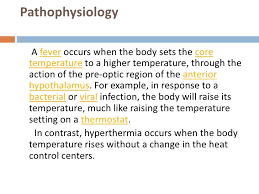
A fever occurs when the body sets the core temperature to a higher temperature , through the action of the pre-optic region of the anterior hypothalamus. For example, in response to a bacterial or viral infection, the body will purposely raise its temperature so the white blood cells can function at optimal in killing the invaders. The body declares WAR! So the high temperature. After the victory, white blood cells production reduced, so is the core temperature. Back to normalcy, 37° C.


Sunday, January 8, 2017

The Hidden Messages in Water

The Hidden Messages in Water

By Masaru Emoto


As the temperature of frozen water rises and the ice starts to melt, crystals emerge for just twenty or thirty seconds.

I take photographs of these crystals, and they have proved to be extremely eloquent, expressing a profound philosophy. The truths of the cosmos take shape and become visible in these crystals, if only for a few moments. This short window of time gives us a glimpse into a world that is indeed magical.

How I take photographs of crystals

Let me explain how I go about taking photographs of crystals.

I put fifty different types of water in fifty different Petri dishes. I then freeze the dishes at –20 degrees C (–4 degrees F) for three hours in a freezer. The result is that the surface tension forms drops of ice in the Petri dishes about one millimetre across. The crystal appears when you shine a light on the crown of the drop of ice.

Of course, the result is never fifty similar crystals, and sometimes no crystals at all are formed. When we graphed the formation of the crystals, we realized that different water formed different crystals. Some of them were clearly similar, some were deformed, and in some types of water, no crystals at all formed.

First I looked at the crystals of tap water from different locations. The water of Tokyo was a disaster – not a single complete crystal was formed. Tap water includes a dose of chlorine used to sanitize it, utterly destroying the structure found in natural water.

However, within natural water, no matter where it came from – natural springs, underground rivers, glaciers, and the upper reaches of rivers – complete crystals formed.

The effects of music on water

My efforts to photograph ice crystals and conduct research began to move ahead. Then one day the researcher – who was as caught up in the project as I – said something completely out of the blue: ‘Let’s see what happens when we expose the water to music.

I knew that it was possible for the vibrations of music to have an effect on the water. I myself enjoy music immensely, and as a child had even had hopes of becoming a professional musician, and so I was all in favour of this off-the-wall experiment.

At first we had no idea what music we would use and under what conditions we would conduct the experiment. But after considerable trial and error, we reached the conclusion that the best method was probably the simplest – put a bottle of water on a table between two speakers and expose it to a volume at which a person might normally listen to music. We would also need to use the same water that we had used in previous experiments.

We first tried distilled water from a drugstore.

The results astounded us. Beethoven’s Pastoral Symphony, with its bright and clear tones, resulted in beautiful and well-formed crystals. Mozart’s 40th Symphony, a graceful prayer to beauty, created crystals that were delicate and elegant. And the crystals formed by exposure to Chopin’s Etude in E, Op. 10, No. 3, surprised us with their lovely detail.

All the classical music that we exposed the water to resulted in well-formed crystals with distinct characteristics. In contrast, the water exposed to violent heavy-metal music resulted in fragmented and malformed crystals at best.

Can words affect water, too?

But our experimenting didn’t stop there. We next thought about what would happen if we wrote words or phrases like ‘Thank you’ and ‘Fool’ on pieces of paper, and wrapped the paper around the bottles of water with the words facing in. It didn’t seem logical for water to ‘read’ the writing, understand the meaning, and change its form accordingly. But I knew from the experiment with music that strange things could happen. We felt as if we were explorers setting out on a journey through an unmapped jungle.

The results of the experiments didn’t disappoint us. Water exposed to ‘Thank you’ formed beautiful hexagonal crystals, but water exposed to the word ‘Fool’ produced crystals similar to the water exposed to heavy-metal music, malformed and fragmented.

Further experimenting showed that water exposed to positive expressions like ‘Let's do it!’ created attractive, well-formed crystals, but the water exposed to negative expressions like ‘Do it!’ barely formed any crystals at all.

The lesson that we can learn from this experiment has to do with the power of words. The vibration of good words has a positive effect on our world, whereas the vibration from negative words has the power to destroy.

The power of love and gratitude

I particularly remember one photograph. It was the most beautiful and delicate crystal that I had so far seen – formed by being exposed to the words ‘love and gratitude’. It was as if the water had rejoiced and celebrated by creating a flower in bloom. It was so beautiful that I can say that it actually changed my life from that moment on, for water had taught me the delicacy of the human soul, and the impact that love and gratitude can have on the world.

I realised that the condition of our soul is very likely to have an enormous impact on the water that composes as much as 70 per cent of our bodies. This impact, in turn, will in no small way affect our health and state of mind. Therefore, if the keynote of our soul is love and gratitude, surely this will enable us to become the most beautiful we can be? Indeed, could it be that the salvation of our souls, our health and our world lies first and foremost in love and gratitude?

Increasing our immunity

Among all the medicines, there are none with as much healing power as love. Since I came to this realization, I have continued to tell people that immunity is love. What could be more effective at overcoming negative energies and returning vitality to the body?

However, I have recently felt the need to change my terminology. I now know that it is not love alone that forms immunity, but love and gratitude. I became convinced of this from the following experiment.

I heated water in a microwave oven and then attempted to see the impact of the magnetic field on crystals. I used two types of distilled water: one just as it was and the other labelled with the words love and gratitude. The crystals formed from the distilled water just as it was were deformed and incomplete, but the water labelled with the words love and gratitude formed complete crystals. In other words, love and gratitude were able to make the water immune to the damaging effects of the magnetic field.

I have mentioned that water shown the words love and gratitude forms the most beautiful crystals. Of course the word love alone has the ability to create wonderful crystals, but love and gratitude combine to give the crystals a unique depth and refinement, a diamond-like brilliance.

I also discovered that the love and gratitude crystals actually look more like the gratitude crystals than the love crystals. What this suggests is that the gratitude vibration is more powerful and has a greater influence. Love tends to be a more active energy, the act of giving oneself unconditionally. By contrast, gratitude is a more passive energy, a feeling that results from having been given something – knowing that you have been given the gift of life and reaching out to receive it joyously with both hands.

So then what does it mean to say that the passive energy of gratitude is stronger than love? When I was thinking about this question, I stumbled upon an interesting concept, which became an important clue to answering the question concerning how we can and should live our lives.

The need for more gratitude

What is the relationship between love and gratitude? For an answer to this question we can use water as a model. A water molecule consists of two hydrogen atoms and one oxygen atom, represented by H2O. If love and gratitude, like oxygen and hydrogen, were linked together in a ratio of 1 to 2, gratitude would be twice as large as love.

I suggest that having twice the amount of gratitude as love is the balance we should strive for. At a seminar, after I had mentioned this in my presentation, two young women came up to me and said, ‘We were very impressed. Weren't you saying that people have one mouth for speaking and two ears for listening?’

‘That’s right – that’s absolutely right!’ I exclaimed, and I knew that I had become a little wiser.

When we observe the natural world, we can see that the passive energy has greater strength. The fish of the sea produce enormous numbers of eggs, but not all of them hatch. Only a small portion reach the stage where they hatch, while the remaining eggs are offered as food to other creatures.

Have human beings lived in a ratio of two parts gratitude and one part love? I suspect that the exact opposite is true.

Of course, the grandeur of love cannot be denied, and most people do have a general understanding of the power of love. However, we have been raised in a culture where all our focus is placed on the energy of love, while the other side of the formula receives little attention.

The focus of the human race has been drawn away from that which cannot be seen, and towards the obvious physical world. And in order to make our own as much as possible of this physical world, we have cut down forests and fought back deserts in an effort to insure the supreme domination of our culture.

Such advancements by human society may indeed be the result of love – for our families and our countries – but as long as we continue to live our lives based on this strategy, there will be no end to conflict. The history of the twentieth century was the history of fighting and warfare.

Perhaps we are finally beginning to see that the direction we are moving in leads nowhere. We have sacrificed too much in order to secure the riches of life. Forests have been destroyed and clean water lost, and we have cut up and sold the earth itself.

What the world needs now is gratitude. We must begin by learning what it means to have enough. We need to feel gratitude for having been born on a planet so rich in nature, and gratitude for the water that makes our life possible. Do we really know how wonderful it is to be able to breathe a big breath of clean air?

If you open your eyes, you will see that the world is full of so much that deserves your gratitude.

When you have become the embodiment of gratitude, think about how pure the water that fills your body will be. When this happens, you yourself will be a beautiful, shining crystal of light.

From The Hidden Messages in Water by Masaru Emoto

 http://www.creatingconsciouslhttp://www.creatingconsciously.com/books/emotowaterbook.pdfy.com/books/emotowaterbook.pdf

Tuesday, November 15, 2016

The Aging Process. - 2

Cardiovascular Effects of Aging
   
Aging brings on increased stiffness of the chest wall, diminished blood flow through the lungs, and a reduction in the strength of your heartbeat. (In fact, maximum heart rate per minute declines with each year and can be estimated by subtracting your age from 220.) Don't worry too much about this, though. Your heart pumps more blood per beat to compensate for a diminishing heart rate.
Older people take longer to recover from stress, a shock, or surprise. After exertion, such as exercise, more time passes before your body returns to its resting heart rate and blood pressure. Older people often feel colder than their younger counterparts, largely due to diminished circulation. Blood vessels change, too. Artery walls slowly thicken and become less elastic, increasing their vulnerability to normal wear and tear.

While arterial thickening is considered normal, it may predispose you to the buildup of plaque inside your arteries. Plaque restricts the flow of blood to the heart and the brain, which can lead to heart attack or stroke.
Plaque buildup increases with age but is exacerbated by elevated total cholesterol levels and by elevated LDL (low density lipoproteins, the "bad" cholesterol) levels in the blood. A diet rich in saturated fat and cholesterol and low in fiber coupled with a sedentary lifestyle contribute to high blood levels of total cholesterol and LDL cholesterol.
Until about age 50, men have higher blood cholesterol concentrations than women. That's thought to be the result of the protective function of estrogen, a female hormone that helps keep blood cholesterol levels in check. Even when estrogen levels fall and blood cholesterol levels rise after menopause, women still run a lower risk of heart attack and stroke from clogged arteries than their male peers.
Because they haven't been suffering from the same damaging high cholesterol levels as men, women suffer from heart attack and stroke an average of ten years later in life than men. But once menopause starts, a woman's risk for heart attack and stroke rises steadily with each passing year. Between 40 and 50 percent of people over the age of 65 have high blood pressure, yet scientists are not sure why.
In about 95 percent of the cases the cause remains a mystery. The decreased elasticity of the blood vessels as we age may be at least partially responsible for high blood pressure, but lifestyle may be equally, if not more, responsible. Studies show that less technologically advanced countries have virtually no high blood pressure with advancing age, while industrialized nations such as the United States show a steady increase.
Why does it matter? Elevated blood pressure harms blood vessels. You may feel fine, but out-of-control blood pressure is an insidious condition that puts you at greater risk for stroke, heart disease, kidney failure, and other ailments.

Age and Body Temperature:
Not too hot, not too cold? As we age, we lose some of our ability to regulate body temperature. A room that has a twenty-year-old running for a heavy sweater or sweating buckets may feel perfectly comfortable to a grandparent. Physical changes discussed earlier, such as loss of muscle, as well as reduced energy production, are partially responsible for decreased perception of cold.
In addition, blood vessels in the skin do not have the same youthful ability to constrict in order to conserve heat, and you may not be able to shiver, which is heat-producing.
Older people also lack the ability to dissipate normal body heat, and because of a decreased sense of thirst, they are more likely to be suffering from a lack of fluid. Thyroid disease, which is increasingly prevalent in older adults, can also be responsible for thermal insensitivity.
All these changes make older people more susceptible to both hypothermia, a condition in which body temperature dips below 96 degrees Fahrenheit, and heatstroke. Both conditions are life-threatening.
People age 75 and older are five times more likely to die of hypothermia than young people. Symptoms of hypothermia include sleepiness or confusion; leg or arm stiffness; slow, slurred speech; and low pulse rate. ]

Gastronomical Effects of Aging
  
You may not think of your mouth as being part of the gastrointestinal system, but in fact, it's the very starting point of the process by which you digest foods and absorb nutrients. As you age, chewing can become more difficult, you may chew more slowly, and you may not chew your food as efficiently. That's especially true if you have dentures or poor dentition.
Chewing is important, though, because it breaks down food so that stomach acid and intestinal enzymes can better attack it, digesting it to its smallest components to be absorbed by the intestine. When you swallow larger pieces of food, it takes about 50 to 100 percent longer for it to make its way to your stomach because your esophagus, the pipe that connects your mouth with your stomach, doesn't contract as forcefully as it did when you were younger.

As a result, you are also more vulnerable to choking. Slowing down and chewing food thoroughly will help you make the most out of your eating experience and help eliminate some of the problems caused by gulping larger chunks of food. As many as 30 percent of Americans over the age of 60 do not produce enough stomach acid because of two conditions: hypotrophic gastritis (reduced production of stomach acid) or atrophic gastritis (the absence of stomach acid).
You may not feel either of these conditions, but their effects are real. Too little stomach acid results in faulty vitamin B12 absorption. A deficiency of vitamin B12 in your bloodstream and tissues can lead to pernicious anemia and irreversible nervous-system impairment and may contribute to high levels of homocysteine in your blood. High homocysteine is one of the risk factors for heart disease.
People over age 60 have a greater risk of developing gallstones, perhaps because of the narrowing of the bile duct at the opening of the intestine. A high fat diet also puts you at greater risk. When you digest fat you need bile, a substance made by the liver and stored in the gallbladder. Gallstones form when liquid stored in the gallbladder hardens into rock-hard material.
As you get older, you produce less lactase, the digestive enzyme that breaks down the carbohydrate in dairy products known as lactose. It's difficult to pinpoint how many older people can't tolerate the likes of milk, cheese, and ice cream. But if you have bloating and discomfort beginning within hours of eating dairy products, you probably have some diminished tolerance for lactose.
Lactose intolerance is individual. That's why you may be able to tolerate some dairy products and not others. For example, many people with lactose intolerance can eat yogurt, which is lower in lactose than a glass of milk. In addition, consuming milk or other dairy products with food helps to decrease the effects of lactose intolerance, as does consuming smaller amounts at a time.
As you get older, your gut -- particularly your colon -- may become sluggish and less toned. One in three people age 60 or older have diverticula, which are outpouchings in the lining of the large intestine. These pouches are the result of increased pressure within the intestine caused by decreased muscle tone. In addition, when your gut gets sluggish, you become more vulnerable to constipation.
Your liver is your largest internal organ, weighing in at about three pounds. But it gets smaller with time, beginning around age 50. The liver's shrinkage begins at the same time that body weight and muscle mass start their decline. However, in the very old, the liver becomes disproportionately small. Having less liver tissue and decreased blood flow to this organ means that your body may handle certain medications differently.
That's why the older you get, the more often you and your doctor should evaluate the effect of all of the medications you take and discuss your alcohol intake.
You can't live without it, but you probably know little about why your liver is so important. The liver:
  • makes bile, which helps you digest fat
  • helps determine the amount of nutrients that are sent to the rest of your body
  • stores glycogen, a complex carbohydrate that is converted to sugar and released into the bloodstream, providing fuel for your body when your blood sugar level falls
  • synthesizes many proteins
  • processes drugs that have been absorbed by the digestive tract into easy-to-use forms for the body
  • detoxifies and gets rid of substances that would otherwise be poisonous, such as the waste products from the breakdown of medications and alcoh
With time, you may become infected with Helicobacter pylori (H. pylori) -- a pesky bacteria that hitches a ride on the stomach lining and is the cause of nearly all ulcers. Ulcers are sores or holes in the lining of the stomach or duodenum, a part of the small intestine. They cause pain when the stomach is empty, such as between meals and in the wee hours of the morning, but irritation can come at any time.
Sometimes the pain lasts for minutes; other times it hangs around for hours. Eating or taking antacids may relieve your distress, but only temporarily. H. Pylori infects about 60 percent of American adults by age 60, but infection with the bacterium does not necessarily mean you will develop an ulcer.
However, the presence of H. Pylori does increase your chances because it weakens the protective mucous coating in the digestive tract and makes it vulnerable to the corrosive effects of stomach acid. H. pylori infection is easily cured with antibiotics, sometimes in combination with acid-suppressing medication to alleviate the symptoms and heal the ulcer.
How will you know if H. pylori is plaguing you? Your health care provider can use any of the following tests to diagnose H. pylori infection:
  • Blood tests: A blood test can confirm H. pylori infection.
  • Breath tests: This involves drinking a harmless liquid and having a sample of your breath tested one hour later to detect H. pylori.
  • Endoscopy: A small tube with a camera inside is inserted through your mouth and into the stomach to look for ulcers. During this procedure, small samples of the stomach lining can be gathered for testing for H. pylori.
You've got two of them, and boy, are they a busy pair. All the blood in your body is constantly filtered by the kidneys, which determine the elements to keep and those to eliminate in urine. Without adequate kidney function, you would not be able to clear toxic byproducts of normal metabolism or those of medication breakdown.
Nor would you be able to regulate water balance and blood pressure. Functioning kidneys actually participate in bone health, too, by finishing off vitamin D production that begins in the skin and by regulating calcium and phosphorus loss in urine.
When you're born, each kidney tips the scale at a shade more than 1.5 ounces. As you grow, so do they -- to about nine ounces a piece. But as you age, they begin to decrease in size. By your eighties, they've shrunk to about six ounces each. Kidneys also gradually become less efficient at filtering your blood and making urine, beginning around age 30. And as you get on, less blood makes it to the kidneys.
While scientists agree that kidney function drops off with age, they can't agree on why. It could be that you lose nephrons, or kidney cells, and this decreases the organs' capabilities. Some say that undetected infection, injury, and medication reactions and a decrease in blood flow caused by vascular disease may be the reason that kidney function flounders.
Whatever the cause, you can preserve kidney function by drinking plenty of fluids; controlling cardiovascular disease, including high blood pressure, as much as possible; and keeping blood glucose levels in check, especially if you have been diagnosed with diabetes. Chronically high blood glucose destroys the tiny blood vessels that supply the kidneys, causing cell damage and death.
Now that you've digested a hearty amount of information about the gastronomical effects of aging, it's time to learn about the immunological effects of aging. Continue to the next post to find out more.