Tuesday, October 31, 2017

Chapter 5 -How do I detect the occurrence of Jin-Suo?


If your body manifests one or several of the following eight symptoms, then you are suffering from Jin-Suo:

[Test 1] Ability to squat
Do you find it increasingly difficult?
One way to tell is to try using a squat toilet.


[Test 2] Can you lift your legs with ease? Remember climbing stairs in strides? Do you find it increasingly difficult?


[Test 3] Can you bend from the waist effortlessly? Each time, bending becomes increasingly
difficult for you and you might easily
end up with twists and sprains.


[Test 4] Is your one leg longer or shorter than the other? “How come I never realized it?

[Test 5] Can you stretch your legs in a seated position (assuming a horse stance)? “Why can’t I stretch out as wide as others?”

[Test 6] Can you walk or run in long strides? If you can only take small steps, then it’s time to take note.

[Test 7] Can you stretch and bend the arms? Try holding the rings on a bus or train.

[Test 8] Can you turn your body easily? “Ah, it is not because I am fat,
but because I’ve got
Jin-Suo?” 

Chapter 5. Lajin Self-Healing Method


La: To stretch.

Jin: A Chinese medical term similar to tendons and ligaments.


Lajin: To stretch and to restore functions of the Jin where Jin-Suo has occurred, so as to self heal, restore health and prevent aging.


Jin-Suo: Contraction or degeneration of the functions of the Jin, which is the major contributor to aging and most disorders. 


Image result for Participants at a workshop doing Paida and Lajin


Participants at a workshop doing Paida and Lajin ↖

Image result for Participants at a workshop doing Paida and Lajin

What are the diagnostic and self-healing properties of Lajin?


In addition to its therapeutic functions, Lajin can also help in diagnosis. Physical illnesses can be diagnosed from the Lajin posture and self-healed in the course of Lajin practice.  


Take the following for instance:

1. If there is knee pain and the knees cannot be straightened, these are symptoms of Jin-Suo (contraction of tendons). This indicates that the Liver Meridian (the energy channel related to liver) is blocked, because liver governs the Jin (tendons). Obstructed Liver Meridian will certainly affect the stomach and the spleen. This is because the liver (which has the properties of wood, according to Chinese Wu Xing theory) negatively impacts the spleen (which has the properties of earth).

Lajin is both an accurate "physical check-up" and precise self-healing in action.


2. If there is pain in the back of the knees, it indicates that the Urinary Bladder Meridian is blocked, and the lower back has problems, which may be caused by lumbar vertebrae and/or kidney malfunction, or both. This is because the functions of the urinary bladder and the kidney are closely related — both with the properties of water — and one organ cannot stay healthy if the other is not. Diseases caused by Urinary Bladder Meridian blockages include edema, obesity, frequent urination, diabetes, and so on.


3. During Lajin in reclining position, if the raised hands and arms cannot reach the surface of the bench, this may indicate risks of frozen shoulder, and it contributes to diseases of the heart, lung, head, five sense organs (ears, eyes, lips, nose and tongue) and breasts. 


 4. If the raised leg cannot stretch straight and the lowered leg hangs in the air without touching the ground, it suggests that the Jin-Suo (contraction of tendons) is severe, the Liver, Spleen and Kidney Meridians are blocked, and that there is lower back and knee pain, and even numerous problems with vital organs of the body. Women with these symptoms may have gynecological disorders, whereas men may have prostate problems. 
 

Image result for Participants at a workshop doing Paida and Lajin


Image result for Signs of Jin-Suo Tendons contraction

DIY lajin at home with chairs at door frame ↖


Lajin or tendons stretching is a simple and effective self-healing method. It is both an accurate "physical check-up" and precise self-healing in action. When practiced correctly, it can help enhance overall health and promote longevity by cleansing vital energy channels (meridians) in the body, thus enabling smooth Qi and blood flow. This in turn improves various conditions, acute or chronic such as high blood pressure, diabetes, gynaecological and prostate disorders, dislocations as well as pains caused by Jin-Suo


Chapter 4 -How to Paida properly?


How to Paida properly?


1. Paida attentively: Concentration and faith will activate the vital energy in the body. You should firmly believe that you are your own best doctor and that you can self heal. While doing Paida, you can imagine that you are injecting fresh Qi into the body and bringing out the dirty Qi. Distracting, negative thoughts could bring negative effects.

2. Paida with solid slaps: If you feel the pain of Paida, it means you are on the right path. Your health problems will gradually go away with persistent Paida.

3. Make good use of your palm and fingers: When Paida a large area such as the front of the knees, use both palm and fingers. If the area is relatively small, such as the back of the knees, you could mainly use the fingers with agile movement of the wrist.

4. Paida with force, as long as you can stand the pain: Paida can be very painful in the beginning, but the pain usually subsides after a few minutes.

5. Better recite or chant scriptures during Paida: Reciting scriptures will bring better result. You may choose your favourite ones. "I am sorry", "Please forgive me", "Thank you", "I love you"

6. Use your fists to avoid too much noise of Paida.

Basic Principles of Paida

High intensity + long duration + high frequency = 
speedy improvement.

 Lower intensity + shorter duration + lower frequency = slower improvement.

 No Paida = no improvement

Principle of Sha Treatment

Sha, i.e. poisoned blood in the body, is the colourful thing under the skin that appears during Paida.


When Sha appears, the body’s self-healing power is at work. So, continue Paida until it goes away.

Duration and Frequency of Paida
1. Paida can be done at any time of a day. You can make it your lifelong habit, and Paida in the 
mornings and evenings, or in the mornings, afternoons and evenings. 


2. Due to different Paida intensity and people’s particular physical conditions, there is no fixed time length for when the Sha appears and disappears. Therefore, as with Lajin, the duration and frequency of Paida vary from person to person. Children, the elderly, the frail, and the severely sick are advised to Paida in the top-down sequence.

3. For overall health improvement, you can Paida from head to foot for 15-20 minutes at a time, at least once or twice a day (particularly the head, shoulders, armpits, elbows and knees for 1-5 minutes each).

Those in sub-healthconditions can Paida the “problem areas” for a longer time besides Paida the parts mentioned above. Generally, the duration should be between 5-30 minutes, and you can do it once, twic e, or more times a day.

For those with severe health problems, Paida duration should be extended to no less than one hour. After Sha appears, Paida should be continued. The body will finish the elimination of toxicants and waste as Sha disappears. That’s the secret of the magic efficacies of Paida.

4. Those who feel under the weatheror have obvious symptoms are advised to Paida the “problem areas” for at least half an hour each time. For example, those with knee pains, frozen shoulder, neck problems, headache or sleeping disorders can Paida the knees and elbows at least once or twice a day.

5. Those with severe health problems, such as inability to lift the shoulders or walk, or those diagnosed with psoriasis, heart problems, high blood pressure, diabetes or cancer are advised to Paida top-down with the focus on the elbows, hands, knees, feet and the “problem areas”. Do it for at least one hour and at least three times a day. Duration of each Paida session can be reduced when the symptoms are relieved.

6. One Paida session can be divided into several, with each session focusing on one particular part of the body.

7. After several rounds of Paida, it is not as easy to have Sha as before. Whether Sha appears or not, Paida can be a daily exercise for both the sick and the healthy. Persistent Paida helps enhance circulation of blood, keep you fit and even cure pains and diseases.

A Few Things to Note about Paida

1. Avoid directing an electric fan or air conditioner at yourself during Paida, so as not to catch cold 
and chills via your open pores.

2. Drink warm water before and after
Paida. Warm ginger and date soup is recommended. (Boil 
ginger slices and red dates for 15-20 minutes. You may add some brown sugar.) In addition to helping you stay hydrated, this will also prevent dizziness, fatigue and boost metabolism.


3. Avoid showers or baths within one hour after Paida. After one hour, be sure to shower or bathe with warm water and not cold water. On a cold day, it is best to avoid showering after Paida.

4. Those with skin diseases (such as psoriasis) are advised to do prolonged, heavy Paida for best effect. Secretion of liquid(s) is a sign of its effectiveness, so it is important to continue Paida. Do not Paida open wounds.

5. People with diabetes are less tolerant of the pain of Paida, so Paida lightly in the beginning and gradually increase intensity. Those with varicose veins and edema in the legs are advised to Paida in an upward direction to improve blood circulation.

6. When Sha appears, it is important to continue Paida to speed up the elimination of toxins from the body. Reactions such as rashes usually go away in a few days this is normally so for those with good physical conditions such as children, young and healthy people. The elderly and the severely sick usually experience recovery reactions for a longer period of time.

I have a health problem, which body parts should I Paida?
Whatever your health problem is, you are advised to start with these body parts: elbows, hands, knees and feet. Then you can Paida your head, shoulders, arms, legs, armpits and the base of your thighs. Be sure to Paida all around these parts for 15 minutes or more each.

After Paida these parts, find your “problem areas:

1. Conditions of the head and diseases of the five senses such as facial paralysis, headaches, dizziness, cold, stroke, insomnia, etc.: Paida the head and face.


2. Neck, shoulder and various joint problems such as neck and shoulder stiffness, inflammation of the joints, arthritis, and neck pain: Paida shoulders, elbows, wrists, hips, knees, ankles, etc. Those who do not have the necessary strength for Paida can ask others for help, as these areas are far from vital organs and require heavy Paida for best effects.

3. Conditions of the heart, lungs, mammary and thyroid glands: Paida inner wrist joints, armpits, and areas below and around the collarbone.

4. Various gynaecological conditions such as ovarian cysts, cervical tumours, fibroids, endometriosis; men’s conditions such as prostate problems, impotence, early ejaculation; conditions of the reproductive and urinary systems, etc.: Paida the base of your thighs where there is a concentration of toxins as well as vital energy, veins, nerves and lymph glands. Please
also Paida the inner sides of the legs and the abdomen.

5. Old injuries like sprains, twists and sports injuries, etc.: Paida the afflicted areas, scarred areas and surgery incision areas. Take special care and ensure longer duration. Slap for 20 minutes or more for best effects.

6. Various itches: Paida afflicted areas, inner wrist joints and knees. Stand up and slap both sides of thighs.

7. Those with piles, constipation, water retention, gastro-intestinal problems: Paida the abdomen, all around knees, inner thighs, base of thighs and overweight areas heavily for a long time. You can also use your fists in these areas. Using hands to chop the base of thighs is another recommended method, as it is strong in intensity, yet does not produce much noise.

8. Acute problems can be treated by Paida vital acupoints, as per acupoints used in acupuncture: For example, acute heart problems, dizziness, fainting and drunkenness can be treated by Paida the inner sides of the elbows and the Neiguan acupoint heavily for 5-15 minutes; acute stomach pain can be alleviated by Paida the Zusanli acupoint heavily for 10-30 minutes.

Image result for Neiguan acupoint

Neiguan acupoint↖

Image result for Zusanli acupoint
Zusanli acupoint↖

9. All Paida methods can be practiced in combination with Lajin for better effects.
page28image11920

Chapter 4. Paida Self-Healing Method


My Health, I Manage!
E-Tao Paida & Lajin Self-Healing

Chapter IV Paida Self-Healing Method

Pai: To pat

Da: To slap

Paida: To pat and slap body parts to draw out and expel poisonous waste in the body and to restore health by facilitating smooth Qi flow in the body’s energy channels (meridians).


Sha: “poisoned blood” in the body. It is a word unique to the Chinese language, and is used as an indicator for diagnosis and treatment of health problems.
沙:体内的“毒血”。
Shā: Tǐnèi de “dú xiě”.
Sha: “poisoned blood” in the body. 

Qi: Invisible vital energy that flows in the body. 


Image result for Sha at the back of the knees

Image result for paida the knees


Sha at the back of the knees ⇧ after Paida


Paida was first practiced by ancient Taoists to “treat old injuries”. It activates the body’s inherent self-healing power to clear vital energy channels (meridians), thus removing stagnant energy and toxins, curing pains and diseases, and improving health.

Paida = Elimination of Poisonous Waste in the Body

Paida is a unique self-healing method which combines Taoist and Buddhist practices and methods of Classical Chinese Medicine (CCM). The key to its success lies in one’s positivity and concentration when practicing Paida by oneself or for others, and the intensity and duration of such practice.

page23image11016

Sequence of Paida
Generally speaking, you can Paida in the following top-down sequence:


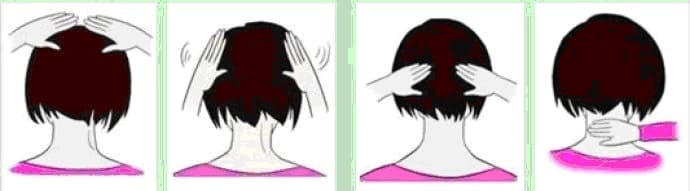
Image result for Paida the top of the head

Step 1: Paida the head⇩
Image result for Paida the top of the head


Paida the top of the head with one hand↑


Image result for Paida the sides of the head with two hands

Paida the sides of the head with both hands↖

Image result for Paida the top of the head
Paida the back of the head with both hands↖

Image result for Paida the back the head with one hands
Paida the back of the neck with one hand ↖


Step 2: Paida the shoulders

Image result for Paida the back the head with one hands


Paida the right side with left hand, and vice versa. Remember to pat all around the shoulders. ↖


Step 3: Paida both armpits⇩

Image result for Paida the back the head with one hands


Those  people with heart, lung and breast problems should pat the armpits more often. ↖


Step 4: Paida the inner sides of the elbow joints⇩


Image result for Paida the back the head with one hands


This covers all the energy channels (meridians) on the inner sides of the elbow joints, i.e. Heart Meridian on the innermost side, Lung Meridian and Large Intestine Meridian at the rim of the outer side, as well as the Pericardium Meridian in the middle. ↖


Step 5: Paida the knees⇩

Image result for Paida the back the head with one hands
Paida the front of the knees with both hands and make sure that the knee is covered by the entire palm. Then Paida the inner sides, outer sides and the back of the knees. This improves all foot and leg problems, including pain, numbness and swelling. When combined with Lajin, it will bring better efficacies. 


Step 6: Paida the feet⇩

Image result for Paida the back the head with one hands
Paida the arches, insteps, ankles and surrounding areas heavily. This not only helps cure foot diseases, but also brings good curative effects for all diseases of internal organs. ↖


Step 7: Paida any body parts where needed
After going through all the six steps, you may Paida any body parts according to your particular condition. 


Image result for Paida any body parts

Related image

Image result for Paida any body parts

Image result for Paida any body parts

Image result for Paida any body parts

Image result for Paida any body parts

Related image

Image result for Paida any body parts