Showing posts with label method. Show all posts

Tuesday, October 31, 2017

Chapter 5. Lajin Self-Healing Method


La: To stretch.

Jin: A Chinese medical term similar to tendons and ligaments.


Lajin: To stretch and to restore functions of the Jin where Jin-Suo has occurred, so as to self heal, restore health and prevent aging.


Jin-Suo: Contraction or degeneration of the functions of the Jin, which is the major contributor to aging and most disorders. 


Image result for Participants at a workshop doing Paida and Lajin


Participants at a workshop doing Paida and Lajin ↖
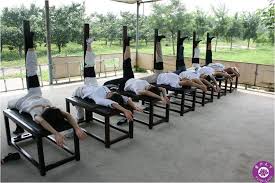
Image result for Participants at a workshop doing Paida and Lajin

What are the diagnostic and self-healing properties of Lajin?


In addition to its therapeutic functions, Lajin can also help in diagnosis. Physical illnesses can be diagnosed from the Lajin posture and self-healed in the course of Lajin practice.  


Take the following for instance:

1. If there is knee pain and the knees cannot be straightened, these are symptoms of Jin-Suo (contraction of tendons). This indicates that the Liver Meridian (the energy channel related to liver) is blocked, because liver governs the Jin (tendons). Obstructed Liver Meridian will certainly affect the stomach and the spleen. This is because the liver (which has the properties of wood, according to Chinese Wu Xing theory) negatively impacts the spleen (which has the properties of earth).

Lajin is both an accurate "physical check-up" and precise self-healing in action.


2. If there is pain in the back of the knees, it indicates that the Urinary Bladder Meridian is blocked, and the lower back has problems, which may be caused by lumbar vertebrae and/or kidney malfunction, or both. This is because the functions of the urinary bladder and the kidney are closely related — both with the properties of water — and one organ cannot stay healthy if the other is not. Diseases caused by Urinary Bladder Meridian blockages include edema, obesity, frequent urination, diabetes, and so on.


3. During Lajin in reclining position, if the raised hands and arms cannot reach the surface of the bench, this may indicate risks of frozen shoulder, and it contributes to diseases of the heart, lung, head, five sense organs (ears, eyes, lips, nose and tongue) and breasts. 


 4. If the raised leg cannot stretch straight and the lowered leg hangs in the air without touching the ground, it suggests that the Jin-Suo (contraction of tendons) is severe, the Liver, Spleen and Kidney Meridians are blocked, and that there is lower back and knee pain, and even numerous problems with vital organs of the body. Women with these symptoms may have gynecological disorders, whereas men may have prostate problems. 
 

Image result for Participants at a workshop doing Paida and Lajin


Image result for Signs of Jin-Suo Tendons contraction

DIY lajin at home with chairs at door frame ↖


Lajin or tendons stretching is a simple and effective self-healing method. It is both an accurate "physical check-up" and precise self-healing in action. When practiced correctly, it can help enhance overall health and promote longevity by cleansing vital energy channels (meridians) in the body, thus enabling smooth Qi and blood flow. This in turn improves various conditions, acute or chronic such as high blood pressure, diabetes, gynaecological and prostate disorders, dislocations as well as pains caused by Jin-Suo


Chapter 4. Paida Self-Healing Method


My Health, I Manage!
E-Tao Paida & Lajin Self-Healing

Chapter IV Paida Self-Healing Method

Pai: To pat

Da: To slap

Paida: To pat and slap body parts to draw out and expel poisonous waste in the body and to restore health by facilitating smooth Qi flow in the body’s energy channels (meridians).


Sha: “poisoned blood” in the body. It is a word unique to the Chinese language, and is used as an indicator for diagnosis and treatment of health problems.
沙:体内的“毒血”。
Shā: Tǐnèi de “dú xiě”.
Sha: “poisoned blood” in the body. 

Qi: Invisible vital energy that flows in the body. 


Image result for Sha at the back of the knees

Image result for paida the knees


Sha at the back of the knees ⇧ after Paida


Paida was first practiced by ancient Taoists to “treat old injuries”. It activates the body’s inherent self-healing power to clear vital energy channels (meridians), thus removing stagnant energy and toxins, curing pains and diseases, and improving health.

Paida = Elimination of Poisonous Waste in the Body

Paida is a unique self-healing method which combines Taoist and Buddhist practices and methods of Classical Chinese Medicine (CCM). The key to its success lies in one’s positivity and concentration when practicing Paida by oneself or for others, and the intensity and duration of such practice.

page23image11016

Sequence of Paida
Generally speaking, you can Paida in the following top-down sequence:


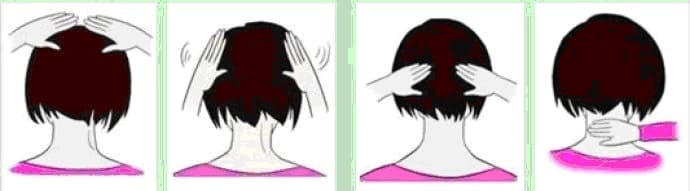
Image result for Paida the top of the head

Step 1: Paida the head⇩
Image result for Paida the top of the head


Paida the top of the head with one hand↑


Image result for Paida the sides of the head with two hands

Paida the sides of the head with both hands↖

Image result for Paida the top of the head
Paida the back of the head with both hands↖

Image result for Paida the back the head with one hands
Paida the back of the neck with one hand ↖


Step 2: Paida the shoulders

Image result for Paida the back the head with one hands


Paida the right side with left hand, and vice versa. Remember to pat all around the shoulders. ↖


Step 3: Paida both armpits⇩

Image result for Paida the back the head with one hands


Those  people with heart, lung and breast problems should pat the armpits more often. ↖


Step 4: Paida the inner sides of the elbow joints⇩


Image result for Paida the back the head with one hands


This covers all the energy channels (meridians) on the inner sides of the elbow joints, i.e. Heart Meridian on the innermost side, Lung Meridian and Large Intestine Meridian at the rim of the outer side, as well as the Pericardium Meridian in the middle. ↖


Step 5: Paida the knees⇩

Image result for Paida the back the head with one hands
Paida the front of the knees with both hands and make sure that the knee is covered by the entire palm. Then Paida the inner sides, outer sides and the back of the knees. This improves all foot and leg problems, including pain, numbness and swelling. When combined with Lajin, it will bring better efficacies. 


Step 6: Paida the feet⇩

Image result for Paida the back the head with one hands
Paida the arches, insteps, ankles and surrounding areas heavily. This not only helps cure foot diseases, but also brings good curative effects for all diseases of internal organs. ↖


Step 7: Paida any body parts where needed
After going through all the six steps, you may Paida any body parts according to your particular condition. 


Image result for Paida any body parts

Related image

Image result for Paida any body parts

Image result for Paida any body parts

Image result for Paida any body parts

Image result for Paida any body parts

Related image

Image result for Paida any body parts