Showing posts with label healing. Show all posts

Tuesday, October 31, 2017

Chapter 4. Paida Self-Healing Method


My Health, I Manage!
E-Tao Paida & Lajin Self-Healing

Chapter IV Paida Self-Healing Method

Pai: To pat

Da: To slap

Paida: To pat and slap body parts to draw out and expel poisonous waste in the body and to restore health by facilitating smooth Qi flow in the body’s energy channels (meridians).


Sha: “poisoned blood” in the body. It is a word unique to the Chinese language, and is used as an indicator for diagnosis and treatment of health problems.
沙:体内的“毒血”。
Shā: Tǐnèi de “dú xiě”.
Sha: “poisoned blood” in the body. 

Qi: Invisible vital energy that flows in the body. 


Image result for Sha at the back of the knees

Image result for paida the knees


Sha at the back of the knees ⇧ after Paida


Paida was first practiced by ancient Taoists to “treat old injuries”. It activates the body’s inherent self-healing power to clear vital energy channels (meridians), thus removing stagnant energy and toxins, curing pains and diseases, and improving health.

Paida = Elimination of Poisonous Waste in the Body

Paida is a unique self-healing method which combines Taoist and Buddhist practices and methods of Classical Chinese Medicine (CCM). The key to its success lies in one’s positivity and concentration when practicing Paida by oneself or for others, and the intensity and duration of such practice.

page23image11016

Sequence of Paida
Generally speaking, you can Paida in the following top-down sequence:
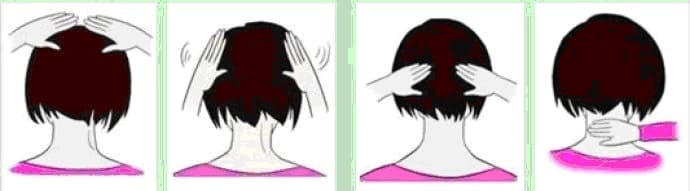

Image result for Paida the top of the head

Step 1: Paida the head⇩
Image result for Paida the top of the head


Paida the top of the head with one hand↑


Image result for Paida the sides of the head with two hands

Paida the sides of the head with both hands↖

Image result for Paida the top of the head
Paida the back of the head with both hands↖

Image result for Paida the back the head with one hands
Paida the back of the neck with one hand ↖


Step 2: Paida the shoulders

Image result for Paida the back the head with one hands


Paida the right side with left hand, and vice versa. Remember to pat all around the shoulders. ↖


Step 3: Paida both armpits⇩

Image result for Paida the back the head with one hands


Those  people with heart, lung and breast problems should pat the armpits more often. ↖


Step 4: Paida the inner sides of the elbow joints⇩


Image result for Paida the back the head with one hands


This covers all the energy channels (meridians) on the inner sides of the elbow joints, i.e. Heart Meridian on the innermost side, Lung Meridian and Large Intestine Meridian at the rim of the outer side, as well as the Pericardium Meridian in the middle. ↖


Step 5: Paida the knees⇩

Image result for Paida the back the head with one hands
Paida the front of the knees with both hands and make sure that the knee is covered by the entire palm. Then Paida the inner sides, outer sides and the back of the knees. This improves all foot and leg problems, including pain, numbness and swelling. When combined with Lajin, it will bring better efficacies. 


Step 6: Paida the feet⇩

Image result for Paida the back the head with one hands
Paida the arches, insteps, ankles and surrounding areas heavily. This not only helps cure foot diseases, but also brings good curative effects for all diseases of internal organs. ↖


Step 7: Paida any body parts where needed
After going through all the six steps, you may Paida any body parts according to your particular condition. 


Image result for Paida any body parts

Related image

Image result for Paida any body parts

Image result for Paida any body parts

Image result for Paida any body parts

Image result for Paida any body parts

Related image

Image result for Paida any body parts

Chapter 3 - The “pain medicine”


The “pain medicine” 


Nobody likes pain, but it is actually a super-medicine. Like diseases, it is a gift from nature. The “pain” here does not refer to the kind caused in accidents or fights, but the sensation felt when proactively practicing Paida and/or Lajin. Of the various recovery responses, pain is the most commonly experienced. Some may refuse to do Paida and Lajin because of the pain. Actually, it is precisely the reason that they should be practiced.

Pain is the secret weapon of their miraculous healing effects. The reasons are as follows:

Firstly, pain is a tool of precise diagnosis, just as an old saying goes, “where there are no blockages in the meridians, no pain will be felt.” Pain indicates the part of the body where an illness lies; and the intensity of pain indicates the severity of a disease. Patients with heart diseases or emotional problems are more afraid of pain than the average person. Heart diseases refer to disorders in the physical organ, the heart; whereas emotional problems refer to disorders of the intangible psyche, spirit, or mind. Heart diseases and emotional problems are interrelated and mutually influential; they are both manifestations of blockages in the Heart and Pericardium Meridians. If a part of the body where a meridian runs through is hurting, it signals that the corresponding organ is having problems.

“Pain” directly stimulates and opens up the heart, triggers willpower, and mobilizes yang-qi (right qi); it is a “medicine for the heart”. The heart, as sovereign of bodily organs, governs the spirit. It stimulates secretion of bio-chemicals that the body needs, i.e. “endogenous medicine”. Without pain, our self-healing power will not be activated, thus the endogenous medicine will not be produced. Our self-healing ability acts like a compound medicine, and pain is the catalyst that triggers generation of this endogenous medicine. Hence, pain is part of the process of producing endogenous medicine; it may even be an integral part of the medicine itself, i.e. the “pain medicine”. Moreover, pain is also the process of pinpointing the location of diseases so that further treatment can be carried out; it reveals its targets very clearly, i.e. at the area where the pain is felt. Hence, the “pain medicine” is a “precision medicine”; persistent pain means continuous treatment with precision medicine. Moreover, this pain is bearable; it can be self-regulated according to one’s condition and tolerance.

As the “pain medicine” is an “endogenous medicine” manifested as self-healing power, it is more accurate, symptomatic, eco-friendly and direct compared to medication. In Chinese medicine, self-healing power is referred to as yang-qi, or right qi; in Western medicine, it is referred to as immunity, repairing ability, hormones, insulin, stem cells, adrenaline, or enkephalin. With the advancement of medical science, new terms will be continually added to the list.

The degree of “pain” is proportionate to the efficacy of this “medicine”, i.e. the more hurting it is, the better the self-healing efficacy. During Paida and Lajin, when more pain is felt, yang-qi rises faster and the entire body immediately warms up and even starts to sweat. The time when most pain is felt is the time when yang-qi is conjured up the fastest; hence the best efficacy is gained. The Qi of diseases is yin-qi (evil qi); when it accumulates, more diseases will break out and life is shortened; on the contrary, when yang-qi is abundant, fewer diseases will break out and life is prolonged. When yang rises, yin will decline. Yang-qi is zheng-qi (or “right qi”), as described in Huang Di Nei Jing, “when zheng-qi is kept in, evils shall not enter”. This sentence sums up the true essence of Chinese medicine.

In case the pain becomes almost unbearable at the early stage of Paida and Lajin, the intensity can be reduced and the duration lengthened.

“Pain” makes us focused. We can experience the state of the body and soul becoming one, the state where giving and receiving is occurring in ourselves. Thus, pain is also a meditation method. During meditation, one may find it hard to concentrate. When you feel pain during Paida and/or Lajin, your mind is unprecedentedly focused; it is impossible at that moment to think about your children, the stock market or other matters. Your thoughts will focus on the part that hurts most, and that is almost invariably where the problems are. The ability to endure pain varies with changing state of mind, and it will be enhanced through continued Paida and Lajin. The ability to endure greater pain is a sign of better health.

“Pain” is our natural protection system that enables us to avoid danger; as such, the “pain medicine” is safer than medication. When the pain exceeds one’s endurance, one will instinctively stop using the “pain medicine”. Beginners, the seriously ill, and the elderly need not start Paida and/or Lajin with high intensity, they also should not anxiously try to gain significant efficacy at one go, but should instead take it one step at a time.

Our ability to endure pain will gradually improve with the increase in intensity and duration of Paida and Lajin. When the tolerance levels for the “pain medicine” and medication are compared, it is found that their effects on the human body are exactly opposite. Greater tolerance of the “pain medicine” indicates alleviation or curing of diseases, whereas greater tolerance of medication implies that the drug has become ineffective, or has even caused side effects.

The “pain medicine” is essentially a “medicine for the mind”; it is the result of interaction between the mind and the body. A person’s attitude towards pain is constantly changing; once you change your mindset and start to view pain as a proactive and positive therapy, you can instantly endure greater pain. Then, pain will no longer be an enemy or a devil, but instead a friend or an angel.

As smooth flowing meridians are considered a nourishing tonic to the body, and pain is the process of clearing meridians, thus the “pain medicine” is considered a tonic as well. 

Chapter 3 - Three stages of a healing crisis


Three stages of a healing crisis 


Generally, a healing crisis has the following three stages :

Looking for (potential) illnesses.
When Qi flow is hindered by greater resistance of blockages in the body and cannot go through a problem area, it will automatically find an alternative route to go around it. Such a process will repeatedly kick in when the Qi encounters other blockages at the alternative routes.

These continuous attempts can help the body clear up the less serious problems, while revealing more serious ones which the body has yet to gather enough strength to expel.

Revealing illnesses.
In the first stage, most of the meridians would have been cleansed. The Paida and Lajin self-healing process will enhance Qi flow in either parts of the body or the whole. This will enable the recharged body to focus on and clear the remaining identified problems. As a result, symptoms of various health problems will worsen, after which follows the revelation of all sorts of sicknesses.

This is the stage when the body is fighting against sicknesses, and it is also the most critical one. During this process, the body will get lousy, and the symptoms will aggravate. If you were to do a medical check-up then, the test results would most likely indicate a temporary state of abnormalities. That is why this stage is always dubbed as the “dà sǐ dà huó” (大死大活, death and revival) stage indeed, to some extent, this is the darkness before dawn breaks. Unfortunately, many fail to understand this healing cycle and give up on Paida and Lajin half way through. One must understand that without going through this dire state of suffering, it is impossible to embrace new lease of life, let alone the effects of “body overhaul” and “rejuvenation”.

Beating illnesses
After Qi’s repeated attempts to go through the problem areas and with greater intensity of Paida and Lajin, the body’s energy gets continually boosted. Under the constant pressure of stronger Qi flow, the problems (appearing in the form of Sha) will gradually recede and eventually disappear. At the same time, patients will feel their various sicknesses subsiding and eventually going away.

Clearing clouds about the healing crisis
The Qi flow follows a law of its own. And the process does not change course according to an individual’s perception or will. As a result, Paida and Lajin may cause anxiety in those who do not understand how they work. Some may even mistakenly think that the newfound illnesses/symptoms are caused by Paida and Lajin. In actual fact, such revelations are the desired effects of Paida and Lajin, which facilitate the Qi flow to detect known sicknesses as well as unknown ones in the body. And one cannot just tackle where the problems are, but need to have the body go through a comprehensive healing process. Only then can such a process be considered complete overhaul of the body. 


This process will tackle the following three types of sicknesses:

1. Past sicknesses
This refers to past illnesses of which some may have been cured long ago. However, the injuries caused by such illnesses may have not been healed properly as a result of subsequent changes to the body’s organic structure (for instance, joints of an operated injury) which are left unnoticed. As a result, the meridian blockages at these specific spots may not allow the Qi to pass through easily and this normally leads to soreness at the old injuries and other complications related to the past sicknesses.

2. Existing sicknesses
This refers to illnesses that you are aware of. When the Qi hits right at the problem areas, one has to suffer more severe symptoms.

3. Future sicknesses
Future sicknesses fall into three types :
Existing illnesses that are left undetected due to lack of obvious symptoms;
Illnesses that do not manifest many symptoms at the early stage (e.g. weakening kidney, pancreas, etc.);
Potential illnesses that might break out in future.

Despite the fact that we might not know of the existence of these sicknesses in the body or that they even cannot be traced, one gets to feel their presence when healing crises occur.

To conclude, for those who want to achieve their personal health goal through Paida and Lajin, experiencing healing crises is an important step towards regaining health. Only when this stage is gone through, can one get healed from all past and existing sicknesses and be more assured of his/her future health. 

Chapter 3 -Phenomena of healing crises and “diseases”


Phenomena of healing crises and “diseases”

Various reactions occur during Paida and Lajin, for instance, pain, soreness, numbing or swelling sensations, itchiness, drowsiness, nausea, etc. Black or purple Sha (poisoned blood/toxic waste), red swellings and greenish bruises (different forms of Sha) may appear at the slapped areas. These are signs of healing crises”, or recovery responses. They are basically the same as the reactions of medication, acupuncture, moxibustion, or Qi Gong


When healing crises occur, various excretions may be expelled from the body, e.g. vomit, sweat, rashes, burps, wind, stool, tears, snorts, and so on. These are all good signs of detoxification in process. Recovery responses may appear unpleasant, but are in effect signs of improvement. Just like darkness before dawn, they are gifts from nature.

First of all, “healing crises” function as an accurate self-diagnosis. It tells us, through various symptoms, which parts of the body are sick. This includes agonies we are suffering from, illnesses or injuries from the past, and also lurking ones that are yet to break out. We may not realise it, but some diseases believed to be thoroughly cured are actually not. In cases where diseases go undetected or are wrongly diagnosed, or when one is in a “sub-health” condition, Paida and/or Lajin can immediately complete diagnosis, whereby yang-qi (right qi) activated through the practice is colliding with yin-qi (evil qi/latent diseases), resulting in various discomforting symptoms.

Secondly, healing crises occur when the body’s self -healing power is doing its duty of protecting and adjusting itself, which means that treatment is in progress. In Paida and/or Lajin, some people may have his/her condition improved directly; however, it is more likely that one needs to go through this phase of “healing crises” before improvement is gained, i.e. the symptoms will surface, and sometimes worsen, before they get fixed. Apart from reactions like pain, numbness, soreness, swelling sensation and itchiness, there may also be crying, red spots, rashes, blisters, dizziness, headaches, coughing, belching, nausea, vomiting, thick phlegm, runny nose, burping, farting, smelly stool and urine, etc., which are all signs of the body expelling toxic waste. More severe “healing crises” include trembling of the entire body or even fainting, for instance, some may faint when receiving acupuncture treatment. Past diseases may surface and worsen during Paida and Lajin processes, for instance, cardiovascular patients may feel more discomfort in the heart; hypertensive patients may have higher blood pressure; diabetics may experience higher blood sugar levels; patients with gastric problems may suffer more stomach discomfort; patients with various pains may feel more agony. These recovery responses are in effect rare blessings, which indicate that the self-healing power is regulating the body, detoxifying, and producing “antibodies”. Do not assume such good reactions to be bad; and do not take these rewards for punishments. The best thing to do at this point is to continue and intensify Paida and Lajin.

Thirdly, by experiencing “healing crises”, the nature of diseases can be better understood. Diseases and recovery responses are natural warnings from the body, telling us that the agonies are caused by improper thinking, behaviour and habits. These need to be changed, otherwise the condition will worsen. People are wary of diseases, and may even hate or curse them, because the symptoms cause them discomfort or even great suffering. However, whatever is manifested in us is good, including diseases. For instance, fever is the body’s instinctive reaction to expel the cold. Forcing down a fever by taking medicine may temporarily suppress the symptoms, but seeds of future diseases are planted; high blood pressure indicates the presence of blockages in the body’s meridians that hinder blood circulation, in response to which the heart instinctively increases the pressure to enable the blood to go through the blockages. If the root causes of diseases are not pinpointed for targeted treatment, and drugs are blindly taken instead to suppress symptoms, not only will the diseases not be cured, more problems will arise later on . People who take anti-hypertensive drugs are aware of this from their own experience. The nature of recovery responses needs to be understood in order for the nature of diseases to be understood. Now that we know “diseases” and recovery responses are signs of our self-healing instinct to love, protect, and regulate the body, we should be grateful for them, and not disregard or misinterpret the messages.

Fourthly, the occurrence of “healing crises” is a test of one’s heart and mind. Although the nature of both “diseases” and “recovery responses” is the same for everyone, whether they are looked upon as something good or bad, depends on one’s way of thinking. If you are negative, worried, fearful and prone to complaining, diseases will be perceived as doors leading to death; if you are positive, reflective, grateful and highly adaptable, then diseases will be perceived as great warning signs and doors to longevity. Hence, diseases and recovery responses are tests of our body and even more so, of our mind. They are watersheds in life. Both diseases and recovery responses are instinctive reactions of the body’s self-healing power to maintain our well-being. They are different in that diseases are automatic warnings of the self-healing power, whereas “healing crises” are the results of our proactive action to activate and enhance that power.

By understanding diseases and recovery responses, we can further grasp the significance of self-healing power. Diseases originate in the heart, and are cured through heartfelt changes. When discomforts in the body are viewed with negativity and fear, they are perceived as “diseases”; when viewed with positivity and gratitude, they are regarded as “recovery responses”.
When recovery responses appear, Paida and Lajin should be continued, as the efficacy of the treatment at this point is enhanced. Clinical practices continually prove that the more severe the recovery responses, the better the self-healing effects. If one’s Qi and blood flow is too weak, and the reactions are overly severe, the intensity of Paida and Lajin can be reduced, but the duration may be lengthened as suited.

At the same time, ginger and date soup ((boil ginger slices and red dates for around 30 minutes) may be taken to replenish energy; moxibustion may be applied to increase the yang-qi (right qi) in the body. Paida and Lajin can be continued after the Qi and strength are replenished. This is very helpful in improving the effect of Paida and Lajin in those who are weak in Qi, seriously ill, elderly or frail.

Paida and Lajin should be continued even after diseases are cured. These exercises could be adopted as life-long habits, so that we can be free from the need of medications, injections and surgeries. Practicing Paida and Lajin daily is just like having regular meals. If, no matter how intense Paida and Lajin are practiced, no pain, numbness, soreness or swelling sensation is felt, and no recovery responses occur, this indicates that the bones are in place and tendons are flexible, thus Paida and Lajin need not be continued. However, even in yoga teachers with very flexible tendons, signs of detoxification reactions like numbness start to appear when a Lajin session is extended beyond 30 minutes.