Showing posts with label cure. Show all posts

Sunday, February 25, 2018

Reversing Cancer: A Journey from Cancer to Cure


Reversing Cancer: A Journey from Cancer to Cure

 Paperback – April, 2004
by Gerald H. Smith (Author)

This book was borne out of a powerful personal journey involving the author’s wife being diagnosed with a stage III ovarian cancer. Faced with traditional medicine’s 14% to 20% treatment "success" rate, Dr. Smith was determined to reverse the "death" sentence imposed on his wife. By tracing the intelligent evolution of alternative cancer therapies, the author was able to formulate a treatment approach using alternative medicine integrated with conventional treatment. Doctor Smith’s 25 plus years of clinical experience with alternative approaches to healing guided him through numerous documents that provided the basis for his treatment protocol. The book provides an in-depth description of the effective, non-invasive advanced technologies that were used to build up his wife’s immune system and also destroy the ovarian cancer. The bonus of his research was two fold: First, it proved that the patient’s quality of life can be preserved even with use of chemo therapeutic agents and second, that the concepts discovered in solving his wife’s ovarian cancer can be applied to help reverse any type of cancer.

The contents focus on helping cancer patients and physicians define the underlying factors contributing to the cause of cancer and reasons for relapse. It also contributes new information on the key role mercury and dental infections play in the formation of cancer. The book also presents new technological advances to improve accuracy of selecting nutritional supplements. Another major find was Dr. Yoshiaki Omura’s advanced research, Selective Drug Uptake Enhancement Method, that targets affected areas with medications and nutrients by stimulating the appropriate acupuncture points.  The book offers an extensive resource for both cancer patients and physicians to guide them through the vast maze of alternative therapies. It also contains user-friendly inks to helpful websites to obtain essential products for the healing process. The information is also designed to empower cancer patients by teaching them how to remove toxic wastes, choose foods to regenerate and improve the immune system and use natural remedies to cope with the psychological component.  The reader is presented with Nobel Prize research that explains the true nature of cancer. The ultimate goal of this comprehensive book is to educate patients about the true nature of cancer in order to resolve their fears when being diagnosed with the big "C." The scientific model presented reveals the mechanism of cancer and gives patients the tools to assist in the reversing process. To convey all the above, the information was written in easy to understand language.

The Bi-Digital O-Ring Test performed by a licensed M.D., D.O., D.D.S., D.M.D., L.Ac., or O.M.D. trained by Dr. Yoshiaki Omura, M.D., Sc.D., is an early non-invasive diagnostic test for intractable medical problems with their safe and effective treatment. It can involve the detection and treatment of early stages of cardiovascular disease, Alzheimer's disease, Autism, and cancer (often long before any known laboratory test can detect any abnormality or malignancy). It may be the ultimate in preventive medicine available today. BDORT evaluation can diagnose many medical problems early, and can also help manage conditions such as malignant tumors, chronic severe pain, cardiovascular diseases, Alzheimer's disease, Autism and neuromuscular diseases.
This method can save and prolong lives, because of effective medicines can be determined and administered quickly. By the "Selective Drug Uptake Enhancement Method", developed by Dr. Omura, most of the effective medication can be delivered selectively to the pathological areas, reducing the drug going to normal tissue and thus minimizing side effects. Such precise, non-toxic, effective treatment customized to each individual can achieve amazing results in hours or days depending on the pathogenic factors unique to each individual.
Through virtual drug testing, by Omura's Bi-Digital O-Ring Test, harmful drug interactions among multiple beneficial drugs (taken together), allergies, and toxic doses can be detected and
avoided before administration.
Screening:
Most of the cancer & other malignancies can be screened in 5 minutes & after that the pathological diagnosis takes an additional 10 – 20 minutes for each malignancy.
Treatment:
Safe & effective treatment can be selected for each medical problem. For the cancer treatment increasing the normal cell telomere & or increasing longevity gene significantly can reduce cancer cell telomeres to practically zero & can inhibit cancer cellular activities safely & effectively & non-invasively.
Optimal Dose of Medicine:
In treating with any medicine, optimal dose is most important. If overdose is given, instead of improvement, the opposite effect will take place. Dr Omura will demonstrate all this during the meeting using participants. Many patients die from overdose of chemotherapy. An overdose of chemotherapy promotes the growth of cancer.
Acupuncture Point Localization & Stimulation:
Dr Omura will also discuss a simple method of stimulating a most important acupuncture point True ST 36 which increases normal cell telomere & longevity gene. His Bi-Digital O-Ring Test is the only method that can localize the exact location, shape, size & depth of the acupuncture point as well as the neurotransmitters inside the acupuncture point all non-invasively.
This is a rare opportunity to study with the Founder of the Bi-Digital O-Ring Test who performed the first acupuncture anesthesia outside of China for a surgical procedure in 1972 in New York University Hospital of Albert Einstein College of Medicine at .

EXAMPLES OF HOW BDORT MAY BE APPLIED:
- Diagnosis
- Treatment
- Material Evaluation
- Optimal Dosing
- Electromagnetic Field Effects
- Environmental Toxin Evaluation
- Selective Drug Uptake Enhancement
- Acupuncture Point Localization
- Meridian Location
- Shape, Diameter, and Depth of acupuncture points


CEREBROPHYSIOLOGICAL RESPONSE MECHANISM IN BI-DIGITAL O-RING TEST BY FREQUENCY ANALYSIS OF HUMAN BRAIN WAVES - EFFECT OF CHEMICAL SUBSTANCES
Noriyuki Tani D.D.S., Shigeyuki Tanaka, Masaru Ono and Yoshihiro Yagyu First Department of Prosthodontics Meikai University School of Dentistry 1-1, Keyakidai, Sakado-shi, Saitama Prefecture
 
ABSTRACT
The Bi-Digital O-Ring test (O-ring test) developed in 1978 by Y. Omura as a new diagnostic approach has gained a wide-spread recognition in many countries of the world as a clinically useful test. In spite of and contrary to the simplicity of its procedure, its mechanism has remained largely unknown. It is especially obscure what cerebro-physiological changes are induced or how sensitive the cerebral recognition level is. In other words, since a stimulant applied in the O-ring test or given by a chemical substance produces very feeble stimulation, it still remains unknown whether the reaction occurring in the O-ring test is identical to the conventionally-defined cerebral evoked response or whether the reaction is induced through a completely different response mechanism. To determine the mechanism on a cerebro-physiologial level, it is necessary to define the potentiality of this test as a human cerebral sensor as so described in 1965 by Tsunoda and in 1986 by Kikuchi et al. Our presentation at the Third International Symposium on Acupuncture and Elerctro-Therapeutics has confirmed the potentiality of the O-ring test as a human cerebral sensor, because the reaction could be recognized as a cerebral response to weak light of 80 luxs. This study was undertaken to further confirm our previous results. Experiment was carried out using the same experimental system as in our previous study presented at the symposium to confirm the existence of cerebral responses to non-contact stimulation with chemical substances delivered at a distance of 1 or 15cm from the stimulation points at the regions of the oral cavity and stomach in 10 subjects. The chemical substances used as stimuli consisted of potassium cyanide, arsenic, paraformaldehyde, methyl methacrylate monomer, vitamin C and toothpaste. The following results were obtained:
1. When stimulated by a conventional manner of stimulation, cerebral evoked potential tended to appear acutely at stimulation. In the O-ring test with chemical substances, the appearance of the response (integration of 10-second values )tended to be suppressed.
2. The cerebral responses produced by stimulation of the oral cavity and stomach in a resting state with closed eyes were not symmetrical over both sides. Especially at the d, ?, a and ß1 regions, the responses were dominant on the right temporal and left occipital areas. This finding does not agree with the earlier described symmetry of the cerebral response.
3. The characteristic finding in this experiment was the left-hemispheric dominance at the ß2 region unlike the right-hemispheric dominance at other regions.
4. A distinct difference was found between the responses by stimulation with harmful substances and those by stimulation with harmless substances. However, there were no substance-related differences between the group of harmful substances and that of harmless substances.
5. Distance-related differences were demonstrated in the intensity of cerebral responses. Stimulation at a distance of 1cm frontally to the oral cavity induced strong cerebral responses to methyl methacrylate monomer, vitamin C and toothpaste.
6. In stimulation with potassium cyanide, arsenic and paraformaldehyde, the difference in distance produced no differences in the intensity of responses. It is considered that since the both substance groups induced cerebral responses at either distance as described in 4, potassium cyanide, arsenic and paraformaldehyde induced cerebral responses to almost the same degree at either distance, which accounts for the lack of significant differences.
 
Dr. Yoshiaki Omura, MD is general practitioner and Cardiologist of more than 50 years of experience. He is also the president and founder of the International College of Acupunc-ture & Electro-Therapeutics, president and founder of the International Bi-Digital O-Ring Test Medical Association, and medical research director of the Heart Disease Research Foundation
Highlights of his contributions include:
 
· Director of Medical Research, Heart Disease Research Foundation, New York
 
· President, International College of Acupuncture and Electro-Therapeutics, New York
 
· Adjunct Prof. Dept. of Community and Preventive Medicine, New York Medical College, New York
 
· Prof., Non-Orthodox Medicine Dept., Ukrainian National Medical University, Kiev, Ukraine
 
· Former Visiting Research Prof., Dept. of Electrical Engineering, Manhattan College, New York
 
. Former Adjunct Prof. of Pharmacology, Chicago Medical School
 
· Former Adjunct Prof. of Physiology, Showa University of Medicine, Tokyo, Japan
 
· Founder and Editor-in-Chief, Acupuncture & Electro-Therapeutics Research, The International Journal
 
· President, Japan Bi-Digital O-Ring Test Association
 
· Former Attending Physician, Neuroscience Dept., New York Pain Center, Long Island College Hospital
 
· Former Consultant, New York Pain Center, Long Island College Hospital
 
Doctor of medicine - Medical School - Yokohama City University 1958


LIFE FELLOW OF THE ROYAL SOCIETY OF MEDICINE (LONDON, ENGLAND)

FELLOW PRESIDENT INTERNATIONAL COLLEGE OF ACUPUNTURE AND ELECTRO-PHARAPEUTICS

LIFE FELLOW, AMERICAN COLLEGE OF ACUPUNCTURE

LIFE FELLOW OF THE ROYAL SOCIETY OF MEDICINE (LONDON, ENGLAND)

LIFE FELLOW, DIPLOMATE AND EXECUTIVE MEMBER AMERICAN ASSOCIATION OF INTEGRATIVE MEDICINE

FELLOW PRESIDENT INTERNATIONAL COLLEGE OF ACUPUNTURE AND ELECTRO-PHARAPEUTICS

LIFE FELLOW, AMERICAN COLLEGE OF ACUPUNCTURE

LIFE FELLOW, DIPLOMATE AND EXECUTIVE MEMBER AMERICAN ASSOCIATION OF INTEGRATIVE MEDICINE

DIPLOMAT OF THE AMERICAN ACADEMY OF THE PAIN MANAGEMENT

FELLOW AND PRESIDENT OF THE INTERNATIONAL COLLEGE OF ACUPUNTURE AND ELECTRO-THERAPEUTICS

LIFE FELLOW, DIPLOMATE OF THE AMERICAN ASSOCIATION OF INTEGRATIVE MEDICINE


Thursday, November 23, 2017

A New and Natural Method of Treatment of Peptic Ulcer Disease

FROM NOVEMBER 1979 TO MAY 1982,  I had the "honor" of serving time at "Evin" prison, Tehran , Iran. Evin is the historical prison which has set the pace of revolution in the country. It is composed of several "blocks." At Evin, people experienced the course, dimensions, and (as a result of the power struggle from within) the transformation of the revolution. The conditions and the emotional aspects of life there could not be compared with the experiences or settings most readers have known. 

  A predominantly starch diet was available. There was no shortage of medication. A critical shortage of cell space at the onset woefully deteriorated. Any professional contact had to be in the presence of the guards, who were always suspicious! I was lucky to have been able to make my observations in Block 3 when I was waiting clarification of my own situation. There I could follow-up my patients before movement became restricted and inmates were confined to their completely isolated individual or group cells.

  Men and women from all walks of life, of all ages, under the prevailing uniform condition there, unfolded their particular response to different levels of stress.

  Clinically diagnosed peptic ulcer disease was one major manifestation of this stress.Younger people (men much more than women) presented the typical symptoms and signs, from simple epigastric pain experienced for the first time, to recurrence and exacerbation of complaints in patients with chronic ulcer disease. Symptoms even reached the point of semi-consciousness from the intensity of pain, suggesting impending perforation; intermittent pain during the day or night; pain which limited sleep; and continuous intense fluctuation pain. Melena with anemia and hematemesis, on many occasions, supported the clinical diagnosis.
  
  In January 1980, a chance incident forced me to treat one of the inmates , who late one night sought relief for unbearable pain, with 500 cc (two glasses) of water. His pain became less severe and then disappeared completely after 8 minutes. He was an experienced "sufferer" with a long history of repeated treatment, and found relief of pain with water a surprising but welcome experience, particularly as it permitted him to avoid any contact with the guards. He agreed to take the same amount of water every 3 hours as if he were maintaining a diet of nine "meals" a day, during his waking hours; he took three regular meals and six "water meals." The water intake was regular. Food was eaten as it arrived, to allow for the fluctuating time of arrival. The little pain he felt in between his "meals" became less severe and disappeared totally after 3 days. I told him to maintain this diet for 6 weeks. he was given no other type of medication. He had achieved a "clinical cure" with water only for the duration of his stay of a few months in the environment that had "caused" the symptomatic recurrence of an ulcer previously diagnosed by x-ray.
  
  The result of this simple method of "treatment" seemed now too good to be abandoned or ignored. I pointed out the advantages of not depending on medication by this method, under the circumstances, especially to those who had a long history and had tried various methods of treatment with the number of medications available. Those who tried the method were satisfied. The final acceptance by everyone in Block 3 came when a man in his 20s, who had a long history of duodenal ulcer disease, developed another episode of pain at 1 P.M. His symptoms gradually worsened; antacids that he had taken and the several tablets of cimetadine he had kept against such a day did not help. By 11 P.M., he had so much pain that he had become semiconscious. Absolute relief came in 20 minutes after swallowing 500 cc water followed by another 250 cc water 15 minutes later. This total recovery was a  source of amazement to me and to the young man's friends who could not believe his transformation. This simple method became the accepted standard treatment for peptic ulcer disease pain in Block 3 of Evin prison, accepted even by those who had political obsessions and personal prejudice.

The group of men in Block 3 were slowly changing because of investigation and sentencing. More and more, these men who suffered ulcer disease pain accepted this "new method" of treatment (recommended even now) now consisted of one glass of water (250cc) half an hour before meal, and an equal amount 2½ hours after each meal (i.e., 1,500 cc of water /day of 3 meals). The patients were told they could drink an extra amount if they were thirsty. The duration of treatment recommended was between 4 and 6 weeks, in keeping with the average time an actual ulcer would take to heal. 

  A "maintenance course" of a glass of water (250 cc) before breakfast and a similar amount 2½ hours after the three meals in "severe stress cases" proved most effective.

  High urine volume and, therefore, sodium loss produced cramps in some of the first patients. As a result, extra salt intake with meals was recommended. Some of the people taking this treatment had to get up in the middle of the night to urinate. These two physiological side effects were the only observed disadvantages to this method of treatment.
  
  The repeated positive results even in patients with a long history of duodenal ulcer disease who responded to treatment with water, who even chose this method in preference to the standard medication methods of treatment, even when antacids, H2 blocking agents, and anticholinergics were readily available, indicated to me that we were dealing with a physiological correctable or controllable state. As a result of lucky access to printed information on peptides of the GI tract, the subsequent stage of my clinical formulations became feasible. 

  During the last part of confinement, I became involved at the main prison hospital which drew patients from section clinics. Many patients with hematemesis* and/or melena with low blood pressure and/or low hematocrit were seen. They were treated with blood transfusion (up to 8-10 X 250-450 cc of blood to maintain a systolic blood pressure of 90 - 100 mm mercury or a hematocrit of 30). Except for the first ill patient who was given cimetidine (4 tablets of 200 mg for 2 days only, with a supplement of a late night injection of cimetidine again only for 2 days), none of the patients received chemical medication. They were provided with a large jug of strong sugar-sweetened water, with instructions to drink a glass every hour. This period gradually increased to a glass every 1½ hours and then every 2 hours. After 36-48 hours when a feeling of "hunger" would begin, light food with water according to the foregoing schedule was the only treatment needed; i.e., once again, the clinical improvement was definite and no medicines (antacid or H2 blocking agents) were necessary to reestablish improvement. No surgery became necessary. There was no mortality from GI bleeding in these patients. No recurrence of bleeding was seen.

[NOTE: *Hematemesis or haematemesis is the vomiting of blood. The source is generally the upper gastrointestinal tract, typically above the suspensory muscle of duodenum. Patients can easily confuse it with hemoptysis (coughing up blood), although the latter is more common. Hematemesis "is always an important sign". Hematemesis indicates that the bleeding is from the upper gastrointestinal tract, usually from the esophagus, stomach, or proximal duodenum. Occasionally hemoptysis or vomiting of swallowed blood from epistaxis can be confused with hematemesis.]

 [NOTE: The hematocrit, also known by several other names, is the volume percentage of red blood cells in blood. It is normally 45% for men and 40% for women. Blood is composed mainly of red blood cells and white blood cells suspended in an almost clear fluid called serum. The hematocrit test indicates the percentage of blood by volume that is composed of red blood cells. The condition called "anemia" results from having too few red blood cells.]

The authorities, who by now could not block to ignore these results any longer, conducted an unofficial trial of their own. They had a  questionnaire, which I drew up, reproduced in multiple copies. In a closed "off-limits" section with 600 persons, 240 (40%) were using medication to treat their "ulcer" pain. These people filled out the form and went on the water treatment. The result was dramatic. Water treatment for peptic ulcer disease became the standard form of treatment for that institution and has survived beyond my enthusiasm and incarceration!

  During the 2½ years in prison, I must have seen well over 3,000 patients with ulcer symprom. I follow-up about 600. The follow-up information from the rest came to me from their guards, from physicians in charge of other sections, and from chance meetings or messages received. The almost total lack of demand for antacid from the pharmacy during the last few months was an indicator of the success of this treatment, which had spread to all the sections. Even the prison authorities adopted this method for themselves, for they too suffered from peptic ulcer! The final recognition came when my captors, who earlier would have shot me with the least excuse, later confirmed in writing to the Medical Council, the  effectiveness of this new method of treatment of peptic ulcer disease, requesting them to inform the medical profession of Iran through their journal. 

  The implications of this method of treatment seem important, especially the importance or usefulness of "a glass of water" as a diagnostic tool. The following points deserve emphasis:

  1. Experience with thousands of patients showed that simple, clinical peptic ulcer disease complaints, the ones in whom a doctor would not suspect a complication, respond to this method of treatment. One glass of water (250 cc) relieves pain within 3 - 8 minutes. Sometimes a little more may be necessary.

  2. A few cases of "appendix pain" without other clinical manifestations also responded and became pain-free. Be it from a response of the ileocoecal valve or a cutaneous representation of common thoracic nerve roots, this observation indicates that a

Image result for ileocecal valve

site of pain other than epigastric may herald a clinical picture of duodenal ulcer (d.u) disease. 

  3. Of the few patients who did not respond to this treatment, further questioning and investigation revealed other pathology. A colleague's case diagnosed a "d.u." when he adopted this method of treatment for his patients (he is conducting an open trial), developed severe "pain and signs" precipitating the need for diagnostic surgery. The condition proved to be acute cholecystitis.

  4. In the majority of patients, the relief of pain was preceded by eructation of gas "indicating" that the passage of diluted acid was made possible after what may be relaxation of the pyloric sphincter. 
Image result for pyloric sphincter

Related image

Image result for pyloric sphincter

  In view of this experience, I suggest that a different interpretation of the "absolute" validity of the design and the conclusions of the "randomized clinical trials" on peptic ulcer is necessary. The water used to swallow a "pill," be it the actual medicine under test or the placebo control (up to now considered inert), has proven to have a definite (physiological) effect of its own. It is possible to theorize that water has its effect before the pharmacologic substance under study achieved optimum blood levels. My experience also suggests that the high cure rate with placebo in controlled studies reported up to now were not without a good reason. Any interpretation or comparison of medication against "placebo" should be reconsidered, due to the body's response to water as a "natural medicine," although in insufficient volume and not at the peak of secretion of acid (in d.u. patients). I think that water must be essential in maintaining homeostasis through the appropriate peptides in the region. 

Acknowledgments
  In this preliminary observation, the author thanks all the friends and foes who made these observations possible; the dedicated colleagues still in captivity who were of constant support and who have developed genuine belief in this method of treatment : Dr. David Fulmer of Princeton Medical Group who became a supporting voice even before seeing the author; Dr M. Litt, chairman of the Bio-Engineering Department , University of  Pennsylvania, who has given the author temporary access to the facilities of the University:  Dr. Mary Berwick, Bio-Medical Library, University of Pennsylvania, whose search indicates that the author must face the questions on this particular method of treatment alone; and finally Professor Iraj Zandi, University of Pennsylvavia, for his enthusiastic support. 

F. Batmanghelidj, M.D.
Princeton, New Jersey

Write for reprints to: F. Batmanghelidj, M.D., P.O.Box 1512, Princeton, New Jersey 08540. 

To determine how much water you need each day, divide your body weight in half. The answer is the approximate number of water ounces you should drink daily.

Related image


Tuesday, October 31, 2017

Chapter 4. Paida Self-Healing Method


My Health, I Manage!
E-Tao Paida & Lajin Self-Healing

Chapter IV Paida Self-Healing Method

Pai: To pat

Da: To slap

Paida: To pat and slap body parts to draw out and expel poisonous waste in the body and to restore health by facilitating smooth Qi flow in the body’s energy channels (meridians).


Sha: “poisoned blood” in the body. It is a word unique to the Chinese language, and is used as an indicator for diagnosis and treatment of health problems.
沙:体内的“毒血”。
Shā: Tǐnèi de “dú xiě”.
Sha: “poisoned blood” in the body. 

Qi: Invisible vital energy that flows in the body. 


Image result for Sha at the back of the knees

Image result for paida the knees


Sha at the back of the knees ⇧ after Paida


Paida was first practiced by ancient Taoists to “treat old injuries”. It activates the body’s inherent self-healing power to clear vital energy channels (meridians), thus removing stagnant energy and toxins, curing pains and diseases, and improving health.

Paida = Elimination of Poisonous Waste in the Body

Paida is a unique self-healing method which combines Taoist and Buddhist practices and methods of Classical Chinese Medicine (CCM). The key to its success lies in one’s positivity and concentration when practicing Paida by oneself or for others, and the intensity and duration of such practice.

page23image11016

Sequence of Paida
Generally speaking, you can Paida in the following top-down sequence:


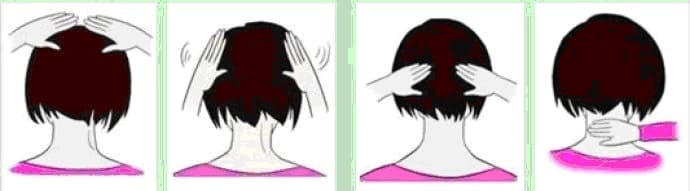
Image result for Paida the top of the head

Step 1: Paida the head⇩
Image result for Paida the top of the head


Paida the top of the head with one hand↑


Image result for Paida the sides of the head with two hands

Paida the sides of the head with both hands↖

Image result for Paida the top of the head
Paida the back of the head with both hands↖

Image result for Paida the back the head with one hands
Paida the back of the neck with one hand ↖


Step 2: Paida the shoulders

Image result for Paida the back the head with one hands


Paida the right side with left hand, and vice versa. Remember to pat all around the shoulders. ↖


Step 3: Paida both armpits⇩

Image result for Paida the back the head with one hands


Those  people with heart, lung and breast problems should pat the armpits more often. ↖


Step 4: Paida the inner sides of the elbow joints⇩


Image result for Paida the back the head with one hands


This covers all the energy channels (meridians) on the inner sides of the elbow joints, i.e. Heart Meridian on the innermost side, Lung Meridian and Large Intestine Meridian at the rim of the outer side, as well as the Pericardium Meridian in the middle. ↖


Step 5: Paida the knees⇩

Image result for Paida the back the head with one hands
Paida the front of the knees with both hands and make sure that the knee is covered by the entire palm. Then Paida the inner sides, outer sides and the back of the knees. This improves all foot and leg problems, including pain, numbness and swelling. When combined with Lajin, it will bring better efficacies. 


Step 6: Paida the feet⇩

Image result for Paida the back the head with one hands
Paida the arches, insteps, ankles and surrounding areas heavily. This not only helps cure foot diseases, but also brings good curative effects for all diseases of internal organs. ↖


Step 7: Paida any body parts where needed
After going through all the six steps, you may Paida any body parts according to your particular condition. 


Image result for Paida any body parts

Related image

Image result for Paida any body parts

Image result for Paida any body parts

Image result for Paida any body parts

Image result for Paida any body parts

Related image

Image result for Paida any body parts