Not true, unless you're walking in very unsanitary conditions, such as stagnant water or some third-world country areas without plumbing.
In general, parasites that enter through the feet skin are rare and found only in the hottest places. Even there, as long as you're not walking barefoot or standing barefoot around in festering pools of water, there's little chance you'll pick something up, and it's extremely unlikely you'll pick up something that's life threatening ( you have a much higher chance of winning the lottery). However, please do not walk around a dog park without shoes. Common sense. There, we've said it.
The greater harm to your health is not getting out and exercising.
Last thought here : keep your tetanus immunization up to date. Tetanus, also known as lockjaw, is an infection characterized by muscle spasms. Boosters are given every ten years. If you can't remember when your last tetanus booster jab was given, check with your doctor. Although cuts when going barefoot are rare, particularly after your first few weeks, it's better to be safe than sorry here. And remember, if you've got a cut on your feet, do not go barefoot until it's healed.
Dirty Feet
If you don't want to get your feet dirty, then there is good news and bad news. First, the bad news: if you go barefoot walking, particularly in the city, your feet will get dirty. However, that dirt washes right off, particularly if you keep a wash basin/pail of water or wet wipes by your home entrance door.
So here's the good news. Your feet are likely cleaner going barefoot outside than they are in your shoes. Why? Because we almost never wash the insides of our shoes, and we sweat in them every day whenever we wear them.
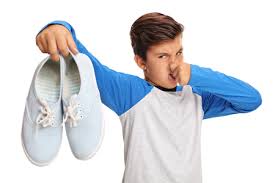
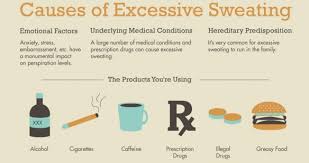
Shoes are known to harbor thousands if not millions of molds, fungi, and disease-causing bacteria in and on them before we finally succumb and throw them out in favor of a new pair.


Good Morning America once tested 8 people's pairs of shoes as well as two dogs' paws and found the shoes carried the most bacteria, up to 66 million organism each. This compared to toilet seats, with only 1,000 organisms. And nine out of ten pairs of shoes contained coli-form bacteria from human or animal feces. They can also carry pesticides, toxic chemicals, and pollen. Yet we rarely (if ever) wash our shoes, because we don't want to ruin them. So instead we slip our clean feet into germ traps, sweaty shoes-environments devoid of oxygen that are just perfect for wee beasties to fester in and on. And we track them around the houses.
The rule in our house is this : whether we've washed our feet when we've entered the home or not, we must wash our feet again before we go to bed.
And there's even more good news. Research shows that microbes in the dirt (not those in our shoes) are actually good for us, and exposure to them contributes to a stronger immune system. More on this fascinating topic later.
Going Bare at the indoor Gym.
Something funny happened on the way to the fitness gym. People have gotten liability crazy. Out of concern that you may drop a weight on your foot ( which would break your foot in or out of a shoe), trip (something you're more likely to do in a shoe), or catch your foot on a contraption, gyms are wary about having you go barefoot.
"At my favorite gym I have to write my own waiver after a lengthy discussion with management about being able to use a treadmill barefoot. In the waiver, I stated they were not responsible if I hurt myself. I also had to promise that I would scrub down the belt afterward so it wasn't dirty for the other patrons (who oddly enough, would be in shoes that were never washed, even after walking in public bathrooms). Even then they were hesitant to let me use the treadmill barefooted."
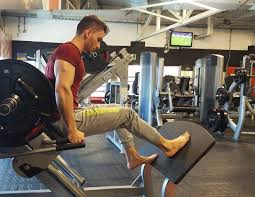
Other strange oddities at gyms abound. There are fitness classes and even yoga classes (though this one is silly) where you have to at least wear socks, if not shoes, when working out. However, you're more likely to slip and fall, particularly in a pose, if you can't grab with your toes.
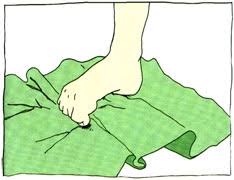
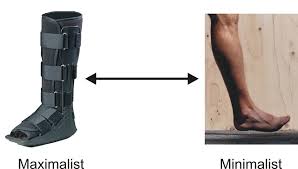
Working out barefoot at the gym is a great way to increase proprioception (your perception of movement and spatial orientation of your body and its parts). balance, strength, and overall health. However, if you find you just can't do it at your gym or the stares are too much, then simply get yourself the most minimal shoe you can. There are even toe sock, with rubber nubs for traction, designed specially for yoga classes.
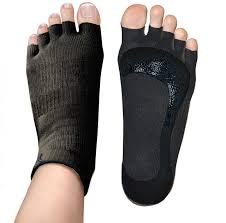


Toe Shoe ⇧
Toe Socks ⇩
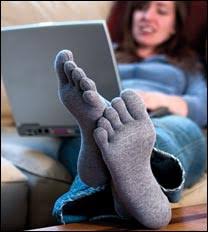
But wait, you say. What about the gym locker rooms? If our feet are cleaner out of a shoe, what about getting athlete's foot at the local gym? That occurs because people take their sweaty feet with festering foot fungus out of their shoes and then walk around barefoot in the locker room and showers.
In these environments, if your foot is going back into shoes, it's easy to pick up the fungus and spread it to your shoes. But if you're staying barefoot, the fungus can't survive in oxygen, so your bare-feet should be just fine. When in doubt, wipe your feet, especially in between your toes, with tea tree oil, organic raw apple cider vinegar, or raw honey. Flip-flops will serve you well here too.
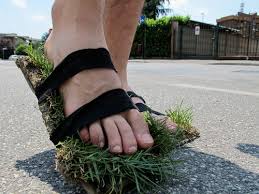
Natural Grass Barefoot Wear ⇧
Absolutely wear shoes in public restroom, on the streets in third-world countries, and anywhere else you see or smell unsanitary conditions or feel uncomfortable.
In general, parasites that enter through the feet skin are rare and found only in the hottest places. Even there, as long as you're not walking barefoot or standing barefoot around in festering pools of water, there's little chance you'll pick something up, and it's extremely unlikely you'll pick up something that's life threatening ( you have a much higher chance of winning the lottery). However, please do not walk around a dog park without shoes. Common sense. There, we've said it.
The greater harm to your health is not getting out and exercising.
Last thought here : keep your tetanus immunization up to date. Tetanus, also known as lockjaw, is an infection characterized by muscle spasms. Boosters are given every ten years. If you can't remember when your last tetanus booster jab was given, check with your doctor. Although cuts when going barefoot are rare, particularly after your first few weeks, it's better to be safe than sorry here. And remember, if you've got a cut on your feet, do not go barefoot until it's healed.
Dirty Feet
If you don't want to get your feet dirty, then there is good news and bad news. First, the bad news: if you go barefoot walking, particularly in the city, your feet will get dirty. However, that dirt washes right off, particularly if you keep a wash basin/pail of water or wet wipes by your home entrance door.
So here's the good news. Your feet are likely cleaner going barefoot outside than they are in your shoes. Why? Because we almost never wash the insides of our shoes, and we sweat in them every day whenever we wear them.
Shoes are known to harbor thousands if not millions of molds, fungi, and disease-causing bacteria in and on them before we finally succumb and throw them out in favor of a new pair.
Good Morning America once tested 8 people's pairs of shoes as well as two dogs' paws and found the shoes carried the most bacteria, up to 66 million organism each. This compared to toilet seats, with only 1,000 organisms. And nine out of ten pairs of shoes contained coli-form bacteria from human or animal feces. They can also carry pesticides, toxic chemicals, and pollen. Yet we rarely (if ever) wash our shoes, because we don't want to ruin them. So instead we slip our clean feet into germ traps, sweaty shoes-environments devoid of oxygen that are just perfect for wee beasties to fester in and on. And we track them around the houses.
The rule in our house is this : whether we've washed our feet when we've entered the home or not, we must wash our feet again before we go to bed.
And there's even more good news. Research shows that microbes in the dirt (not those in our shoes) are actually good for us, and exposure to them contributes to a stronger immune system. More on this fascinating topic later.
Going Bare at the indoor Gym.
Something funny happened on the way to the fitness gym. People have gotten liability crazy. Out of concern that you may drop a weight on your foot ( which would break your foot in or out of a shoe), trip (something you're more likely to do in a shoe), or catch your foot on a contraption, gyms are wary about having you go barefoot.
"At my favorite gym I have to write my own waiver after a lengthy discussion with management about being able to use a treadmill barefoot. In the waiver, I stated they were not responsible if I hurt myself. I also had to promise that I would scrub down the belt afterward so it wasn't dirty for the other patrons (who oddly enough, would be in shoes that were never washed, even after walking in public bathrooms). Even then they were hesitant to let me use the treadmill barefooted."
Other strange oddities at gyms abound. There are fitness classes and even yoga classes (though this one is silly) where you have to at least wear socks, if not shoes, when working out. However, you're more likely to slip and fall, particularly in a pose, if you can't grab with your toes.
Working out barefoot at the gym is a great way to increase proprioception (your perception of movement and spatial orientation of your body and its parts). balance, strength, and overall health. However, if you find you just can't do it at your gym or the stares are too much, then simply get yourself the most minimal shoe you can. There are even toe sock, with rubber nubs for traction, designed specially for yoga classes.
Toe Shoe ⇧
Toe Socks ⇩
But wait, you say. What about the gym locker rooms? If our feet are cleaner out of a shoe, what about getting athlete's foot at the local gym? That occurs because people take their sweaty feet with festering foot fungus out of their shoes and then walk around barefoot in the locker room and showers.
In these environments, if your foot is going back into shoes, it's easy to pick up the fungus and spread it to your shoes. But if you're staying barefoot, the fungus can't survive in oxygen, so your bare-feet should be just fine. When in doubt, wipe your feet, especially in between your toes, with tea tree oil, organic raw apple cider vinegar, or raw honey. Flip-flops will serve you well here too.
Natural Grass Barefoot Wear ⇧
Absolutely wear shoes in public restroom, on the streets in third-world countries, and anywhere else you see or smell unsanitary conditions or feel uncomfortable.


