CHAPTER 10
DEHYDRATION AND BRAIN DAMAGE
Diseases of the nervous system are so devastating that, unless you have come across people suffering from some of these conditions, you cannot
appreciate their devastation. You do not have to
be a genius to know that Parkinson's disease,
Alzheimer's disease, Lou Gehrig's disease, multiple sclerosis, hemiplegia, quadriplegia, aphasia, autism, attention deficit disorders, and epilepsy, to name some, are dreaded conditions.
I am of the opinion that some of these conditions are produced by persistent dehydration in the body. We need to understand the role of water in the nervous system to realize how easily some of the above problems—those that are not the result of accident or injury, but are gradually establishing degenerative conditions—can be prevented and even cured. An added advantage of
preventing brain disease by keeping the brain optimally hydrated is that water increases the brain's efficiency for processing information.
On average, the human brain weighs 1.4 kilograms, or about 3 pounds. It is estimated that the brain consists of 85 percent water, whereas all the other soft-tissue cells are said to be about 75 percent water. The brain is extremely sensitive to water loss. It is said that the brain cannot tolerate even a 1 percent loss of water. If it were to be dehydrated to the point of being only 84 percent water for long, the brain would not function properly. Remember that nerve cells in the brain are one-time-living units. They do not give birth to daughter cells in the same way as other cells in the body. Thus, dehydration that affects a brain cell to the point of causing it damage will leave a permanent mark.
Still, nature is wiser than we think. To make sure that the brain gets all it needs, including all the water, the brain, which is approximately one-fiftieth of the total body weight, is allocated about 20 percent of the circulation. In addition,
the brain is constantly bathed in a special fluid composition that is different from blood or serum. The capillaries of the brain manufacture this highly specialized and exact fluid composition. The bulk of these capillaries are inside large chambers of the brain. The fluid they manufacture specially for the brain is called cerebrospinal fluid. It contains more salt and less potassium. This bathing fluid also provides a physically shock-absorbing protection for the brain against knocks to the skull. Also, when the head has to change position rapidly, the fluid surrounding the brain protects it from being thrown about. The brain capillaries also filter and take away the toxic waste produced by the continuously working brain cells. Brain cells function around the clock. The body sleeps, but the brain does not.
THE BLOOD-BRAIN BARRIER
The brain is most effectively protected from fluctuations in the composition of the blood. Unlike the capillaries elsewhere, brain capillaries have no perforations in their walls for the free diffusion of elements. The capillary walls are perfectly sealed. Everything that has to reach the brain side of blood circulation has to be
transported by highly specialized and specific mechanisms through the cells lining the capillary wall. You could say the brain capillaries are part of a filter system that regulates the entry of materials into the space that houses the brain itself. In this way, the brain is protected all the time from sudden changes in the composition of the blood. The capillary system of the brain establishes a natural barrier to accessing the brain without a safeguard. This barrier system is called the blood-brain barrier.
Dehydration can cause a breach in the blood-brain barrier. Any such breach compromises the integrity of normal brain functions. I am of the strong opinion that dehydration that compromises the protective shield of the blood-brain barrier is the primary cause of most of the diseases of the central nervous system. When the barrier becomes compromised, the solid waste of such microscopic bleedings is converted into plaques that are the hallmark of most neurological disorders, such as multiple sclerosis, Parkinson's disease, and Alzheimer's disease. I think the same process takes place in migraine headaches.
The same emergency way of hydrating a sensitive area of the body can take place in different organs and tissues. When the system dumps blood into the upper intestine, or if it bleeds into the muscle tissue, 94 percent of the blood volume consists of only water and is immediately put back into circulation. The rationale behind this type of microscopic bleeding in the kidneys and the lungs is that both of these organs need lots of fresh water to begin working properly again. Getting it this way is the only logical process when the body is already dehydrated and no fresh water is coming in to satisfy these organs' needs.
This process of bleeding in the lungs and kidneys, on a microscopic scale, is identified as a distinct condition called pulmonary-renal syndrome. The same process is also seen in lupus, one of the autoimmune diseases. If such bleedings takes place in the intestinal tract on a larger scale and more frequently, the diagnosis of gastritis, duodenitis, or ulcerative colitis is given to the condition. When the process takes place under the skin, particularly in children, it is called a purpura.
In bleeding ulcers, a great deal of blood is dumped into the intestinal tract. Its water is then reabsorbed to avert over concentration of the blood and the subsequent catastrophic complication of widespread clotting in the brain and elsewhere. I recognized this phenomenon of bleeding in the intestinal tract when I treated more than three thousand cases of peptic ulcer disease with only water. Some of these patients had bleeding ulcers.
I researched the process of bleeding in the intestinal tract some time later and identified the mechanism that I have described. At the time, I treated patients with strongly sweetened water, eight ounces hourly until the bleeding stopped. My reasons for the use of sugar in these cases was the initial assumption that the brain needed a much higher concentration of energy to cope; the secondary reasoning was to switch the mechanism of tissue breakdown to the physiology of tissue formation under the influence of insulin that gets secreted because of sugar. It worked! The bleeding stopped very quickly. Simple water was then used after the bleeding had stopped. This is a treatment process that I recommend in
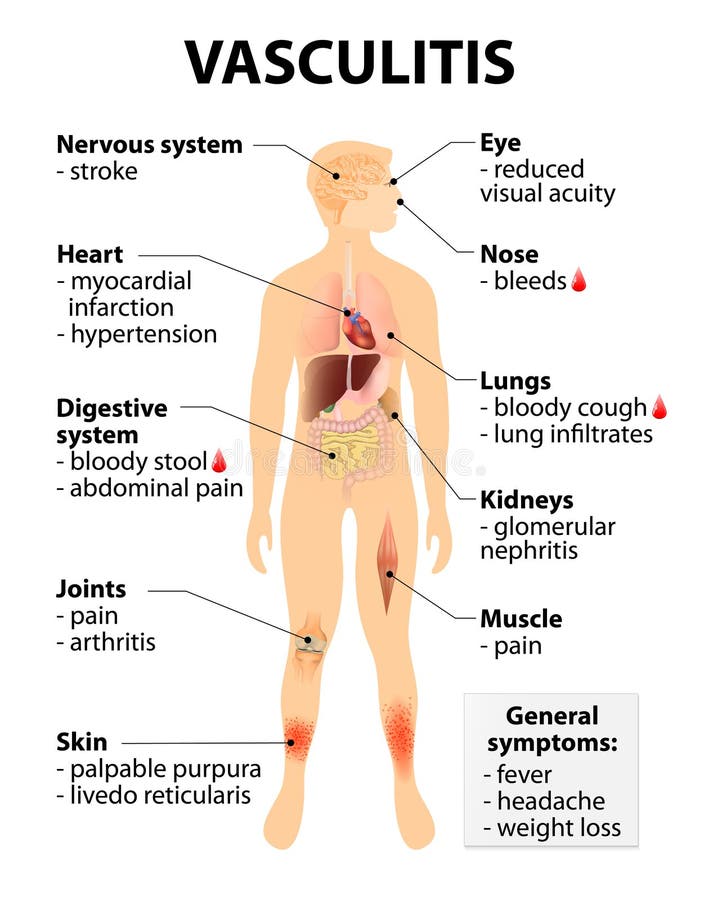
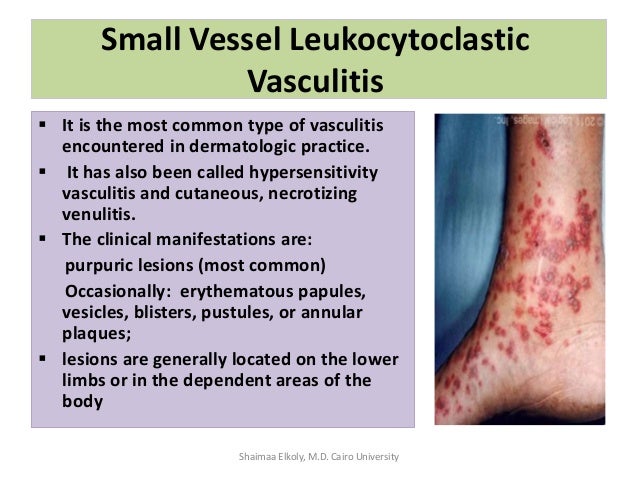
bleeding without a distinct reason. The process of microscopic bleeding into tissues is called vasculitis.
Vasculitis is a group of uncommon diseases, which result in inflammation of the blood vessels. Vasculitis symptoms and signs vary greatly and depend upon the organs affected and the severity of the disease, and may include: Rash.Oct 26, 2017



NEUROTRANSMITTERS AND DEHYDRATION
Neurotransmitters are brain chemicals that are manufactured and secreted in one or another of the many networks of nerves as a means of passing coded information. The nerve systems in the body are like cables that wire and interconnect the various parts of a country. In the same way that differing codes and wave-lengths distinguish one cable television station from another, different chemicals used in the nervous system distinguish the action of one brain center from another. It is interesting to note that up to fifty years ago, scientists had no clear idea as to the mechanism and role of chemical messengers that cause the transfer of information between one nerve and another, or even between the nerve and the muscle fibers it controls and commands.
It is now understood that a number of amino acids—components of the proteins we eat—are broken down in the cells by specific enzymes, and their by-products become the chemical messengers. The following information is important. Please pay particular attention to the next few paragraphs. I am about to explain why you are a product of what you drink and eat.
We all know that, because of their network of cables to people's homes, telephone companies and cable TV distributors are able to provide other services through their wires, such as Internet and other systems of information and communication that can be connected to computer systems in the house. Their claim to fame is the fact that they have been successful in spreading their wires far and wide. The same wire can be used to pass different coded information all at the same time. All they have to do is to package the information in a particular range of wavelengths of electromagnetic energy. Since we have developed the ability to package information in varying ranges and combination of electrical impulses—wavelengths—that can be transmitted through a cable, we are at a particularly advanced stage in our ability to communicate. Efficient communication and transfer of information between a generating source and users determine
the rate of progress and development of any future society. It will make fore-casting of events and adoption of an appropriate response possible. The advancement in technology that permits different bundles of information to be transmitted through the same wire at the same time provides a solid foundation for the future progress of society.
The human body has utilized the same technology for the transfer of information in its nerve systems. It has miniaturized the process, and uses chemicals as well as electrical impulses. Nerve cells manufacture one or another brand of chemicals—neurotransmitters—and store them at their nerve endings. Electrical impulses are then passed along the walls of the nerve to where the chemicals are stored and are awaiting release by the electrical trigger system. The electrical impulses travel along the wall of the nerve itself without being shared with the other nerves that are packed in the same bundle. To keep the information private and exclusive to its destination, each nerve has a distinct cylindrical outer layer of insulation that is manufactured mainly from cholesterol—one of cholesterol's many vital and indispensable roles in the body. In most neurological disorders, loss of nerve insulation is a primary contributing factor. It is damage to this insulation layer that causes a variety of symptoms, which are grouped and, in certain circumstances, labeled as “multiple sclerosis.”
Another sophistication in the nerve system of the body is the fact that outgoing information is passed in separate nerves to the incoming information that is generated in the rest of the body. The sensations of pain, heat, cold, smell, wetness, sound, light, and sub-light ranges of radiation are incoming information. Different chemicals used in the nerve endings identify the central station's main line of function. There are a number of major and minor chemically manipulated nerve systems. However, there are five major groups of nerves that are distinguished by their brand of activity. They are:
1. Serotonergic system: This system uses the serotonin family of chemicals as messengers.
2. Histaminergic system: This system uses histamine as a chemical messenger.
3. Adrenergic system: This system uses adrenaline, noradrenaline, and dopamine as their distinguishing chemical messengers.
4. Cholinergic system: This system uses acetylcholine as the chemical messenger.
5. Opiate system: This system uses endorphins and enkephalins as the chemical messengers and it is engaged in pain reduction in the body.
These are the biggest and most highly specialized communications corporations in the human body. There seem to be many smaller communications systems that are active, but these function as secondary servers to the main systems.
I would like to mention two of these secondary servers. They employ aspartate and glutamate as their messengers in the brain. I mention these for a purpose. Whereas the other neurotransmitters have to be intricately manufactured and distributed to the nerve endings for their use, aspartate and glutamate do not need to undergo change to register their presence. They act directly on the brain cells that regulate some aspects of the reproductive systems—possibly also growth. Aspartate is a direct by-product of aspartame—the popular artificial sweetener that is used in about five thousand different food products.
Many people who regularly take artificial sweeteners develop a false hunger, and up to ninety minutes after their intake seek food and eat more than they would normally. As a result, they often gain weight. Aspartame may also cause a major disruption in the communications systems of the body with detrimental effects. In certain people with diabetes—a dehydration problem—aspartame has caused diarrhea and intestinal bleeding.
Before it is absorbed, aspartame also produces formaldehyde and methyl alcohol in the intestines. The quantity depends on the amount of sweetener taken in sodas or in cooked food. Formaldehyde and methyl alcohol have been cited as producing eye-nerve damage—to the point of even causing blindness.
Another secondary complication of the use of this sweetener is tumor formation in the brain. Dr. H. J. Roberts of West Palm Beach, Florida, is a dedicated medical doctor who has done much research on the adverse effects of aspartame (click here). He has identified a number of what he calls “aspartame diseases.” In his June 2002 article in the Journal of Townsend Letter for Doctors and Patients, Dr. Roberts lists a number of neurological problems produced by aspartame.
Of twelve hundred patients,
43 percent had headaches;
31 percent had dizziness and unsteadiness;
31 percent had confusion and memory loss;
13 percent had drowsiness and sleepiness;
11 percent had major epileptic convulsions;
3 percent had minor epileptic attacks and
“absences of the mind”;
10 percent had severe slurring of speech;
8 percent had tremors;
6 percent had severe “hyperactivity” and
“restless legs”;
6 percent had atypical facial pains.
He reports that after cutting out the sweetener from the diet of these people, they improved; some were freed of their symptoms. As you might know, methyl alcohol and formaldehyde damage to the brain cells and the optic nerve is irreversible.
SEROTONIN: THE FOREMAN OF ALL NEUROTRANSMITTERS
When tryptophan gets across the blood-brain barrier and reaches the brain side of the divide, it is quickly picked up and converted to a number of neurotransmitters. The best-researched transmitter produced from tryptophan is serotonin, conductor of the orchestra in all brain activity performed by the resident
neurotransmitters and master controller of body functions.
A tryptophan by-product that is the rage of the town and the media, because it is available without prescription and is used as a sleeping pill, is melatonin. In the past, tryptophan itself was used in this capacity, before it was taken off the market and the deck was cleared for the introduction of an antidepressant drug called
Prozac.
While tryptophan makes more serotonin at a much cheaper cost, Prozac is touted to stop the rapid neutralization of serotonin once it is secreted at the nerve clefts. Why? Because people with depression have low brain-serotonin levels.
Many of the problems in human physiology, and the establishment of stress in the body, are the consequence of the disproportionate transfer of some materials into the brain. In certain circumstances, some amino acids that have to reach the brain cells to be used for making chemical messengers do not reach their destination in sufficient amounts or quickly enough to cope with the demand. The two main causes of shortfall in the delivery of the primary materials are dehydration and the overuse of the respective amino acids in other capacities. Dehydration causes problems with the transport process across the blood-brain barrier.
Tryptophan is vitally important to the human body. It is an essential amino acid. From tryptophan, serotonin, tryptamine, indolamine, and melatonin are manufactured. Tryptophan cannot be manufactured by the body and has to be imported from the foods we eat. This is the reason it is called an essential amino acid. From tyrosine, adrenaline, noradrenaline, and dopamine are manufactured. Six neurotransmitters and one hormone/transmitter—melatonin—become affected when there is dehydration, to the level of producing symptoms such as pain or asthma. The reasons for the loss of these vital elements are simple.
When there is not enough water to detoxify the body through adequate drainage of the tissues and eventually urine production, the liver uses these two amino acids as antioxidants. What are antioxidants? The nearest simple explanation can be seenin the way field lavatories are used without plumbing or drainage. The septic tank of the john contains a chemical that deodorizes, sterilizes, and sanitizes the refuse that gets into the tank when the toilet is used over and over again, until the tank becomes full and has to be emptied by septic pumps. There is a similarity of
function between the chemical in the tank and the way the liver uses tryptophan and tyrosine as antioxidants to detoxify the by-products of chemical reactions in the absence of adequate water for washing toxic things out of the body. This is the crudest way of showing how dehydration can cause severe damage to the human brain. It can cause even the brain to malfunction because the raw materials the brain needs become unavailable. From the breakdown of tryptophan, the liver also releases local “oxygen” that is needed for the function of its cells, when the liver is insufficiently supplied!
HISTAMINE: THE FIRST NEUROTRANSMITTER IN OUR BODY
When the sperm fertilizes the female egg and a new living person begins to form, it has the ability to invoke the action of histamine. It must do so because of histamine's many “nursing” responsibilities—it is a wet nurse to growing cells. Histamine will bring the new cells water and nutrients from its direct influence in expanding the blood and serum circulation. Histamine will rhythmically “pump-feed” the new cells with potassium. It is this feeding program that matures the new cell until it divides and divides yet again, and again, until a new life in the form of a fetus comes into being. Histamine is a most noble element in our body.
Histamine also has responsibilities in antibacterial, antiviral, and anti-foreign-agent (chemicals and proteins) defense systems in the body. At a normal level of body-water content, these actions are held at an imperceptive or unexaggerated level. In a dehydrated state of the body, when much histamine is produced, an immune system activation will release an exaggerated amount of the transmitter from histamine-producing cells.
The excess histamine is held in storage for its drought-management program, yet its immune system stimulation will cause a greater-than-required release of the agent. Histamine-producing cells release their histamine reserves, and they immediately begin to divide and create new histamine-producing cells. Now more cells are formed and more histamine is manufactured for its immediate release. This mechanism is designed to cope with emergency water needs or immune system activity. When water comes to an area, it brings with it all the other substances that are also needed. Water is the common factor on which all the regulatory systems are standardized.
It has been shown that in more watery solutions, the histamine-producing cells lose their histamine granules and stop its manufacture for some time. Thus, water seems to be a most effective natural antihistamine. In conditions such as asthma
and allergies, excess histamine action is the main problem. These conditions are related and should be regulated with an alert and determined increase in water intake.
The natural anti-asthma and anti-allergic reactions to excess histamine are adrenaline or its chemical substitutes. The natural and preventive procedure to avoid attacks of asthma or allergic reactions is without doubt an adequate hydration of the body over a long period of time. Adequate water intake will reduce the over-production of histamine in the body. A water intake of one or two glasses will cause stimulation of the sympathetic nervous system that secretes adrenaline for at least ninety minutes. This is the main way that water will immediately counteract histamine overactivity. Another solution is to exercise, to again enhance the natural activity of adrenaline in the body. Adrenaline is the natural antidote to excess histamine production.
WATER: THE ENERGIZER OF THE BRAIN
It needs be understood that even if the outer skin of the body is comparatively dry and firm, the inner parts of the body should be waterlogged. All the cells of the body live as though they are in an ocean of salt water. Any function of the body has to obey the natural maritime laws. All transport and communications systems inside and outside the cells of the body are designed based on a water atmosphere, much like the habitat of fish in the ocean.
All functions of the body depend on the basic relationship of its pump systems to water. Imagine people living in rural areas next to a river. Imagine the technology is so advanced that each house has its own small hydroelectric-power-generation system that is installed on the river. The flow of water in the river has the power and ability to turn the waterwheel of the turbines that manufacture electricity for the houses. At present, the turbines made for this type of use are installed separately from their waterwheels. The turbines have to be kept in a dry area, and the electricity they generate is “wired” to the house and distributed. In its use of hydro-electric energy for its cell functions, the human body has advanced beyond human imagination—a most enviable achievement. It has designed special turbines (as it were) that are installed in the waterwheels themselves, and they are submerged deep in the waterways.
Miniaturizing the turbines in this way makes another breakthrough in power generation in the body. As a result of this breakthrough, it has become possible to install each turbine where hydroelectric energy is needed. This makes it possible to economize on the need to use wires or electrical insulation to energize the whole body from its hydroelectric source of energy. The energy-generating battery of turbines is installed where energy is needed to perform a function. These hydro-electric-energy-generating units, which also perform a number of other functions, are called cation (pronounced cat-i-on) pumps.
The human body has made another enviable advancement. Normally, in industrial settings, power is generated in one spot and used in another spot to turn motors that perform particular functions. In the body, the water-dependent, energy-generating components and work-performing functions are installed in the same unit.
To economize further, when the workload is not too excessive and the rate of energy generation is more than is needed, the extra energy is stored. If the rate of water flow is more than adequate, the extra energy that is manufactured is stored in the batteries, like the coal and coke dump reserves next to the power stations that manufacture and distribute electricity. The widely scattered batteries that store the extra energy are called adenosine triphosphate (ATP) and guano-sine triphosphate (GTP). A third area where energy is stored is in the calcium dumps in the cells. These areas are known as endoplasmic reticulum.
Imagine a sump or bilge pump in the basement of your house or in a ship that becomes directly energized by the rise in the level of water and is able to generate its own energy from the flow of that water through its system. Now imagine the water is not clear but has other substances floating in it. Please take one further step in the realm of imagination.
Imagine you are a fish living in an intricately designed house in the middle of the ocean, and all of your belongings are afloat. Imagine that you are particularly organized and wish to keep your house spic-and-span and prevent it from getting cluttered up by too many unwanted elements. You would install an automated house-cleaning system—obviously powered by hydroelectricity. The human body has gone through all of these steps in the design of each of its many trillions of cells. It employs a type of “bilge pump,” the cation pump.
Cation pumps maintain balance in the interior of the cells of the body. They use hydroelectric energy generated from the rush of water through them to take some elements outside the cell and assist in the transfer of the needed elements into the cell. They energize the cells by also making more power than they need for their own task. This extra energy is stored for later use. Extra energy is manufactured only when water supply and its pressure is adequate. All functions of the brain depend in a major way on this source of energy.
It is my understanding that the microtubules in the waterways of all cells, including the long nerves, are made of cation pumps that are stuck together. You now understand why the rush of water from the outside to the inside of the micro-tubules also turns all the energy-dependent cation pumps that make up the micro-tubule.
Next to oxygen, water is the most essential material for the efficient working of the brain. Water is a primary nutrient for all brain functions and transmission of information. This is why the brain is 85 percent water and is housed in a very special “water bag” that goes all the way down the spinal cord into the lower back. The use of cation pumps is not limited to the nervous system. They are employed in all the cells of the body, in their outer membranes and in the membranes inside the cells.
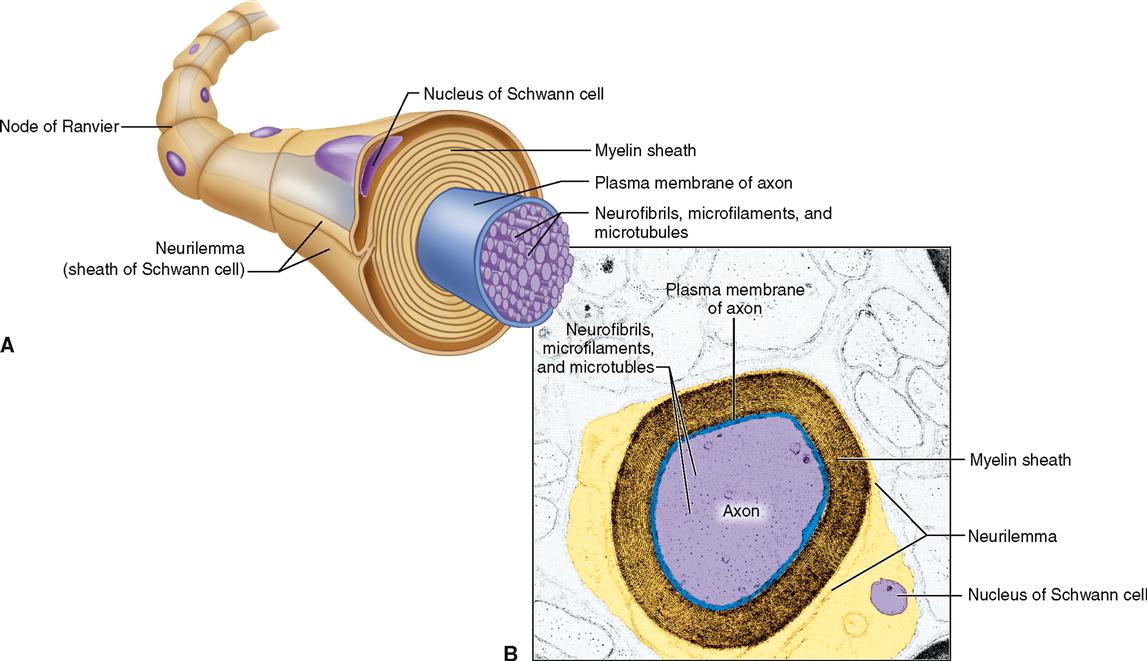

Figure 10.1: A single axon that is cut across shows the microtubules and the areas of more fluidity that seem to allow the existence of a “float”-transport system along the line of the tube.
(click here to watch Youtube)
A few years ago, I received a letter from a woman who is worth mentioning here. She wrote about an ear problem that is now cleared up. The story exemplifies my explanations of chronic dehydration and nerve damage. She was a young-at-heart, seventy-one-year-old professional concert musician who taught at her local university. She was very health-conscious, ate the right kind of foods, but drank green tea and only two cups of water a day, and did not take salt. She did exercise. One day she realized her left ear could not hear properly and had lost the ability to distinguish fine sounds. She went for ear tests at two different centers. Both reached the conclusion that she was suffering from some nerve deafness, which was not advanced enough to warrant her wearing a hearing aid. She wondered about acupuncture treatment and had six sessions of it, “but it didn't help.” Then she heard me on a radio interview explaining chronic dehydration as a major cause of so many health problems. She bought my book Your Body's Many Cries for Water and, after reading it, began drinking more water. The result: “After about a month I found I could and still can hear the watch tick with my left ear.” This simple observation on “nerve recovery” by a person who was alert to the loss of an important function is an indication of how chronic dehydration can lead to devastating results, and how correction of dehydration in time can reverse a potentially permanent pathology.
DEHYDRATION: THE CAUSE OF STROKES
(Bilingual/ 双语)
Talking about permanent pathology, let me tell you the story of my sister Shahla. We are a close family, and there is a particular bond between my sister and me. There is about thirteen years' difference between us. When we were studying in England, away from home and parents, I was in charge. Even in later stages of her life, whenever she needed to make a serious decision, she would consult with me. As a family, we emigrated to America when living in our homeland, Iran, became hazardous after the mullahs took over in 1979 and Iran became a theocratic dictatorship. Most of us gravitated to northern Virginia.
Shahla is a hard worker and a most reliable executive, and although she had a lot of upheaval in her life in exile she has not lost her cheerfulness and enthusiasm. She had recently started smoking despite my contrary advice. She had also taken a liking to a glass of red wine now and then. She had come to Virginia to work with my younger brother, who had established himself as a developer in the
area.
In the summer of 1989, Shahla wanted to relax after a lot of turmoil in her emotional life. She decided to spend some time beside the pool of her apartment complex. She was also trying to lose weight. She would spend most of her free time and the weekends at the poolside in the sun. She would also take the occasional drink of wine as she was relaxing on her poolside mat—an ideal of many people who wish to have a quiet, relaxing holiday.
On a Monday morning after a weekend by the pool, when she was working at her office, she noticed tingling sensations in her left arm. Gradually the left side of her body became heavy and not sufficiently responsive. She got scared and called me. She left the office and was driven home. By the time I arrived, her left leg and left arm were in a state of partial paralysis. She could hardly move them. She was now dead scared. After a quick examination and a call to a doctor friend, I started to force water into her.
I managed to give her two jugs of water and one jug of orange juice with some salt, about six quarts of fluids. Her anxiety began to diminish. By the time the doctor had arrived, her arm weakness had perceptibly improved and she also had some movement in her leg muscles.
You might think that I should have called an ambulance and packed her off to the emergency room of a hospital. I did not do so because, other than receiving an intravenous drip to get some fluid into her, I believe she would have suffered other damage in the time she awaited medical attention. Anyway, she improved and improved and improved. By the late afternoon, she was well on her way to recovery. However, we needed to find out if there was any underlying local pathology in the brain that might have signalled its presence by manifesting muscle weakness on one side of her body.
A consultation with one of the local neurologists was arranged, and we went to him for an in-depth evaluation. After his examination, he confirmed a slight remaining weakness on the left side. Shahla was admitted to the hospital. After all the blood tests and non-invasive procedures such as CT scans and MRIs showed nothing, it was decided to do a cerebral angiogram to rule out a leaking aneurysm in the brain arteries.
The procedure was conducted the next day. Her brain arteries were as clean as a whistle. No aneurysm, no plaque, no obstruction, nothing that would account for the temporary weakness on the left side of her body. They charged her thirteen thousand dollars for three nights' stay in the hospital. She did not yet have insurance to cover such expenses. Needless to say, what rest she had at the poolside she paid for with her health and money. Why? Because of a basically wrong understanding of the way the human body works.
She had severely dehydrated her brain by the intake of alcohol, heat of the sun, dieting without water intake, and the vicious cycle of the physiological events that are set in motion when there is severe dehydration. What her brain had done was to decommission a major part of its activity that would take her to the location where she could continue the damage-producing actions.
Even in genuine situations when there is a blockage of the arteries in a region of the brain, resulting in “rotting” brain tissue, adequate intravenous hydration has produced dramatic recoveries. In experiments in animals, if intravenous fluids are given within one hour of blocking the main artery to a part of the brain that would permanently destroy about 20 percent of the blood-deprived region, the rotting area will be reduced significantly. Such is the power of water in reviving even purposely oxygen- and circulation-deprived areas of the brain.
This was the reason why I forced water on Shahla as soon as I reached her. I thought that even if she had actually clotted one of the main arteries of her brain, the water would help open the surrounding capillaries and prevent expansion of the clot beyond its already formed areas. Equally, if the neurological manifestations were due to vascular spasm, then the water would relieve the constriction in the arteries—and it did. There was no time to wait and see; a decision and an action were vital at the very moment that Shahla showed the onset of muscle weakness that was increasing. Today, she is well. She no longer smokes, and drinks wine only on festive occasions, but drinks plenty of water—enough to give her lots of bubbly energy.
Edmund, the husband of my office manager, a very young man, had exactly the same type of paralysis and was taken to the hospital. His wife, Joy, was informed of the devastating crisis in their family. I was nearby when she received the information. I asked her if Edmund drank enough water. Apparently he would seldom drink water. I asked her to get him to drink lots of water straightaway to prevent the damage from continuing. She did, and he recovered completely. It is now four years since that episode. The moral of these stories: Give stroke candidates lots of water—if possible, before they actually develop clots and then neurological symptoms.
DEHYDRATION AND BRAIN DAMAGE
Diseases of the nervous system are so devastating that, unless you have come across people suffering from some of these conditions, you cannot
appreciate their devastation. You do not have to
be a genius to know that Parkinson's disease,
Alzheimer's disease, Lou Gehrig's disease, multiple sclerosis, hemiplegia, quadriplegia, aphasia, autism, attention deficit disorders, and epilepsy, to name some, are dreaded conditions.
I am of the opinion that some of these conditions are produced by persistent dehydration in the body. We need to understand the role of water in the nervous system to realize how easily some of the above problems—those that are not the result of accident or injury, but are gradually establishing degenerative conditions—can be prevented and even cured. An added advantage of
preventing brain disease by keeping the brain optimally hydrated is that water increases the brain's efficiency for processing information.
On average, the human brain weighs 1.4 kilograms, or about 3 pounds. It is estimated that the brain consists of 85 percent water, whereas all the other soft-tissue cells are said to be about 75 percent water. The brain is extremely sensitive to water loss. It is said that the brain cannot tolerate even a 1 percent loss of water. If it were to be dehydrated to the point of being only 84 percent water for long, the brain would not function properly. Remember that nerve cells in the brain are one-time-living units. They do not give birth to daughter cells in the same way as other cells in the body. Thus, dehydration that affects a brain cell to the point of causing it damage will leave a permanent mark.
Still, nature is wiser than we think. To make sure that the brain gets all it needs, including all the water, the brain, which is approximately one-fiftieth of the total body weight, is allocated about 20 percent of the circulation. In addition,
the brain is constantly bathed in a special fluid composition that is different from blood or serum. The capillaries of the brain manufacture this highly specialized and exact fluid composition. The bulk of these capillaries are inside large chambers of the brain. The fluid they manufacture specially for the brain is called cerebrospinal fluid. It contains more salt and less potassium. This bathing fluid also provides a physically shock-absorbing protection for the brain against knocks to the skull. Also, when the head has to change position rapidly, the fluid surrounding the brain protects it from being thrown about. The brain capillaries also filter and take away the toxic waste produced by the continuously working brain cells. Brain cells function around the clock. The body sleeps, but the brain does not.
THE BLOOD-BRAIN BARRIER
The brain is most effectively protected from fluctuations in the composition of the blood. Unlike the capillaries elsewhere, brain capillaries have no perforations in their walls for the free diffusion of elements. The capillary walls are perfectly sealed. Everything that has to reach the brain side of blood circulation has to be
transported by highly specialized and specific mechanisms through the cells lining the capillary wall. You could say the brain capillaries are part of a filter system that regulates the entry of materials into the space that houses the brain itself. In this way, the brain is protected all the time from sudden changes in the composition of the blood. The capillary system of the brain establishes a natural barrier to accessing the brain without a safeguard. This barrier system is called the blood-brain barrier.
Dehydration can cause a breach in the blood-brain barrier. Any such breach compromises the integrity of normal brain functions. I am of the strong opinion that dehydration that compromises the protective shield of the blood-brain barrier is the primary cause of most of the diseases of the central nervous system. When the barrier becomes compromised, the solid waste of such microscopic bleedings is converted into plaques that are the hallmark of most neurological disorders, such as multiple sclerosis, Parkinson's disease, and Alzheimer's disease. I think the same process takes place in migraine headaches.
The same emergency way of hydrating a sensitive area of the body can take place in different organs and tissues. When the system dumps blood into the upper intestine, or if it bleeds into the muscle tissue, 94 percent of the blood volume consists of only water and is immediately put back into circulation. The rationale behind this type of microscopic bleeding in the kidneys and the lungs is that both of these organs need lots of fresh water to begin working properly again. Getting it this way is the only logical process when the body is already dehydrated and no fresh water is coming in to satisfy these organs' needs.
This process of bleeding in the lungs and kidneys, on a microscopic scale, is identified as a distinct condition called pulmonary-renal syndrome. The same process is also seen in lupus, one of the autoimmune diseases. If such bleedings takes place in the intestinal tract on a larger scale and more frequently, the diagnosis of gastritis, duodenitis, or ulcerative colitis is given to the condition. When the process takes place under the skin, particularly in children, it is called a purpura.
In bleeding ulcers, a great deal of blood is dumped into the intestinal tract. Its water is then reabsorbed to avert over concentration of the blood and the subsequent catastrophic complication of widespread clotting in the brain and elsewhere. I recognized this phenomenon of bleeding in the intestinal tract when I treated more than three thousand cases of peptic ulcer disease with only water. Some of these patients had bleeding ulcers.
I researched the process of bleeding in the intestinal tract some time later and identified the mechanism that I have described. At the time, I treated patients with strongly sweetened water, eight ounces hourly until the bleeding stopped. My reasons for the use of sugar in these cases was the initial assumption that the brain needed a much higher concentration of energy to cope; the secondary reasoning was to switch the mechanism of tissue breakdown to the physiology of tissue formation under the influence of insulin that gets secreted because of sugar. It worked! The bleeding stopped very quickly. Simple water was then used after the bleeding had stopped. This is a treatment process that I recommend in
bleeding without a distinct reason. The process of microscopic bleeding into tissues is called vasculitis.
Vasculitis is a group of uncommon diseases, which result in inflammation of the blood vessels. Vasculitis symptoms and signs vary greatly and depend upon the organs affected and the severity of the disease, and may include: Rash.Oct 26, 2017
NEUROTRANSMITTERS AND DEHYDRATION
Neurotransmitters are brain chemicals that are manufactured and secreted in one or another of the many networks of nerves as a means of passing coded information. The nerve systems in the body are like cables that wire and interconnect the various parts of a country. In the same way that differing codes and wave-lengths distinguish one cable television station from another, different chemicals used in the nervous system distinguish the action of one brain center from another. It is interesting to note that up to fifty years ago, scientists had no clear idea as to the mechanism and role of chemical messengers that cause the transfer of information between one nerve and another, or even between the nerve and the muscle fibers it controls and commands.
It is now understood that a number of amino acids—components of the proteins we eat—are broken down in the cells by specific enzymes, and their by-products become the chemical messengers. The following information is important. Please pay particular attention to the next few paragraphs. I am about to explain why you are a product of what you drink and eat.
We all know that, because of their network of cables to people's homes, telephone companies and cable TV distributors are able to provide other services through their wires, such as Internet and other systems of information and communication that can be connected to computer systems in the house. Their claim to fame is the fact that they have been successful in spreading their wires far and wide. The same wire can be used to pass different coded information all at the same time. All they have to do is to package the information in a particular range of wavelengths of electromagnetic energy. Since we have developed the ability to package information in varying ranges and combination of electrical impulses—wavelengths—that can be transmitted through a cable, we are at a particularly advanced stage in our ability to communicate. Efficient communication and transfer of information between a generating source and users determine
the rate of progress and development of any future society. It will make fore-casting of events and adoption of an appropriate response possible. The advancement in technology that permits different bundles of information to be transmitted through the same wire at the same time provides a solid foundation for the future progress of society.
The human body has utilized the same technology for the transfer of information in its nerve systems. It has miniaturized the process, and uses chemicals as well as electrical impulses. Nerve cells manufacture one or another brand of chemicals—neurotransmitters—and store them at their nerve endings. Electrical impulses are then passed along the walls of the nerve to where the chemicals are stored and are awaiting release by the electrical trigger system. The electrical impulses travel along the wall of the nerve itself without being shared with the other nerves that are packed in the same bundle. To keep the information private and exclusive to its destination, each nerve has a distinct cylindrical outer layer of insulation that is manufactured mainly from cholesterol—one of cholesterol's many vital and indispensable roles in the body. In most neurological disorders, loss of nerve insulation is a primary contributing factor. It is damage to this insulation layer that causes a variety of symptoms, which are grouped and, in certain circumstances, labeled as “multiple sclerosis.”
Another sophistication in the nerve system of the body is the fact that outgoing information is passed in separate nerves to the incoming information that is generated in the rest of the body. The sensations of pain, heat, cold, smell, wetness, sound, light, and sub-light ranges of radiation are incoming information. Different chemicals used in the nerve endings identify the central station's main line of function. There are a number of major and minor chemically manipulated nerve systems. However, there are five major groups of nerves that are distinguished by their brand of activity. They are:
1. Serotonergic system: This system uses the serotonin family of chemicals as messengers.
2. Histaminergic system: This system uses histamine as a chemical messenger.
3. Adrenergic system: This system uses adrenaline, noradrenaline, and dopamine as their distinguishing chemical messengers.
4. Cholinergic system: This system uses acetylcholine as the chemical messenger.
5. Opiate system: This system uses endorphins and enkephalins as the chemical messengers and it is engaged in pain reduction in the body.
These are the biggest and most highly specialized communications corporations in the human body. There seem to be many smaller communications systems that are active, but these function as secondary servers to the main systems.
I would like to mention two of these secondary servers. They employ aspartate and glutamate as their messengers in the brain. I mention these for a purpose. Whereas the other neurotransmitters have to be intricately manufactured and distributed to the nerve endings for their use, aspartate and glutamate do not need to undergo change to register their presence. They act directly on the brain cells that regulate some aspects of the reproductive systems—possibly also growth. Aspartate is a direct by-product of aspartame—the popular artificial sweetener that is used in about five thousand different food products.
Many people who regularly take artificial sweeteners develop a false hunger, and up to ninety minutes after their intake seek food and eat more than they would normally. As a result, they often gain weight. Aspartame may also cause a major disruption in the communications systems of the body with detrimental effects. In certain people with diabetes—a dehydration problem—aspartame has caused diarrhea and intestinal bleeding.
Before it is absorbed, aspartame also produces formaldehyde and methyl alcohol in the intestines. The quantity depends on the amount of sweetener taken in sodas or in cooked food. Formaldehyde and methyl alcohol have been cited as producing eye-nerve damage—to the point of even causing blindness.
Another secondary complication of the use of this sweetener is tumor formation in the brain. Dr. H. J. Roberts of West Palm Beach, Florida, is a dedicated medical doctor who has done much research on the adverse effects of aspartame (click here). He has identified a number of what he calls “aspartame diseases.” In his June 2002 article in the Journal of Townsend Letter for Doctors and Patients, Dr. Roberts lists a number of neurological problems produced by aspartame.
Of twelve hundred patients,
43 percent had headaches;
31 percent had dizziness and unsteadiness;
31 percent had confusion and memory loss;
13 percent had drowsiness and sleepiness;
11 percent had major epileptic convulsions;
3 percent had minor epileptic attacks and
“absences of the mind”;
10 percent had severe slurring of speech;
8 percent had tremors;
6 percent had severe “hyperactivity” and
“restless legs”;
6 percent had atypical facial pains.
He reports that after cutting out the sweetener from the diet of these people, they improved; some were freed of their symptoms. As you might know, methyl alcohol and formaldehyde damage to the brain cells and the optic nerve is irreversible.
SEROTONIN: THE FOREMAN OF ALL NEUROTRANSMITTERS
When tryptophan gets across the blood-brain barrier and reaches the brain side of the divide, it is quickly picked up and converted to a number of neurotransmitters. The best-researched transmitter produced from tryptophan is serotonin, conductor of the orchestra in all brain activity performed by the resident
neurotransmitters and master controller of body functions.
A tryptophan by-product that is the rage of the town and the media, because it is available without prescription and is used as a sleeping pill, is melatonin. In the past, tryptophan itself was used in this capacity, before it was taken off the market and the deck was cleared for the introduction of an antidepressant drug called
Prozac.
While tryptophan makes more serotonin at a much cheaper cost, Prozac is touted to stop the rapid neutralization of serotonin once it is secreted at the nerve clefts. Why? Because people with depression have low brain-serotonin levels.
Many of the problems in human physiology, and the establishment of stress in the body, are the consequence of the disproportionate transfer of some materials into the brain. In certain circumstances, some amino acids that have to reach the brain cells to be used for making chemical messengers do not reach their destination in sufficient amounts or quickly enough to cope with the demand. The two main causes of shortfall in the delivery of the primary materials are dehydration and the overuse of the respective amino acids in other capacities. Dehydration causes problems with the transport process across the blood-brain barrier.
Tryptophan is vitally important to the human body. It is an essential amino acid. From tryptophan, serotonin, tryptamine, indolamine, and melatonin are manufactured. Tryptophan cannot be manufactured by the body and has to be imported from the foods we eat. This is the reason it is called an essential amino acid. From tyrosine, adrenaline, noradrenaline, and dopamine are manufactured. Six neurotransmitters and one hormone/transmitter—melatonin—become affected when there is dehydration, to the level of producing symptoms such as pain or asthma. The reasons for the loss of these vital elements are simple.
When there is not enough water to detoxify the body through adequate drainage of the tissues and eventually urine production, the liver uses these two amino acids as antioxidants. What are antioxidants? The nearest simple explanation can be seenin the way field lavatories are used without plumbing or drainage. The septic tank of the john contains a chemical that deodorizes, sterilizes, and sanitizes the refuse that gets into the tank when the toilet is used over and over again, until the tank becomes full and has to be emptied by septic pumps. There is a similarity of
function between the chemical in the tank and the way the liver uses tryptophan and tyrosine as antioxidants to detoxify the by-products of chemical reactions in the absence of adequate water for washing toxic things out of the body. This is the crudest way of showing how dehydration can cause severe damage to the human brain. It can cause even the brain to malfunction because the raw materials the brain needs become unavailable. From the breakdown of tryptophan, the liver also releases local “oxygen” that is needed for the function of its cells, when the liver is insufficiently supplied!
HISTAMINE: THE FIRST NEUROTRANSMITTER IN OUR BODY
When the sperm fertilizes the female egg and a new living person begins to form, it has the ability to invoke the action of histamine. It must do so because of histamine's many “nursing” responsibilities—it is a wet nurse to growing cells. Histamine will bring the new cells water and nutrients from its direct influence in expanding the blood and serum circulation. Histamine will rhythmically “pump-feed” the new cells with potassium. It is this feeding program that matures the new cell until it divides and divides yet again, and again, until a new life in the form of a fetus comes into being. Histamine is a most noble element in our body.
Histamine also has responsibilities in antibacterial, antiviral, and anti-foreign-agent (chemicals and proteins) defense systems in the body. At a normal level of body-water content, these actions are held at an imperceptive or unexaggerated level. In a dehydrated state of the body, when much histamine is produced, an immune system activation will release an exaggerated amount of the transmitter from histamine-producing cells.
The excess histamine is held in storage for its drought-management program, yet its immune system stimulation will cause a greater-than-required release of the agent. Histamine-producing cells release their histamine reserves, and they immediately begin to divide and create new histamine-producing cells. Now more cells are formed and more histamine is manufactured for its immediate release. This mechanism is designed to cope with emergency water needs or immune system activity. When water comes to an area, it brings with it all the other substances that are also needed. Water is the common factor on which all the regulatory systems are standardized.
It has been shown that in more watery solutions, the histamine-producing cells lose their histamine granules and stop its manufacture for some time. Thus, water seems to be a most effective natural antihistamine. In conditions such as asthma
and allergies, excess histamine action is the main problem. These conditions are related and should be regulated with an alert and determined increase in water intake.
The natural anti-asthma and anti-allergic reactions to excess histamine are adrenaline or its chemical substitutes. The natural and preventive procedure to avoid attacks of asthma or allergic reactions is without doubt an adequate hydration of the body over a long period of time. Adequate water intake will reduce the over-production of histamine in the body. A water intake of one or two glasses will cause stimulation of the sympathetic nervous system that secretes adrenaline for at least ninety minutes. This is the main way that water will immediately counteract histamine overactivity. Another solution is to exercise, to again enhance the natural activity of adrenaline in the body. Adrenaline is the natural antidote to excess histamine production.
WATER: THE ENERGIZER OF THE BRAIN
It needs be understood that even if the outer skin of the body is comparatively dry and firm, the inner parts of the body should be waterlogged. All the cells of the body live as though they are in an ocean of salt water. Any function of the body has to obey the natural maritime laws. All transport and communications systems inside and outside the cells of the body are designed based on a water atmosphere, much like the habitat of fish in the ocean.
All functions of the body depend on the basic relationship of its pump systems to water. Imagine people living in rural areas next to a river. Imagine the technology is so advanced that each house has its own small hydroelectric-power-generation system that is installed on the river. The flow of water in the river has the power and ability to turn the waterwheel of the turbines that manufacture electricity for the houses. At present, the turbines made for this type of use are installed separately from their waterwheels. The turbines have to be kept in a dry area, and the electricity they generate is “wired” to the house and distributed. In its use of hydro-electric energy for its cell functions, the human body has advanced beyond human imagination—a most enviable achievement. It has designed special turbines (as it were) that are installed in the waterwheels themselves, and they are submerged deep in the waterways.
Miniaturizing the turbines in this way makes another breakthrough in power generation in the body. As a result of this breakthrough, it has become possible to install each turbine where hydroelectric energy is needed. This makes it possible to economize on the need to use wires or electrical insulation to energize the whole body from its hydroelectric source of energy. The energy-generating battery of turbines is installed where energy is needed to perform a function. These hydro-electric-energy-generating units, which also perform a number of other functions, are called cation (pronounced cat-i-on) pumps.
The human body has made another enviable advancement. Normally, in industrial settings, power is generated in one spot and used in another spot to turn motors that perform particular functions. In the body, the water-dependent, energy-generating components and work-performing functions are installed in the same unit.
To economize further, when the workload is not too excessive and the rate of energy generation is more than is needed, the extra energy is stored. If the rate of water flow is more than adequate, the extra energy that is manufactured is stored in the batteries, like the coal and coke dump reserves next to the power stations that manufacture and distribute electricity. The widely scattered batteries that store the extra energy are called adenosine triphosphate (ATP) and guano-sine triphosphate (GTP). A third area where energy is stored is in the calcium dumps in the cells. These areas are known as endoplasmic reticulum.
Imagine a sump or bilge pump in the basement of your house or in a ship that becomes directly energized by the rise in the level of water and is able to generate its own energy from the flow of that water through its system. Now imagine the water is not clear but has other substances floating in it. Please take one further step in the realm of imagination.
Imagine you are a fish living in an intricately designed house in the middle of the ocean, and all of your belongings are afloat. Imagine that you are particularly organized and wish to keep your house spic-and-span and prevent it from getting cluttered up by too many unwanted elements. You would install an automated house-cleaning system—obviously powered by hydroelectricity. The human body has gone through all of these steps in the design of each of its many trillions of cells. It employs a type of “bilge pump,” the cation pump.
Cation pumps maintain balance in the interior of the cells of the body. They use hydroelectric energy generated from the rush of water through them to take some elements outside the cell and assist in the transfer of the needed elements into the cell. They energize the cells by also making more power than they need for their own task. This extra energy is stored for later use. Extra energy is manufactured only when water supply and its pressure is adequate. All functions of the brain depend in a major way on this source of energy.
It is my understanding that the microtubules in the waterways of all cells, including the long nerves, are made of cation pumps that are stuck together. You now understand why the rush of water from the outside to the inside of the micro-tubules also turns all the energy-dependent cation pumps that make up the micro-tubule.
Next to oxygen, water is the most essential material for the efficient working of the brain. Water is a primary nutrient for all brain functions and transmission of information. This is why the brain is 85 percent water and is housed in a very special “water bag” that goes all the way down the spinal cord into the lower back. The use of cation pumps is not limited to the nervous system. They are employed in all the cells of the body, in their outer membranes and in the membranes inside the cells.
Figure 10.1: A single axon that is cut across shows the microtubules and the areas of more fluidity that seem to allow the existence of a “float”-transport system along the line of the tube.
(click here to watch Youtube)
A few years ago, I received a letter from a woman who is worth mentioning here. She wrote about an ear problem that is now cleared up. The story exemplifies my explanations of chronic dehydration and nerve damage. She was a young-at-heart, seventy-one-year-old professional concert musician who taught at her local university. She was very health-conscious, ate the right kind of foods, but drank green tea and only two cups of water a day, and did not take salt. She did exercise. One day she realized her left ear could not hear properly and had lost the ability to distinguish fine sounds. She went for ear tests at two different centers. Both reached the conclusion that she was suffering from some nerve deafness, which was not advanced enough to warrant her wearing a hearing aid. She wondered about acupuncture treatment and had six sessions of it, “but it didn't help.” Then she heard me on a radio interview explaining chronic dehydration as a major cause of so many health problems. She bought my book Your Body's Many Cries for Water and, after reading it, began drinking more water. The result: “After about a month I found I could and still can hear the watch tick with my left ear.” This simple observation on “nerve recovery” by a person who was alert to the loss of an important function is an indication of how chronic dehydration can lead to devastating results, and how correction of dehydration in time can reverse a potentially permanent pathology.
DEHYDRATION: THE CAUSE OF STROKES
(Bilingual/ 双语)
Talking about permanent pathology, let me tell you the story of my sister Shahla. We are a close family, and there is a particular bond between my sister and me. There is about thirteen years' difference between us. When we were studying in England, away from home and parents, I was in charge. Even in later stages of her life, whenever she needed to make a serious decision, she would consult with me. As a family, we emigrated to America when living in our homeland, Iran, became hazardous after the mullahs took over in 1979 and Iran became a theocratic dictatorship. Most of us gravitated to northern Virginia.
Shahla is a hard worker and a most reliable executive, and although she had a lot of upheaval in her life in exile she has not lost her cheerfulness and enthusiasm. She had recently started smoking despite my contrary advice. She had also taken a liking to a glass of red wine now and then. She had come to Virginia to work with my younger brother, who had established himself as a developer in the
area.
In the summer of 1989, Shahla wanted to relax after a lot of turmoil in her emotional life. She decided to spend some time beside the pool of her apartment complex. She was also trying to lose weight. She would spend most of her free time and the weekends at the poolside in the sun. She would also take the occasional drink of wine as she was relaxing on her poolside mat—an ideal of many people who wish to have a quiet, relaxing holiday.
On a Monday morning after a weekend by the pool, when she was working at her office, she noticed tingling sensations in her left arm. Gradually the left side of her body became heavy and not sufficiently responsive. She got scared and called me. She left the office and was driven home. By the time I arrived, her left leg and left arm were in a state of partial paralysis. She could hardly move them. She was now dead scared. After a quick examination and a call to a doctor friend, I started to force water into her.
I managed to give her two jugs of water and one jug of orange juice with some salt, about six quarts of fluids. Her anxiety began to diminish. By the time the doctor had arrived, her arm weakness had perceptibly improved and she also had some movement in her leg muscles.
You might think that I should have called an ambulance and packed her off to the emergency room of a hospital. I did not do so because, other than receiving an intravenous drip to get some fluid into her, I believe she would have suffered other damage in the time she awaited medical attention. Anyway, she improved and improved and improved. By the late afternoon, she was well on her way to recovery. However, we needed to find out if there was any underlying local pathology in the brain that might have signalled its presence by manifesting muscle weakness on one side of her body.
A consultation with one of the local neurologists was arranged, and we went to him for an in-depth evaluation. After his examination, he confirmed a slight remaining weakness on the left side. Shahla was admitted to the hospital. After all the blood tests and non-invasive procedures such as CT scans and MRIs showed nothing, it was decided to do a cerebral angiogram to rule out a leaking aneurysm in the brain arteries.
The procedure was conducted the next day. Her brain arteries were as clean as a whistle. No aneurysm, no plaque, no obstruction, nothing that would account for the temporary weakness on the left side of her body. They charged her thirteen thousand dollars for three nights' stay in the hospital. She did not yet have insurance to cover such expenses. Needless to say, what rest she had at the poolside she paid for with her health and money. Why? Because of a basically wrong understanding of the way the human body works.
She had severely dehydrated her brain by the intake of alcohol, heat of the sun, dieting without water intake, and the vicious cycle of the physiological events that are set in motion when there is severe dehydration. What her brain had done was to decommission a major part of its activity that would take her to the location where she could continue the damage-producing actions.
Even in genuine situations when there is a blockage of the arteries in a region of the brain, resulting in “rotting” brain tissue, adequate intravenous hydration has produced dramatic recoveries. In experiments in animals, if intravenous fluids are given within one hour of blocking the main artery to a part of the brain that would permanently destroy about 20 percent of the blood-deprived region, the rotting area will be reduced significantly. Such is the power of water in reviving even purposely oxygen- and circulation-deprived areas of the brain.
This was the reason why I forced water on Shahla as soon as I reached her. I thought that even if she had actually clotted one of the main arteries of her brain, the water would help open the surrounding capillaries and prevent expansion of the clot beyond its already formed areas. Equally, if the neurological manifestations were due to vascular spasm, then the water would relieve the constriction in the arteries—and it did. There was no time to wait and see; a decision and an action were vital at the very moment that Shahla showed the onset of muscle weakness that was increasing. Today, she is well. She no longer smokes, and drinks wine only on festive occasions, but drinks plenty of water—enough to give her lots of bubbly energy.
Edmund, the husband of my office manager, a very young man, had exactly the same type of paralysis and was taken to the hospital. His wife, Joy, was informed of the devastating crisis in their family. I was nearby when she received the information. I asked her if Edmund drank enough water. Apparently he would seldom drink water. I asked her to get him to drink lots of water straightaway to prevent the damage from continuing. She did, and he recovered completely. It is now four years since that episode. The moral of these stories: Give stroke candidates lots of water—if possible, before they actually develop clots and then neurological symptoms.
脱水:中风的原因
说到永久性病理,让我告诉你我姐姐莎拉的故事。 我们是一个亲密的家庭,我和姐姐之间有着特殊的联系。 我们之间大约相差十三岁。 当我们在英国学习时,远离家乡和父母,我负责。 即使在她人生的后期,每当她需要做出严肃的决定时,她都会咨询我的意见。 我们全家移民到了美国,当时我们的祖国伊朗在 1979 年毛拉掌权后变得危险,伊朗成为神权独裁国家。 我们大多数人都被吸引到弗吉尼亚州北部。
莎赫拉是一位勤奋的工作人员,也是一位最可靠的高管,尽管她在流亡生活中经历了很多动荡,但她并没有失去她的开朗和热情。 尽管我提出相反的建议,她最近还是开始吸烟了。 她还时不时地喜欢喝一杯红酒。 她来到弗吉尼亚州和我弟弟一起工作,我弟弟已经在该地区成为了一名开发商。
区域。
1989 年夏天,莎赫拉在经历了感情生活的诸多动荡之后,想要放松一下。 她决定在公寓的泳池边待上一段时间。 她也在努力减肥。 她大部分的空闲时间和周末都会在泳池边晒太阳。 当她在池畔垫子上放松时,她还会偶尔喝点酒——这是许多希望度过一个安静、轻松假期的人的理想选择。
周末在泳池边度过后的周一早上,当她在办公室工作时,她注意到左臂有刺痛感。 渐渐地,她的左侧身体变得沉重,反应不够灵敏。 她很害怕,给我打电话。 她离开办公室,被开车送回家。 当我到达时,她的左腿和左臂已处于部分瘫痪状态。 她几乎无法移动它们。 她现在已经吓得要死了。 经过快速检查并打电话给一位医生朋友后,我开始给她灌水。
我设法给了她两壶水和一壶加了一些盐的橙汁,大约六夸脱的液体。 她的焦虑开始减轻。 当医生到达时,她的手臂无力明显改善,腿部肌肉也有了一些活动。
你可能认为我应该叫救护车,把她送到医院的急诊室。 我没有这样做,因为除了接受静脉滴注给她注入液体之外,我相信她在等待医疗救助的过程中还会遭受其他伤害。 不管怎样,她进步了,进步了,进步了。 到了下午晚些时候,她已经康复了。 然而,我们需要查明大脑中是否存在任何潜在的局部病变,这些病变可能通过身体一侧的肌肉无力来表明其存在。
我们安排了一位当地神经科医生的会诊,并向他进行了深入的评估。 检查后,他确认左侧仍有轻微的无力感。 莎赫拉被送进医院。 在所有血液检查和 CT 扫描和 MRI 等非侵入性检查均未显示任何结果后,决定进行脑血管造影,以排除脑动脉中的渗漏动脉瘤。
该程序于第二天进行。 她的脑动脉干净得像哨子一样。 没有动脉瘤,没有斑块,没有阻塞,没有任何东西可以解释她身体左侧暂时无力的原因。 他们向她收取了住院三晚一万三千美元的费用。 她还没有保险来支付这些费用。 不用说,她在池畔的休息是用她的健康和金钱换来的。 为什么? 因为对人体运作方式的理解基本上是错误的。
由于饮酒、阳光照射、节食而不喝水,以及严重脱水时引发的生理事件的恶性循环,她的大脑严重脱水。 她的大脑所做的就是停止其大部分活动,这些活动将把她带到可以继续造成损害的行动的位置。
即使在真实情况下,大脑某个区域的动脉阻塞,导致脑组织“腐烂”,充足的静脉补水也能带来显着的恢复。 在动物实验中,如果在阻断大脑某部分的主动脉后一小时内给予静脉输液,将永久破坏约20%的缺血区域,腐烂区域将显着减少。 这就是水的力量,可以使大脑中故意缺氧和循环不足的区域恢复活力。
这就是为什么我一到莎拉身边就给她灌水的原因。 我认为,即使她大脑的一条主动脉实际上已经凝结,水也会帮助打开周围的毛细血管,并防止凝块扩张到已经形成的区域之外。 同样,如果神经系统症状是由于血管痉挛引起的,那么水会缓解动脉的收缩——事实确实如此。 没有时间观望了; 当莎赫拉开始出现肌肉无力并加剧的那一刻,决定和行动至关重要。 今天,她很好。 她不再抽烟,只在节日场合喝酒,但喝大量的水——足以给她带来大量的活力。
我办公室经理的丈夫埃德蒙(Edmund)非常年轻,他也患有同样类型的瘫痪,被送往医院。 他的妻子乔伊(Joy)得知他们的家庭面临毁灭性的危机。 当她收到信息时我就在附近。 我问她埃德蒙喝了足够的水吗? 看来他很少喝水。 我请她让他立即喝大量的水,以防止伤害继续下去。 她做到了,他完全康复了。 距离那件事已经过去四年了。 这些故事的寓意是:如果可能的话,在中风患者出现血栓并出现神经系统症状之前,给他们喝大量的水。
HORMONES AND DEHYDRATION
Stress to the human body immediately translates into dehydration. In other words, ... (click here to continue)
HORMONES AND DEHYDRATION
Stress to the human body immediately translates into dehydration. In other words, ... (click here to continue)


 Charging Voltage: DC12V Rechargable Batteries with charger