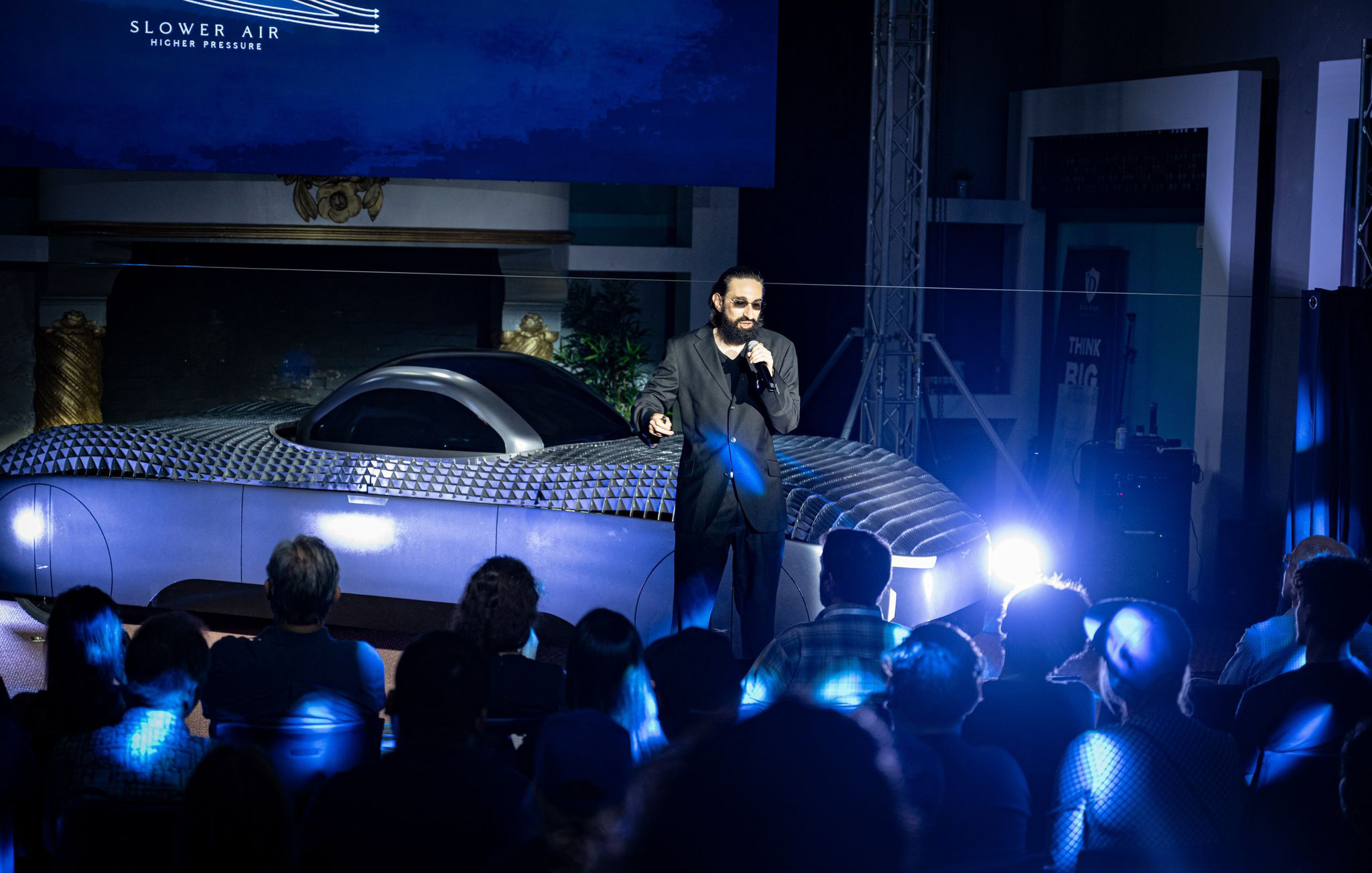
The first flying electric car, 'Model A,' approved by the FAA and it's 100% electric

Under experimental status, the first flying electric car has officially been cleared for take off.
This week, Alef Aeronautics revealed its flying car “Model A" was granted legal permission from the Federal Aviation Administration to test run the vehicle on the road and in the sky − a move needed before it can be released to the public.
Alef is the first company to receive a Special Airworthiness Certification from the FAA, the company said in a news release. The certification limits the locations and purpose for which the vehicle is allowed to fly.
The vehicle will also need to meet National Highway and Traffic Safety Administration safety standards before taking flight.
But the company's CEO Jim Dukhovny says the company is "hopeful" the certification "will be our next step."
"The historical significance of this cannot be overstated," Dukhovny told USA TODAY Friday. "While there have been pioneers like Terrafugia, Paul Moller, and Henry Ford, this is the first time a vehicle, in the traditional sense (parks and drives like a car, functions like a car, looks like a car), has received permission to fly. It's also important that Alef is the first electric car which received permission to fly. And, last but not least, the ability for vertical takeoff is central to most people's conception of a 'flying car.'"
Under the Code of Federal Regulations, Alef is required to report any issues including malfunctions or defects to the U.S. government agency during "Model A" development and testing.

Available for preorder
The flying car is now available for preorder, the Santa Clara, California-based company posted on its website. Carrying one or two occupants, the vehicle will sell for about $300,000.
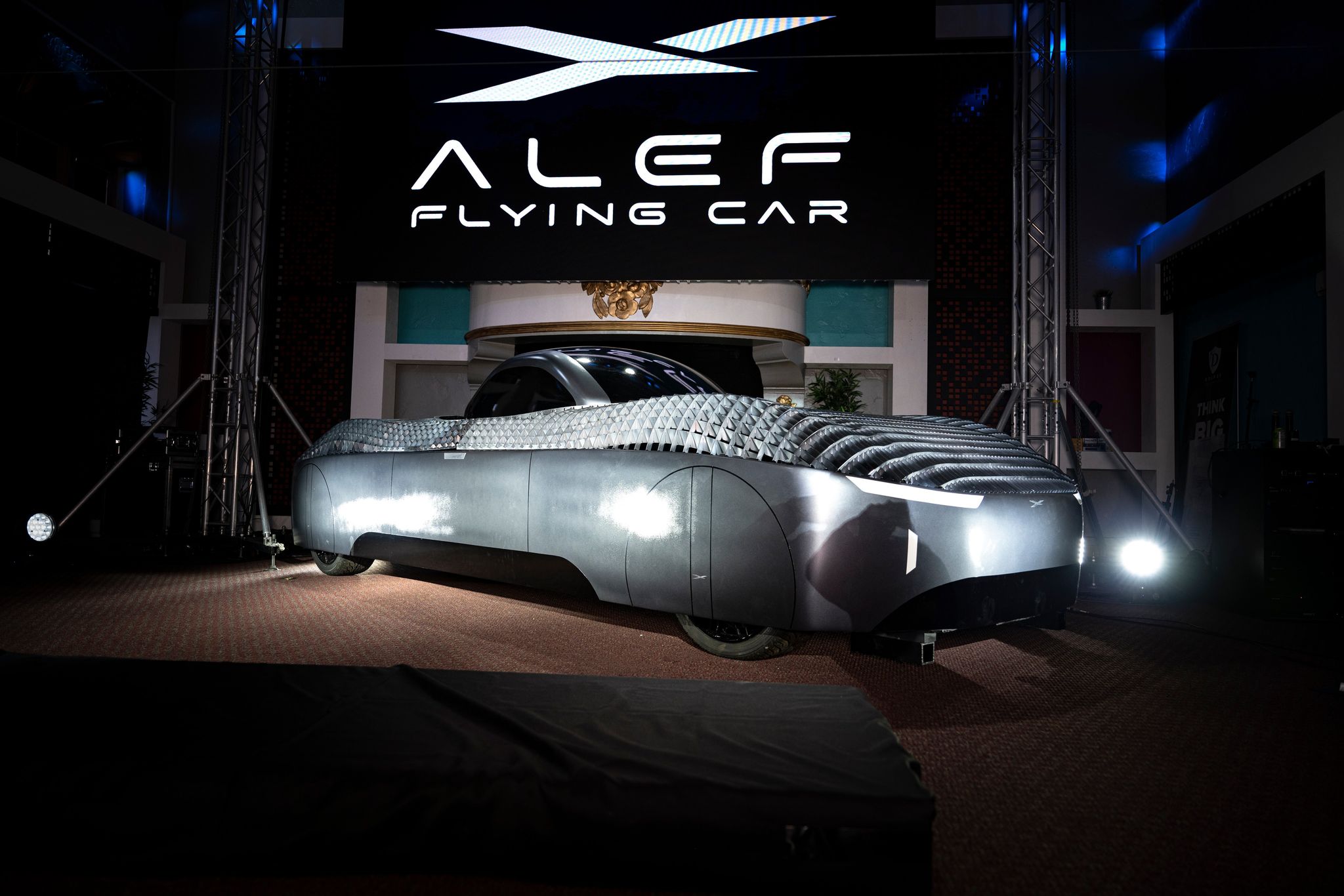
The "Model A" is 100% electric, drivable on public roads and has vertical takeoff and landing capabilities, the company wrote in its release.
The car will be a Low Speed Vehicle, meaning it won’t go faster than about 25 miles per hour on a paved surface. If a driver needs a faster route, they will be able to use the vehicle's flight capabilities, according to Alef.
As of Friday, presales were open, with interested customers able to pay a $150 deposit to get on the waiting list, or $1,500 for a priority spot on the list's queue.
Four years of test flying
The company, founded in 2015 by Dukhovny, Konstantin Kisly, Pavel Markin, Oleg Petrov in Palo Alto, California, has been test driving and flying the car's prototype since 2019.
The version customers could receive has a driving range of 200 miles and a flight range of 110 miles.


"We’re excited to receive this certification from the FAA. It allows us to move closer to bringing people an environmentally friendly and faster commute, saving individuals and companies hours each week. This is a one small step for planes, one giant step for cars."
Alef CEO Jim Dukhovny
Marty McFly influence
The idea to get the vehicle on the road and into the air happened the same year Marty McFly, a character from “Back To The Future”, traveled to the “future” of October 2015, according to the company.
"During one of the Science Fiction lectures, Jim Dukhovny talked about how flying cars are finally possible in 2015," Alef wrote in a testament on its website.
He and his fellow founders soon met, and the first real flying car was drawn on a napkin in a cafe, the company said.
The following year, the first sub-scale prototype was built, and in 2018, the first full-size “skeleton” took to the skies.

Delivery slated to start in late 2025
Buyers will be able to complete their configuration as production nears, the company, backed by a Tesla investor, said.
The company said it plans to start delivering the vehicles to customers by late 2025.
For more information about the "Model A" visit https://alef.aero.
Laws and Regulations
As a Federal agency, NHTSA regulates the safety of motor vehicles and related equipment.
Statutes
NHTSA administers statutory authority under title 49 of the United States Code, Chapters 301, 303, 321, 323, 325, 327, 329 and 331.
Motor Vehicle Safety
Chapter 301
National Driver Register
Chapter 303
General
Chapter 321
Consumer Information
Chapter 323
Bumper Standards
Chapter 325
Odometers
Chapter 327
Automobile Fuel Economy
Chapter 329
Theft Prevention
Chapter 331
Federal Motor Vehicle Safety Standards
NHTSA issues Federal Motor Vehicle Safety Standards to implement laws from Congress. FMVSSs can be found in title 49, part 571, of the Code of Federal Regulations.
FMVSS
Title 49, Part 571, Code of Federal Regulations
Regulations
NHTSA sets vehicle safety regulations, which can be found in title 49 of the Code of Federal Regulations, and highway safety regulations, which can be found in title 23 of the Code of Federal Regulations.
Vehicle Safety
Title 49, Code of Federal Regulations
Highway Safety
Title 23, Code of Federal Regulations
Other Authorities
Standing General Order on Crash Reporting, ADS and Level 2 ADAS
Bipartisan Infrastructure Law
FAST ACT
MAP-21
SAFETEA-LU
Programs, Guidance & Reports
Corporate Average Fuel Economy
Whistleblower Program
Compliance Assistance Program
Guidance Documents
Letters of Interpretation from NHTSA's Chief Counsel
Reports to Congress
American Automobile Labeling Act Reports
Civil Penalty Settlement
Digest of State Alcohol Highway Safety-Related Legislation
Code of Federal Regulations
PART 21—CERTIFICATION PROCEDURES FOR PRODUCTS AND ARTICLES
Authority:42 U.S.C. 7572; 49 U.S.C. 106(f), 106(g), 40105, 40113, 44701-44702, 44704, 44707, 44709, 44711, 44713, 44715, 45303; Sec. 102, Pub. L. 116-260, 134 Stat. 2309.
Special Federal Aviation Regulation No. 88—Fuel Tank System Fault Tolerance Evaluation Requirements
1. Applicability. This SFAR applies to the holders of type certificates, and supplemental type certificates that may affect the airplane fuel tank system, for turbine-powered transport category airplanes, provided the type certificate was issued after January 1, 1958, and the airplane has either a maximum type certificated passenger capacity of 30 or more, or a maximum type certificated payload capacity of 7,500 pounds or more. This SFAR also applies to applicants for type certificates, amendments to a type certificate, and supplemental type certificates affecting the fuel tank systems for those airplanes identified above, if the application was filed before June 6, 2001, the effective date of this SFAR, and the certificate was not issued before June 6, 2001.
2. Compliance: Each type certificate holder, and each supplemental type certificate holder of a modification affecting the airplane fuel tank system, must accomplish the following within the compliance times specified in paragraph (e) of this section:
(a) Conduct a safety review of the airplane fuel tank system to determine that the design meets the requirements of §§ 25.901 and 25.981(a) and (b) of this chapter. If the current design does not meet these requirements, develop all design changes to the fuel tank system that are necessary to meet these requirements. The responsible Aircraft Certification Service office for the affected airplane may grant an extension of the 18-month compliance time for development of design changes if:
(1) The safety review is completed within the compliance time;
(2) Necessary design changes are identified within the compliance time; and
(3) Additional time can be justified, based on the holder's demonstrated aggressiveness in performing the safety review, the complexity of the necessary design changes, the availability of interim actions to provide an acceptable level of safety, and the resulting level of safety.
(b) Develop all maintenance and inspection instructions necessary to maintain the design features required to preclude the existence or development of an ignition source within the fuel tank system of the airplane.
(c) Submit a report for approval to the responsible Aircraft Certification Service office for the affected airplane, that:
(1) Provides substantiation that the airplane fuel tank system design, including all necessary design changes, meets the requirements of §§ 25.901 and 25.981(a) and (b) of this chapter; and
(2) Contains all maintenance and inspection instructions necessary to maintain the design features required to preclude the existence or development of an ignition source within the fuel tank system throughout the operational life of the airplane.
(d) The responsible Aircraft Certification Service office for the affected airplane, may approve a report submitted in accordance with paragraph 2(c) if it determines that any provisions of this SFAR not complied with are compensated for by factors that provide an equivalent level of safety.
(e) Each type certificate holder must comply no later than December 6, 2002, or within 18 months after the issuance of a type certificate for which application was filed before June 6, 2001, whichever is later; and each supplemental type certificate holder of a modification affecting the airplane fuel tank system must comply no later than June 6, 2003, or within 18 months after the issuance of a supplemental type certificate for which application was filed before June 6, 2001, whichever is later.
[Doc. No. 1999-6411, 66 FR 23129, May 7, 2001, as amended by Amdt. 21-82, 67 FR 57493, Sept. 10, 2002; 67 FR 70809, Nov. 26, 2002; Amdt. 21-83, 67 FR 72833, Dec. 9, 2002; Doc. No. FAA-2018-0119, Amdt. 21-101, 83 FR 9169, Mar. 5, 2018]
Subpart A—General
§ 21.1 Applicability and definitions.
(a) This part prescribes—
(1) Procedural requirements for issuing and changing—
(i) Design approvals;
(ii) Production approvals;
(iii) Airworthiness certificates; and
(iv) Airworthiness approvals;
(2) Rules governing applicants for, and holders of, any approval or certificate specified in paragraph (a)(1) of this section; and
(3) Procedural requirements for the approval of articles.
(b) For the purposes of this part—
(1) Airworthiness approval means a document, issued by the FAA for an aircraft, aircraft engine, propeller, or article, which certifies that the aircraft, aircraft engine, propeller, or article conforms to its approved design and is in a condition for safe operation, unless otherwise specified;
(2) Article means a material, part, component, process, or appliance;
(3) Commercial part means an article that is listed on an FAA-approved Commercial Parts List included in a design approval holder's Instructions for Continued Airworthiness required by § 21.50;
(4) Design approval means a type certificate (including amended and supplemental type certificates) or the approved design under a PMA, TSO authorization, letter of TSO design approval, or other approved design;
(5) Interface component means an article that serves as a functional interface between an aircraft and an aircraft engine, an aircraft engine and a propeller, or an aircraft and a propeller. An interface component is designated by the holder of the type certificate or the supplemental type certificate who controls the approved design data for that article;
(6) Product means an aircraft, aircraft engine, or propeller;
(7) Production approval means a document issued by the FAA to a person that allows the production of a product or article in accordance with its approved design and approved quality system, and can take the form of a production certificate, a PMA, or a TSO authorization;
(8) State of Design means the country or jurisdiction having regulatory authority over the organization responsible for the design and continued airworthiness of a civil aeronautical product or article;
(9) State of Manufacture means the country or jurisdiction having regulatory authority over the organization responsible for the production and airworthiness of a civil aeronautical product or article.
(10) Supplier means a person at any tier in the supply chain who provides a product, article, or service that is used or consumed in the design or manufacture of, or installed on, a product or article.
[Doc. No. FAA-2006-25877, Amdt. 21-92, 74 FR 53384, Oct. 16, 2009; Doc. No. FAA-2013-0933, Amdt. 21-98, 80 FR 59031, Oct. 1, 2015; Amdt. 21-98A, 80 FR 59031, Dec. 17, 2015; Docket FAA-2015-0150, Amdt. 21-99, 81 FR 42207, June 28, 2016; Docket FAA-2018-1087, Amdt. 21-105, 86 FR 4381, Jan. 15, 2021]
§ 21.2 Falsification of applications, reports, or records.
(a) A person may not make or cause to be made—
(1) Any fraudulent, intentionally false, or misleading statement on any application for a certificate or approval under this part;
(2) Any fraudulent, intentionally false, or misleading statement in any record or report that is kept, made, or used to show compliance with any requirement of this part;
(3) Any reproduction for a fraudulent purpose of any certificate or approval issued under this part.
(4) Any alteration of any certificate or approval issued under this part.
(b) The commission by any person of an act prohibited under paragraph (a) of this section is a basis for—
(1) Denying issuance of any certificate or approval under this part; and
(2) Suspending or revoking any certificate or approval issued under this part and held by that person.
[Doc. No. 23345, 57 FR 41367, Sept. 9, 1992, as amended by Amdt. 21-92, 74 FR 53384, Oct. 16, 2009; Amdt. 21-92A, 75 FR 9095, Mar. 1, 2010]
§ 21.3 Reporting of failures, malfunctions, and defects.
(a) The holder of a type certificate (including amended or supplemental type certificates), a PMA, or a TSO authorization, or the licensee of a type certificate must report any failure, malfunction, or defect in any product or article manufactured by it that it determines has resulted in any of the occurrences listed in paragraph (c) of this section.
(b) The holder of a type certificate (including amended or supplemental type certificates), a PMA, or a TSO authorization, or the licensee of a type certificate must report any defect in any product or article manufactured by it that has left its quality system and that it determines could result in any of the occurrences listed in paragraph (c) of this section.
(c) The following occurrences must be reported as provided in paragraphs (a) and (b) of this section:
(1) Fires caused by a system or equipment failure, malfunction, or defect.
(2) An engine exhaust system failure, malfunction, or defect which causes damage to the engine, adjacent aircraft structure, equipment, or components.
(3) The accumulation or circulation of toxic or noxious gases in the crew compartment or passenger cabin.
(4) A malfunction, failure, or defect of a propeller control system.
(5) A propeller or rotorcraft hub or blade structural failure.
(6) Flammable fluid leakage in areas where an ignition source normally exists.
(7) A brake system failure caused by structural or material failure during operation.
(8) A significant aircraft primary structural defect or failure caused by any autogenous condition (fatigue, understrength, corrosion, etc.).
(9) Any abnormal vibration or buffeting caused by a structural or system malfunction, defect, or failure.
(10) An engine failure.
(11) Any structural or flight control system malfunction, defect, or failure which causes an interference with normal control of the aircraft for which derogates the flying qualities.
(12) A complete loss of more than one electrical power generating system or hydraulic power system during a given operation of the aircraft.
(13) A failure or malfunction of more than one attitude, airspeed, or altitude instrument during a given operation of the aircraft.
(d) The requirements of paragraph (a) of this section do not apply to—
(1) Failures, malfunctions, or defects that the holder of a type certificate (including amended or supplemental type certificates), PMA, TSO authorization, or the licensee of a type certificate determines—
(i) Were caused by improper maintenance or use;
(ii) Were reported to the FAA by another person under this chapter; or
(iii) Were reported under the accident reporting provisions of 49 CFR part 830 of the regulations of the National Transportation Safety Board.
(2) Failures, malfunctions, or defects in products or articles—
(i) Manufactured by a foreign manufacturer under a U.S. type certificate issued under § 21.29 or under an approval issued under § 21.621; or
(ii) Exported to the United States under § 21.502.
(e) Each report required by this section—
(1) Must be made to the FAA within 24 hours after it has determined that the failure, malfunction, or defect required to be reported has occurred. However, a report that is due on a Saturday or a Sunday may be delivered on the following Monday and one that is due on a holiday may be delivered on the next workday;
(2) Must be transmitted in a manner and form acceptable to the FAA and by the most expeditious method available; and
(3) Must include as much of the following information as is available and applicable:
(i) The applicable product and article identification information required by part 45 of this chapter;
(ii) Identification of the system involved; and
(iii) Nature of the failure, malfunction, or defect.
(f) If an accident investigation or service difficulty report shows that a product or article manufactured under this part is unsafe because of a manufacturing or design data defect, the holder of the production approval for that product or article must, upon request of the FAA, report to the FAA the results of its investigation and any action taken or proposed by the holder of that production approval to correct that defect. If action is required to correct the defect in an existing product or article, the holder of that production approval must send the data necessary for issuing an appropriate airworthiness directive to the FAA.
[Amdt. 21-36, 35 FR 18187, Nov. 28, 1970, as amended by Amdt. 21-37, 35 FR 18450, Dec. 4, 1970; Amdt. 21-50, 45 FR 38346, June 9, 1980; Amdt. 21-67, 54 FR 39291, Sept. 25, 1989; Amdt. 21-92, 74 FR 53385, Oct. 16, 2009; Doc. No. FAA-2018-0119, Amdt. 21-101, 83 FR 9169, Mar. 5, 2018]
§ 21.4 ETOPS reporting requirements.
(a) Early ETOPS: reporting, tracking, and resolving problems. The holder of a type certificate for an airplane-engine combination approved using the Early ETOPS method specified in part 25, Appendix K, of this chapter must use a system for reporting, tracking, and resolving each problem resulting in one of the occurrences specified in paragraph (a)(6) of this section.
(1) The system must identify how the type certificate holder will promptly identify problems, report them to the responsible Aircraft Certification Service office, and propose a solution to the FAA to resolve each problem. A proposed solution must consist of—
(i) A change in the airplane or engine type design;
(ii) A change in a manufacturing process;
(iii) A change in an operating or maintenance procedure; or
(iv) Any other solution acceptable to the FAA.
(2) For an airplane with more than two engines, the system must be in place for the first 250,000 world fleet engine-hours for the approved airplane-engine combination.
(3) For two-engine airplanes, the system must be in place for the first 250,000 world fleet engine-hours for the approved airplane-engine combination and after that until—
(i) The world fleet 12-month rolling average IFSD rate is at or below the rate required by paragraph (b)(2) of this section; and
(ii) The FAA determines that the rate is stable.
(4) For an airplane-engine combination that is a derivative of an airplane-engine combination previously approved for ETOPS, the system need only address those problems specified in the following table, provided the type certificate holder obtains prior authorization from the FAA:
If the change does not require a new airplane type certificate and . . .
(i) Requires a new engine type certificate All problems applicable to the new engine installation, and for the remainder of the airplane, problems in changed systems only.
(ii) Does not require a new engine type certificate Problems in changed systems only.
Then the Problem Tracking and Resolution System must address . . .
(i) All problems applicable to the new engine installation, and for the remainder of the airplane, problems in changed systems only.
(ii) Problems in changed systems only.
(5) The type certificate holder must identify the sources and content of data that it will use for its system. The data must be adequate to evaluate the specific cause of any in-service problem reportable under this section or § 21.3(c) that could affect the safety of ETOPS.
(6) In implementing this system, the type certificate holder must report the following occurrences:
(i) IFSDs, except planned IFSDs performed for flight training.
(ii) For two-engine airplanes, IFSD rates.
(iii) Inability to control an engine or obtain desired thrust or power.
(iv) Precautionary thrust or power reductions.
(v) Degraded ability to start an engine in flight.
(vi) Inadvertent fuel loss or unavailability, or uncorrectable fuel imbalance in flight.
(vii) Turn backs or diversions for failures, malfunctions, or defects associated with an ETOPS group 1 significant system.
(viii) Loss of any power source for an ETOPS group 1 significant system, including any power source designed to provide backup power for that system.
(ix) Any event that would jeopardize the safe flight and landing of the airplane on an ETOPS flight.
(x) Any unscheduled engine removal for a condition that could result in one of the reportable occurrences listed in this paragraph.
(b) Reliability of two-engine airplanes —
(1) Reporting of two-engine airplane in-service reliability. The holder of a type certificate for an airplane approved for ETOPS and the holder of a type certificate for an engine installed on an airplane approved for ETOPS must report monthly to their respective Aircraft Certification Service office on the reliability of the world fleet of those airplanes and engines. The report provided by both the airplane and engine type certificate holders must address each airplane-engine combination approved for ETOPS. The FAA may approve quarterly reporting if the airplane-engine combination demonstrates an IFSD rate at or below those specified in paragraph (b)(2) of this section for a period acceptable to the FAA. This reporting may be combined with the reporting required by § 21.3. The responsible type certificate holder must investigate any cause of an IFSD resulting from an occurrence attributable to the design of its product and report the results of that investigation to its responsible Aircraft Certification Service office. Reporting must include:
(i) Engine IFSDs, except planned IFSDs performed for flight training.
(ii) The world fleet 12-month rolling average IFSD rates for all causes, except planned IFSDs performed for flight training.
(iii) ETOPS fleet utilization, including a list of operators, their ETOPS diversion time authority, flight hours, and cycles.
(2) World fleet IFSD rate for two-engine airplanes. The holder of a type certificate for an airplane approved for ETOPS and the holder of a type certificate for an engine installed on an airplane approved for ETOPS must issue service information to the operators of those airplanes and engines, as appropriate, to maintain the world fleet 12-month rolling average IFSD rate at or below the following levels:
(i) A rate of 0.05 per 1,000 world-fleet engine-hours for an airplane-engine combination approved for up to and including 120-minute ETOPS. When all ETOPS operators have complied with the corrective actions required in the configuration, maintenance and procedures (CMP) document as a condition for ETOPS approval, the rate to be maintained is at or below 0.02 per 1,000 world-fleet engine-hours.
(ii) A rate of 0.02 per 1,000 world-fleet engine-hours for an airplane-engine combination approved for up to and including 180-minute ETOPS, including airplane-engine combinations approved for 207-minute ETOPS in the North Pacific operating area under appendix P, section I, paragraph (h), of part 121 of this chapter.
(iii) A rate of 0.01 per 1,000 world-fleet engine-hours for an airplane-engine combination approved for ETOPS beyond 180 minutes, excluding airplane-engine combinations approved for 207-minute ETOPS in the North Pacific operating area under appendix P, section I, paragraph (h), of part 121 of this chapter.
[Doc. No. FAA-2002-6717, 72 FR 1872, Jan. 16, 2007, as amended by Doc. No. FAA-2018-0119, Amdt. 21-101, 83 FR 9169, Mar. 5, 2018]
§ 21.5 Airplane or Rotorcraft Flight Manual.
(a) With each airplane or rotorcraft not type certificated with an Airplane or Rotorcraft Flight Manual and having no flight time before March 1, 1979, the holder of a type certificate (including amended or supplemental type certificates) or the licensee of a type certificate must make available to the owner at the time of delivery of the aircraft a current approved Airplane or Rotorcraft Flight Manual.
(b) The Airplane or Rotorcraft Flight Manual required by paragraph (a) of this section must contain the following information:
(1) The operating limitations and information required to be furnished in an Airplane or Rotorcraft Flight Manual or in manual material, markings, and placards, by the applicable regulations under which the airplane or rotorcraft was type certificated.
(2) The maximum ambient atmospheric temperature for which engine cooling was demonstrated must be stated in the performance information section of the Flight Manual, if the applicable regulations under which the aircraft was type certificated do not require ambient temperature on engine cooling operating limitations in the Flight Manual.
(3) Documentation of compliance with part 38 of this chapter, in an FAA-approved section of any approved airplane flight manual. Such material must include the fuel efficiency metric value as calculated under § 38.11 of this chapter, and the specific paragraph of § 38.17 of this chapter with which compliance has been shown for that airplane.
[Amdt. 21-46, 43 FR 2316, Jan. 16, 1978, as amended by Amdt. 21-92, 74 FR 53385, Oct. 16, 2009; Admt. 21-107, 89 FR 12653, Feb. 16, 2024]
§ 21.6 Manufacture of new aircraft, aircraft engines, and propellers.
(a) Except as specified in paragraphs (b) and (c) of this section, no person may manufacture a new aircraft, aircraft engine, or propeller based on a type certificate unless the person—
(1) Is the holder of the type certificate or has a licensing agreement from the holder of the type certificate to manufacture the product; and
(2) Meets the requirements of subpart F or G of this part.
(b) A person may manufacture one new aircraft based on a type certificate without meeting the requirements of paragraph (a) of this section if that person can provide evidence acceptable to the FAA that the manufacture of the aircraft by that person began before August 5, 2004.
(c) The requirements of this section do not apply to—
(1) New aircraft imported under the provisions of §§ 21.183(c), 21.184(b), or 21.185(c); and
(2) New aircraft engines or propellers imported under the provisions of § 21.500.
[Doc. No. FAA-2003-14825, 71 FR 52258, Sept. 1, 2006]
§ 21.7 Continued airworthiness and safety improvements for transport category airplanes.
(a) On or after December 10, 2007, the holder of a design approval and an applicant for a design approval must comply with the applicable continued airworthiness and safety improvement requirements of part 26 of this subchapter.
(b) For new transport category airplanes manufactured under the authority of the FAA, the holder or licensee of a type certificate must meet the applicable continued airworthiness and safety improvement requirements specified in part 26 of this subchapter for new production airplanes. Those requirements only apply if the FAA has jurisdiction over the organization responsible for final assembly of the airplane.
[Doc. No. FAA-2004-18379, Amdt. 21-90, 72 FR 63404, Nov. 8, 2007]
§ 21.8 Approval of articles.
If an article is required to be approved under this chapter, it may be approved—
(a) Under a PMA;
(b) Under a TSO;
(c) In conjunction with type certification procedures for a product; or
(d) In any other manner approved by the FAA.
[Doc. No. FAA-2006-5877, Amdt. 21-92, 74 FR 53385, Oct. 16, 2009]
§ 21.9 Replacement and modification articles.
(a) If a person knows, or should know, that a replacement or modification article is reasonably likely to be installed on a type-certificated product, the person may not produce that article unless it is—
(1) Produced under a type certificate;
(2) Produced under an FAA production approval;
(3) A standard part (such as a nut or bolt) manufactured in compliance with a government or established industry specification;
(4) A commercial part as defined in § 21.1 of this part;
(5) Produced by an owner or operator for maintaining or altering that owner or operator's product;
(6) Fabricated by an appropriately rated certificate holder with a quality system, and consumed in the repair or alteration of a product or article in accordance with part 43 of this chapter; or
(7) Produced in any other manner approved by the FAA.
(b) Except as provided in paragraphs (a)(1) through (a)(2) of this section, a person who produces a replacement or modification article for sale may not represent that part as suitable for installation on a type-certificated product.
(c) Except as provided in paragraphs (a)(1) through (a)(2) of this section, a person may not sell or represent an article as suitable for installation on an aircraft type-certificated under §§ 21.25(a)(2) or 21.27 unless that article—
(1) Was declared surplus by the U.S. Armed Forces, and
(2) Was intended for use on that aircraft model by the U.S. Armed Forces.
[Doc. No. FAA-2006-25877, Amdt. 21-92, 74 FR 53385, Oct. 16, 2009; Amdt. 21-92A, 75 FR 9095, Mar. 1, 2010; Doc. No. FAA-2015-1621, Amdt. 21-100, 81 FR 96688, Dec. 30, 2016]
§ 21.9 Replacement and modification articles.
(a) If a person knows, or should know, that a replacement or modification article is reasonably likely to be installed on a type-certificated product, the person may not produce that article unless it is—
(1) Produced under a type certificate;
(2) Produced under an FAA production approval;
(3) A standard part (such as a nut or bolt) manufactured in compliance with a government or established industry specification;
(4) A commercial part as defined in § 21.1 of this part;
(5) Produced by an owner or operator for maintaining or altering that owner or operator's product;
(6) Fabricated by an appropriately rated certificate holder with a quality system, and consumed in the repair or alteration of a product or article in accordance with part 43 of this chapter; or
(7) Produced in any other manner approved by the FAA.
(b) Except as provided in paragraphs (a)(1) through (a)(2) of this section, a person who produces a replacement or modification article for sale may not represent that part as suitable for installation on a type-certificated product.
(c) Except as provided in paragraphs (a)(1) through (a)(2) of this section, a person may not sell or represent an article as suitable for installation on an aircraft type-certificated under §§ 21.25(a)(2) or 21.27 unless that article—
(1) Was declared surplus by the U.S. Armed Forces, and
(2) Was intended for use on that aircraft model by the U.S. Armed Forces.
[Doc. No. FAA-2006-25877, Amdt. 21-92, 74 FR 53385, Oct. 16, 2009; Amdt. 21-92A, 75 FR 9095, Mar. 1, 2010; Doc. No. FAA-2015-1621, Amdt. 21-100, 81 FR 96688, Dec. 30, 2016]
Subpart B—Type Certificates
Source:Docket No. 5085, 29 FR 14564, Oct. 24, 1964, unless otherwise noted.
§ 21.11 Applicability.
This subpart prescribes—
(a) Procedural requirements for the issue of type certificates for aircraft, aircraft engines, and propellers; and
(b) Rules governing the holders of those certificates.
§ 21.13 Eligibility.
Any interested person may apply for a type certificate.
[Amdt. 21-25, 34 FR 14068, Sept. 5, 1969]
§ 21.15 Application for type certificate.
(a) An application for a type certificate is made on a form and in a manner prescribed by the FAA.
(b) An application for an aircraft type certificate must be accompanied by a three-view drawing of that aircraft and available preliminary basic data.
(c) An application for an aircraft engine type certificate must be accompanied by a description of the engine design features, the engine operating characteristics, and the proposed engine operating limitations.
[Doc. No. 5085, 29 FR 14564, Oct. 24, 1964, as amended by Amdt. 21-40, 39 FR 35459, Oct. 1, 1974; Amdt. 21-67, 54 FR 39291, Sept. 25, 1989; Amdt. 21-92, 74 FR 53385, Oct. 16, 2009; Doc. No. FAA-2018-0119, Amdt. 21-101, 83 FR 9169, Mar. 5, 2018]
2015
By coincidence, two events happened at the same time in the Fall of 2015; one real and one fictional.
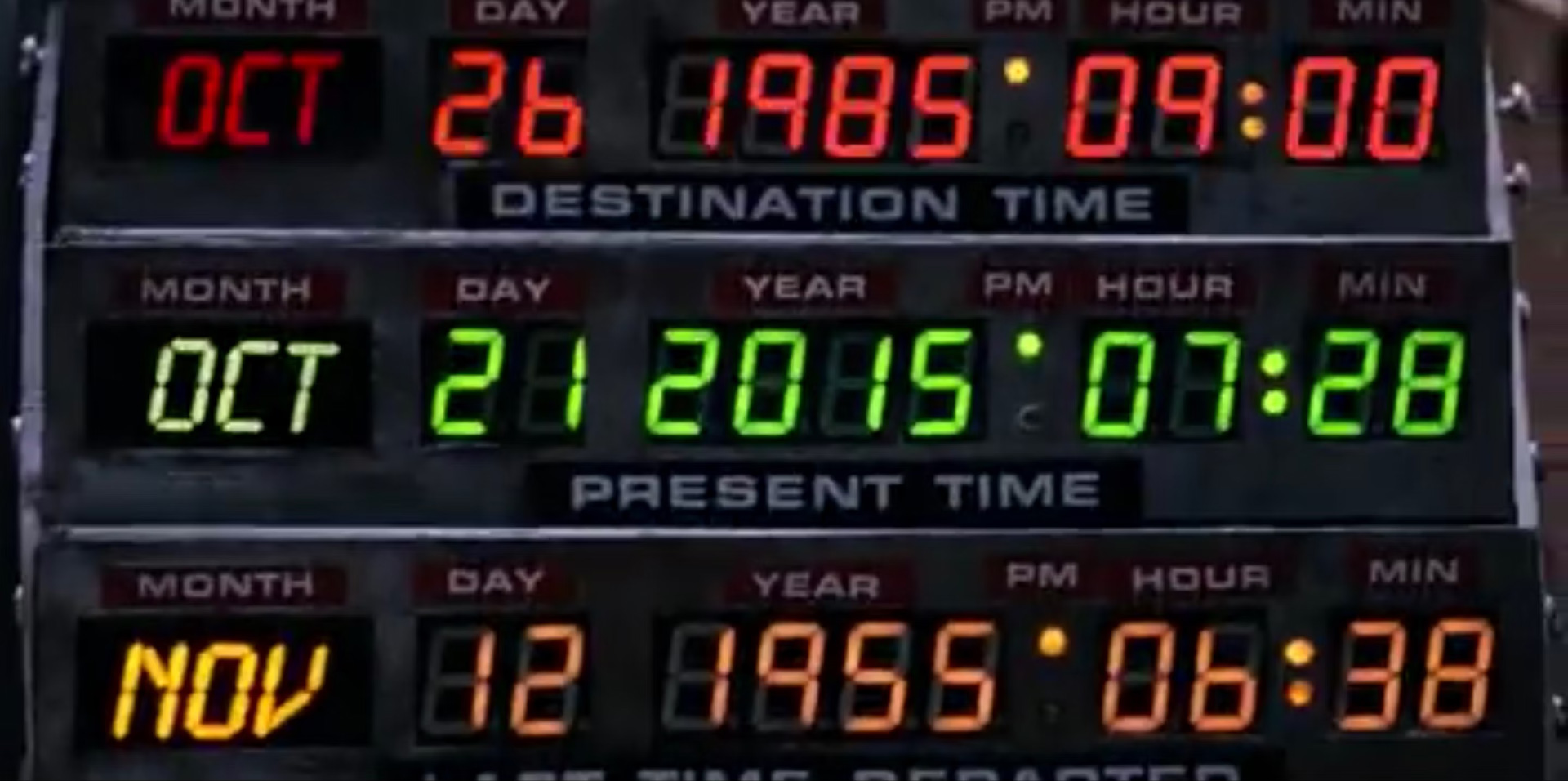
A moment from "Back To The Future".
Fictional was: Marty McFly, a character from “Back To The Future”, traveled to the “future” of October 2015. Real was: 4 founders decided to form a company to build a real flying car.
During one of the Science Fiction lectures, Jim Dukhovny talked about how flying cars are finally possible in 2015. But he lacked technical skills to take on such a complicated task by himself. So, in several weeks four friends met at a Coupa Cafe in Palo Alto: Dr. Constantine Kisly, Pavel Markin, Oleg Petrov, Jim Dukhovny - each a technical genius.

Alef founders at Draper University.
The first real flying car was drawn on a napkin in a cafe. It was assumed it would take about 6 months to build one. Boy, was this an underestimate.
The constraints were: it has to be a real car (driving in driving lanes, parking in parking spaces), it has to have a vertical takeoff (otherwise it is not a real flying car), it has to be affordable for most people (not just the rich).
2016
In 2016, the first sub-scale prototype was built.
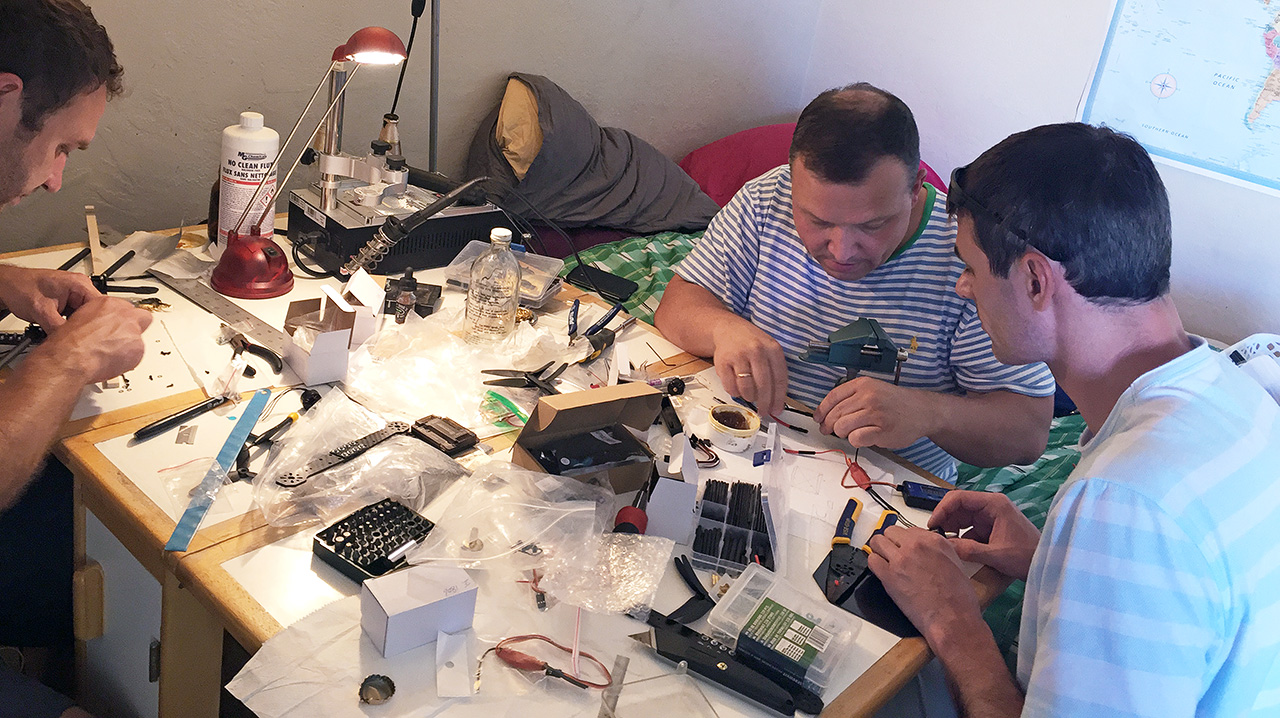
Early days of the team in their garage
Early
Early
After rigorous software and hardware testing, including wind tunnel simulations and flow dynamics, a body of a real arm-size RV car was taken, and the proprietary propulsion was installed.
This scaled version, together with full-size propulsion was demonstrated for one of the most revolutionary and successful businessmen in history, Tim Draper, who after seeing the vehicle’s potential, became the pioneering investor of the company. Tim Draper also became a mentor and an inspiration to the team.
The next critical step was proving efficient forward flight, in order to prove the car as an everyday commuter vehicle. After this was accomplished, significant investment followed and the team moved forward at pace.
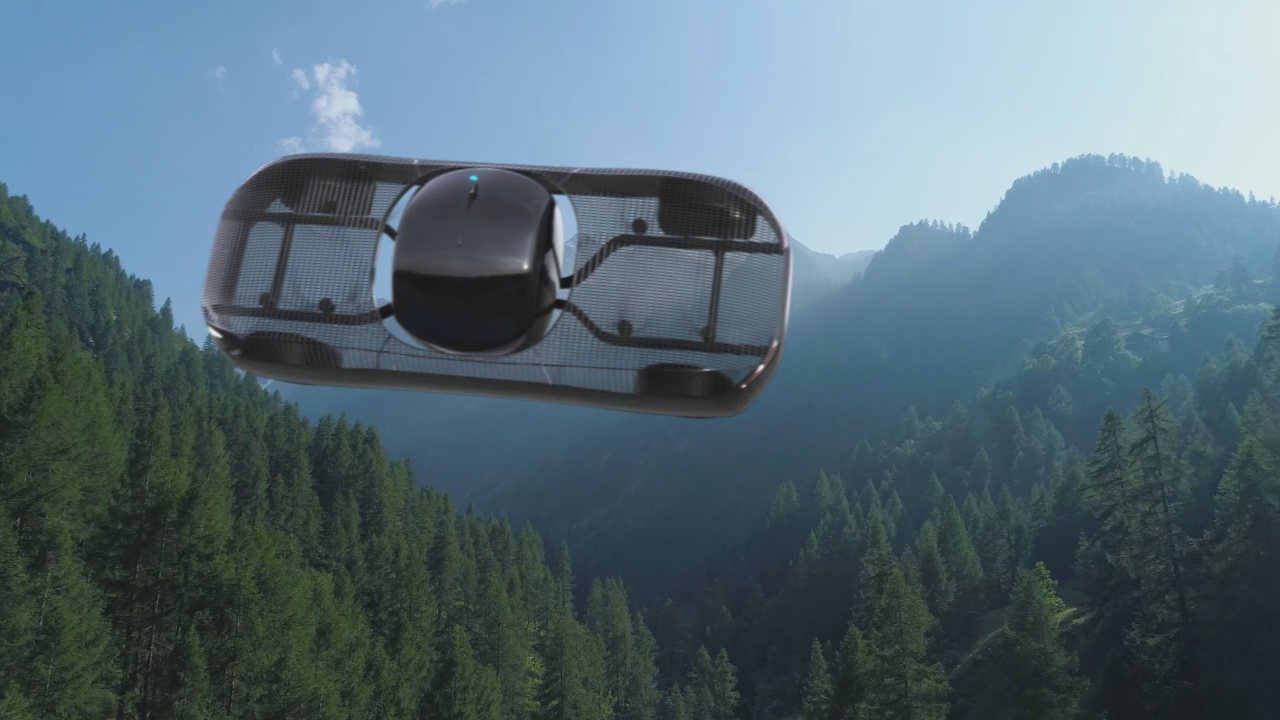
( f l y ii n g c a r )
The next big step was proving the efficient forward flight, in order for this flying car to become not a toy, but an everyday commute vehicle. After this was accomplished, a big round of investment sent the company on a full-time focused journey.
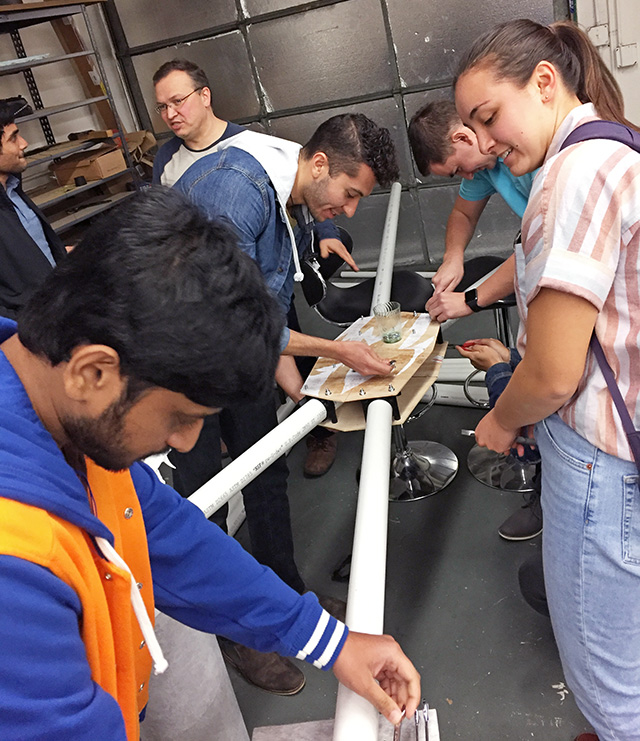
New professionals join the team.
Number of young bright engineers joined Armada.
Number of famous and world-expert people joined the Advisory Board.
Number of investors became believers and created a resourceful network spanning America, Europe and Asia.
2018
In 2018, the first full-size “skeleton” was flown. And it proved to confirm that calculations and subscale research was correct.
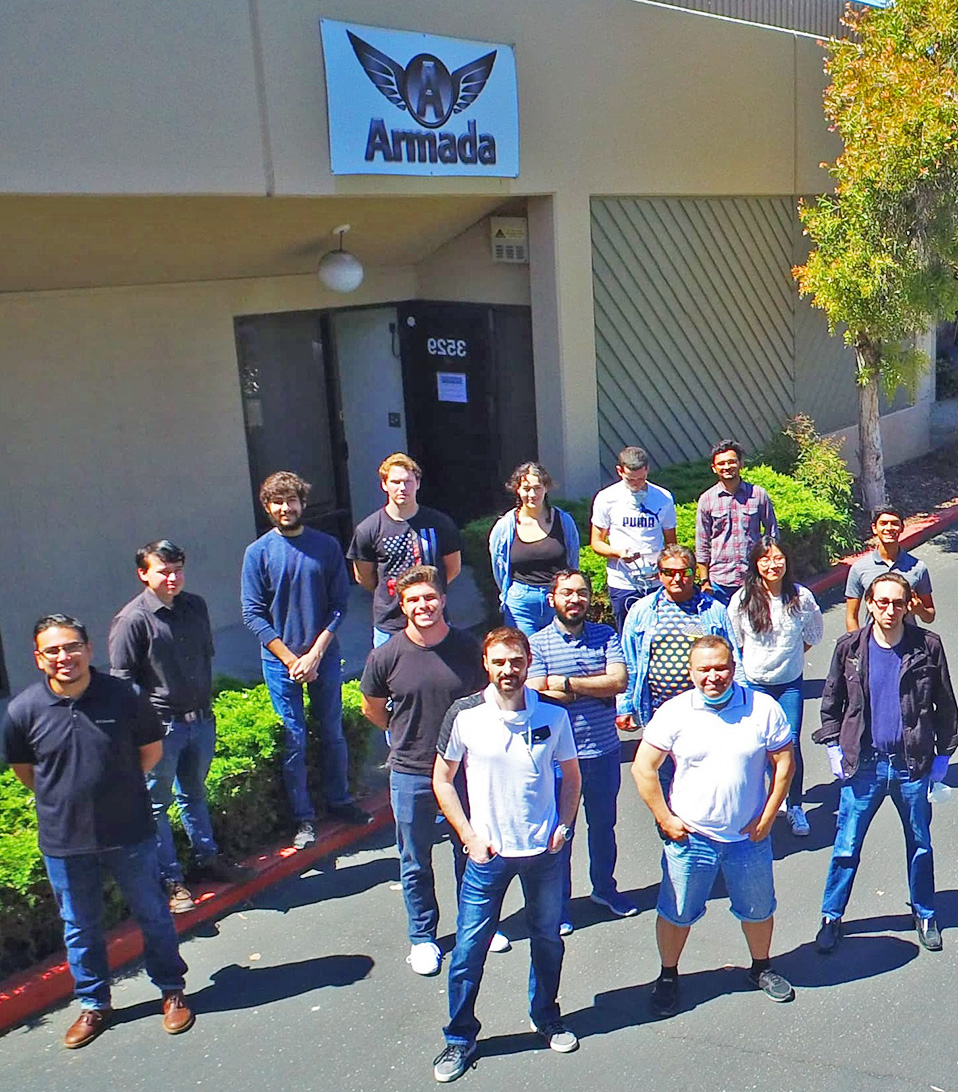
The Armada team at Santa Clara office.

Armada Aeronautics team.
2019
In 2019, after four years of R&D, a full-size prototype was flown. Shortly after that, the vehicle was converted for autonomous flight for the safe continuation of testing. Development continued and the first semi-public demo of a real full-size flying car was shown to a group of investors. It consisted of driving, vertical takeoff, and a small forward motion.
Meanwhile the work on the patent continued, and finally USPTO indicated the allowance of key claims.
2021
By 2021 the company’s leadership team were ready to extend their focus beyond just engineering, and turned to the look and feel of their expanding brand. Their team expanded with the recruitment of famous exterior and interior former Bugatti and other major brands designer, Hirash Razaghi, whose mandate was to define the modern, sporty exterior design of the company’s consumer vehicle.

Flying Car
A famous exterior and interior Bugatti and Jaguar designer from Sweden, Hirash Razaghi, was hired, and he produced a modern sporty look and feel car.
2022
The company officially rebranded under the name “Alef” and launched its public facing website along with a defined mission and vision for a new consumer future. Alef - as in the first letter of a Phoenician, Aramaic, Hebrew, Arabic, Persian, Syrian and other alphabets – signifies the leading position Alef will eventually occupy in the hearts, minds, and garages of the public.
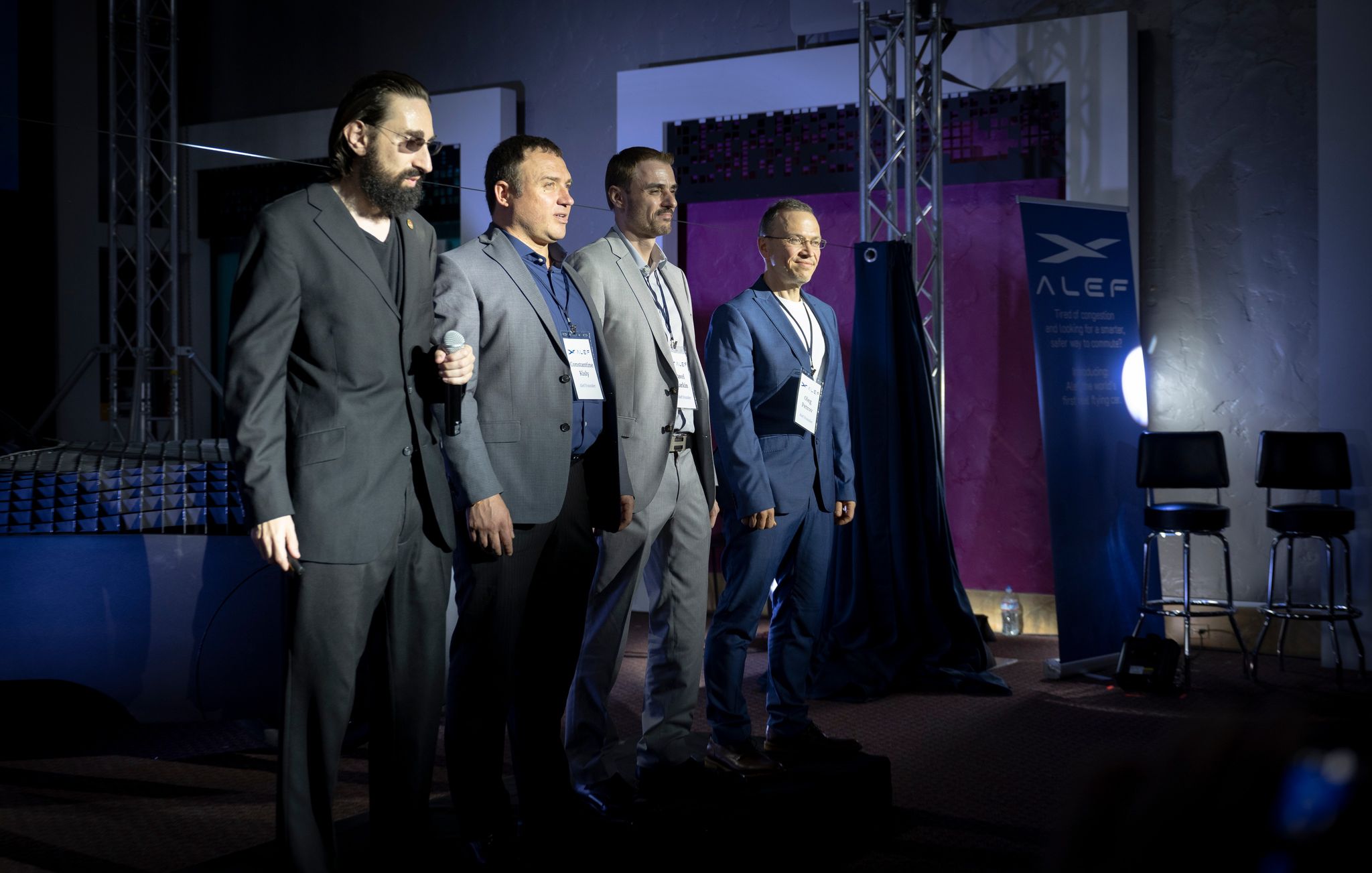
Four Founders