312 Meridian Exercise
312 Meridian Exercise was developed by Professor Zhu Zongxiang based on the principles of the meridian system.
3 refers to massaging three acupoints of hegu on the hand neiguan on the wrist and zusanli on the knee.
1 refers to abdominal breathing, actually a form of simplified qigong (breathing exercise), through which Zhu believed could exercise the meridians in the abdomen area being closely related with chronic diseases.
2 refers to the physical exercise of both legs. Zhu believed the most simple and effective exercise is squatting down and standing up.
Profesor Zhu Zongxiang

91 year old (2014) Zhu Zongxiang has the vigor and vitality of man half his age. In a few old and shabby rooms situated near a group of ancient buildings in Beijing, the old doctor has stubbornly persisted in learning more about the meridians of acupuncture for more than 30 years. He often said he was a traitor to Western medicine.
Since the 1950s, he had been teaching physiology, a basic medical subject, in Peking Union Medical College Hospital. However, a decision in 1973 changed his life.
That year, he was inspired by Premier Zhou Enlai's appeal to Chinese medical experts to make clear the theory of acupuncture. Zhou's call for action followed US President Richard Nixon's visit to China in 1972.
Zhu joined the acupuncture meridian research group of the Institute of Biophysics under Chinese Academy of Sciences.
Meridian points were discovered in China 2,500 years ago. In Huang Di Nei Jing (The Medical Classic of the Yellow Emperor), one of the most important ancient medical classics, the meridians were recorded to have the function of "promoting circulation of Xueqi (Blood and Qi) and balancing yin and yang" and "determining life and death and treating hundred diseases."
The meridians were discovered to be a general controlling system for the human body and had the function of preventing diseases and promoting health and longevity. Today, TCM doctors still insert acupuncture needles into the acupoints along the meridians to treat diseases.
However, the existence of the meridians has always been questioned by Western medicine.
To justify the theory, doctor Zhu and his colleagues had spent more than 10 years to experiment with modern methods to demonstrate its biophysical existence.
In the 1980s, the researchers successfully showed the 14 meridians in human body through biophysical methods, which are surprisingly identical to that recorded in ancient classical meridian graph.
For visitors suspicious towards his research, doctor Zhu would proudly demonstrate his two proof tests to them.
He used a mallet to tap different areas on the elbow until the patient heard a loud sound measured through a device similar to the stethoscope. Zhu then marked a red spot at that point.
A line of the red spots determined by the same method is actually showing the position of a meridian, according to Zhu.
He would then place two electrodes of a current meter on the line and stimulation of the current could be felt. When one electrode was placed off the line, one would feel nothing. It showed that the meridian line had the lowest electric impedance, according to Zhu.
Even after Zhu published his breakthrough findings, the scientific world still did not change their skeptical attitude. And the debate on meridians is ongoing and interpretations of the phenomenon vary among scientists.
In ancient times, meridians was a philosophical concept invented by ancient Chinese doctors to summarize the general functions of the human body, according to Wu Gencheng, director of Institute of Acupuncture Research, Shanghai Medical College of Fudan University. The institute had been researching acupuncture for decades.
"We believe that the meridians' functions are closely related with the nerves, but it is impossible in modern science to find the material equivalent to the meridians described in the ancient time. It is hard to imagine a new passage way in the human body," said Wu.
In a further blow to Zhu's efforts, the Institute stopped funding their research.
Zhu did not give up and established Beijing Yanhuang Meridian Center to design the meridian based exercise to promote people's health and longevity. Zhu calls it the "3-1-2" method.
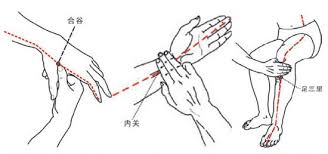
According to Zhu, 3 refers to massaging three acupoints of hegu on the hand neiguan on the wrist and zusanli on the knee.
1 refers to abdominal breathing, actually a form of simplified qigong (breathing exercise), through which Zhu believed could exercise the meridians in the abdomen area being closely related with chronic diseases.
2 refers to the physical exercise of both legs. Zhu believed the most simple and effective exercise is squatting down and standing up.
"Physical exercise will involve the excitation of all the meridians spreading in the whole body," he explained.
In fact, in Zhu's views, the health benefits of all kinds of physical exercise are actually coming from the enhancement of the meridians in the process.
Daily exercises for 25 minutes will keep people young and vigorous, prevent and treat many senile and difficult diseases and relieve some common diseases, Zhu claims.
During the past 17 years, Zhu had formally trained more than 10,000 people, mostly elderly people. "Though the popularization of the exercise is slow, I obtain valuable proof information from them that the exercise is effective for health promotion," he said.
Zhang Yawen, 74, was a typical beneficiary of 312 exercises. She was a college professor and had long been inflicted by hypertension and arthritis, which often made her sleepless at night.
She claimed her health improved a lot after she followed 312 exercises for a few months. Now she has the confidence to live to 100.
Zhu conducted a study among more than 8,000 people attending his training class, 95 percent of whom suffered from chronic diseases such as hypertension, coronary heart disease, asthma, diabetes and arthritis. Most have seen major improvements after four weeks' practice.
Though Zhu had a strong wish to spread his exercise to a larger population, he still depends on opening workshops and distributing study materials to spread the word.


16 August 2014
Hosted in Guiyang, China on 16th August 2014, the 4th World 312 Meridian Congress had received speakers from 10 countries around the world including China, India, European Union, Malaysia and Singapore. 2000 strong crowd from 30 different provinces in China attended the congress.
Guests of honour include national leaders of China to grace the event of spreading the popular 312 exercise which had attracted over 30,000,000 people worldwide.
The next congress will be held in Singapore organised by International 312 Meridian Exercise Association.
312 Meridian Exercise was developed by Professor Zhu Zongxiang based on the principles of the meridian system.
3 refers to massaging three acupoints of hegu on the hand neiguan on the wrist and zusanli on the knee.
1 refers to abdominal breathing, actually a form of simplified qigong (breathing exercise), through which Zhu believed could exercise the meridians in the abdomen area being closely related with chronic diseases.
2 refers to the physical exercise of both legs. Zhu believed the most simple and effective exercise is squatting down and standing up.
Profesor Zhu Zongxiang
91 year old (2014) Zhu Zongxiang has the vigor and vitality of man half his age. In a few old and shabby rooms situated near a group of ancient buildings in Beijing, the old doctor has stubbornly persisted in learning more about the meridians of acupuncture for more than 30 years. He often said he was a traitor to Western medicine.
Since the 1950s, he had been teaching physiology, a basic medical subject, in Peking Union Medical College Hospital. However, a decision in 1973 changed his life.
That year, he was inspired by Premier Zhou Enlai's appeal to Chinese medical experts to make clear the theory of acupuncture. Zhou's call for action followed US President Richard Nixon's visit to China in 1972.
Zhu joined the acupuncture meridian research group of the Institute of Biophysics under Chinese Academy of Sciences.
Meridian points were discovered in China 2,500 years ago. In Huang Di Nei Jing (The Medical Classic of the Yellow Emperor), one of the most important ancient medical classics, the meridians were recorded to have the function of "promoting circulation of Xueqi (Blood and Qi) and balancing yin and yang" and "determining life and death and treating hundred diseases."
The meridians were discovered to be a general controlling system for the human body and had the function of preventing diseases and promoting health and longevity. Today, TCM doctors still insert acupuncture needles into the acupoints along the meridians to treat diseases.
However, the existence of the meridians has always been questioned by Western medicine.
To justify the theory, doctor Zhu and his colleagues had spent more than 10 years to experiment with modern methods to demonstrate its biophysical existence.
In the 1980s, the researchers successfully showed the 14 meridians in human body through biophysical methods, which are surprisingly identical to that recorded in ancient classical meridian graph.
For visitors suspicious towards his research, doctor Zhu would proudly demonstrate his two proof tests to them.
He used a mallet to tap different areas on the elbow until the patient heard a loud sound measured through a device similar to the stethoscope. Zhu then marked a red spot at that point.
A line of the red spots determined by the same method is actually showing the position of a meridian, according to Zhu.
He would then place two electrodes of a current meter on the line and stimulation of the current could be felt. When one electrode was placed off the line, one would feel nothing. It showed that the meridian line had the lowest electric impedance, according to Zhu.
Even after Zhu published his breakthrough findings, the scientific world still did not change their skeptical attitude. And the debate on meridians is ongoing and interpretations of the phenomenon vary among scientists.
In ancient times, meridians was a philosophical concept invented by ancient Chinese doctors to summarize the general functions of the human body, according to Wu Gencheng, director of Institute of Acupuncture Research, Shanghai Medical College of Fudan University. The institute had been researching acupuncture for decades.
"We believe that the meridians' functions are closely related with the nerves, but it is impossible in modern science to find the material equivalent to the meridians described in the ancient time. It is hard to imagine a new passage way in the human body," said Wu.
In a further blow to Zhu's efforts, the Institute stopped funding their research.
Zhu did not give up and established Beijing Yanhuang Meridian Center to design the meridian based exercise to promote people's health and longevity. Zhu calls it the "3-1-2" method.
According to Zhu, 3 refers to massaging three acupoints of hegu on the hand neiguan on the wrist and zusanli on the knee.
1 refers to abdominal breathing, actually a form of simplified qigong (breathing exercise), through which Zhu believed could exercise the meridians in the abdomen area being closely related with chronic diseases.
2 refers to the physical exercise of both legs. Zhu believed the most simple and effective exercise is squatting down and standing up.
"Physical exercise will involve the excitation of all the meridians spreading in the whole body," he explained.
In fact, in Zhu's views, the health benefits of all kinds of physical exercise are actually coming from the enhancement of the meridians in the process.
Daily exercises for 25 minutes will keep people young and vigorous, prevent and treat many senile and difficult diseases and relieve some common diseases, Zhu claims.
During the past 17 years, Zhu had formally trained more than 10,000 people, mostly elderly people. "Though the popularization of the exercise is slow, I obtain valuable proof information from them that the exercise is effective for health promotion," he said.
Zhang Yawen, 74, was a typical beneficiary of 312 exercises. She was a college professor and had long been inflicted by hypertension and arthritis, which often made her sleepless at night.
She claimed her health improved a lot after she followed 312 exercises for a few months. Now she has the confidence to live to 100.
Zhu conducted a study among more than 8,000 people attending his training class, 95 percent of whom suffered from chronic diseases such as hypertension, coronary heart disease, asthma, diabetes and arthritis. Most have seen major improvements after four weeks' practice.
Though Zhu had a strong wish to spread his exercise to a larger population, he still depends on opening workshops and distributing study materials to spread the word.
16 August 2014
Hosted in Guiyang, China on 16th August 2014, the 4th World 312 Meridian Congress had received speakers from 10 countries around the world including China, India, European Union, Malaysia and Singapore. 2000 strong crowd from 30 different provinces in China attended the congress.
Guests of honour include national leaders of China to grace the event of spreading the popular 312 exercise which had attracted over 30,000,000 people worldwide.
The next congress will be held in Singapore organised by International 312 Meridian Exercise Association.


