This is dedicated to all human survival modes. Robust health is essential if we want to meet our goals in this life. It is never too late to be wise. It is never too early to revise.
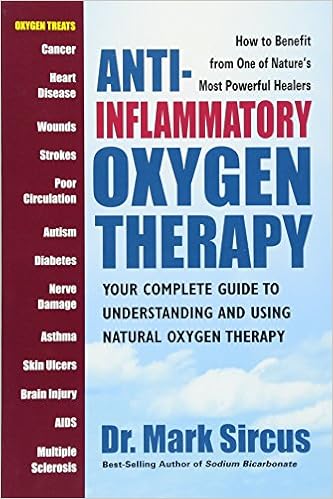
Page 22/102 It has long been recognized that solid tumors contain poorly vascularized regions characterized by severe hypoxia (oxygen deprivation), acidosis and nutrient starvation.[5] Tumor hypoxia is typically associated with poor patient prognosis. Over the past decade, work from many laboratories has indicated that hypoxic microenvironments contribute to cancer progression by activating adaptive transcriptional programs that promote cell survival, motility and tumor angiogenesis.[6] Oxygen pulls the rug out from under cancer cells and tumors by removing the basic condition that makes them virulent. There is no substitute for oxygen in regards to maintaining human life. If there is not an adequate amount of oxygen in a cell, then energy production is unavoidably restricted (just as any fire must have ample oxygen in order to continue to burn). When energy production is inadequate to meet cellular needs, then many cell operations do not proceed normally, allowing cancer and other diseases to occur. Cancer, cardiovascular disease, Parkinson's, Alzheimer's and much more are all potential results of inadequate cellular oxygenation. These diseases of inadequate oxygenation cause untold suffering and loss of life, which is avoidable when using Anti-Inflammatory Oxygen Therapy. With enough oxygen, we can regain our lives and our health. It is common for people to have plenty of oxygen in their blood stream and yet have insufficient oxygen inside their cells because cell membranes have become resistant over time to the diffusion of oxygen into the cell interior. One of the principle reasons for this are massive magnesium deficiencies inside of the cells. A full protocol needs to be incorporated with oxygen to realize maximum results. The National Institutes of Health is experimenting with targeted cancer drugs that repair damaged arteries. The University of Texas Arlington received $1.4 million to develop nanoparticles that promote healing in damaged endothelium, the lining of blood vessels. "Angioplasty and stenting often damage arterial walls, with a significant risk of subsequent complications, such as re-narrowing of the artery or blood clot," said Dr. Yang. Platelets accumulate on the damaged vessel, initiating clot formation. Other cells can deposit on the damaged vessel wall, building up a blockage.[7] Oxygen is the ultimate nanoparticle in terms of medicine and health. It will do the job without collateral side effects that pharmaceuticals have because of their toxic origin. Georgetown University and many other universities are testing a new class of cancer drugs called immune-checkpoint inhibitors. Stimulating the immune system works and there are reports of primary tumors fading and patients becoming completely cancer free. Oncologists are calling this approach a breakthrough but even the most enthusiastic supporters of the checkpoint inhibitors acknowledge that about half their patients have not benefited. These new, sophisticated forms of molecular medicine cannot outperform oxygen, which will do the same job safely and quickly. [1] Apoptosis of T-leukemia and B-myeloma cancer cells induced by hyperbaric oxygen increased phosphorylation of p38 MAPK. Chen YC et al; Leuk Res.; 2007 Jun; 31(6):805-15. Epub 2006 Oct 24. http://www.ncbi.nlm.nih.gov/pubmed/17064767 [2] .University of Colorado Denver. "Lack of oxygen in cancer cells leads to growth and metastasis." ScienceDaily; September 13, 2012 . [3] Many of the cellular responses to hypoxia are mediated through changes in gene expression. The transcription factors primarily responsible for these changes are the Hypoxia Inducible Factors (HIFs), the biology of which has been reviewed elsewhere (Pouyssegur et al., 2006; Semenza, 2003). Briefly, HIFs are members of the bHLH-PAS family of proteins, and bind to canonical DNA sequences (hypoxia regulated elements, or HREs) in the promoters or enhancers of target genes. They consist of an alpha (HIF-α) and a beta (HIF-β, or ARNT) subunit, and activate the expression of at least 150 genes encoding proteins that regulate cell metabolism, survival, motility, basement membrane integrity, angiogenesis, hematopoiesis, and other functions. Regulation of HIF activity is mediated primarily through the stability of the alpha subunit: under conditions of abundant oxygen (>8–10%), HIF-α proteins are translated but rapidly degraded. http://www.ncbi.nlm.nih.gov/pmc/articles/PMC3150586/ [4] The Hypoxic Cell. A Target for Selective Cancer Therapy—Eighteenth Bruce F. Cain Memorial Award Lecture 1 J. Martin Brown2; http://cancerres.aacrjournals.org/content/59/23/5863.full [5] Carmeliet and Jain, 2000; Pouyssegur et al., 2006 [6] http://www.ncbi.nlm.nih.gov/pmc/articles/PMC3150586/ [7] Penn State Materials Research Institute. "Researcher turns sights on prostate cancer, tissue engineering, blood vessel repair." ScienceDaily. ScienceDaily, 30 January 2014.
MUST- READ LETTER AND ARTICLE ON WAITING TO GET THIRSTY. LETTER TO DR. LAWRENCE APPEL (Back To The Letter's Page, click here to read) Professor Lawrence Appel, M.D., M.P.H. Chairman: Food and Nutrition Panel, National Academy of Sciences (NAS), 26 February, 2004. Dear Dr. Appel: Follow Your Thirst, Report Says : Washington Post Wrong! A large percentage of people get sick as a result of chronic unintentional dehydration without sensing thirst! The view presented by your NAS panel about waiting to get thirsty before drinking water is exactly what is wrong with medicine in America, and possibly the single cause of escalating costs of the "sick care" system in this country. This is the reason we have a sick care system in place of having a health care system that understands disease prevention instead of medicating people until they get sicker by the millions. At least 200,000 of these die every year from medication-related problems. This is the very reason that after heart disease and cancer, chemicals used in patient treatment are the third most prevalent licensed and protected cause of death in this country, more that the other common diseases. None of the honorable members of your panel, whose report made news in all the major media, seemed to be aware that PA Phillips, PA. and associates, New England J. Medicine, Sept. 1985 --Reduced Thirst Water Deprivation in Healthy Elderly Men -- have shown that sharpness of the perception of thirst is lost after a certain age until obviously dehydrated elderly do not recognize they need to drink water and do not reach for water that is put next to them. Otherwise your panel would have used different wording in their report. the elderly are the sickest sector of society as a result of waiting to get thirsty before they drink water , exactly what your report is recommending people should do. Worse still, the panel seems to be unaware of the primary role of the neurotransmitter histamine as the water regulator and the drought management program coordinator in the human body : that it gets more and more manufactured as the body begins to get dehydrated, producing the major localized pains and systemic conditions like allergies, asthma, the "inflammatory diseases," and others : that water is the best natural anti-histamine that should be used instead of the antihistamine chemicals drugs on the market : that water is the best natural diuretic that should be used in place of drugs for this purpose. With their drastic limitation of knowledge about the water regulatory processes in the human body , to dictate to people to drink water only when they get thirsty without doubt will harm most of those who trustingly heed the instruction. The abstract of presentation on histamine is attached. Your panel has reiterated what Heinz Valtin, M.D., professor emeritus of Dartmouth medical School, published in the American Journal of Physiology in August of 2002. My attached rebuttal articulate to Dr. Valtin's obsolete views about initiation of the thirst mechanism by the kidney --"Waiting to Get Thirsty Is to Die Prematurely and Very Painfully"-- was published in the Townsend Letters for Doctors and Patients, january 2003. The article is also posted on www.watercure.com. This article explains fully why the esteemed members of your panel need to review the published materials on unintentional dehydration and reverse the emphasis in their report on "waiting to get thirsty before drinking water" -- as soon as possible . They need to realize that the human body has many other emergency thirst signals that precede the dry mouth indicator of thirst. They need to advise people to minimally over-hydrate -- prevent dehydration -- rather than wait for dehydration to cause a "dry mouth" before drinking water. A large percentage of people get sick as a result of locally settled and inflammation-producing chronic unintentional dehydration without sensing "thirst." The members of your panel need to realize that water should be placed on top of the list of nutrients. After all, it is the primary instrument of energy release -- its hydrolytic chemical action -- for all functions on the human body. People who drink water to prevent thirst are doing the right thing. They are preventing dehydration-effect to even begin in their body systems. They are preventing the diseases of dehydration (DOD) that we in medicine have assumed to be this or that disease condition and treated with inventive cocktails of toxic medications. This is the dark side of modern medicine that is getting exposed for the shameful , licensed and protected, medical ignorance that it is.
The power of sleep. (CLICK HERE FULL view) Why sleep is so important, and how to get more of it.
Sleep brings us good health, enhancing our body, mind and spirit. We spend one-third of our lives asleep but a whole lot of activity is going on during this period.
Repair occurs at the cellular level. While we sleep, muscle’s rebuild, red blood cells that carry oxygen rich blood (energy) are created, and wounds are healed. As a result, our immune system becomes stronger, our blood pressure is lower and our body has lower inflammation rates that would have otherwise damaged our blood vessels and led to heart disease.
Learning is solidified and memories are processed. Knowledge, understanding and retention is improved. Think about how forgetful you are when you miss a few nights of restful sleep.
Hormones are balanced, including those that help you maintain a healthy weight! When you are sleep deprived, the hormones that regulate appetite become out of balance. You may end up eating more calories by reaching for foods that are higher in fat and carbohydrates. Hormones that prevent you from becoming depressed and anxious are also balanced.
According to the National Sleep Foundation, the average adult needs 7-8 hours of sleep each night. People who short themselves on a regular basis, live shorter, more sickly lives. The most important phase of sleep is the REM (rapid eye movement cycle). Each REM cycle lasts 90-120 minutes and most adults average 4-5 REM’s per night. Infants spend 50% of their sleep in REM, whereas adults average only 20% REM sleep. REM decreases with aging.
What causes lack of sleep, impairing important REM cycles? A host of factors including too much light, stress, the time of your work shift, sleep apnea (often caused by excess weight), frequent urination, menopause, excess brain stimulation before bedtime (computer or video games) and certain medications. Poor nutrition (caffeine, excess sugar, alcohol) and lack of adequate exercise are also key factors that negatively impact a restful night’s sleep.
Are you interested in better health? Sleep on it and get back to me in the morning.
How to Get Better
Sleep as a Runner
Catching more quality Z's can make
you a stronger, better runner.
Status Update: Late night last night. Still managed to
get up at 4, knock out an 18-miler, and get the kids to
school on time.
Status Update: Didn't get enough sleep this week.
Stayed in bed for an extra hour and skipped my run.
Let's say these two status updates showed up on
your Facebook or dailymile feed. Which would
get more "likes"? If you're like many runners
(and most Americans), you probably admire the
badass who fought through fatigue to complete
her run and suspect that the slumbering beauty
is a slacker.
Our society views sleep as a luxury, at best. Many
people think that revealing your need for it marks
you as a weakling, says John Caldwell, Ph.D., a
psychologist who has researched sleep deprivation
and fatigue for NASA and the U.S. military. "We
think if you're really a good athlete, that means you'
re tough and you'll take whatever life throws your
way," Caldwell says. "Part of being tough is not
needing to sleep."
By that line of reasoning, some of the country's top
marathoners rank as total slouches. After all, Ryan
Hall pens naps in his calendar as "business meetings,"
and both Deena Kastor and Shalane Flanagan log as
much as 10 hours of shut-eye a night. They clearly
understand what science is increasingly revealing:
It's during sleep that your body recovers from hard
training and builds you into a better runner.
Indeed, recent research suggests that just one night
of bad rest can have an impact (albeit largely psycho
-logical) on your running performance. Meanwhile,
chronically shorting yourself of even an hour of
sleep per night has cumulative negative effects on
your running and your health. "Sleep is as important
as your workouts," says Joe English, a running coach
in Portland, Oregon, and the National Advisory coach
to the Leukemia & Lymphoma Society's Team
in Training. "When you start robbing from that pot to
get everything else done, the quality of your training
--and of everything else--starts to fall apart."
Sleep Much?
No lab test can tell you exactly how many hours of
sleep you need--the number varies widely by
individual. But the average adult needs between seven
and nine hours each night, says Matthew Edlund, M.D.,
schedule on Kuro5hin’s and everything2′s website .
The basic idea behind it is that you can force your
body to compress the necessary sleep stages (REM
being the most important they say) into a 20-min
sleep unit. By spreading six of these concentrated
sleep units throughout the day, you can supposedly
experience better and more effective sleep than on
a typical 8-hour schedule that most people try to
follow.
With a little information under my belt, I quickly
tried to adapt to Uberman sleep back then but
soon realized that my work schedule just didn’t
allow it. I wasn’t able to consistently take the
required naps — a huge no-no if you want to be
successful with this.
Since then, I’ve gotten married, had a child, and
although I’m working at a different job, my
schedule with my family and work is even less
flexible. However, last week I found a variant on
the ‘Uberman’ sleep schedule (what some refer to
as the ‘Everyman’ sleep schedule) where you take
four (instead of six) naps throughout the day and
supplement them with a 3-hour core sleep period
at night.
Not only is this doable with my work schedule (I’ll
only need to nap once during lunch), but my wife
is happy because I still go to bed with her at night
— at least for a few hours. I’ve also read that it is
easier to adapt to this schedule than to the Uberman
one — another bonus :) .
Essentially I’ll be attempting to sleep around
4 hours a day, made up of one 3-hour period of
sleep (for me that will be 11pm to 2am) followed
by three 20-min naps spread throughout the day
(7am, 12pm, and 7pm).
So what is the reasoning behind all this? Well for
one, I love to try out new things. Experiments
that others find to be weird intrigue me (take the
Lemonade Diet^^ for example). Another thing is,
I’ve realized in order for me to achieve some of the
goals I have in mind without sacrificing time spent
with my family, I’m simply going to need more of it.
This seems to be a welcome solution.
So with that in mind, I’ll be posting daily over the
next few days as I relate to you my experience
attempting to adapt to the ‘Everyman’ sleep-schedule.
Master Cleanse (Lemonade Diet^^
)
Overview
The aim:
Quick weight loss.
The claim:
Drop 20 pounds in 10 days and cleanse your body of toxins.
The theory:
If you give up solid foods and consume only fluids, weight loss (at least in the short-term) is inevitable.
Balanced Diet
These diets fall within accepted ranges for the amount of protein, carbs, fat and other nutrients they provide.
Pros & Cons
Easy
Cheap
No teeth required
Nutritionally not the soundest
How does Master Cleanse
(Lemonade Diet) work?Originally cooked up to flush purported toxins and waste from the body, Master Cleanse – also known as the Lemonade Diet – has only recently become popularized for quick weight loss. (Beyonce allegedly used it to slim down for her role in Dreamgirls.)
Say goodbye to solid food. For at least 10 days, your new best friends are not-quite lemonade, water, and laxatives. That means 4 cups of salt water each morning, a cup of herbal laxative tea at night, and 6 to 12 glasses throughout the day of the “lemonade”—a concoction you make from fresh lemon or lime juice, maple syrup, cayenne pepper, and water, according to www.themastercleanse.com, one of the most comprehensive Master Cleanse websites. (Several variations of the diet exist, so it’s up to you to decide which one to follow.) Crave something more substantial? Too bad: Straying from the 650-calorie per day regimen is not allowed.
After a minimum of 10 days (some dieters apparently stick it out for 45), you’ll slowly transition back to solid foods with soup and fruit juice. The website doesn’t specify what your post-cleanse diet should be, but it does advise that you eat as little meat and dairy as possible and supplement meals with a probiotic to aid digestion. While dieters commonly repeat the regimen—the website’s author claims to have done it 18 times since 2003—experts don’t advise making this your permanent routine.
Beware: You may experience what the website calls “detox diet symptoms,” such as cravings, fatigue, irritability, aches, pains, nausea, vomiting, and a burning sensation during bowel movements. Proponents claim these symptoms are signs of the body’s detoxification, but there’s no scientific evidence that Master Cleanse or other detox diets actually rid the body of toxins. What’s more, say experts, the liver is perfectly capable of purging the body’s impurities.How much does it cost?
Practically nothing. Drinks are made from water and household ingredients. The priciest items will be lemons and maple syrup.
Will you lose weight?
How could you not, with nightly laxatives and so few daily calories (650 is about one-third of the number most adults are advised to get)? But don’t expect lasting results: You’ll mostly be losing water weight and lean muscle mass—not fat—and fasting may stall your metabolism, making you more likely to regain once you resume a normal diet.
How easy is it to follow?
Though preparation is simple, giving up solid foods in favor of liquids may prove difficult.
Convenience. Making the drinks is a cinch. The real annoyance will be running to the bathroom all day long.
Recipes. Ingredients and measurements for the “lemonade” can be found at www.themastercleanse.com, among other websites.
Eating out. Unless you’re sticking to water, eating at home is your best bet.
Alcohol. Forbidden.
Time-savers. None.
Extras. None.
Fullness. A growling stomach is a likely companion on this liquid diet.
Taste. Some dieters reportedly liken the lemonade to an energy drink.
What is the role of exercise?
It’s not part of the plan and it may even be dangerous to exercise when you’re consuming so few calories. Ask your doctor before exercising while on Master Cleanse. In general, adults on healthy diets are encouraged to get at least 2 ½ hours of moderate-intensity activity (like brisk walking) each week, along with a couple days of muscle-strengthening activities.
Feel free to ask on ANY topic.
Posts are welcome!Intend to be a lifelong learner. Do not think that it is just a coincidence. How many will ever recognize God in anything that takes place?