Showing posts with label organs. Show all posts

Sunday, October 29, 2017

My Health, I Manage! E-Tao Paida & Lajin Self-Healing (Chapter 1)


Chapter I 

My Journey to Cure

Excerpt from Journey to Cure

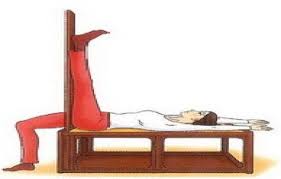
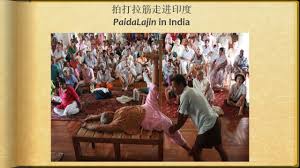
Like yesterday, I put out low tables at the corridor outside for the queuing Tibetans to do Lajin. The number of tables had increased from three to six, on top of each lay a patient, who had one leg straight up against the pole, while someone next to him helped to press his legs. If I noticed that some did not seem to benefit from the practice, I would make them repeat it, with me pressing the leg, and showing those around how painful the facial expression would be when it was done properly. In the end, they realized that their symptoms had gone with the painful exercise. 

Image result for Helping to press legs of the one doing Lajin
Helping to press legs of the one doing Lajin
nImage result for Helping to press legs of the one doing Lajin
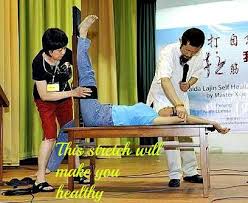
Image result for Helping to press legs of the one doing Lajin

Image result for Helping to press legs of the one doing Lajin


It really made my day when I witnessed the immediate effects of Lajin it not only cured the pain in the torso and limbs, but also eased headaches and pains in internal organs. A woman who had pain in her knees and legs had it eliminated after Lajin, but the pain in her back, chest and stomach remained. There were clicking sounds in her thoracic and lumbar vertebrae when I performed bone-setting on her, after that all her remaining pain disappeared; in another case, I used bone-setting on a middle-aged man with acute stomach pain that radiated from his abdomen to the back. After four popping sounds on his thoracic vertebrae, the pain went away completely. By now I was convinced that pain in the organs such as stomach and liver must be closely related to the corresponding spots on the vertebrae.

It occurred to me that since Lajin could easily be practiced at home or in the office, it should be introduced to the world so that more people could benefit from it, especially the increasing number of office workers who suffer from neck and back pains. Companies could consider installing “Lajin benches” in the office, as part of employee benefits package.

I also discovered some sad truths today. I saw that some Tibetans had spent the night sleeping along the corridor of the monastery, in order to get treated the next day. From this I guessed that the reason why so many Tibetans suffer from diseases such as arthritis might be because a majority of them are nomads used to sleeping out in the fields at night where damp and cold air gets into the body. Since there are hardly any medical services available at remote places in Tibet, people could not get treated when sick; instead, they have to rely on such drugs as painkillers or hormone pills, which they could buy without prescription. Monasteries with many lamas usually purchase boxes of painkillers so as to alleviate various pains. The overdose and/or misuse of these medicines induce a lot of diseases, such as distortion of bones. Deafness, which is a common illness here, is caused by misuse of hormone drugs to treat colds. To make things worse, a lot of drugs sold to the locals here are either counterfeit or of poor quality, which nobody elsewhere would take.

Many illnesses can actually get treated without any medication, including the many eye problems I found among my patients, such as cataract, far-sightedness, inflamed or tearing eyes, because they could all be cured with acupuncture. However, due to poverty and lack of acupuncturists in the area, people either let it worsen, or travel afar to a hospital to get infusions. They seemed to be always getting infusions in hospital, and hardly receiving any other treatments. Sadly, they seemed to always get sicker after the infusions.

Excerpt from Journey to Qinghai

Paida and Lajin in the Sun

After lunch, we went back to the kitchen. Again, it was overcrowded. I had to invite those waiting their turns out. I laid out a few more tables and encouraged them to do Lajin. The first two men about to receive treatment both had lower back pain and hip pain, and were limping. I asked, “Have you done Lajin?” They both answered, “Yes.” “Have you done Paida?” I asked. “Yes.” “Have you patted your hip?” I asked again. “No.” was their answer. As they were men (hence would not be embarrassed to expose the hip), I asked them to take off their pants to have the hip patted.

One of them, while loosening his pants, pointed to his ass and asked, “It was patted yesterday. Doesn’t that count?” I took a look — there was a large area of purple Sha (poisoned blood). I asked, “Is your pain relieved?” “Yes.” He answered. I took the opportunity to explain to him, “The purplish dark Sha shows that Paida is effective on you, and the cold-dampness (chills in the body that induce various diseases) is being cleared. You need to continue receive heavy Paida.” I asked another man to pat his hip. But his Paida was way too gentle. I showed him how to pat vigorously. Everyone laughed. The one helping to Paida took the hint and began to use heavy slaps. The one receiving Paida immediately showed painful expressions.

The other sturdy Kangba man had to follow suit, and took off his pants to receive Paida. Very soon a large area of Sha appeared on his hip. I said to them, “It’s best to pat yourself, as you’ll be both the giver and receiver of this ‘gift’.” In the beginning, they were reluctant to pat themselves. I explained to them why and they began to use genuine slaps. Over time, they got slack, with arms rising and falling slowly and the intensity falling, just like the lazy kowtow machine in an oilfield. From time to time, I had to ask others to give them a few hard slaps. It went on like this for half an 
hour, and indeed their hip pain was greatly eased. I asked them to walk again, and they could basically do it normally. They couldn’t help but feel amazed at the healing method and its wonderful efficacy. 


Helping each other do Lajin
Taken from Mr. Xiao’s blog:
h t tp : / / b lo g . s i n a . c o m . c n / s / b lo g _ 5 dc 9 4 6 a 6 0 1 0 0 h 3 e 5 . h tm l
English version posted at E-Tao website:
h t tp : / / w w w . P a i da L a j i n . c o m / e n / h o m e / m _ p o s t . a s p ? i d = 2 1 3 7 9 5 5 1 8 1 4 9
Editors Note:
Paida in a group
page6image11552 page6image11712
Visit our website at http://www.paidalajin.com/en/home/ to read more of Mr. Hongchi Xiaos Journey to Curestories. You can also get free downloads, watch videos, read FAQs and self-healing stories from around the world. 

Saturday, June 24, 2017

The Body Garbage Disposal Unit

One of the most powerful ways to stimulate a healing response in the human body is to stop eating. Why is that? Huge amount of energy is required to digest a meal. One writer called it just like an explosion on the human body. Twelfth hundred(1,200) calories is required to digest one meal. That's quite  phenomenal, isn't it. So what happens when you don't eat? Well, all that blood and energy is looking for something to do. It can be likened to what happened when you go on holiday at home. I go to the parts of my house that are bugging me. Every day we sweep the floor, we do the dishes, we make the bed , wash the clothes but you know, these are the basics but there's always little extra things that you wait for a bit spare time to do. That's exactly what's happening in your body today. And in each body reading this blog-post here , the energies are going to different parts, to the areas of greatest needs. Now before the human body can restore or regenerate, it must clean the "house." That's why this program often called the cleanse or a detox.  The house has to be cleaned. As the house gets cleaned, there are four (4) main organs of elimination. 

And number 1 is the skin. The largest organ of elimination is the skin. Your skin has millions of little "mouths", if you were to look at under a microscope you'd see all the tiny little holes. Dr. Kellogg, very famous doctor, his of Kellogg's Corn Flakes fame , although I think that he would nearly die if he could see what Kellogg's cornflakes are made of today didn't quite have the sugar in it that he had in his. But he wrote many books on health. He was the medical director of one of the largest natural hospitals in America Battle Creek,  with thousand beds. So many, he wrote many books on it. He called the pores of the human body millions of little sewers. Why did he call the millions of little sewers because they give off waste. They're organs of elimination. Have you ever had a white shirt on , especially, on a hot day when you're perspiring a lot and the collar is brown. What's the brown? It's dirt. Where did the dirt come from? Inside of you. So the skin is a very effective organ of elimination.

To be an effective organ of elimination, it has certain needs. It requires you to allow your skin to breathe. How can we ensure that our skin is breathing? Very important to be mindful of the creams that you're putting on your skin. The body knows coconut oil. It knows essential oils; it knows olive oil. What it is not familiar with is the many chemicals found in most moisturizers. If you have bought moisturizers with your "Please Check" our little books in the bookcase especially the chemical maze. And if you do have some chemicals in your moisturizers , please don't apply them because we want  the waste out, we don't want to be putting more poison into the body. And everything you put on your skin is absorbed into your blood. It's (3:34) 

Tuesday, June 20, 2017

Cell Biology

Image result for cells images
Image result for cells imagesImage result for cells images


A cell is chemical system that is able to
maintain its structure and reproduce.
Cells are the fundamental unit of life. All
living things are cells or composed of cells.

Image result for cytoplasm


The interior contents of cells is the
cytoplasm. The cytoplasm is isolated from
the surrounding environment by the
plasma membrane g y p. 
There are two fundamentally different
forms of cells.

Image result for Cells and organelles
 Prokaryotic cells - relatively simple cells -
lack nuclear membrane and many 
organelles -bacteria and their relatives are
all prokaryotic


Image result for cytoplasm
Eukaryotic cells - more complex cells - have a nucleus and many organelles - all cells of plants, animals, fungi, and protists.


Image result for cells size dimensions

Most cells are small
Prokaryotic: 1-10 µm
Eukaryotic: 10 - 100 µm
(1 µm = .001 mm)


What are the types of cells?
Blood and immune system cells
Erythrocyte (red blood cell)
Megakaryocyte (platelet precursor)
Monocyte (white blood cell )
Connective tissue macrophage (various types)
Epidermal Langerhans cell.
Osteoclast (in bone)
Dendritic cell (in lymphoid tissues)
Microglial cell (in central nervous system)

Cells and organelles.

Organelles, Macromolecules, & Atoms .

Why are cells small?
As cell size increases the volume increases much faster than the surface area. 

Cells obtain nutrients, gain information
and rid waste through their plasma 
membrane. 

As cell size increases, a cell’s ability to
exchange with its environment becomes
limited by the amount of membrane
area that is available for exchange.

Robert Hooke - 1665 - using an early
microscope viewed cork and saw many 
repeating box-like structures and called
them “cells.”

What he saw were spaces surrounded by walls that once contained living cells. Since Hooke’s first observations what is known about cells has increased greatly.

Cell Theory
• Cells are the fundamental unit of life -
nothing less than a cell is alive.
• All organisms are constructed of and by cells.
• All cells arise from preexisting cells.
Cells contain the information necessary
for their own reproduction. No new cells
are originating spontaneously on earth today.
• Cells are the functional units of life. All
biochemical processes are carried out by cells.
• Groups of cells can be organized and
function as multicellular organisms
• Cells of multicellular organisms can
become specialized in form and function
to carry out sub-processes of the multicellular
organism.

Prokaryotic cell structure
small, with a plasma membrane surrounded by a rigid cell wall
in many the cell wall is made of _____________ - a carbohydrate
cross-linked with polypeptides cell wall may be covered with a capsule made of polysaccharides few or no membrane enclosed spaces within the cytoplasm no nucleus - DNA is in a region called the nucleoid.
DNA is circular and naked (has no protein associated with it)

Bacteria often have flagella with a single protein core (flagellin)
that they can use to move in a rotary corkscrew like fashion.

The rotary motor of prokaryotic flagella is powered by proton flow
through the cell membrane.

Rotating structures are rare in nature.

Membrane enclosed spaces allow cell
functions to be compartmentalized
and isolated from other functions.
Prokaryotes lack membrane enclosed
spaces in their cytoplasm.

Some prokaryotes are photosynthetic.
The biochemical machinery for
trapping light energy is contained
within a highly folded plasma membrane.

Eukaryotic cell structure larger, with a typical plasma membrane - some with a cell wall.
Many _________________________ and
other interior spaces enclosed by membranes:
Nucleus, Endoplasmic reticulum, Golgi apparatus,
Mitochondria, Chloroplasts, Lysosomes,Vacuoles, Vesicles.
Cytoplasm with a cytoskeleton - protein tubules and fibers
cell wall found in plants (cellulose), fungi (chitin), some protists.

Cellular Organelles
Nucleus - the largest and most obvious
membrane bound compartment -
controls cell activities contains the
nucleolus - a darkened region where
ribosomal RNA is synthesized contains
chromosomes - consist of DNA
wrapped around proteins.

Nucleus is surrounded by the nuclear
envelope - a double membrane.
Nuclear membrane has nuclear pores
that control entry and exit of materials.

Chromosome - “colored body” consists of
both DNA and protein - seen as
chromosomes when highly condensed in
preparation for cell division. At other
times the DNA and protein are threadlike
and called __________.

The most common proteins are histones.
DNA is coiled around histones in a
regular pattern that produces structures
called nucleosomes.

Endoplasmic reticulum (ER) - a web-like
series of membranes within the cytoplasm
in the form of flattened sheets, sacs, tubes,
creates many membrane enclosed spaces -
spreads throughout the cytoplasm - has
connections with the outer membrane of
the nucleus and the plasma membrane 
interior space is called the ______

Functions:
-circulation and transport
-storage of proteins and minerals
-synthesis of lipids, carbohydrates, and proteins
-A large surface area for enzyme action.

Two types of ER - rough and smooth:

rough ER - studded with ribosomes site of synthesis of many proteins all ribosomes on rER are actively involved in protein synthesis -

smooth ER - site for synthesis of steroids
and other lipids Ca++ storage in muscles 
detoxification of drugs, toxins, alcohol
(especially in liver).

The highly convoluted surface provides a
large surface area for enzymatic activities.
Many enzymes are imbedded in the
membranes.

Ribosomes - protein synthetic machinery 
• two subunits - large and small - each made of protein and ribosomal RNA (rRNA)
• subunits associate when they are synthesizing proteins
• protein synthesis occurs on ribosomes that are free-floating in the
cytoplasm and on ribosomes attached to ER
• rRNA is synthesized in the nucleolus 

Golgi Apparatus -
a collection of membranes associated with
the ER composed of flatten sacs called ___
______concentrates and packages proteins
 synthesized on the ER

The Golgi is functionally associated with the ER.

Proteins synthesized on the ER are concentrated internally and transport vesicles are budded off.

Transport vesicles fuse with the Golgi, dump their contents into the Golgi.

Golgi packages proteins in vesicles so that they may be excreted from the cell, or used within the cell.

Secretory vesicles - used for excretion - leave the Golgi and move to plasma membrane where they fuse and dump their contents outside - seen in many glands.

The Golgi Apparatus also forms lysosomes.
Lysosomes - vesicles filled with digestive
enzymes - used for intracellular digestion.

Particles can be taken into cell by phagocytosis and vesicle fused
with lysosome.

The components of organelles can be
recycled after digestion by lysosomes.

Microbodies: Peroxisomes and
Glyoxisomes vesicles that form through
growth and division within the cytoplasm
Glyoxisomes are found in plants - contain
enzymes that convert fats into carbohydrates.
Peroxisomes - used for removing reactive compounds from the
cytoplasm - create H2O2 as a byproduct and degrade it with the enzyme catalase.

Mitochondria - cellular powerhouses - the site of much of the
energy harvest by cells have double membrane structure inner membrane folded into inward projections called cristae two spaces within the mitochondrion - the matrix and the intermembrane space.

Mitochondria -
• The site of oxygen consumption within cells
• Have their own DNA that is similar to prokaryotic DNA
• Have their own ribosomes that are
similar in construction to prokaryotic ribosomes
• Synthesize many, but not all, of their own proteins
• Mitochondria replicate by binary fission - similar to prokaryotic cell division

Chloroplasts - sites of photosynthesis - in
nearly all plants and some protists trap
light energy and convert it into chemical
energy have double membrane structure -
inner space is the stroma.

Within the stroma have a series of stacks
of flattened membrane structures called 
thylakoids - the stacks are called grana.
 The light energy trapping molecules of 
photosynthesis are found in the membranes of
the thylakoids.

Chloroplasts have their own DNA, similar to prokaryotic DNA.
Can synthesize many of their own proteins using prokaryote-like ribosomes'
Synthesize many, but not all, of their own proteins.
Replicate through division similar to prokaryotic cell division.
Chloroplasts can take on other functions.

____________ synthesize and store starch in roots and tubers.

____________ have pigments and give fruits ripened color.

Centrioles - are part of specialized region
of the cell called the centrosome (cell
center) found in animals and most protists.
The centrioles are involved in the 
production of microtubules.
Microtubules have many functions 
including moving chromosomes during
cell division centriole structure - 9 triplets
of microtubules surrounding a hollow core -________________similar to the basal
body of flagella

Cytoskeleton - scaffolding of proteins that
transport materials, position and move
organelles, maintain and change cell shape,
and organize enzymes into functional associations 3 components - actin filaments, microtubules, and intermediate filaments.

All are polymers of smaller protein subunits - lengthen through addition of polymer subunits, shorten through
actin filaments - involved in cell movements and in membrane
deformations - smallest components of the cytoskeleton.

microtubules - hollow tubes made of
proteins called tubulins responsible for cell
movements and movements of organelles
within the cytoplasm, movement of
chromosomes during cell division -
largest components of the cytoskeleton.

intermediate filaments- 8 stranded protein fibers - play a role in
cell structure, anchoring organelles and in transport of materials within the cytoplasm anchor neighboring cells to each other in tissues.

Flagella and Cilia - cellular appendages can propel cells or propel materials over the cell surface cells that have flagella have few (usually 1 or 2) cells that have cilia have many - covering the surface flagella move with whip-like movements to propel the cell
cilia have a more regular stroke and groups of cilia appear to
move in unison, resulting in a wave-like motion flagella 5 to 20x longer than cilia

Structure has basal body with 9 + 0 structure of microtubules
flagellum is membrane bound with pairs of microtubules in a 9+2
pattern.

Each pair of tubules has short arms of another protein - dynein -
that extend to neighboring tubules movement of the flagellum is produced by sliding of the microtubule pairs 

Plant Cells have, in addition to the collection of organelles found
in other groups, a central vacuole for storage and for producing
________ pressure inside the the cell.

The central vacuole is usually filled with water and solutes. A high solute concentration draws water into the vacuole, expanding the vacuole and the cell.

Because plant cells are enclosed by a cell
wall, the expansion of the vacuole can 
exert pressure on the cell without causing
the cell to burst.

Plants have cell walls made of cellulose.

During cell division plant cells build
dividing walls between the two new
cells called the cell plate. An adhesive
layer - the middle lamella - is laid down
between the new cell walls.

Cell walls can be thickened through the
addition of materials to the inside of the
primary cell wall.

Where did Eukaryotic Cells come from?
The oldest rocks with evidence of fossil
cells date to 3.5 billion years. The oldest
rocks with cells large and complex enough
to be eukaryotic date to 1.0 billion years.
For 2.5 billion years only prokaryotic cells
existed on earth.
The best hypothesis for the origin of
eukaryotic cells was proposed by Lynn
Margulis in the early 1970s. This
hypothes is now called the ___________
 ___________. 

Eukaryotic cells appear to be the product
of a collaboration among different types
of prokaryotic cells. Some prokaryotic
cells became the host for other prokaryotic
cells that lived inside them. Some of the 
complex organelles of eukaryotes provide
evidence for this theory.

Mitochondria and chloroplasts appear to
be the direct descendants of energy
producing bacteria. Mitochondria are the
descendants of bacteria that were capable
of oxidative respiration.

Chloroplasts are the descendants of
photosynthetic bacteria.

Evidence:
Both have their own DNA and ribosomes
that are similar to those found in
prokaryotes. Both make many of their
own proteins and both multiply in a
fashion similar to prokaryotic cell division.
Both are double membrane organelles -
the inner membrane descended from the
ancestral guest cell, and the outer
membrane descended from the vacuole
membrane that was formed around the
guest.
Other organelles may also be the product
of endosymbiosis.
Some centrioles and basal bodies have
naked DNA as part of their structure.
There are many modern examples of
endosymbiosis involving organisms that
can live together or live independently.
The same was probably true of the
ancestors of endosymbiotic organelles
in the distant past.