Showing posts with label salt. Show all posts

Thursday, October 12, 2017

EXCUSE #2 : I COULD STEP ON SOMETHING SHARP.

Yes, you could. At least in the beginning, you could certainly step on something sharp and hurt yourself. But it is not nearly as big a concern as you think. Why?
Because when you start walking barefoot, you are hyper-vigilant. Barefoot walking and aware-foot walking. You have two eyes and you are using them to look for anything in your path. Over the first few weeks you'll know the location of every stick, stone, seam, and crack on your path. When you are barefoot, you are walking awarefoot. It is good. You'll be in the moment, incredibly focused and mindful of each step and everything before you. Your eyes will keep you safe as you scour the ground. 

  Soon enough, glass will become no more than a sharp pebble, something that you'll feel underfoot but that won't cut your feet. Over time you'll find it is not the glass that gets you, but sometimes a tiny thorn, or if you're in cactus country a barb or goathead.
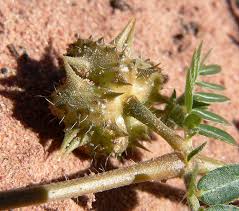
Image result for goathead

⇧ Goathead 

⇩ "Touch-me-not"
Image result for touch me not plant

All of these are minor, sometimes requiring you to stop for a minute or a bit more. But none of them is the type of catastrophic injury we think about going barefoot walking outdoor.

FOOT NOTE
Keep a Sharp Eye Out for Rock Salt

We're often asked about the worst injury we've sustained when walking barefoot or running barefoot. we cut our feet while going barefoot on rock-salt-treated pavement in the winter. 
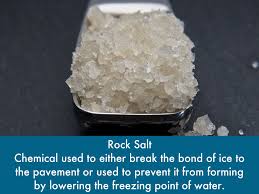
Image result for rock-salt-treated pavement

Image result for rock-salt-treated pavement


Image result for rock-salt-treated pavement

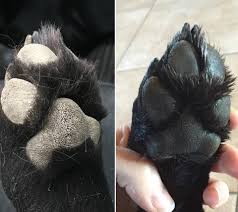
While salt id often applied on roads, sidewalk, and steps during winter to melt ice and keep people from slipping, rock salt wreaks havoc on bare feet, canine feet inclusive. See photo above.

  Why? Well, when it's dry, rock salt is sharp and hurts like the dickens.
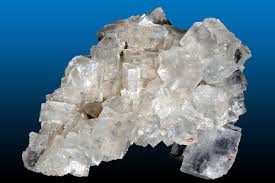
Image result for rock-salt  sharp

  If it's wet, it acts as a meat-tenderizer, softening the skin, thus making our human feet susceptible to normally benign road hazard while walking barefoot. A piece of glass that normally would never bother a barefoot walker now poses a potential painful threat.


Thursday, June 15, 2017

Salt The Health

Humans, like many other animals, crave the taste of salt. Animals frequent salt licks, humans have traded salt for equal weights of gold, and the word “salary” comes from the Roman soldier’s allowance for purchasing salt. Salt appears in our language in idioms like “worth its salt” and “salt of the earth.” Shakespeare’s play King Lear is a variant of a folktale where a daughter tells her father she loves him as much as meat loves salt. In a murder mystery I read years ago, a character listed the four food groups as sweet, salty, sticky, and chocolate.

It’s no fair: everything that tastes good turns out to be bad for us. We love the taste of salt, but dietary guidelines tell us we should all limit our sodium intake to less than 2.3 grams (2300 mg) a day to avoid high blood pressure and death from cardiovascular disease. And those who are fifty-one, African American, or who have high blood pressure, chronic kidney disease or diabetes should limit their intake even further, to 1500 mg a day or less.

(Note: the salt molecule consists of an atom of sodium and an atom of chloride; 40% of the weight is sodium, so 1500 mg of sodium equals 3750 mg of salt, roughly ¾ of a teaspoon. Over 75% of our salt is already in the food, not added from the salt shaker.)

In 2010, the American Heart Association lowered its recommendations to 1500 mg a day for everyone. We thought that was good advice, but new evidence has muddied the waters.


In the latest issue of The New England Journal of Medicine, three new studies about the role of salt in cardiovascular disease were published. Instead of providing clear answers, they raise more questions. In a cute NEJM QuickTake cartoon video they summarize the findings of the studies. If you’d rather spend three minutes watching cartoons than reading my explanation, feel free.

Salt and health: the background
High blood pressure is a known risk factor for heart attacks and strokes. Numerous studies have shown a correlation between salt intake and blood pressure, but the correlation between salt intake and cardiovascular outcomes like stroke and death has not been so clearly established. The large INTERSALT study found a modest association between higher levels of sodium intake and higher blood pressure. Some systematic reviews of the literature have confirmed that association, others have not. A 2013 review in the British Medical Journal found that lower sodium intake was correlated not only with a lower risk of hypertension but also with a lower risk of stroke and fatal coronary heart disease. Prospective cohort studies have shown inconsistent associations between sodium intake and cardiac risk.

Larger studies were needed to settle the issue.

First study: Association of Urinary Sodium and Potassium Excretion with Blood Pressure, by Mente et al.

Subjects: 102,216 adults from 18 countries. Method: single fasting urine levels of sodium and potassium were used to estimate 24-hour excretion, providing an indirect estimate of dietary intake. Findings: the association of sodium with BP was greatest in hypertensives, the elderly, and those who had the highest intakes of salt. It was greatest in those ingesting over 6 grams of sodium a day, modest in those ingesting 3-5 grams, and not significant in those ingesting less than 3 grams a day. They found an inverse relationship for potassium: higher levels of potassium were associated with lower blood pressures.

Second study: Urinary Sodium and Potassium Excretion, Mortality, and Cardiovascular Events, by O-Donnell et al.

Subjects: 101,945 adults from 17 countries. Method: as in the first study, single fasting urine tests were used to estimate 24-hour urinary sodium and potassium excretion; those estimates were compared to a composite outcome of death and major cardiovascular events. Findings: mean sodium excretion was 4.93 g. Compared to a reference range of 4.00-5.99 g a day, the odds ratio for death and cardiovascular events was 1.15 for high sodium excretion (over 7 g a day) but was even greater at 1.27 for a low sodium excretion (below 3 g). Higher potassium excretion was associated with decreased risk.

Third study: Global Sodium Consumption and Death from Cardiovascular Causes, by Mozaffarian et al.

The authors reviewed 205 studies on sodium consumption from 66 countries. Estimated mean global consumption was 3.95 grams a day, with regional means varying from 2.18 to 5.51. Daily sodium intake >6 grams a day was associated with increased risk of mortality and cardiovascular events. 

Discussion of the results
We knew too much sodium was risky, but these studies raise concerns that too little sodium might be even worse. As the accompanying editorial points out,

They call into question the feasibility and usefulness of reducing dietary sodium as a population-based strategy for reducing blood pressure…the alternative approach of recommending high-quality diets rich in potassium might achieve greater health benefits, including blood-pressure reduction, than aggressive sodium reduction.

It may not be the potassium itself; diets rich in potassium are also rich in a lot of other healthy nutrients from fruits and vegetables.

These studies were large and well designed. They gathered an immense amount of data, looked at a variety of associations, and did their best to rule out possible confounding factors. But epidemiologic studies like these are imperfect by nature. The authors themselves pointed out several limitations of their studies, including the indirect way they measured sodium and potassium excretion.

So what did we learn?
None of this really sheds any light on what we should do as individuals. Should we continue asking “pass the salt?” Should we abstain from adding salt at the table? Should we read labels and monitor the total amount of salt in our diet? Should we aim for 3–5 g a day?

These studies found associations, but they couldn’t determine causes, and they did not even attempt to measure what would happen if people changed the amount of sodium and potassium in their diets. If anything, they suggest that existing guidelines for salt restriction for the general population may be too extreme.

They also suggest that “moderation in all things” and “eat your vegetables” are still good advice.

Bonus question: What kind of salt should we use?
A related question is whether some kinds of salt are healthier than others. Sea salt, table salt, kosher salt, flavored salt, fleur de sel, Hiwa Kai, Black Hawaiian Sea Salt, Kala Namak, “organic salt,” and Pink Himalayan Sea Salt are all basically the same chemical, sodium chloride. Only the trace amounts of other substances vary. Table salt is fortified with iodine and is a highly effective way to prevent iodine deficiency and goiter. Gourmet cooks swear by the taste differences of different salt varieties.

(Don’t eat Epsom salt. You’d regret it: it’s has a significant laxative effect when taken internally.)

Pink Himalayan sea salt was introduced to me by an e-mail correspondent who questioned the claim that it contained “84 trace minerals that promote health and well being.” I questioned it too, so I did a little research.

Mike Adams, the infamous Health Ranger, explains that Himalayan Pink Crystal Salt contains the full complement of minerals and trace elements “just like Mother Earth intended.” It is an unrefined, unprocessed raw salt mined by hand from salt caves that formed 250 million years ago as ocean salt settled into geologic pockets. It is stone-ground, which apparently doesn’t count as “processing.” Table salt is bad stuff, you see, since it was processed to remove all the good stuff and then they had to replace the iodine because people who ate it started to get goiters. Oh, and incidentally he sells the good stuff on his website and even offers a discount.

I found a website that reports the results of a spectral analysis of Himalayan salt. I think this is where the claim comes from. Even if this analysis is accurate, it is meaningless for health and if anything is worrisome. The amount of minerals in it is too minuscule to make any difference, and we already get plenty of the same trace minerals from other foods. They claim that two double-blind studies were done, but no such studies are listed in PubMed. There is no evidence published in peer-reviewed journals that replacing white salt with pink salt makes a shred of difference or leads to any improvement in health.

If you read down the list of minerals, you will notice that it includes a number of radioactive substances like radium, uranium, and polonium. It also includes substances that act as poisons, like thallium. I wouldn’t be worried, since the amounts are so small; but if anyone believes the trace amounts of “good” minerals in Himalayan sea salt are good for you, why not believe the trace amounts of poisons and radioactive elements are bad for you?

The claim that pink Himalayan salt contains 84 trace minerals may be true, but the claim that it “promotes health and wellness” is false until proven otherwise by legitimate clinical studies. While waiting for evidence, I’d just as soon my salt didn’t contain uranium.

1. DietaryGuidelines2010.pdf (click here

2. Global Sodium Consumption and Death from Cardiovascular Causes (click here for New England Journal of Medicine)

3. The INTERSALT Study: background, methods, findings, and implications. (click here for The American Journal of Clinical Nutrition. The American Journal of Clinical Nutrition

4. Blood pressure, cardiovascular outcomes and sodium intake, a critical review of the evidence. (click here for US National Library of Medicine National Institutes of Health) 

5. Research: Effect of lower sodium intake on health: systematic review and meta-analyses. (click here for the abstract)

6. First study: Association of Urinary Sodium and Potassium Excretion with Blood Pressure, by Mente et al. (CLICK HERE)

7. Second study: Urinary Sodium and Potassium Excretion, Mortality, and Cardiovascular Events, by O-Donnell et al. (click here

8. Third study: Global Sodium Consumption and Death from Cardiovascular Causes, by Mozaffarian et al. (Click Here

9. EDITORIAL: Low Sodium Intake — Cardiovascular Health Benefit or Risk? (click here)

10. Does Epsom Salt Work? (click here)

11. The results of a spectral analysis of Himalayan salt. I think this is where the claim comes from. (click here)

12. What Are the 84 Minerals in Himalayan Salt? The pink color of Himalayan salt comes from iron oxides. (CLICK HERE FOR DETAILS)
The Meadow lists elements found in Himalayan salt in addition to sodium and chloride. In alphabetical order, they are: actinium, aluminum, antimony, arsenic, astatine, barium, beryllium, bismuth, boron, bromine, cadmium, calcium, carbon, cerium, cesium, chlorine, chromium, cobalt, copper, dysprosium, erbium, europium, fluorine, francium, gadolinium, gallium, germanium, gold, hafnium, holmium, hydrogen, indium, iodine, iridium, iron, lanthanum, lead, lithium, lutetium, magnesium, manganese, mercury, molybdenum, neodymium, neptunium, nickel, niobium, nitrogen, osmium, oxygen, palladium, phosphorus, platinum, plutonium, polonium, potassium, praseodymium, protactinium, radium, rhenium, rhodium, rubidium, ruthenium, samarium, scandium, selenium, silicon, silver, sodium, strontium, sulfur, tantalum, tellurium, terbium, thallium, thorium, thulium, tin, titanium, uranium, vanadium, wolfram, yttrium, ytterbium, zinc and zirconium.


Monday, June 5, 2017

How Much Water Do You Know Water Inside Your Body?

20 Interesting and Useful Water Facts

1. Roughly 70 percent of an adult’s body is made up of water.

2. At birth, water accounts for approximately 80 percent of an infant’s body weight.

3. A healthy person can drink about three gallons (48 cups) of water per day. 1 Gallon = 3.7854118 liters . A gallon is comparable to 3.8 liters. One Liter is a little more than a quart in liquid measurement.

4. Drinking too much water too quickly can lead to water intoxication. Water intoxication occurs when water dilutes the sodium level in the bloodstream and causes an imbalance of water in the brain.

5. Water intoxication is most likely to occur during periods of intense athletic performance.

6. While the daily recommended amount of water is eight cups per day, not all of this water must be consumed in the liquid form. Nearly every food or drink item provides some water to the body.


  1. Soft drinks, coffee, and tea, while made up almost entirely of water, also contain caffeine. Caffeine can act as a mild diuretic, preventing water from traveling to necessary locations in the body.
  2. Pure water (solely hydrogen and oxygen atoms) has a neutral pH of 7, which is neither acidic nor basic.
  3. Water dissolves more substances than any other liquid. Wherever it travels, water carries chemicals, minerals, and nutrients with it.
  4. Somewhere between 70 and 75 percent of the earth’s surface is covered with water.
  5. Much more fresh water is stored under the ground in aquifers than on the earth’s surface.
  6. The earth is a closed system, similar to a terrarium, meaning that it rarely loses or gains extra matter. The same water that existed on the earth millions of years ago is still present today.


  1. The total amount of water on the earth is about 326 million cubic miles of water.
  2. Of all the water on the earth, humans can used only about three tenths of a percent of this water. Such usable water is found in groundwater aquifers, rivers, and freshwater lakes.
  3. The United States uses about 346,000 million gallons of fresh water every day.
  4. The United States uses nearly 80 percent of its water for irrigation and thermoelectric power.
  5. The average person in the United States uses anywhere from 80-100 gallons of water per day. Flushing the toilet actually takes up the largest amount of this water.
  6. Approximately 85 percent of U.S. residents receive their water from public water facilities. The remaining 15 percent supply their own water from private wells or other sources.
  7. By the time a person feels thirsty, his or her body has lost over 1 percent of its total water amount.
  8. The weight a person loses directly after intense physical activity is weight from water, not fat.


10 Reasons to Drink Water

  1. Water is absolutely essential to the human body’s survival. A person can live for about a month without food, but only about a week without water.

  2. Water helps to maintain healthy body weight by increasing metabolism and regulating appetite.

  3. Water leads to increased energy levels. The most common cause of daytime fatigue is actually mild dehydration.

  4. Drinking adequate amounts of water can decrease the risk of certain types of cancers, including colon cancer, bladder cancer, and breast cancer.

  5. For a majority of sufferers, drinking water can significantly reduce joint and/or back pain.

  6. Water leads to overall greater health by flushing out wastes and bacteria that can cause disease.

  7. Water can prevent and alleviate headaches.

  8. Water naturally moisturizes skin and ensures proper cellular formation underneath layers of skin to give it a healthy, glowing appearance.

  9. Water aids in the digestion process and prevents constipation.

  10. Water is the primary mode of transportation for all nutrients in the body and is essential for proper circulation.
Reverse Osmosis  

Reverse osmosis was developed as a water treatment method more than 40 years ago. The process first arose as a technique of desalinating seawater. Once the method’s decontaminating capabilities were recognized, reverse osmosis systems began to be commercially produced for home water purification purposes. Such systems were installed in homes as early as the 1970s. Reverse osmosis systems seemed a viable option to the more costly and energy-wasteful distillation units.

  The Process: The reverse osmosis process depends upon a semi-permeable membrane through which pressurized water is forced. Reverse osmosis, simply stated, is the opposite of the natural osmosis process of water. Osmosis is the name for the tendency of water to migrate from a weaker saline solution to a stronger saline solution, gradually equalizing the saline composition of each solution when a semi-permeable membrane separates the two solutions. In reverse osmosis, water is forced to move from a stronger saline solution to a weaker solution, again through a semi-permeable membrane. Because molecules of salt are physically larger than water molecules, the membrane blocks the passage of salt particles. The end result is desalinated water on one side of the membrane and a highly concentrated, saline solution of water on the other side. In addition to salt particles, this process will remove a select number of drinking water contaminants, depending upon the physical size of the contaminants. For this reason, reverse osmosis has been touted as an effective drinking water purification method.

Pros and Cons:
Reverse osmosis is a valuable water purification process when mineral-free water is the desired end product. Most mineral constituents of water are physically larger than water molecules. Thus, they are trapped by the semi-permeable membrane and removed from drinking water when filtered through a reverse osmosis system. Such minerals include salt, lead, manganese, iron, and calcium. Reverse osmosis will also remove some chemical components of drinking water, including the dangerous municipal additive fluoride.

Although reverse osmosis does extract several contaminants from drinking water, its removal capabilities are not ideally suited to the challenges of the municipally treated water that the overwhelming majority of people receive. Municipal water contains such contaminants as chlorine and volatile organic chemicals (
VOCs). Because these contaminants are physically smaller in size than water, the semi-permeable membrane cannot prohibit them from passing through with the water. Thus, they remain in drinking water.

Reverse osmosis, also, by removing alkaline mineral constituents of water, produces acidic water. Acidic water can be dangerous to the body system, causing calcium and other essential minerals to be stripped from bones and teeth in order to neutralize its acidity. Trace elements of minerals were intended to be in water; their removal leaves tasteless, unhealthy drinking water.

Reverse osmosis, although it is less wasteful than distillation, is still an incredibly inefficient process. On average, the reverse osmosis process wastes three gallons of water for every one gallon of purified water it produces.


 Distillation 

 The process of distillation has been known and used for millennia. Although it has primarily been employed as a method of producing alcoholic beverages like whisky and vodka, distillation also works as a technique of water purification. In the 1970s, distillation was a popular method of home water purification, but its use is now largely confined to science laboratories or printing industries.

The Process:


The distillation process utilizes a heat source to vaporize water. The object of distillation is to separate pure water molecules from contaminants with a higher boiling point than water. In the distillation process, water is first heated until it reaches its boiling point and begins to evaporate. The temperature is then kept at a constant. The stable temperature ensures continued water vaporization, but prohibits drinking water contaminants with a higher boiling point from evaporating. Next, the evaporated water is captured and guided through a system of tubes to another container. Finally, removed from the heat source, the steam condenses back into its original liquid form. Contaminants having a higher boiling point than water remain in the original container. This process removes most minerals, most bacteria and viruses, and any chemicals that have a higher boiling point than water from drinking water. For this reason, distillation is sometimes valued as a method of obtaining pure drinking water.

Pros and Cons:
Distillation, similarly to reverse osmosis, provides mineral-free water to be used in science laboratories or for printing purposes, as both functions require mineral-free water. It removes heavy metal materials like lead, arsenic, and mercury from water and hardening agents like calcium and phosphorous. Distillation is often used as the preferred water purification method in developing nations, or areas where the risk of waterborne disease is high, due to its unique capabilities to remove bacteria and viruses from drinking water.

Distillation has several qualities that make it undesirable for the purification of municipally treated water, especially when compared to the decontamination capacities of water filters. Although distillation processes remove mineral and bacterial drinking water contaminants, they do not remove chlorine, chlorine byproducts, or
VOCs. These chemicals, which have a lower boiling point than water, are the major contaminants of municipally treated water. Most dangerous metals and bacteria are removed from water prior to its arrival at a home’s plumbing system. Thus, a distillation system, targeted at the removal of these contaminants, is unnecessary and irrelevant for most people.

Distillation, like reverse osmosis, provides mineral-free water that can be quite dangerous to the body’s system when ingested, due to its acidity. Acidic drinking water strips bones and teeth of valuable and essential mineral constituents.

Furthermore, distillation is an incredibly wasteful process. Typically, 80% of the water is discarded with the contaminants, leaving only one gallon of purified water for every five gallons treated.


Filtration

 Water filters have a long history as a method of water purification, beginning as early as 2000 b.c.e. in ancient Egypt. Filtration has evolved from the simple Hippocratic sleeve of ancient Greece, made from cloth, to the complicated solid block carbon and multimedia water filters currently on the market. Hippocratic Sleeve - A simple water filter designed by Hippocrates of ancient Greece. The filter consisted of a cloth sleeve through which water was poured. Water filtration is now the premier method of water purification, removing more water contaminants, more efficiently, than any other technique.

The Process:
  

 The filtration process involves some type of filter media, over which water flows. This filter media blocks passage of contaminants through physical obstruction, chemical adsorption, or a combination of both processes. Material construction of the filter media varies widely, but the most effective medias are made from carbon or a combination of carbon with other elements. Modern filtration technology allows water filters to remove more and more contaminants through the chemical process of adsorption. In the adsorption process, contaminants are encouraged to break their bond with water molecules and chemically adhere to the filter media. Generally, water goes through several stages of filtration to ensure that each filter media will remove the ultimate number of contaminants. Water normally passes through a water filter at a relatively low speed, in order to ensure adequate contact time with the filter media. Once the water has passed through the required stages of filtration, it emerges as pure drinking water, free from contamination.

Pros and Cons:
Unlike reverse osmosis and distillation process, water filters are not limited in the type or size of contaminants they can remove. Thus, water filters are able to remove far more contaminants than any other purification method. Also, because they use the chemical adsorption process, water filters can selectively retain healthy trace minerals in drinking water.

Filtration is the only one of the three water purification methods that is capable of removing chlorine, chlorine byproducts, and VOCs from drinking water. Chlorine and VOCs are the most dangerous and threatening contaminants of municipally treated drinking water. Besides the removal of these dangerous chemicals, water filters also extract from drinking water the chlorine-resistant protozoa giardia and cryptosporidium. These protozoa have plagued the water treatment industry for several decades and have caused a number of epidemics of severe gastrointestinal disease, contracted through drinking contaminated water. 


Cryptosporidium - A chlorine-resistant protozoan that makes its way into municipal water facilities. The protozoan can cause severe gastrointestinal illness. Giardia - A chlorine-resistant protozoan that makes its way into municipal water facilities. The protozoan can cause severe gastrointestinal illness. 

Water filters, because they do not require the costly energy sources of reverse osmosis and distillation, provide a source of relatively inexpensive, purified water. Also, water filters waste very little water, as compared to reverse osmosis and distillation systems.

Depending upon the type of filter used, water filtration may be a less than ideal form of water purification. For example, granular filters do not utilize the chemical adsorption process, allowing several contaminants to pass through the filter media. Likewise, rapid water filters allot water inadequate contact time with the filter media, limiting the number of contaminants that may be removed. Solid block carbon filters solve both of these problems by using both adsorptive and slow filtration processes. Solid block carbon filters are absolutely the best and most effective water filters available.


Phthalate - Phthalate is a colorless liquid that has a bitter, disagreeable taste. It is a synthetic substance that is commonly used to make plastics more flexible.

VOCs - Volatile Organic Chemicals. VOCs are synthetic chemicals dissolved in water—such as insecticides or herbicides—which vaporize at low temperatures.


WWF - World Wide Fund for Nature. The WWF is a global organization with several offices throughout the world. Its goal is to protect and preserve environmental resources.

Thursday, May 25, 2017

MENTAL MANIFESTING – THE ART OF INNER FENG SHUI

An important principle of Inner Feng Shui is that inner energy that comes from your mind has the power to actualize everything you wish for into reality.

All your wishes can come true and all the outcomes you want can take place. You have the power within you to manifest anything into your life. What you need to do is to focus your mind single-pointedly on what you want.

1. BELIEVE!
This is the most important part of the technique. You must believe that you have the power to mentally manifest what you want into reality.

You must believe that you deserve what you are asking for, that you have a right to it and that you do not need to feel guilty about having it or need to suffer for wanting to get it. To believe intensely in your self and simultaneously stay calm and relaxed requires practice. It cannot happen instantly. But this is the first part of the training and you need to gain control and to subdue your random thoughts, stabilize your mind and focus. This will lead to steady and positive concentration.

2. HAVE A GOAL
You must have a goal whenever you wish to engage your mind to manifest a reality you want. This is a very important part of the technique. Many people are not sure what they really want; their goals tend to be vague and uncertain. So think through your life at this moment and ask yourself what will make you really happy. If you are doing this for the first time, keep your wishes simple, easy to manifest and definitely not absurd or outrageous. The idea is to slowly convince your mind you can do it, so keep your wishes small. The best wishes are specific, focused and something you can visualize in your mind.

3. REMAIN in the PRESENT
Always define your wants and your goals in the present tense, not in future tense. Aim to say “I am successful at my job” instead of “I will be successful at my job” – “I am rich, I have abundance” , "I am enjoying my new house, my new car, my new television set.”

Remember that Objects of Desire are easier to manifest than abstract wishes involving other people. For instance, wishing to win the love of someone, to win a court case, to pass a certain exam, to be successful in a job application are aspirations that require more practice. But…… once you get the hang of it and your wishes start to come true, this will increasingly encourage you and eventually take you on the road to great success until it becomes a habitual part of your living.

Use the words “I desire” or “I want” or “I wish to become” as often as possible. This makes the manifesting process easier; desiring, wanting, wishing are important empowering words and this is because your subconscious mind, the inner higher self of YOU, will go to great lengths to actualize what you want simply to make you happy.

4. BE CREATIVE and KEEP your WISHES SECRET!
Better to go for prosperity programming than poverty programming.

It is wise and beneficial to keep all your wishes to yourself. Never spell out your goals to others. Any negative thoughts or doubts they may have regarding what you wish for can well block your own effort at actualizing. Remember, they too have the power to manifest reality, and while your wishes may be stronger and more powerful, you do not need any obstacles to your success. Any negative thought sent your way which directly targets your own efforts to manifest is sure to hamper your efforts. Make an effort to keep your wishes secret. You may, if you wish, share your success as soon as what you wish for materializes for you.

5. NEVER wish anything that harm others 
Keep all your wishes positive and make it a point never to wish harm to befall anyone. If you inadvertently harm someone intentionally, the same negative thing will eventually boomerang back on you. Use cosmic energy to offer love to another person. It is a lot more powerful.

6. TRUST in your HIGHER SELF 
It is possible that sometimes your higher self resists your efforts to actualize some particular outcome. This can come as a strong inner message that you should stop all attempts to actualize some outcome or something. Trust this message. It is probable that what you are trying to manifest is not in your own best interest or could in the long term harm you or harm someone you love. It benefits to trust your inner guide.

7. ACCESS your HIGHER PURPOSE
Successful Mental Manifestation helps your life becomes happy, successful, healthy, wealthy and stable, it is then that you will benefit even more by going to the next stage, which is to access in to a more meaningful life. Seek out the Higher Purpose of your life is to connect with your higher self who always knows what is best for you.

Over time, you will begin to notice that your pattern of wants and needs and desires take on a new rhythm and that you will be working towards attaining and achieving things that will bring you to even higher happiness levels… and these may not necessarily be associated with material-type goals or objects. GO with FLOW for you are being guided by your inner self, who is always watching over you!

8. HOW to COPE with STRESS? Your journey into self-discovery must take into account the stress level under which you operate. Look within to see what causes you to feel stressed. Consider the following stress-inducing situations and see if anything is causing you anxiety.

In attempting to dissect the causes of stress in your life, you will come to recognize your level of stress tolerance.

Different people have different levels of tolerance. Invariably, the cause of all stress can be reduced to three sources:

People around you who cause you to become emotionally stressed

External events which cause you to become physically stressed

Lifestyle-related issues that cause you to be psychologically stressed

If you examine these three main causes of stress, you will see that they all have to do with the way your mind reacts. The key to dealing successfully with stress starts with pinpointing the root of stress. Everything that causes us to feel stressed comes from the mind.

Generate a sense of mental calmness. Slow down your reaction to people, events and circumstances that cause you stress. Learn to reverse the negatives in life. Try some physical relaxation methods by starting with deep breathing exercises and create powerful and positive word affirmations. Think up short, powerful statements that continually enhance your confidence, build you up and convince you of positive outcomes.


ALLOW the POWER of FENG SHUI to surprise you with positive results!

KEEP THE CHI MOVING and the GOOD FORTUNE will flow in!

Why Salt Lamps are Bad Feng Shui

So I started searching “salt lamp feng shui” and read as much as possible. Could it be that salt lamps are bad feng shui? Or that they should not be used in bedrooms? I had never considered this before.

Luckily the search didn’t take long.

Lillian Too (my favorite feng shui teacher) explains that salt lamps, while pretty, are bad bad bad.

Salt is a great cleansing agent especially if you are moving into a new home or when used in space clearing rituals. It’s particularly good when you need to remove stagnant energy from a piece of old furniture or next to your bedside as described above.

Salt lamps on the other hand are very harmful and do not have the power to cleanse. In fact, salt lamps will soak up all of your chi energy and you will feel tired and listless. They absorb all the good energy from the room including yours! Best to remove them if you are using them now. source

Kathryn Weber, another Feng Shui practitioner, has this to say:

Like the salt cures, these lamps too are quite drying. When they’re heated with a light element, it makes them even more drying. It’s the drying effect of salt lamps that creates problems such as lethargy and despondency, and a lethargic, despondent atmosphere in your home.

Unless you’re a side of ham, you don’t need to be dried out, or live in a drying atmosphere. Most houses (and often people) suffer from is not having enough water and water energy — and the salt just dries them out more. This means your wealth, like your skin, dries up too, as well as your opportunities. Have a salt lamp? Throw it away. source

Final Thoughts
Salt represents earth energy and should only be used sparingly as a cleansing cure. It’s too strong to be used as a regular staple because it absorbs all energy, good and bad.

If everything in your life is going harmoniously and you’re using a salt lamp, then no need to change anything. If life isn’t going as well as you want, try getting rid of that salt lamp and see if things turn around. It’s a very simple and free experiment to conduct.

I removed mine this evening and will report later how it goes. To be honest, I already kinda feel better.


Conscious parenting, family, and relationships.

DARE TO BE YOURSELF

And it can be extremely frightening, especially when being yourself can put you in danger.

I’ve struggled with this my entire life.

Only letting the world see but a fraction of who I was for fear of being ostracized or in some cases verbally or physically attacked.

However I kept flexing my courage muscle because the more I kept myself hidden the more I suffered.

The pain of hiding who I was, was worse than the fear of what I’d face by coming out.

So slowly I began to unveil myself.

First to those who were close to me and eventually to the world.

Not without literal blood, sweat and tears but regardless I felt I owed it to myself and to others who may be like me.

I stood up, wiped off the dirt, wiped off the blood, wiped my tears and like Socrates when asked to leave Athens or die for speaking his truth…

“You are asking birds not to sing in the morning, trees not to blossom when it’s time to blossom? You are asking me not to speak the truth? And that is my only joy: to share my truth with those who are groping in the dark. I am going to be here and I am going to continue teaching my truth”

and the judges said “Then we are helpless, because the mob , with a majority, wants you poisoned and killed”

and Socrates replied “That’s perfectly okay. You can kill me, but you cannot kill my spirit…”

and by spirit he meant his courage and his truth.

and I have learned to speak that truth even if my voice shakes because living outside that space is like being dead while you’re still alive.


Every act of courage to be yourself is creating a freer world because when you’re brave enough to speak your truth you give others permission to do the same.

WHAT IS LOVE?

 “Love is not about possession. Love is about appreciation.”

As we look into each others eyes, we appreciate each other for who we are, for what we bring to each other and the world.

We work together as a team, sometimes feeling like there’s no place where one begins and the other ends.

Constantly mirroring the truth within each other.

Holding space for our most vulnerable and authentic selves and helping each other navigate that in a complex world.

Not afraid to break free from our conditioned idea of love and open to wherever it leads.


Open to loving what is, as oppose to the way we want it to be.

PERSPECTIVE

I am in a portal in the mythical land called Chana, where the gods of the world are trying to take over her mind. I’m posting this monologue for its very fitting in this age and time.

Dear Gods of Chana,

I don’t understand. Why are you doing this? Why am I such a threat? Why are all these people trapped here threats to you? All we believe in is love. We have felt the power within us move and connect us to a universal force that is peaceful, not competitive and judgmental. How can you be afraid of this? You have created a land of war; where children are dulled down to conform to buying things, to listening to what corrupt officials tell them to believe, to work for elites who only get rich off our labors, who hate each other, judge and seek to destroy.

This power offers freedom. This power offers a way for all of us to get along, where everyone can connect to their highest potentials and make this world beautiful.

You are nothing but greed and malice. You want us to become you. You want us to not think. Not feel. I know what you are doing. You want us to obey, to work for you, to adore you, to be afraid, which goes against everything inside of us. You are selfish. You want us to be walking dead, where anything that makes us special is dead within us, so we can make you rich.

I will fight this. I can feel how you are making my mind tell me things to do; to make me believe that my mind and what I see in front of me is real. But you cannot destroy what my heart has felt, that power within me is the only real thing. And I will remain connected to it no matter how hard you try to beat it out of me. It will survive even if that means you have to kill me.

I can feel it. Whatever you’ve put in here, in this portal, is making me angry, making me think things, like that you are an enemy, that the other people in here with me are my foes. But I want you to know that I remember when I was told the secret. I remember my mother’s eyes, pale like the sky on a mid winter’s day and full of warmth. My mother, with warm hands, told me to close my eyes. She placed a finger on my forehead and suddenly my mind was still and I felt that force that moves from my heart up to a God much higher than you.

You cannot take that away from me, you have no right. I just want to make this world better. This secret should be no threat to you. Everyday I see people so unhappy and so consumed by their mind.


But I’m sorry for you because even if you kill me, you can never destroy this power. It will only grow and spread and one day chill the coals of destruction.

BECAUSE OF YOU I DIDN’T GIVE UP

I WANT TO INSPIRE PEOPLE
I WANT SOMEONE TO LOOK AT ME AND SAY
"BECAUSE OF YOU , I DIDN'T GIVE UP."

I’ve often struggled on my path, sometimes more than I’ve triumphed.

Each time was painful, sometimes seeming like beyond relief.

But there always seemed to be a light, someone who was there to listen, to remind me of my greatness and to lift me higher.


I’m grateful for those people, and my only wish, is that in some way I can pay that forward.

ALWAYS SEEMS TO BE A LIGHT

True story.

At least for me it is.

I remember being somewhere around the age of 18.

I lived with a few friends in a dodgy apartment, AMK 420.

“The crack building” it was called.

We had barely any food; popcorn, a bag of potatoes and coffee (no sugar or cream) to be precise.

But it didn’t matter to me.

I was comfortable.

Because it tasted like freedom.

23 years later as I sit in my 650 square foot condo on the water, sipping fresh coconut water, just about to make a smoothie.

“It doesn’t matter where it leads” because I’m comfortable right where I’m at.

Because this feels like freedom.

The ultimate luxury.

You see, when we are present and overflowing with gratitude, by some miraculous force….

Some call it God, some call it the Universe.

Some will say it’s a cliche, but it’s always true for me…


God/The Universe presents us exactly what we need to get where we’re going.

THAT’S FREEDOM

the feeling of being free of the opinion of others is just speechless amazing 

Your feet so rooted in the earth that nothing or no one can make you budge.

You know who you are, what you want and where you’re going.

That’s freedom.

Once you’ve tasted it you can’t help but desire more and when momentarily the shadow of the person who once allowed them self to be manipulated by the will of others creeps in.

As Cher did to Nicolas Cage in the movie ‘Moonstruck’ you give yourself a virtual smack in the face and say ‘snap out of it’


"The greatest fear in the world is of the opinion of others and the moment you are unafraid of the crowd you are no longer a sheep, you become a lion. A great roar arises in your heart, the roar of freedom" – Osho

Your Personal Lucky Directions (Feng Shui)

Something new and interesting happened.

I told you that I’ve been rearranging my furniture. For example, there was this couch that was in the middle of my living room that always felt off. I kept bumping into it. It looked out of place. But it stayed there for many years.

Recently, I had a flash of idea to move it to the opposite side. And it felt perfect. Even sitting on it felt more comfortable. My apartment flows better. All is well in my world.

It was after I did this that I discovered something called your Kua number. It’s from feng shui and is based on your birthdate and the chinese lunar year.

What you do is take the last two digits of your birth year, add them together.
Mine is 1981. Thus, I get 8+1 = 9.
Then, for males, you subtract this number from 10.
10-9 = 1. That’s my Kua number.

It’s different for women. You will add 5 to your number. 9+5 = 14. Keep adding til you get a single digit: 1+4=5.

And know that the lunar year doesn’t start with January 1. For example, if you were born in Jan 1981, it’s considered 1980.

Confusing, I know.

To make it easier, you can use this Kua calculator from Lillian Too (famous feng shui teacher).

And depending on your kua number, you have four lucky directions and four unlucky directions.

I realized the way my couch was positioned before, I was facing West while seated. An unlucky direction for me. And coincidentally, it’s now facing East, a lucky direction.

If it simply stopped there, I wouldn’t have minded much about this.

But there are more examples.

Usually, I journal while lying in bed in a certain favorite position. I’ve tried many others but this one direction was where it felt freeing.

It turns out, that direction is the #1 favored position for Kua 1 people. South-East. Cool!

The other day, I was hanging out at a friends house. There were three seating options, each facing a different direction. I was not thinking about lucky directions. I kept moving until something felt good. The couch didn’t feel right. The one chair didn’t feel right. And the last chair was just right. I opened up my compass, and I was facing South-East!

Interesting!

I wish I had a chart of all of my favorite positions over the years to see if they match up with my lucky directions.

Anyways, this is a cool little fun thing to try out and I wanted to share it with you. I have no idea why it works. If it works. How it works. Nothing except that it seems I naturally favor my lucky directions.

Resources:

Kua Descriptions – this has detailed info on each kua number: your personality, traits, lucky directions. It feels like a Chinese version of astrology.

Tuesday, May 16, 2017

Water, Salt , Sleep

Salt on your Tongue?


OK, so this sounds like the story my parents used to tell me that if you can put salt on the tail of a bird you can catch it…. now they’re saying if you put salt on your tongue (with a drink of water) you can sleep.

What?

A friend recently referred me to a book Water for Health, for Healing, for Life by F. Batmanghedlidj, MD.

Here’s an excerpt from it:
“Salt is vital for sleep regulation. It is a natural hypnotic. If you drink a full glass of water, then put a few grains of salt on your tongue and let it stay there, you will fall into a natural, deep sleep. Don’t use salt on your tongue unless you also drink water. Repeated use of salt by itself might cause nosebleeds. Routine intake of water and the addition of some salt to the diet will regulate sleep pattern.”

And then I noticed the following article on Dr Mercola’s site… citing salt as a natural antidepressant. Interesting.

Knowing that depression and insomnia have a link too… I think it’s worth a try.

Don’t forget to use a good quality unrefined sea salt… where the minerals balance is good.

And I’d love to hear some feedback on this. My friend says she has tried it, and it worked… but I’d like to see a lot more responses.
Write back and tell me how you go, both good and bad, please!
And is it like sleeping at the beach? Crashing waves? Salty sea? Just kidding.
Elizabeth

jamie
I read about this in Women’s Day and it is true it really works… I have tried to tell friends and family to try it but they won’t they think I am crazy… But it really works well…
 
tim
I've recently had mouth sores while simultaneously having headaches. All ive done differently was rinsing my mouth with salt water, before going to bed. and i sleep like a rock with no headaches and the best sleep ever.
 
Nada
I’ve never tried it but will give it a go. I have read however that salt helps with the Serotonin levels, those that are low in serotonin will usually crave salt to help with the balance but it is vital to drink water! I find that when i am really run down I crave a lot of salty foods or just a pinch of salt.
If you think about it according to the above theory it works to the opposite of sugar… Now that makes sense.
 
Shanita
I received the tip from an app on my phone & tested it out. I was sleep within a few mins!! It was the best sleep I had in a long time.
 
Sripal Jain
I read this in one of the app and try it out on myself, I was amazed and I as in a deep s leep
 
brock
got this tip out of the who knew book. got a few questions. seemed to work night before last but not tonight. how much salt do you put on your tongue? do you swallow it? water before or after or both? also what kind of salt – plain ole morton – sea – kosher? could using this on a long-term basis raise blood pressure. (salting food raises blood pressure) even though this is much less. thanks for any input. i really need help sleeping. hey it worked once!
 
sripal jain
Same tip i was reading on iphone app and tried it out and it works best for me, its like a hypnotic sleep and i get refreshed and energetic in the mornning
 
pipinay
The salt cure works often for me but not always. About four out of five times. Not bad! I also suppressed laughter when i heard about it the first time but what have i to lose. Now i am the one that gets the incredulous looks when i talk about my experience with salt and sleeplessness.
 
Dimitri
It works. Glas of water before bed and and suck on some salt grains and I fall asleep in no time.
 
MikeAugust
This works. It’s amazing that we have become so conditioned as “consumers” to trust almost anything we see/hear in commercials, which convince us to buy medicines, and we scoff at the notion that the body’s basic needs can be easily treated with things like proper nutrition and hydration. I read Dr. Batmanghelidj’s book, “Your Body’s Many Cries For Water: You’re Not Sick, You’re Thirsty — Don’t Treat Thirst With Medication” and every sentence in that book makes complete sense.
 
The body’s most basic requirement is water, salt and potassium to maintain proper hydration. While we can last several weeks without food, if need be, we will die within only several days without water. Drugs are chemicals, and the side-effects of many of them can be shocking and downright life-threatening.
 
I am 63. After almost 20 years of believing I had allergies and wasting hundreds and hundreds of dollars and more on allergy meds that didn’t do anything – some common drugs like decongestants and antihistamines were actually making the problem WORSE – Dr. Batmaghelidj’s book convinced me I was severely dehydrated. I now take NO MEDICATION WHATSOEVER and all my “allergy” symptoms are gone.
 
Placing on the tongue a few grains of unrefined sea salt (recommended because it has all the natural minerals that are removed from common table salt) after drinking a glass of water will make you sleep very soundly.
 
I highly recommend the book.
 
Elizabeth Shannon reply August 10, 2016 at 6:18 pm
Thanks Mike for your comments. The salt suggestion was a bit left of field, and it is interesting to know that you have both tried the method and found it helpful. Hydration is very important. Yes, often the basics are what we are not doing, thinking instead that complicated solutions are required. Thanks for your suggestion and book recommendation.

 Many people consume too much salt, but new research may have uncovered one reason people crave it -- it might lead to a better mood.
 
Researchers found that when rats are deficient in sodium chloride (common table salt), they shy away from activities they normally enjoy. A loss of pleasure in normally pleasing activities is one of the most important features of psychological depression.

If salt is a natural mood-elevating substance, it could help explain why so many are tempted to over-ingest it, even though it's known to contribute to high blood pressure, heart disease and other health problems.


Dr. Mercola's Comments:

Most processed foods and restaurant meals contain very high levels of sodium from refined salt, and account for about 77 percent of Americans’ total salt intake. (90 percent of the money most Americans spend on food is for processed foods, and every one of these foods is loaded with unnatural highly processed salt).
 
One 2007 study, featured on BBC News found that the amount of salt consumed in just one Pizza Hut meal is more than twice the recommended daily limit for an adult and four times the daily limit of a six year old.
 
However, the vilification of salt is similar to the issue of saturated fat, which is in fact a healthy type of fat, but is typically consumed in many fast foods that also contain large amounts of trans fats, which can cause a number of health problems. Similarly, whereas natural salt is a healthy ingredient, processed table salt can be a problem.
 
Natural salt is in fact essential for life and play a key role in:
  • allowing fluids to pass in and out of your cells
  • helping carry nutrients to your cells
  • helping nerve cells in your brain and body to transfer information
  • various metabolic reactions in your body
  • regulating blood pressure
An adequate intake of sodium is also required for optimal growth of fat, bone and muscle tissues. According to the study above, severe sodium restriction may negatively affect your glucose metabolism and disturb normal blood viscosity. They also found that sodium deficiency can induce behavioral changes such as reduced motivation, fatigue, and feelings of depression.
 
However, it’s important to understand that the salt used in processed foods is the highly processed variety, and NOT at all the same as the natural salt your body actually craves to perform these vital functions, including the maintenance of proper brain function.
 
Personally I seek to avoid all processed foods whenever possible and rarely consume regular table salt. I like the taste of Himalayan salt so much I carry it with me when I travel, and as many who have dined with me know, I typically put it on the table and offer others to try it and they just love it.
 
Of course I warn them that Himalayan salt tastes so good, many who try it like it so much they refuse to use regular table salt again.
 

Mood Changes May Signal Sodium Deficiency

In the scientific review above, the researchers discovered that sodium taste as well as certain motivational/affective processes converge at sites in your limbic forebrain, suggesting that taste and motivational processes overlap, and because they are related to your sodium homeostasis, changes in sodium levels can influence your behavior both in terms of mood and taste cravings.
In fact, changes in mood are frequently among the first signs of a nutritional deficiency in your diet.
 
For example, people who work day-to-day in extremely hot environments and lose large amounts of sodium through sweating commonly complain of fatigue, headache, difficulty concentrating, and sleep disturbances — symptoms that are often associated with psychological depression.
 
In a classic study in 1936, they showed that it took about seven days to make subjects sodium deficient when consuming sodium-free diets and sweating.

Mood-related symptoms reported by the subjects included:
  • loss of appetite
  • loss of capacity to experience pleasure and joy
  • difficulty concentrating
  • excessive fatigue
  • general sense of exhaustion
Since they did not detect any changes in blood pressure or pulse rate, and none of the subjects experienced cramps, it was determined that the deficiency did not initially disturb physiological functioning to any noticeable degree.
 
Interestingly, the researchers believed it is possible that changes in mood and appetite are among the first noticeable manifestations of sodium deficiency.

Salt actually becomes more palatable as a consequence of sodium loss, so when you become deficient in sodium, your taste buds play a fundamental role in restoring the balance.
 
People suffering from sodium deficiency typically report having a peculiar sensation in their mouth that is more commonly associated with thirst than with craving salt. People with weak adrenals usually report that they crave salty types of foods.
 
How Much Salt Does Your Body Need?

Normally, the homeostasis of your body fluids is corrected primarily by your kidneys, and proper renal handling of sodium is necessary for normal cardiovascular function. Given that your survival and normal physical development are dependent on adequate sodium intake and retention, the central question is – how much salt do you really need?
 
Previous research has shown that the worldwide average for salt intake per person is about 10 grams per day. Meanwhile, the U.S. Food and Drug Administration recommend a maximum of 2.4 grams per person, which still may be more than double what your body really needs.
 
As an example, the New Guinea Highlanders average daily salt intake is around 0.5 g/day, and there is no evidence they are unhealthy. In fact they show far less cardiovascular disease than populations that consume the worldwide norm.
 
A strictly vegetarian diet contains about 0.75 grams of salt per day, and it’s been estimated that the Paleolithic diet contained about 1 to 1.5 grams, which was clearly sufficient for survival, even though it falls far below the FDA recommended amount.
 
I believe it’s clear that most Americans consume FAR too much processed salt that offers minimal health benefits. But if you want to find out whether you’re eating the proper amount of salt for your body, a fasting chemistry profile that shows your serum sodium level can give you a good idea, so that you can modify your diet accordingly.
 
Your ideal sodium level is 139, with an optimal range of 136 to 142.

If it is much lower, you probably need to eat more salt; if it is higher, you’ll likely want to restrict your salt intake.
 
Keep in mind that if you have weak adrenals you will lose sodium and need to eat more natural salt to compensate.
 
Why You Should Avoid Regular Table Salt

As I mentioned earlier, there’s a big difference between standard, refined table salt and natural health-promoting salt.
 
Your table salt is actually 97.5 percent sodium chloride and 2.5 percent chemicals such as moisture absorbents and iodine. This salt is dried at an excessively high temperature -- over 1,200 degrees Fahrenheit -- that actually negatively alters the natural ionic physical structure of the salt.
 
Virtually all of the naturally occurring minerals that are typically in the salt have been processed out. Additionally, the processing imparts unhealthy vibrational frequencies into the salt, somewhat like a harmful homeopathic.

Moreover, when your body attempts to eliminate the excess processed salt, water molecules surround the sodium chloride to break it up into sodium and chloride ions in order to help your body neutralize these ions.
 
To accomplish this, water is taken from your cells, which tends to compromise the fluid balance in your cells.

You may be surprised to learn that for every gram of sodium chloride that your body cannot get rid of, your body uses 23 times the amount of water to neutralize the salt. Eating common table salt therefore causes excess fluid in your body tissue, which can contribute to:
  • Unsightly cellulite
  • Rheumatism, arthritis, and gout
  • Kidney and gall bladder stones
 
Considering the fact that the average American eats 40 to 60 grams of salt each day this is really a pervasive issue. One reason for this overconsumption (other than the fact that it’s in virtually every type of processed food you buy) is that salt appears to be addictive, in a manner similar to that seen after regular consumption of coffee or nicotine.

Your Body Needs Salt – Choose Unprocesed Salt!
Considering the many biological functions facilitated by salt, it would be a mistake to eliminate it entirely. However, it’s important to make sure you’re consuming the right kind of salt – the kind of salt your body can actually process and use.

I believe it’s perfectly fine and beneficial to use a pure, natural salt, such as Celtic or Himalayan salt, to add flavor to your food. (Personally, I far prefer the pink Himalayan salt, but either one will do as they are unprocessed salts and are not associated with most of the problems of commercial salts.)

Natural salt is dried naturally, and is not chemically processed so it contains minerals that your body actually needs to function normally.

If you are following the advice in Take Control of Your Health and have already eliminated processed foods from your diet, then your salt consumption will automatically be very low, as the only salt you’ll be consuming is what you personally add to your meals.

If your sodium levels are too high and you need to avoid salt, you can use lemon, garlic and other fresh herbs as replacements that will give your food added flavor and a healthy kick.