Showing posts with label science. Show all posts

Thursday, April 27, 2017

Science Behind TFT

Amazingly again, these positive results were attained rapidly, in an average of about six minutes!

Their SUD ratings would be a realistic evaluation of TFT's effectiveness. All of them improved after Thought Field Therapy. Overall, their average SUD score declined from 8.8 prior to treatment to 1.9 after treatment.

Serious research into TFT is moving ahead at an accelerated pace.

1. Robert L. Bray, Ph.D., LCSW, Adjunct Professor of Social Work at San Diego State university, and Crystal Folkes, M.S., used TFT to treat immigrants and refugees experiencing Post-Traumatic-Stress Symptoms (PTSS). the specific traumatic events in their lives ranged from single acts of psychological threat to multiple incidents  of violence and torture.

   Before the TFT treatments begin, the subjects completely psychological testing that evaluated their trauma-related symptoms. Then a team of counseling interns trained in the TFT algorithms  administered the therapy, which was overseen by a supervisor. Among the 34 subjects who were guided through an algorithm, and who also completed the pretest ( and later a post-test), there was an average post-therapy decline of almost 40 percent in their symptoms. Among a subgroup of 29 individuals whose pretest scores clearly indicated a diagnosis of post-traumatic stress disorder (PTSD), 62 percent (or 18 people) had post-test scores showing so much improvement that they no longer met the diagnostic criteria for PTSD. Ultimately, 79 percent of these 29 patients reported that they had experienced significant declines in the frequency of symptoms associated with post-traumatic stress. 

2. Im the second study, Ian Grahan of the United Kingdom used one of the advanced TFT techniques called Causal Diagnosis to treat 177 people who were experiencing a variety of psychological problems. All but 11 of these subjects responded  positively to the treatment, thus producing improvement in 94 percent of individuals. The average SUD score declined dramatically, from a pretreatment level of 8.29 to a post-treatment level of 2.17 .

As encouraging as formal studies have been, perhaps the strongest scientific validation of TFT efficacy is simply how predictably people like you experience improvements and cures. The algorithms in this blog will let you test the claims for yourself, without million-dollar studies and control groups. The impressive findings are easily reproducible by practically everyone. With the levels of success we've achieved, we have elevated psychotherapy into the cherished domain of hard science. 


Tuesday, April 11, 2017

What is EFT? - Theory, Science and Uses

A Refreshing New Use of An Established Process.
It Often Works Where Nothing Else Will.

First, if you haven't seen our EFT intro video, please view it now.  It sets the stage regarding your EFT possibilities.

 
Note: Over the years, my original term of EFT has also become known as Tapping.  Accordingly, the terms “EFT”, “Tapping” and “EFT Tapping” are used interchangeably herein.

Welcome

Emotional Freedom Techniques, or EFT (often known as Tapping or EFT Tapping), is a universal healing tool that can provide impressive results for physical, emotional, and performance issues. EFT operates on the premise that no matter what part of your life needs improvement, there are unresolved emotional issues in the way. Even for physical issues, chronic pain, or diagnosed conditions, it is common knowledge that any kind of emotional stress can impede the natural healing potential of the human body.

In many cases, EFT can be applied directly to physical symptoms for relief without exploring any emotional contributors. However, for the most powerful, longest lasting results with EFT, we do expect to identify and target related emotional issues.

The EFT premise also includes the understanding that the more unresolved emotional issues you can clear, the more peace and emotional freedom you will have in your life. The Personal Peace Procedure (discussed later) is the tool you need to get there ... limiting beliefs can vanish, personal performance can soar, relationships can thrive, and vibrant physical health can be yours. If we’re being realistic, everyone on this planet has at least a few emotional issues holding them back from pure, limitless happiness.

With that in mind, EFT can be an ongoing process that we use to clear out the old traumas, and welcome any new challenges with a healthy, productive attitude. The core EFT instruction in this Tutorial will start with the basic tapping process and take you all the way to the Personal Peace Procedure. We welcome anyone and everyone to use these tools for as much peace and freedom as they can imagine.

EFT Tapping Often Works Where Nothing Else Will

EFT breathes fresh air into the healing process by borrowing from the Chinese meridian system. While acupuncture, acupressure and the like have been primarily focused on physical ailments, EFT stands back from this ancient process and points it also at emotional issues. These, in turn, often provide benefits for performance and physical issues.

EFT combines the physical benefits of acupuncture with the cognitive benefits of conventional therapy for a much faster, more complete treatment of emotional issues, and the physical and performance issues that often result.

While related to acupuncture, EFT does not use needles. Instead, we use a simple two pronged process wherein we (1) mentally "tune in" to specific issues while (2) stimulating certain meridian points on the body by tapping on them with our fingertips. Properly done, EFT appears to balance disturbances in the meridian system and thus often reduces the conventional therapy procedures from months or years down to minutes or hours. The basic Tapping process is easy to learn, can be done anywhere, and can be used to provide impressive do-it-yourself results.

Further, the basic method is very portable and learnable by almost everyone. No special education is required. Even children have produced beginner's benefits with it. The foundational process within EFT is known as The EFT Tapping Basic Recipe and is detailed for you in the next article: How to do the EFT Tapping Basics - The Basic Recipe.  Also see What can I expect from EFT Tapping? 

The Body's Energy System – The Foundation of EFT Tapping

About 5,000 years ago, the Chinese discovered a complex system of energy circuits that run throughout the body. These energy circuits ... or meridians as they are called ... are the centerpiece of Eastern health practices and form the basis for modern day acupuncture, acupressure and a wide variety of other healing techniques.

This energy courses through the body and is invisible to the eye. By analogy, you do not see the energy flowing through a TV set either. You know it is there, however, by its effects. The sounds and pictures are your ever present evidence that the energy flow exists.

In the same way, EFT gives you striking evidence that unique energy flows within your meridians because it provides the effects that let you know it is there. By simply Tapping near the end points of your energy meridians you can experience some profound changes in your emotional and physical health. That's what EFT is all about.  It is the central concept in the What is EFT Tapping question.

Western medical science tends to focus on the chemical nature of the body and has not paid much attention to these subtle, but powerful, energy flows until recent years. However, they do exist and are attracting an expanding group of researchers.

Scientific Validation of EFT

EFT's foundation comes from a common sense blend of Acupuncture and Mind-Body Medicine, both of which have decades of scientific studies supporting them. Their effectiveness has been so profound that prestigious institutions such as Stanford, Harvard and many other universities, clinics and hospitals have chosen to use and/or study them. Just do an internet search for terms such as "Mind Body Research" and "Acupuncture Research" and you will be exposed to the huge warehouse of scientific studies that validate the EFT Tapping underpinnings.

Further, many peer reviewed EFT Tapping studies have been completed.  Some of these studies are based on a longer form Tapping protocol that was popular prior to this Tutorial.  This Tutorial has divided that protocol into easy to use parts but, overall, there is no substantive change in it.  One need only put the parts back together to arrive at the original protocol used in previous research.  Thus all research using the previous protocol is still valid even though that protocol reflects "Old EFT."  Future research, however, should be based on the protocols advanced in this Tutorial.  You may wish to read this excellent article summarizing the research on EFT and similar methods written by David Feinstein, PhD.

To me, however, the real proof of EFT's power is not to be found in the laboratory. Rather, the true evidence lies in how well it works for you. Accordingly, this Tutorial is designed so you can put this Tapping process through its paces yourself and come to your own conclusions. Obviously, the more skillful you become at EFT the better will be your results and the more thorough will be your understanding of "What is EFT Tapping."

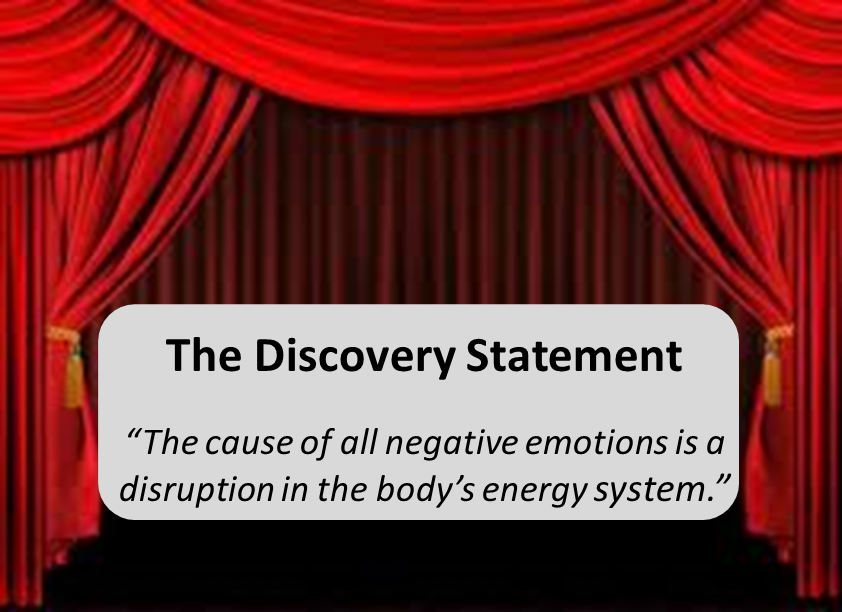
The Discovery Statement

One of the beautiful features of EFT is that its mechanism can be elegantly stated in one sentence. We call it The Discovery Statement and here it is.


Now, let's examine The Discovery Statement in more detail. First, notice what it does not say. It does not say that a negative emotion is caused by the memory of a past traumatic experience. This is important to recognize because that presumed connection of traumatic memories to negative emotions is a mainstay in conventional psychotherapy.

In some circles, it is the accepted practice to "treat the memory" and, in the process, ask the client to repeatedly relive some emotionally painful event. EFT, by contrast, respects the memory but addresses what I believe is the true cause ... a disruption in the body's energy system.

People have called me from all over the world for help over the telephone. Without my asking, they usually start telling me in detail about their past traumas. That's because they mistakenly believe I need all these details to help them. To them, these memories are the cause of their problems.

I care deeply about helping people who needlessly carry around all these emotionally charged memories. That's why I created this easy to use Tapping process. But it always seems strange to people when I tell them they don't need to painfully relive all those horrid details for EFT Tapping to help them. These memories may contribute to an unwanted emotion (you'll see how later), but they are not the direct cause. Accordingly, we don't need to spend time painfully dwelling on them. It is superfluous, if not damaging, to do so.

Thus there is relatively little emotional suffering involved with EFT Tapping. It is comparatively painless (see What can I expect from EFT Tapping? for possible exceptions). You will be asked to briefly recall your problem (there may be some discomfort in that), but that is all. There is no need to relive the pain. In fact, with properly done Tapping, generating prolonged emotional discomfort is frowned upon. This is but one example of where EFT Tapping is a radical departure from conventional methods.

zzzzzzzz: the sound of static on the TV


As a further aid to your learning, it might help if you compare the energy flow in your body to that of a TV set. As long as the electricity flows through your TV normally, the sound and picture are both clear. But what would happen if you took off the back of the TV set and carelessly probed through its complicated electronics with a metal screwdriver?" You would, quite obviously, disrupt or reroute the flow of electricity and an electric short circuit, or "zzzzzt", would occur inside. The picture and sound would become erratic and the TV would exhibit its version of a "negative emotion."

In the same manner, when our energy systems become imbalanced, we have an electrical "zzzzzt" effect going on inside. Straighten out this "zzzzzt" by properly performed Tapping and the negative emotion goes away. It's that simple. I'm well aware of how strange this may sound and how difficult it can be to believe ... at least at first. I wouldn't believe it myself if I hadn't seen so many marvelous changes in people after applying these techniques.

The Intermediate Step ... The Missing Piece

Once you accept it, though .... once you "let it in".... its logic becomes undeniable and you begin to see all the weaknesses in other methods.

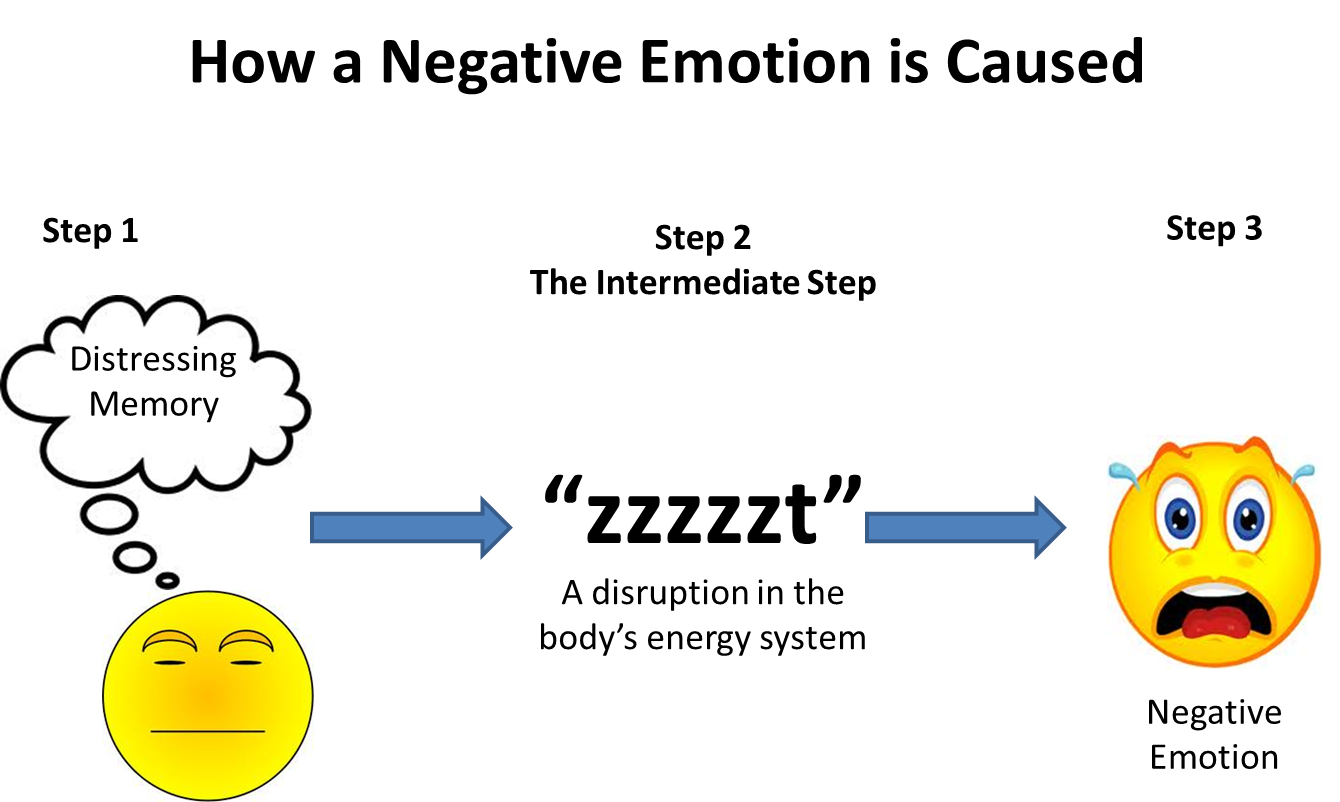
For example, the "treat the memory" method mentioned above becomes glaringly erroneous in the light of these discoveries. It is assumed, in that method, that the past traumatic memory is the direct cause of the emotional upset in someone. It is not. There is an intermediate step ... a missing piece ... between the memory and the emotional upset. And that intermediate step, of course, is the disruption in the body's energy system. It is that disruption, the "zzzzzt", that is the direct cause of the emotional upset. This is portrayed graphically below.
Please note that if step 2 (the intermediate step) does not occur then step 3 is impossible. In other words, if the memory does not cause a disruption in the body's energy system then the negative emotion cannot occur. That is why some people are bothered by certain memories and others are not. The difference is that some people have a tendency for their energy systems to become imbalanced under such memories, while others do not.

With this in mind, it is easy to see how the "treat the memory" method misses the mark. It addresses step 1 and ignores step 2.

This is why some people tend to get worse when conventional psychotherapy aims for the memory and not its cause (the energy disruption). Addressing step 1 by requiring someone to vividly relive a distressing memory serves to induce more disruption in the energy system (more zzzzzts). And that means more pain, not less. It can, and often does, aggravate the problem. If step 2 was addressed instead of step 1, then there would be relatively little pain. The energy system would be balanced (by appropriate Tapping) and internal calm would replace the negative emotion. The result would be rapid relief because the true cause was being addressed. This happens repeatedly with EFT Tapping.

In the following video I combine The Discovery Statement with a discussion of the Intermediate Step.  It adds an extra dimension to these important topics.


One Cause ... Thus You Only Need One Method

Now back again to the "Discovery Statement." Please notice that it is all inclusive. It says, "The cause of ALL negative emotions is a disruption in the body's energy system." This includes fears, phobias, anger, grief, anxiety, depression, traumatic memories, PTSD, worry, guilt and all limiting emotions in sports, business and the performing arts. That's a comprehensive list and covers just about every restrictive emotion we can experience.

Differently stated, this means that all these negative emotions have the same cause....an electrical "zzzzzt" in the body. It also means...
 
...that they can all be relieved in a similar manner.
 
Thus, grief has the same basic cause as trauma, guilt, fear and a baseball player's hitting slump. So the same general method can be used for all these problems. This "one cause" idea is also a blessing for mental health professionals. They are accustomed to an endless, ever changing number of explanations for the seemingly countless emotional concerns of their clients. To learn that there is only one cause greatly simplifies their efforts.

EFT Often Provides Impressive Physical Relief

The medical profession has long known that emotional issues can dramatically affect our body chemistry and that, in turn, can lead to everything from rashes and headaches to addictions, impaired immune systems and cancer. We see consistent evidence of this when we apply the Tapping process.  As guilt, anger, fear, trauma and the like become resolved, physical ailments often subside simultaneously. From time to time we also see physical symptoms fade by simply Tapping on the meridian system without directly aiming EFT at emotional contributors.  In this case, it appears that one of the contributors to the physical ailment may be strictly energetic and thus merely balancing the meridians can bring about symptom relief.  This brings us to another version of the Discovery Statement that says,

"EFT can assist physical healing by resolving
underlying energetic or emotional contributors."
 
This deepens our probe into What is EFT Tapping and to illustrate this, here is a video wherein I discuss the emotional facet of this concept and then follow it up with an actual case with LaVonne and her serious foot pain (neuropathy).  As you will see, aiming the Tapping directly at the pain went nowhere and thus there did not appear to be a strictly energetic contributor.  It was only after I addressed a handful of emotional issues (including guilt over the death of her husband via a motorcycle accident) that she achieved major improvement.  Also note that, although I am using advanced language approaches here (to be explored in future articles), we are clearly illustrating the fundamental principle of achieving physical relief by moving through emotional doors.


It's often a jaw dropping experience to witness these "impossible" recoveries and I invite progressive physicians to explore EFT Tapping as a major healing tool. Many physicians are integrating Tapping into their medical practices and one of those is Eric Robins, MD. His views are given in the following video.


Tuesday, February 14, 2017

Discover The Power of Stem Cell Nutrition & Adult Stem Cells --

Discover The Power of Stem Cell Nutrition & 
Adult Stem Cells -- The Natural Renewal System of Your Body

I'm sure you've already heard about adult stem cells. Maybe you saw a news story, or a read an article. I'm also sure you've heard the terms pluripotent stem cells and embryonic stem cells. 

They have created a great deal of controversy and with good reason. The lure of what embryonic stem cells can do for the body has led to ethical issues surrounding such things as embryo harvesting. 

One thing remains, adult stem cells represent the future of health and wellness as we know it. And they're here to stay.


The Science Behind Stem Cell Nutrition.

Scientists discover that adult stem cells migrate from the bone marrow into the bloodstream, then into the tissues to renew and repair damaged and dead cells.


Studies now show that Adult Stem Cells have the same ability to become virtually any other cell in the body. That is, if a stem cell travels to the brain, it will become a brain cell, to a muscle, a muscle cell, to the liver, a liver cell and so on.


Scientists studying extracts from various natural botanical compounds such as Fucoidan (brown seaweed), and Aphanizomenon Flos Aquae (AFA), discover their ability to trigger a natural release in adult stem cells from the bone marrow.

"..Mesenchynal Stem Cells in the bone marrow give rise to the tissue stem cells, i.e. they have been shown to differentiate into bone and fat cells; tendons, ligament and other connective tissues, as well as neurons and cells of the liver, lung, pancreas and heart. That list is not exhaustive. Also, as their name implies Hematopoietic Stem Cells in the same bone marrow are the well known precursors to the wide variety of blood cells (red and white) and platelets."

Dr. Allan Somersall - The Amazing Power of Stem Cell Nutrition.


In short, the same benefits as embryonic stem cells can be achieved by enhancing the release of adult stem cells -- something your body is already doing and has been doing since the day you were born.

This research has led to the concept of stem cell nutrition, designed to promote the release of adult stem cells from the bone marrow, and their migration to the organs and tissues of the body that are in need of repair.
The Incredible Power of Adult Stem Cells At Work

1. 'Messengers' are sent by tissues in need, requesting the release of adult stem cells from the bone marrow.

2. Adult stem cells are realsed from the bone marrow and circulate in the bloodstream.

3. A different set of 'messengers' attract adult stem cells to migrate into tissues where the stem cells reproduce and become new healthy cells of that tissue.


4. The whole cycle of renewal continues for the duration of your life, 24 hour hours a day, 365 days a year, never stopping until you pass away.
Stem Cell Nutrition -- Your Future is Now

Stem cells occur naturally in the body and serve to replenish cells that are lost through normal wear and tear or injury. 

As we age, our body's ability to self-repair and maintain optimum health decreases due to a reduction in the number of circulating stem cells associated with the normal aging process. 

Increasing the number of circulating stem cells is believed to support the body's process of self-repair and self-renewal.

Our bodies have to maintain a fine balance between breakdown and renewal. The cells of your body are constantly being damaged and replaced and this process is accelerated by stress, pollution and other lifestyle choices.

Stem Cell Science represents a new paradigm in anti-aging and the quest to maintain optimal health.

Stem Cell Science Experts Agree

"The lack of success of embryonic stem cells should be compared with the real successes of adult stem cells. A wealth of scientific papers published over the last few years document that adult stem cells are a much more promising source of stem cells for regenerative medicine." 

- Dr. David A. Prentice, Ph.D.

Stem Cell Nutrition Proven Clinical Studies

Mobilization of human stem cells study published in the Journal of Cardiovascular Revascularization Medicine. (Click for PDF

Fucoidan ingestion increases the expression of CXCR4 on human CD34+ cells. Published in the Journal of Experimental Hematology.

Stem Cell Nutrition Frequently Asked Questions

Here are some of the most common answers to questions about Stem Cell Nutriton.


Where can you order Stem Cell Nutrition?

Whilst blue-green algae and spirulina have been popular for more than 40 years, the idea to extract and use the compunds that trigger stem cell release is relatively new. The #1 stem cell nutrition product is StemEnhance Ultra. It comes with a 30 day money back guarantee and is available to order online.

What is Stem Cell Nutrition?

Stem Cell Nutrition is a new concept in the health and wellness field, where extracts from various natural botanical compounds trigger a release of bone marrow stem cells into the blood stream. These stem cells then travel around the body where they are signaled by tissues to become healthy new cells.

What are the side effects of Stem Cell Nutrition?

There are no known side effects. StemEnhance Ultra contains the same amount of Vitamin K as a serve of brocolli, and some people on blood thinning medication need to be aware of their vitamin K intake. You may however feel more alert, have increased mental clarity, and have better moods as a result of the 12 to 16 mg of naturally occuring PEA found in StemEnhance Ultra. People have also reported a reduction in aches and pains and a better overall sense of well-being. The body seems to respond well to having bone marrow stem cells released into the bloodstream.

What is 'The Amazing Power of Stem Cell Nutrition?

The Amazing Power of Stem Cell Nutrition is a book written by the late Dr Allan Somersall. Dr Somersall was a great supporter of stem cell research, a vibrant and energetic presenter, and he came up with the phrase, 'Everybody has stem cells; everybody uses stem cells; everybody uses stem cells everyday; stem cells work..and they work every time.' He work lives on at stemcellnutrition.com

Which countries is Stem Cell Nutrition available?

At this stage, StemEnhance is available in the US, Canada, Australia, New Zealand, France and Martinique. It will be available in many more countries as we undertake the product registration process.

What are the major Stem Cell Nutrition companies?

The pioneer in stem cell nutrition was Desert Lake Technologies, now known as Cerule, who developed StemEnhance and licensed it to other companies including StemTech. StemTech has recently filed for chapter 11 Bankruptcy and Cerule is set to become the leader in the market, with unfetted access to the Lake Klamath algae supply.

Isn't the algae used in Stem Cell Nutrition toxic?

Not at all. Whilst the whole AFA and microcystin are often found together, Cerule has invested into state of the art harvesting and filtration facilities. They hold many patents and the centrifugal filtering process takes up an entire room. The algae is tested many times will not contain any more than 1 million parts per million of mycrocystin as per the standard set by the State of Oregon.

Is Stem Cell Nutrition available for Dogs and Horses?

There are no specific products for dogs and horses at this stage, but they can consume regular StemEnhance Ultra if mixed with their food. As mammals, they have the same bone marrow system and experience the same results.


Saturday, February 11, 2017

Proof that an oral saline IV is better than a USD$525.00 intravenous one.

Oral vs IV Rehydration

Athletes Take Heed

When considering oral vs IV rehydration, oral is better. Why? Here you will discover what we think, what we know and what can we prove.

Both oral and IV hydration have been used by high-performance athletes through the years. It is common in the NFL, collegiate football, marathon and triathlon sports.

In third world and some second world countries, IV rehydration for athletes is a standard of care.

One Size Does Not Fit All

Research from 2005 found oral re-hydration to be more effective in children than IV fluid (IVF) rehydration, because it was faster to give and reduced hospital admissions in a certain group of small children.

When someone is unconscious or semiconscious, IV administration is the preferred form of hydration by healthcare professionals. But what about the rest of us? Is there a better way?

Oral vs IV Rehydration: The Sport Health Pro View

Because of the commonality of IV use, health professionals believe it is more effective than oral rehydration. It is thought that the IV will provide for far greater performance over oral hydration.

However, this is wishful thinking. There is no science to back this mindset.

Benefits Of Oral Hydration: The Science

Oral hydration has been found to be just as effective as IV hydration and studies show that oral hydration may actually be more beneficial. Oral hydration is also safer. It does not require medical staff to deliver it.
The safety and speed of administration alone makes it a better choice on the field of sports activity.

The study looked at the response to IV and Oral Rehydration. After 20 minutes of rehydration, the subjects exercised untill exhausted. The room temperature was 98.6 degrees Fahrenheit with a humidity of 50%.

The findings....

During exercise, the....

Blood plasma (the liquid part of our blood) and other blood-pumping values were about the same for IV and oral rehydration.

Temperatures were lower with oral rehydration.

Feeling of thirst was lower in the oral rehydration group.

Feelings of exertion were lower in the oral rehydration group.

Performance improvement for the oral rehydration group were only slightly better.

Oral Rehydration: The Better Way

While the results were about the same in the IV vs Oral hydration methods, there are a number of unseen advantages. The risk of infection, bruising, discomfort may be considered minor reasons to avoid the IV. Any invasive treatment to the body has greater risks than natural treatments.

Additionally, the need to move an athlete to a secure place to provide the IV creates further challenges.

Add to this the thirst perception and the feeling of not being exhausted, the oral rehydration has a lot of reasons to consider it as being superior.

By following an effective oral rehydration protocol, athletes are taking charge of their own health naturally. This will help the athlete become more in tune to their body's needs and when it is speaking to them. This in turn may result in greater performance.

So, when it comes to oral vs IV rehydration, oral wins the competition.

Research

Intravenous vs. oral rehydration: effects on subsequent exercise-heat stress.
J Appl Physiol (1985). 1997 Mar;82(3):799-806

Thermoregulation and Stress Hormone Recovery After Exercise Dehydration: Comparison of Re-hydration Methods
J Athl Train. 2013 Nov-Dec; 48(6): 725–733

A related trial in young children, even better results.

Oral versus intravenous rehydration of moderately dehydrated children: a randomized, controlled trial.

Pediatrics. 2005 Feb;115(2):295-301

So, How Much Water To Drink?

The following is the baseline water needs.

Age 2-17y-o daily minimum need is 75% body weight in ounces of water. Divide by 5 or individual dose. Take a pinch of salt dissolved on the tip of the tongue each time you drink.

Age 18+ daily minimum need is half the body weight in ounces of water. Divide by 5 or individual dose. An easier way, 10% your body weight each time you drink. Start with 2x and work up to 5 times. Take a pinch of salt dissolved on the tip of the tongue each time you drink.

Here is the break down and those who should not use this. Please read this entire section to find your specific need.

NEVER: drink more than 32 ounces in 2 hours.

NEVER: drink the water without taking the salt (unless otherwise directed). Too much water could wash out the electrolytes needed for normal health.

NEVER: Use the protocol if you have kidney disease without talking to a doctor.

NEVER: Use the protocol if you have congestive heart disease (CHF) or other fluid restrictions.

NEVER: use the protocol if you have a salt intolerance.

The Five Rights of Proper Hydration

Right Person: age 2-17 / 18-50 / 50-80 / 80 and older.

Right Time: 30 min before and 2 hours after meals.

Right Route: Dissolve the salt in mouth so it can be absorbed in the mucous membranes.

Right Amount: Salt: 1/8th tsp per 16 ounces, water: 10% of body weight in ounces of water each time you drink.

Why Dissolve the Salt On the Tip Of Your Tongue?

Some drink water with salt in it. This is called Sole. It can and will make many people sick to their stomachs. Putting the salt on the tongue will allow it to get to the blood faster so that when the water arrives in the gut, it will better be able to be absorbed.

Right Electrolyte: While normally this would be unprocessed salt, it could include others depending on your health issues.

Right Person Age 2-17: If there are any health problems, do not use the water cures protocol without supervision of a healthcare provider. The growing years...According to Dr. B, the formula is 75% of their body weight in ounces of water is the total daily dose. Then divide by 5 or 6 for individual dose. During athletic performance, the hydration need goes up to 100% of their body weight in ounces of water.

Right Person Age 18-50: Start drinking the water 2 x a day (within 20 min of waking) and slowly increase.

Right Person Age 50-80: Start off slower. Use the least amount of water and the least amount of salt. Only start off drinking one time a day. Then after a week, increase to 2 times a day. Allow up to 30 days before increasing the amount of water you drink or the salt you take.

Right Person Age 80 and over: Only start with the help of a healthcare professional. You should be monitored for health changes.

Right Person 18-50: If you do not have any other health issues, this age group usually responds to the basic water cures protocol.

Right Route: Obviously you are going to drink the water. The electrolytes are another story. Some prefer putting salt in the water. This may make you sick to your stomach. Others prefer putting the salt on the tongue and letting it dissolve. There is a third way that also makes sense.

When adding a tablespoon of liquid chlorophyll to the last drink of the day, adding level teaspoon of honey and 1/4 tsp of salt into the glass, blend into the water, and it will be more easily absorbed in both your mouth before swallowing and in your gut after it goes down.

Note: By using the oral route, the best way to make it most effective, hold each sip in the mouth and allow your saliva to mix with it as well as some of it to be absorbed.

Right Amount: This is broken down into four answers. There are individual doses, daily doses and doses for those highly active or in very hot or humid conditions.

Drink the water all at once. Do not nurse your water. Think of your body as holding it rather than holding it in a bottle. The salt is what allows your body to store it.

One thing to note, many start losing weight. Sometimes the weight loss is dramatic. The amount of water we need will gradually decrease as you follow the water cures protocol.

First: Never drink more than 32 ounces at one time or inside of a 2-hour period and never drink that much without salt.

Individual dose: At a normal activity level, 10 percent of your body weight in ounces of water. So If you weigh 135 lbs, you would drink 13 ounces. If you weigh 190 lbs, you would drink 19 ounces. Ten percent in ounces is basically the first two numbers of your weight if you are over 100 lbs and the first number if you are under 100 lbs.

This is the baseline amount you need to drink. If you are active, you will need to drink more depending on the intensity of what you are doing.

There is science on drinking more. Urine Volume and Change in Estimated GFR in a Community-Based Cohort Study. Conclusions in this community-based cohort, decline in kidney function was significantly slower in those with higher versus lower urine volume.

Right Time: 30 to 45 min before meals, 2 hours after meals. The reason is simple. When we drink water and take the electrolytes on an empty stomach, the water more readily goes through the stomach and enters the gut. From there, it returns to the stomach through the blood circulatory system and prepares the stomach for the soon-to-arrive food. The preparation includes both having everything ready for the production of hydrochloric acid and the creation of the mucous lining for the arrival of the food. Additionally, any old salts are washed out of the stomach.

In addition to being the best practice of hydration of the body and to avoid diluting the stomach juices, drinking before allows the stomach to better prepare for the meal.

If you are doing water to lose weight, drink as soon as you get up. Ideally you want to drink your water and dissolve the salt in your mouth within 20 minutes of awaking. Likewise drink at least 20 minutes before bed.

Right Electrolyte: Normally the Water Cures protocol suggests using unprocessed salt. However, there are exceptions. While we do not understand the reason why, some fine ground sea salts tend to have less mineral counts than the coarse salts. This may be due to oxidation from exposure to air. So we recommend the coarse sea salt as perhaps the best.

And not all sea salt has the same mineral counts. It must be unprocessed. The best way to know, look for the mineral count. Mined salts likewise are rich in minerals. Some prefer one over the other. The best way to find out which works best for you is to try both or even switch back and forth.

Sometimes we may need additional electrolytes. Your doctor would be in the best position to tell you if you should use any others, how much and how long.

How Much Water to Drink to Prevent Dehydration
This is a work in progress. We will continue to study and define the answer to this question. One thing we do know, when there is illness or disease, the water cures protocol can help some to reset their health.

Please share your experience or questions to help us grow this knowledge base.

Friday, December 16, 2016

Chapter 6 DIET, THE SLOW KILLER

Chapter 6 

DIET, THE SLOW KILLER

Once, you've cleaned out and repaired your food processing and waste removal system, you're ready to begin the process of rebuilding your body. Keep in mind that your body is rebuilding itself all the time. The actual life cycle of a blood cell, for example, is approximately four months. That means you end up replacing your entire blood supply every 120 days. The question is: what
will determine the quality of that blood? What are you going to be building that new blood from—Cocoa Puffs and beer?

  Understand, it's not only your blood, but every cell and organ in your body that's being replaced. For the most part, you get an entirely new body every seven years. It doesn't take a genius
to realize that the better your nutrition, the better "quality" your new body will have.

Unfortunately, it's not so simple. Any attempt to optimize the nutrition we take into our bodies must address five key problem areas.

The Five Problem Areas

1. The Question of Meat

2. Milk. It Doesn't Necessarily Do a Body Good

3. Plastic Fats

4. Refined to Death

5. What's the Big Deal about Organic (which will be covered in Chapter 7)

1. The Question Of Meat

Probably no topic has been more discussed (and is more confusing) than what constitutes the optimum diet. There's the:

Caveman diet
The blood-type diet
The Hi-carbo diet
The Low-carbo diet
The High-protein diet
The Low-protein diet
The Steak Lover's diet
The Vegetarian diet
The Vegan (or pure vegetarian) diet
The Hollywood diet
The Scarsdale diet
The Twinkie diet
etc.

Heck, I'm getting confused just writing them down. So let's step back, take an objective view of the situation, and do a little reality check.

Let's begin by cutting through all of the nonsense and just taking a look at what kinds of food our bodies were designed to handle—then figure out what that means for us today. And the best
way to do that is by first identifying the key characteristics of our "eating and digestive" systems, then seeing which animals we match up with and what they eat. The key "indicators" that we're
going to look at are:

The teeth
The stomach
The length of the digestive tract

The Human Eating Machine


>Teeth. All of our teeth are nearly of the same height. Our canines are projected only a small amount, and our molars are broad-topped

>Stomach. The human stomach is slightly elongated, approximating the shape of a kidney bean

>Digestive tract. The average adult has a digestive tract (measured from mouth to anus) of about 30-33 feet long. This means that the ratio of the length of a person's digestive tract as compared to their height (also measured from mouth to anus) is approximately
10-12 times the length of their body.

Carnivores, the Meat Eaters: Lions, Tigers, Etc.

The first thing you notice about carnivores is that their teeth are nothing like those found in humans. They have huge canines for striking and seizing prey, pointed incisors for removing meat
from bones, and molars and premolars with cusps for shredding muscle fiber. In carnivores, the teeth of the upper jaw slide past the outside of the lower jaw so that prey is caught in a vicelike grip. In general, carnivores don't chew much; mostly, they just tear chunks off and swallowing them whole.

  An examination of the carnivore intestinal tract reveals a short (relative to the length of their body) bowel for fast transit of waste out of the body[1]. (The actual length of the carnivore bowel is
approximately 3 to 5 times the length of the body—measured from mouth to anus—a ratio less than half that found in humans.)

  Most of the digestive process occurs in the carnivore's stomach (which is a round, sackshaped, simple structure with a very high concentration of acid salts for digesting animal muscle and bone). Food usually remains for days at a time in a carnivore's stomach while it is digested (to a large extent) by enzymes present in the RAW meat itself (a process called autolytic digestion). In addition, carnivores are adapted to process huge amounts of food at a time (up to 25% of their body weight or more), then eat nothing for days at a time.

  Again, this doesn't sound very much like us.

Herbivores, the Plant Eaters: Cows, Deer, Etc.

  Herbivores have sharp chisel-shaped incisors for cutting, no upper incisors in some cases, and small incisor-like canines. Their diastema molars and premolars are flattened with ridges. Their
teeth and upper jaw meet the lower jaw so that lateral movement of the lower jaw produces the ...

[1 Fast transit of waste for carnivores is important for two reasons. One, the faster the transit, the less opportunity
for parasites to take hold. Two, meat tends to putrefy in the intestinal tract. Fast transit, therefore, limits exposure

to the byproducts of putrefaction.]

...grinding actions to break down plant materials. In herbivores, the incisors are dominant, the canines usually depressed, and the molars broad-topped.

  As for the herbivore bowel, it usually runs almost 8 times longer than a carnivores (20 to 28 times the length of the body, from mouth to anus) since, unlike meat, plant matter is not prone to
putrefaction, thus rendering quick elimination moot.

  Herbivores also tend to have extended, compound stomachs.

  Again, not much like us.

  Omnivores (Roots, Berries, Meat, Etc.): Bears, Wild Pigs, Etc.

  No animal is really adapted to eat all things; but if any animal comes close, it would have to be the bear. Typical foods consumed by bears include: ants, bees, seeds, roots, nuts, berries, insect
larvae such as grubs, and even flowers. Some meat, of course, is eaten by bears including rodents, fish, deer, pigs and lambs.[1]
 Grizzlies and Alaskan brown bears are well-known salmon eaters. And of course, anyone who has read Winnie the Pooh knows that many bears relish honey.

  Other than the ants and grubs and rodents, the bear diet sounds a lot like the typical American diet; and, it's for this reason that many people conclude that the natural human diet is that of an omnivore. But remember, we're stepping back and taking a look physiologically where we fit in, and on those counts, we don't match the omnivores.

  The biggest difference is in the teeth. Omnivores have the sharp canines of the carnivore AND the pronounced incisors of the herbivore. They also have molars that are BOTH pointed and
broad-topped.

  That's not even close to a human set of teeth.

Frugivores, Fruit and Nut Eaters: Gorillas, Etc.

  In the frugivore, all the teeth are nearly of the same height. The canines are little projected and the molars are broad-topped. (Sound familiar?) Unlike the carnivore jaw, which as we have seen is vertically mobile for biting or tearing, the jaw of the typical frugivore is laterally mobile to allow for chewing.

  As for the bowel of the frugivore, it runs about 10 to 12 times the length of the body from mouth to anus—the same as found in the human body.

  The stomach of the frugivore is typically long and extended—a complex structure—containing 1/10 of the acidic salts and pepsin found in a carnivore's stomach. Again, the same as in us.

  So, here we have our match, but what does it mean? Are we restricted to fruits and nuts?

[1 Polar bears feed almost exclusively on seals and an occasional human; but then, what vegetation is there for them to eat in the frozen wastes of the Arctic.]

   No. In fact, the frugivores we most closely resemble, the wild chimpanzees, periodically do indeed eat live insects and raw meat. Among the great apes (the gorilla,[1]the orangutan, the bonobo,
and the chimpanzee) and ourselves, only humans and chimpanzees[2] hunt and eat meat on a frequent
basis. But make no mistake, chimpanzees are largely fruit eaters, and meat comprises only
about 3% of their diet—far, far less than is found in the typical American diet.

   So Should We, or Should We Not, Eat Meat?

   Is a vegetarian diet automatically better?

   No. In fact, depending on blood type, some people actually do better when they include meat in their diet. Other factors in our diet affect our health to a much greater degree than whether or not we eat meat.

   So??

   The bottom line is that eating small amounts of meat, chicken, or fish probably comes down mostly to a personal choice. If you choose to, you can eat 3 oz a day, or less, of meat without any
significant health problems—with the following provisos:

  Keep the amount small—3 ounces a day or less.

>Heavy consumption of meat significantly compromises beneficial bacteria in the colon resulting in a 1,000% increase in the levels of harmful bacteria in the colon and a concomitant 90% drop in the levels of the beneficial bacteria as measured in fecal matter.

>High consumption of meat also tends to push the body's pH levels into the acidic range, which as you'll see in Chapter 12 presents major health risks including cancer and osteoporosis.

>Epidemiological studies at Harvard Medical School showed that, "Men who eat red meat as a main dish five or more times a week have four times the risk of colon cancer than men who eat red meat less than once a month." They are also "more than twice as likely to get prostate cancer."

[1 Gorillas have never been observed hunting or feeding on any animals other than invertebrates such as termites and ants.]


[2 Wild chimps love fresh baby monkey meat.]

   If you're going to eat meat, buy only organic meat to avoid exposure to the wholerange of chemicals,[1]growth hormones, and parasites present in beef and chicken, or the high levels of toxic metals present in most fish. If it isn't available locally, pressure
your supermarket to carry it as an option.

2. What About Dairy?

   The average American typically eats close to 600 pounds of dairy products a year, which makes it the single largest component of their diet. Unfortunately, this may not be as healthy asthe milk ads you see on TV would lead you to believe. Even if the cow's milk you get is free of chemicals, growth hormones, allergenic proteins, blood, pus, antibiotics, bacteria, and viruses typically found in milk, you still have major problems. Cow's milk is not designed for people. For one thing, it has 20 times the casein of human milk.[2]
 (Human milk is designed to take an infant from 8 pounds to 40 pounds in 18 months. Cow's milk is designed to take a calf from 90 pounds to 1,000 pounds in about 24 months. Although they are both white, mother's milk and cow's milk are totally different beverages.) And for that matter, the cow's milk you buy in the store and the cow's milk that comes from a cow are not similar substances.

> First, homogenized milk is not natural and presents serious health risks. The theory behind homogenization sounds simple: break up the fat particles in milk until they are so small that they stay suspended in the milk and don't rise to the top and form the
layer of cream that used to be the trademark of all bottles of milk. Unfortunately, there's a side effect to this process. Once you make the fat particles so small that they don't rise, you've also made them so small that they easily get absorbed into the body and clog your arteries.

> Second, there's the problem of the growth hormone used in dairy cows to increase milk production. This growth hormone, called bovine-somatotropin3(BST), was developed by Monsanto. It was supposed to be identical to the actual growth hormone found in cows, and in fact, as part of their 55,000 page application to the FDA, Monsanto submitted a chart identifying the 191 amino acids contained in BST showing that they absolutely matched the amino acid chain found in natural growth hormone.
Unfortunately, it seems, the application is inaccurate. The problem occurs at amino acid #144, which was supposed to be lysine in both the natural growth hormone and in Monsanto's BST. As it turns out, it isn't. In the July 1994, issue of Protein Science(3:1089-97, 1994), Bernard Violand, a Monsanto scientist published evidence that
amino acid #144 in Monsanto's growth hormone is, in fact, epsilon-N-acetyllysine, a freak substance. Whoops! Ah, but then you probably think that once this problem...

[1 Just as an example, over 90% of today's chickens are fed arsenic compounds. And while we're on the subject of chickens, it's probably worth mentioning that according to a government study, over 90% of the chickens sold in this country are infected with leukosis (chicken cancer). As for those chickens with too much cancerous tissue to be sold, well . . . they're destroyed, ground up, and fed back to the chickens that we ultimately buy and eat!]

[2 The high levels of casein are just one of several reasons that humans do not digest milk proteins very well, leading to numerous allergic reactions and high levels of mucous in our noses and bowels. Incidentally, Elmer's® glue is made from cow's milk casein; that's why you see Elsie the cow on each bottle of Elmer's® glue.]


[3 Also called rBGH (recombinant bovine growth hormone).]

...came to light, totally nullifying the Monsanto application, that BST was recalled.
Nope, not in the United States![1]

   And then there's the fact that the body digests milk (any milk) differently once gastric juices begin to flow (at around 18-20 months old). Before gastric juices flow, milk is alkaline and non-mucous forming in the body; but once gastric juices enter the picture, they turn the milk acid, forming mucous, causing sinus problems, allergies, colds, etc. That's why every animal except man weans its young off milk! Think about that for a moment.

  In addition to all of that, milk has been implicated in:
>Heart disease[2]
>Cancer[3]—particularly breast cancer
>Diabetes[4]
>Allergies and colds
>Colitis
>Colic and earaches in young children

   And finally, milk has played a major role in the development of the "super bacteria" that have recently emerged to plague our health. How? In 1990, the USDA allowed the dairy industry to increase the one part per hundred-million antibiotic residue standard for milk by 10,000% to one part per million. The problem is that at this level of constant intake, the antibiotics actually destroy the probiotic colonies normally found in the intestinal tract, which then allows harmful bacteria to flourish and develop resistance to a whole range of antibiotics.[5]

   If you must have dairy, use organic. Avoid homogenized milk at all costs. Also, there are a number of grain and rice-based milk alternatives; some of which are spectacular.

[1 The FDA gave its approval for the sale of Monsanto's BST product back in 1993, but in Canada and the European Union, BST remains uapproved because of strong circumstantial evidence that it may promote cancer in cows and humans. Understand, this change in one amino acid is not insignificant. The replacement of one amino acid can change the configuration of a protein significantly; and configuration determines the properties and effects of a protein. Although the chemically detectable difference between true BGH and Monsanto's BST creation may be slight, the effects of the two hormones on the human body may be quite different indeed.]
[2 If you do drink milk, it is essential that you take a folic acid supplement to neutralize the xanthine oxidase found in milk. Xanthine oxidase, which attacks the arteries, is a major factor in heart disease. Interestingly enough, this problem seems only to occur with homgenized milk. When non-homogenized milk is consummed, the body excretes the xanthine oxidase.]
[3 It's worth noting that 60% of America's dairy cows are infected with the leukemia virus.]
[4 One particular protein, beta-caseine, found in cow's milk, can literally trick the immune system into attacking and destroying the insulin-producing beta cells of the pancreas.]

[5 There are 52 different kinds of antibiotics and 59 bioactive hormones found in milk.

   Note: milk is often pitched as a great source of calcium. It is not. Yes, it has a high calcium content, but the body is able to utilize very little of it; and, in fact, because of the way the body deals with milk, consumption of milk actually leaches calcium from the bones.[1] If you have any doubt about this, just consider the fact that Americans are among the highest consumers of dairy in the world, eating an average of 600 pounds of dairy a year per person—and yet we have one of the highest incidences of osteoporosis in the civilized world!

   3. Unnatural Fats: The Number 1 Dietary Problem

  Food manufacturers love hydrogenated oils because hydrogenation makes those oils thicker, creamier, and more appetizing to the consumer. Unfortunately, hydrogenation also saturates the oils' fatty acids, changing them into trans-fatty acids. Trans-fatty acids are the number one killer in our diets, and a major contributor to:

>Cancer

>Heart Disease

>Diabetes

   Hydrogenated (and partially hydrogenated) oils are absolutely unnecessary and have no place in your diet or in any of the foods you eat. The number one dietary prescription from this chapter
is to totally eliminate all hydrogenated oils from your diet. Unfortunately, it's not as easy as it sounds. Food manufacturers have put them in almost every food they manufacture. The good
news is that if enough people refuse to buy foods that contain trans-fatty acid oils, manufacturers will stop putting them in their foods.

   You also want to eliminate refined oils and manufactured polyunsaturated oils from your diet. What oils are good? Virtually any raw natural oil is good. Olive oil is the best. Use lots of extra
virgin olive oil in your cooking. Surprisingly, butter is cool—provided that you can get butter that doesn't contain antibiotics and bovine growth hormone and all the rest of the nonsense that many
dairy farmers use.

  "Wait a second! Isn't butter high in saturated fat?" Absolutely, and let's put that bugaboo to rest. Natural saturated fats in moderation are not a problem. They do not raise cholesterol levels. They do not lead to heart disease. In fact, there is actually a diet that helps people lose weight, and lower cholesterol levels while eating as much meat and eggs and natural saturated fat as they like.[2]
 The two reasons this diet works are (1) natural saturated fats do
not cause heart problems, and (2) all versions of this diet call for the elimination of snack foods, processed foods, sugared foods, foods containing any trans-fatty acids, and foods high on the glycemic index.

[1 It is a myth that we need milk for calcium. There are many far superior sources of calcium—such as sesame seeds. The problem with milk is that because of its high acidity, your body needs to buffer it with even more internal calcium than you get from the milk itself. Also, the 10 to 1 ratio of calcium to magnesium found in milk is insanely high and devastating to the body.]

[2 I've already discussed my concerns with too much meat in the diet; nevertheless, these programs do demonstrate the health-building power of just eliminating the bad things from our diet.]

 4. Refined Carbohydrates: The Number 2 Dietary Problem

   This includes all refined and processed foods, including:

>Everything made with white flour

>White rice

>Cold cereals

>Most hot cereals

>Most snack foods

>All sugar foods, including cakes, candies, and soda pop[1]

   They negatively affect the body in a number of ways. They are all acid forming in the body, which we'll talk more about in Chapter 12. They are all converted to triglycerides in the body and
stored as fat. And they all rank high on the glycemic index (with no redeeming nutritional value such as the fruits and vegetables that are also high on the glycemic index).

The Glycemic Index

   The glycemic index, and identifying high-glycemic foods, is one of the hot areas of nutritional science right now. Not to make light of it, it is an extremely important dietary consideration, but with one huge HOWEVER. First, though, a quick discussion of the glycemic index.

   Diabetics have been using the glycemic index for years to help in controlling their insulin levels. Quite simply, foods that adversely affect blood sugar by elevating insulin levels are termed "high glycemic" foods, and foods that do not elevate insulin levels are "low glycemic." High glycemic foods can:

>Cause your body to store fat

>Make you fatigued

>Cause your brain to go "fuzzy"

>Lead to heart problems such as elevated LDL cholesterol levels and high blood pressure

   Obviously, these are conditions to be avoided. High glycemic foods that cause elevated insulin levels and the concomitant problems I just mentioned include:

Bananas

Raisins ...

[1 Soda pop, particularly colas, may be the single worst "food" ever invented. First, soda contains approximately 1 teaspoon of sugar per ounce of soda. (Aspartame is even worse—once having been considered by the military for possible use as a battlefield neurotoxin.) That works out to about 12 teaspoons per can, or 32 teaspoons per Big Gulp. Many sodas, particularly colas, are high in phosphoric acid, which leaches calcium out of your body at an astounding rate. And all sodas "feature" CO2 bubbles, which when you think about it, is the body's main waste product!]

... Carrots

Potatoes

Corn

Breads, cereals, pastas, and rice of all kinds

Virtually all snack foods

Sugars of all kinds and soda pop

   Earlier, I mentioned that there was a big HOWEVER to the glycemic index. What is that however? It's called chewing. If you chew your food well enough, the saliva neutralizes almost all of the glycemic response. So how much do you need to chew your food?

   There's an old saying that says, "You should drink your solids and chew your liquids." What that means is that you should chew the dry food you eat until it turns to liquid in your mouth (about 40 chews per mouthful), and that you should swish liquids back and forth in your mouth (chew them as it were) an equal number of times.

   As we've already discussed when we talked about refined foods, you should give up snack foods and refined flour products and sugar sweetened foods for a number of reasons. On the other
hand, for most people, if chewed enough, it's still okay to eat all of the fresh fruits and vegetables you want—even if they are high on the glycemic index.

   General Recommendations

>Diet. Clean up your act.

 Eliminate as much of the processed and cooked food from your diet as possible. Instead of canned or frozen, eat fresh.

 Eliminate as much of the refined flours, grains, and sugars as possible. Instead of white bread, eat REAL whole wheat. Instead of cake and ice cream for dessert,
eat fruit.

 Replace low-value foods such as potatoes and iceberg lettuce with high value foods such as sweet potatoes and almost any of the richly colored vegetables (particularly, spinach, brussels sprouts, broccoli, and beets).[1]

  As much as possible, eliminate all snack foods and fast foods. Replace with prunes (no kidding, an extremely powerful antioxidant), raisins, and all of the berries.

  Eliminate all hydrogenated oils and trans-fatty acids. Replace with olive oil and fresh butter.

[1 For those with arthritis, it might be useful to forego vegetables from the nightshade family, including: tomatoes,

spinach, and eggplant.]

     Cut back on the quantity of meat, pork,[1]chicken, and dairy in your diet. And make sure that what you do consume is organic.[2]
 Fish, of course, is okay—okay that is, if you can be sure it's free of heavy metals and toxins and hormonal "modifications."

> So what does that leave you? Actually thousands of choices. Virtually, everything that we've talked about eliminating is easily replaced with a healthier version. If you can't find the organic meats and dairy you want, or the whole grain foods you're looking for, talk to your supermarket. In most cases, they will get it if you ask.

>Of course, if someone is in an advanced state of illness, they better clean up their act TOTALLY, and eat no meat and no cooked food. In fact, ideally, they should go on a raw juice fast[3]—at least, until they get well. Once you're well, you can bake up a potato, or grill yourself a nice piece of organic beef (if that's your bent).

>The bottom line is that the worse you eat, the more often you will need to cleanse and detox and make use of supplements.

   So After All That, What Do I Eat?

   At one time, I was totally vegetarian, primarily for ethical reasons. Anyone who has any awareness of how cattle, poultry, and pigs are treated in our modern "superfarms," must think twice about consuming products produced by this system. It is incredibly cruel.
Unfortunately, after years of speaking engagements in numerous places around the world, I got tired of eating iceberg lettuce with second-rate Italian dressing for lunch, and white rice and dead vegetables for dinner. I broke down and started eating small amounts of chicken and fish.

   My diet now consists of:

>Fresh juices, superfoods, and ground flaxseed (see next chapter) for breakfast.

>Large fresh salads with a variety of greens and vegetables4
 with the occasional small piece of chicken or fish for lunch.

>Dinner is light. Sometimes a bowl of slow cooked whole-grain cereal so the enzymes are still active. Sometimes a small bowl of soup. Sometimes fresh fruit, etc.

[1 And no, pork is not "the other white meat." In fact, it's probably one of the more indigestible meats.]
[2 Incidentally, pesticide levels are far more concentrated in the animal flesh and dairy we eat than in the fruits and vegetables sprayed with those pesticides. Think about it for a moment. The animals consume these pesticides day after day, steadily concentrating all of the pesticides they eat through their entire lives in their flesh. The bottom line is that the higher up the food chain you go, the more concentrated the pesticides are. A cow eats hundreds of pounds of clover to make a few gallons of milk—concentrating the pesticide in that milk. Then again, it takes 21 pounds of milk to make 1 pound of butter, and 10 pounds of milk to make 1 lb of cheese—concentrating the pesticides even more.]
[3 See Chapter 13.]

[4 Sometimes I'll substitute a plate of lightly steamed or baked vegetables for the salad.]

 > On the other hand, I still have an occasional slice of pizza. When I was young, I'd eat pizza 2-3 times a week. Now it's once a month. And more often than I should, I still indulge a sweet tooth and have dessert.