Showing posts with label sugar. Show all posts

Saturday, October 28, 2017

The Importance of Hydration

When we're born, our bodies are composed of about 75 percent water. As we age, that percentage drops to about 65 percent, about two-thirds of our body's weight, and varies depending upon age, gender, and muscle and fat percentages. Containing essential nutrients that the human body requires in order to perform everyday functions, water is the clean hydration our bodieo need in order to survive and thrive, daily. Replenishing your body's cells, organs, and systems with adequate hydration is imperative, and while many people quench their thirst with sugary synthetic beverages such as sodas and sweetened fruit juices, these drinks offer little in terms of hydration and a great deal in terms of harm. When the essential nutrients provided by water are replaced with synthetic addictive, empty calories, and loads of sugar, the brain and body reap none of the benefits that plain water provide, and instead endure blood sugar spikes and crashes, over-whelming processing and storage of improper "nutrients" ( what some might refer to as "malnutrients"), and of course, inadequate hydration. All of these malnutrients wreak havoc on the human body's brain, cells, organs and systems, compromising the body's functions rather lah supporting them. If you don't think water is overly important for the human body's proper functioning, simply take a look at what water does for the body. 

Physical Processes That Depend upon Adequate Hydration
Adequate hydration is essential to the optimal performance of every process in the human body and the functioning of every cell, organ, and system. Clearly, a focus on consuming enough water (32.53 ml water for every 1 kilogram of body weight) daily is a step in the right direction toward achieving overall health. "To think, drink, and blink, you nee water" is a saying that sums up the human body's need for proper hydration in order to perform every function, whether simple or complex, voluntary or involuntary. Water supports the electrical impulses that allow the heart to beat regularly, the nerves and spinal cord to communicate, and the brain to process information to sustain good health. To move, jump, throw, and perform any physical activity, the body' muscles need water. The joints, eyes, nose, and mouth are lubricated by ( you guessed it right) water. in addition to all the benefits that result from hydrating the body's cells and systems, your brain and body experience far fewer difficulties thanks to the improved detoxification, proper digestion, and enhanced nutrient absorption that naturally occur when the body has adequate amounts of water. 

The Average Adult's Water Needs

The average adult doesn't consume enough water on a daily basis. Most people are simply unaware of how little water it takes to actually keep the body hydrated and operating at its best. In order to perform everyday functions such as breathing and muscle movement, and involuntary actions including digestion and heartbeats, the human body requires about 2 liters of water per day ( i.e. about 68 ounces or about 8½ cups, cup size is 8 ounces). Those 2 litres of water help the body perform everyday functions, and replenish the stores of water that are constantly escaping the human body through every exhaled breath, urination, and persperation. Factors such as gender, age, and body composition( the ratio of fat to muscle percentage) play into the amount of water needed by the body on a daily basis. but the fluctuation is  minimal, making the general rule of eight (8-ounce) cups  of water per day widely accepted for the general population over the age of eighteen(18). There are instances when the amount of water required by the human body increases, such as with an increase of physical activity, outdoor, extended exposure to hot and/or hudud climates, and illnesses that can lead to fluid loss, such as those that occur with vomiting and diarrhoea.

  Following Water Cure Protocol Formula, those 10 cups of 10 percent of water per dose, can be consumed during a twelve-hour period by simply drinking a single cup every hour and a half. Dividing the total daily amount into regular, 90 minutes, "doses" lets the human body achieve and maintain adequate hydration throughout the day. Energy levels, focus, digestion, and even mood can remain unaffected by the effects of dehydration. Making it even easier to fulfil those 1½ hourly water intake goals are the sweet treat that can be concocted with infused water recipes. You can choose 100 of easy, delicious recipes for detox, Weight Loss, healthy Skin, Better Immunity and More! all within this healthy wealth blog site. 

Thursday, September 14, 2017

AGEs You Know?

Do You Know Your AGE?
How and Why to
Prevent AGE Damage

Advanced glycation endproducts (AGEs) may be a
fact of life, but fighting them may extend your life.
By Will Block
f we may be so bold, which would you rather have and hold—GOLD or MOLD? OK, it’s a trick question (please don’t scold), because if truth be told, you wouldn’t want either—they’d leave you cold if you knew they were both about . . . old.
Old people, you see, are the victims of AGE—Advanced Glycation Endproducts, of which GOLD and MOLD are two prominent examples. The acronyms stand for glyoxallysine dimer and methylglyoxallysine dimer, respectively, but don’t worry—there won’t be a quiz on that. It would be wise, however, for you to become better informed about AGE (or AGEs, as they’re often called), because these chemical compounds are a key factor in the aging process.
As you will see, AGEs are formed inside your body through normal metabolism and aging, and outside your body during the preparation of some foods you eat. They’re implicated in the development or exacerbation of numerous degenerative diseases associated with aging, notably type 2 diabetes, atherosclerosis, cardiovascular disease, Alzheimer’s and other dementias, cataracts, retinal dysfunction, kidney failure, nerve damage, arthritis, and cancer.
Supplements Can Slow AGEing
It’s impossible, alas, to avoid AGEs altogether—their formation begins during early embryonic development and continues steadily for the rest of our lives. The body’s mechanisms for removing unwanted substances cannot keep up, because the AGEs are resistant to this process. Therefore, even if every other factor in the aging process could be magically eliminated, it would still be impossible to avoid aging. The good news, however, is that the “AGEing” process can be slowed down—and so, therefore, can the aging process. There are two ways to do this. Ideally, we should do both.
One way to slow AGEing involves the use of certain supplements that have been shown—in laboratory experiments, animal studies, or human clinical trials—to inhibit the formation of AGEs. Notable in this regard are: benfotiamine, a fat-soluble form of thiamine (vitamin B1); the amino acid histidine; the dipeptidecarnosine, which consists of linked histidine and beta-alanine; alpha-lipoic acid, a saturated fatty acid renowned for its potent and versatile antioxidant actions; and rutin, a flavonoid found in many plants, notably buckwheat, black tea, and apple skins.*

*Some of the evidence for these compounds was discussed in “Reducing Glycation Reactions for Better Health and Longer Life” in the February 2008 issue.

No! Nooo!
The other way to slow AGEing is to (are you sitting down?) avoid, as much as possible, browning the foods that you cook. Just as the colors red, orange, yellow, blue, and purple are usually signs of exceptional healthfulness in fruits and vegetables (these colors come mostly from flavonoids), the color brown should be considered a “red flag” warning ofunhealthfulness in the crusts of bakery products and in meats or vegetables that have been baked, roasted, broiled, grilled, fried, sautéed, etc. It’s better for your health to steam, boil, or stew the meats and veggies.1
I can hear you now: “No! Nooo!” I know, I knooow. Forgoing the most delicious preparation methods seems almost insane—like giving up sweets. But it does have its rewards: better health and longer life.

†For some good news on the sweets front, see the article on page 11 of this issue. That article and this one share an emphasis on the importance of glycemic control for maintaining good health.

A Prediction Ignored, Then Verified

Louis Camille Maillard
(1878–1936)
To understand AGEs (about which there is much confusion in the popular literature), we need to go back a century, to prewar Paris. In 1912, a young French physician and chemist named Louis Camille Maillard (Mah·YAHR) began investigating the chemical reactions between nutrient sugars (such as glucose and fructose) and amino acids, the building blocks of proteins.
When Maillard heated aqueous solutions of sugars and amino acids for a few hours, they turned a yellow-brown color, the result of a series of reactions that yielded a witches’ brew of products. Significantly, the same phenomenon occurred, albeit much more slowly, when he simply allowed the solutions to sit for a few weeks under physiological conditions (37ºC, pH 7.4).
Maillard had discovered a series of complex and important chemical reactions that now bear his name:Maillard reactions. He predicted that they would occur in the human body, especially in diabetic patients because of their chronically high glucose (blood sugar) levels. This prophetic insight went unnoticed for half a century, however, and he did not live to see it realized.
In 1971, scientists investigating the blood of diabetic patients discovered that some of the hemoglobin wasglycated. Glycation—the first step in the Maillard reactions—is the chemical attachment of a sugar molecule (either free or bound in a polysaccharide, such as starch) to an amino acid (either free or bound in a protein, such as hemoglobin). As the ensuing reactions advance through numerous complex stages, they can lead to a great variety of endproducts, most of which are harmful to us. These are the “advanced glycation endproducts” we now call AGEs.
AGEs Make Diabetes a Kind of Accelerated Aging
The sugar of greatest importance to us is glucose, because it’s the principal product of carbohydrate digestion, and it’s our principal fuel for energy metabolism. Glucose is among the least reactive of the nutrient sugars in the Maillard reactions. This may have led, through natural selection, to its being the evolutionarily favored sugar in mammalian species.2,3
The glycation reactivity of fructose (fruit sugar), on the other hand, is about ten times higher than that of glucose. Fructose is found in honey and many fruits, and it’s also one-half of the sucrose (table sugar) molecule, the other half being glucose. The exceptional propensity of fructose to produce AGEs is another reason why we (diabetics especially) should minimize our intake of sucrose and high-fructose corn syrup.
Because diabetics tend to have higher glucose levels than nondiabetics, they also have higher AGE levels at any given age, compared with nondiabetic individuals. And because AGEs form earlier in life and more rapidly in these patients, diabetes can be thought of as an accelerated form of aging. Much evidence suggests that AGEs are involved in almost all the complications of diabetes, which arise from damage to blood vessels throughout the body.4
AGEs—A Haphazard Process
Unlike most biologically important reactions, which are catalyzed by enzymes, glycation is not catalyzed. It’s a nonenzymatic version of a common and necessary biochemical process calledglycosylation, which is tightly controlled as to the time, place, and extent of its occurrence. The lack of enzymatic control over the glycation process means that this reaction can occur haphazardly—anytime, anywhere, to an extent limited only by the availability of the reactants—and it does, with generally harmful results that tend to accumulate over time.
Now you get the picture: there’s nothing to restrain glucose from reacting with amino acids and proteins, which are everywhere in the body. Since we can’t live without glucose, we can’t avoid AGEs—but we can slow down their formation. Another bit of good news is that not all glucose will react similarly with all proteins (of which there are about 25,000 different kinds in humans)—the extent of the reaction depends on a myriad of factors that can vary greatly throughout the body. But, as we saw above, the list of “hot spots” is large, and the long-term consequences are horrendous.
Most AGEs Are Incredibly Yummy
So much for the AGEs that form in our bodies as a result of normal metabolism. What about the ones we ingest with our food? Isn’t it adding insult to injury to eat the very kinds of compounds we’re trying to minimize the formation of in our bodies? Of course it is, but if you’re the kind of person who likes food, you probably love dietary AGEs (which should be called DAGEs), because they happen to be among the tastiest compounds known. (This is another of Ma Nature’s cruel jokes at our expense.)
It’s no accident that many AGEs are found in commercial food flavorings designed to make all kinds of foods taste even better, as though they’d been browned. (The Maillard reactions are, in fact, the basis of the flavoring industry.) Nor is it an accident that the bits of browned stuff left over in the frying or roasting pan, which celebrity chef Emeril Lagasse calls “yum-yums,” are yummy because of the Maillard browning, which is the principal source of DAGEs.
Oh, What a Tangled Web Maillard Wove
Over 1000 DAGEs are currently known, and there are probably many more. They’re the products of Maillard reactions occurring under dry conditions at temperatures above about 120ºC (248ºF). The tangled web of chemical reactions is so complex that many chemists have spent their whole lives trying to unravel it. The caramelization (browning) of sugar, by the way, may appear to be a Maillard-type process, but it’s not—the chemistry is entirely different.
In books on the chemistry of cooking, the Maillard reactions are portrayed in a good light because of the gustatory wonders they produce. Chefs love them, naturally, and they’re not about to commit professional suicide by shunning them just because some scientists recommend it. In any case, the books claim that the Maillard reactions occur only with high, dry heat, not at the lower temperatures involved in cooking with water, where the maximum is 100ºC (212ºF). That may be true in the kitchen, where time scales are usually very short, but in real life, as Maillard himself showed, the process does occur—very slowly—even under cool, wet conditions.
You Are So Cool (and Wet)
Not to get too personal, but your body, compared with an oven or barbeque, is rather cool and wet, and the Maillard reactions will proceed, slowly but surely, for all the days of your life. You could, however, resist this slow tide by taking antiglycating supplements every day.
And given a choice between eating browned foods that are high in Maillard products, or water-cooked foods that have virtually none . . . well, that too is a choice that only you can make. (Let’s hope the federal health police don’t someday try to make it for you.)
AGEs Large and Small
There are hundreds of known, naturally occurring AGEs produced by the Maillard reactions in our bodies. Some of these are very large molecules produced by the chemical cross-linking—induced by sugars—of proteins that were never intended to be linked. This produces a kind of cellular “gunk,” which in principle is not unlike the crud that builds up in your car’s engine over time. In both cases, performance is impaired, and the system can be brought to a premature halt if suitable measures are not taken.
One example of the slow damage due to cross-linking is the gradual stiffening of the protein collagen, which is the principal component of our connective tissue and cartilage. The resulting loss of tissue elasticity can occur in the heart, blood vessels, skin, eyes, kidneys, joints, etc., with results that older people know all too well.
Many other AGEs are relatively small degradation products of the Maillard reactions, and some of these contain a reactive chemical group called the carbonyl group, R2C=O. [The carbonyl is the C=O part; the two Rs can be almost anything but hydrogen atoms, as, e.g., in acetone, (CH3)2C=O, which contains two methyl groups.]
Carbonyl compounds are common in organic chemistry, and many of them instigate harmful chemical reactions in living organisms. In fact, the glycation reaction that begins the Maillard process involves a carbonyl group on the sugar molecule reacting with the amino group of an amino acid. The spectrum of damage caused by carbonyl compounds is calledcarbonyl stress. It’s analogous to the oxidative stress caused by reactive oxygen species, including free radicals.
AGEs of a sort can also be formed, by the way, by the reactions of sugars or other reactive carbonyl compounds with two other important types of biological molecules: lipids (fats) and nucleic acids (DNA and RNA). These AGEs too are deleterious to our health.
References
  1. Harding A. How food is prepared important to health: study. Reuters Health, May 7, 2007.
  2. Ahmed N. Advanced glycation endproducts—role in pathology of diabetic complications. Diabetes Res Clin Pract 2005;67:3-21.
  3. Ulrich P, Cerami A. Protein glycation, diabetes, and aging. Recent Prog Horm Res 2001;56:1-21.
  4. Peppa M, Uribarri J, Vlassara H. Glucose, advanced glycation end products, and diabetes complications: what is new and what works. Clin Diabetes 2003;21(4):186-7.

Will Block is the publisher and editorial director of Life Enhancement magazine.

Saturday, April 22, 2017

The True Causes of Diseases

by Barbara ONeill

So the million-dollar question , "Why do people get sick?" What is the true cause of disease?

Well, Louis Pasteur made the germ theory famous and he made the germ theory famous probably in about the 1850s , somewhere like that, and the germ theory states that germs cause disease.

Now, if the germ theory is correct, surely all we have to do is find something that will kill the germ. Have we got enough things to kill germs, ladies and gentlemen? There, if you've seen it's a million multi multi million dollar industries, the whole pharmaceutical industry,  isn't it?

In fact, there are two multi-million dollar industries, actually there's three now. Number one is the junk food industry. And because of the junk food industry, people aren't working well, that's produced the pharmaceutical industry that comes along trying to fulfill what Louis Pasteur stated that germs causes disease. But I tell you what, if germs do cause disease and we've got a multi-million dollar industry built on drugs to kill germs , why aren't people getting better? In fact, people are getting sicker. They are.

Well, there's another multi-million dollar industry being born out of the frustrations from people who aren't getting better from the drugs and that is the vitamin industry. Am I right? Is it working? I would like to suggest to you that it is not working. 

And there's a very famous nurse called Florence Nightingale. She knew the true cause of disease. And I'll show you why in a minute. And when she read Louis Pasteur's theory who was a contemporary at her time, she said, "This is the theory of a man of a very unstable mind." And she said, "Anyone who believes it, is equally unstable." 
What did Florence Nightingale believe? 

Well, Florence Nightingale was born to a very wealthy parents. She was educated which was very unusual for a woman of her day. And she wanted to help people And so at the ripe old age of about 28, she was that age before her father let her start to work in institutions for wealthy young women who were fainting because their corsets were too tight , etc., etc. 

She said in her book the only time she was happy when she had parcels of food and she was going to the little villages to help the poor. Her sister, Frances Parthenope, loved the wealthy life. She loved the parties, sewing a fine seam and painting watercolors but Florence Nightingale said it that drew no satisfaction to her. So, by the time she was about 33, she'd gained a little bit of experience. Well, actually quite a bit of experience in the line of nursing. She was very interested in how the institutions. And so she put in a lot of procedures, so that was basically her role.  Well in about 1856 and the Crimean War * was happening. [*Crimean War, (October 1853–February 1856), war fought mainly on the Crimean Peninsula between the Russians and the British, French, and Ottoman Turkish, with support from January 1855 by the army of Sardinia-Piedmont.] And the message got back to the British government that the French soldiers were being better looked after than the British soldiers. it's usually political, isn't it? And so the British government asked Florence Nightingale to take 35 nurses to Zuccotti which was the port where the wounded from the Crimean War were being taken. When she got there, the conditions were appalling. The hospital was ex-army Turkish barracks. The plumbing didn't work.  There was raw sewage in the corridors. The conditions were appalling. And the death rate in that hospital was fifty percent. You had a better chance on battlefront than you had in that hospital. 

But when she came in, the doctor said, "We don't need you. And you're not coming in here." They sent her to the kitchen. She went to the kitchen, it was filthy. There were huge big pots of water with a bit of rotten meat in it. There was the food. Because the plumbing wasn't working, 30 men work were going to one chamber pot. The stench was horrific. She found one man who'd been there two weeks and hadn't been attended. They were just overflowing with wounded men. So, Florence Nightingale did what she could; scrub the kitchen, got the kitchen  working. Meanwhile she telegramed her father. 

She said, " I want a shipload  of clean linen, clean bed clothes, clean mattresses, clean bandages and a cook. As you will see as we go through the lecture this morning, human body cannot heal without nourishment. It's like asking a builder to build a house but not providing the building raw material. Two and a half weeks later, another shipload pf wounded soldiers came in . The hospital was already at its limits. So the doctor said, frowned at the nurses, "All right, you can come in." I hated that.
 Do you know she made them wash their hands between operations. The first thing Florence Nightingale did was, she got her nurses to start scrubbing.  Scrubbing and cleaning. Opening the windows. She got men to assess the plumbing, to see now, if you don't turn the tap off, you're not going to be, he's still going to be mopping up, aren't you? Within, I think it was about October she arrived, November 1856 , by 1857 that was about April, the death rate had gone down to ten percent. Within a full six months, the death rate was 2 percent. Wow! 

When she went back to England, she was hailed as a heroine. When she found that was going to happen, she slipped down the back gangplank and went home. She said, "I'm not a heroine." 

She said, " All I did was increased hygiene, the sanitation, and the nutrition." She knew germs don't cause disease. She said, "Germs are the results of unhealthful conditions."  She made the hospital such that there was nowhere for them germs to live. Their role on the planet is to clean up the dirty place. You see that?  

In fact, on his deathbed Louis Pasteur refuted his own theory. This is what he said, I have about four books where his deathbed confession is quoted, "Bernard was right." Who was Bernard?  Claude Bernard was a contemporary at the time of Louis Pasteur.
Claude Bernard believed it was not germs that cause the disease, but it was the condition of the body. And this is what Pasteur said on his deathbed, "Bernard was right. The microbe is nothing. The organism is everything."  And isn't that true? It is not the microbe that causes the disease,  it is the environment. Florence Nightingale , she didn't come in with drugs to kill every microbe. She just cleaned up the environment, so they weren't there anymore. Displacing common sense, isn't it? 

So, the germs theory has been very popular and it is still is to some extent. But  another theory has almost surpassed it. They're actually equal. I call them the two Gs'.  In 1953, headlines in the newspaper, "Secret of Life has been Discovered!" Watson and Crick's had been able to unravel the DNA . And from that time on, the second G came in to be blamed as the cause of all diseases. It's the Gene. Is it the Germ or is it the Gene? 

Notice with both theories, it takes away all responsibility on the human being for what is happening in them. So, they are very convenient , seriously. You see, if the human body was designed to heal itself and if it's not healing itself, one must ask this . This little three little word will remain here all the time. And it's the law of action and reaction. It's Newton's Third Law of Motion : to every action there is an equal and an opposite reaction. If a body is not healing when it's given certain conditions, one has to put on the detective hat on and ask why. Why is this happening?  And why isn't it healing? And what's the definition of insanity? To do what you've always done and expect different results. If it's not working, change the conditions until the body says, "Yeah , this works." And as I spoke about last night, you're the doctor. If the body says, "I like this." What's it saying, yeah do this.

Let's have a look at the gene. Here is the cell. And the cell must be looked at because that's what we are. We're just a bunch of cells. We have hair cells, eyes cells, tissue cells, skin cells, liver cells, kidney cells and most all the cells are much the same. And they run much the same. Yesterday in your live blood analysis, you saw the size of cell, 250 million red blood cells on one drop of blood. 

 Image result for 250 million red blood cells on one drop of blood

Image result for 250 million red blood cells on one drop of blood

[4 oxygen molecule in hemoglobin. 250 million hemoglobins per red blood cell. 5 million red blood cells per drop of blood (1 mcL): Plasma-55%, Bitty Coat < 1 %, RBCs - 45 %]
  Now , when I'm speaking about the cell, I'm not speaking about the red blood cell because the red blood cell is a little different. It doesn't have a nucleus. You see, it's in the nucleus that the DNA is. 

Image result for the nucleus that the DNA is


Image result for the nucleus that the DNA is

Image result for the nucleus that the DNA is

The red blood cell the carrier. And it is the carrier of nourishment taking it to these other cells, so that they've got oxygen, so they've got water, so that they've got nourishment, so the waste can be taken away. So Watson and Crick's in 1953 were able to unravel this DNA? if you pull that DNA out , it's two meters long. Wow!

Let's have a look at the DNA unraveled. DNA is abbreviation for DeoxyriboNucleic Acid which is a molecule that carries the genetic instructions used in the growth, development, functioning and reproduction of all known living organisms and many viruses. Chromosome is a thread-like structure of nucleic acids and protein found in the nucleus of most living cells, carrying genetic information in the form of genes. 23 chromosomes from my mother, 23 chromosomes from my father. The information is all stored up in the DNA on how to make a new body.  

 Image result for chromosome

Image result for chromosome
1. chromatid
2. centromere
3. q arm
4. p arm

Image result for chromosome

Image result for chromosome

Image result for chromosome

And did you know we're constantly being remade. Our eyes cells are remade every two to three days. That's why people that have eye operations, they recover very, very quickly.

The next cell that recovers quick is the cells that line your gastrointestinal tract. Their remade every three to five days. Because we're not all made at once, every cell not remade at once, I think it takes approximately about a year before we have got a new body.

Let's have a look at the DNA. The outside strands are made up of polysaccharides. And polysaccharides basically means many sugars. And many sugars come from just about everything that we eat. So they're of upward strands. The inside strands are made up of amino acids. And amino acids come from the protein that we eat. The glue that glues the amino acid bands to the outside polysaccharide strands is minerals. And the food that is the highest in minerals is the vegetables. When Hippocrates said let food be your medicine and medicine be your food, he didn't know about the DNA. But he knew that we were made up from what we eat. And you can see by the very structure of the DNA, we're made up from the food that we eat . We're constantly being remade. How are we remade? 

Well, DNA has all the information on  how to re-make us. Every cell in the body has all that information and if you were to put all that information into alphabetical language, it would fill a thousand books with a thousand pages and three thousand letters on each page. That's quite phenomenal, isn't it? All the information, let's say this is a gastrointestinal tract cell, GIT-cell. All the information on how to make a new gastrointestinal tract cell is in every single DNA of every single cell of the body. So, all the information is there. But that gastrointestinal tract cell, it doesn't want to make a new liver cell or a new pancreatic cell. So, for reasons that medicine doesn't quite understand, the information is highlighted, not on how to make a new liver cell  but how to make a new gastrointestinal tract cell. So, almost the liver cell information that's veiled over. 

So , let's look at how a new gastrointestinal tract cell is made. So all the information is in the DNA makes a photocopy of it, then it's called RNA . [ RiboNucleic Acid (RNA) is a polymeric molecule essential in various biological roles in coding, decoding, regulation, and expression of genes. RNA and DNA are nucleic acids, and, along with proteins and carbohydrates, constitute the four major macro-molecules essential for all known forms of life.] And RNA with its photocopy of all the information on how to make a new gastrointestinal tract comes down to the little factory where it's made, called ribosome. Ribosome is the little factory where the new cell is made. 

And the structure begins brick upon brick. What are the bricks? Amino acid. What's the glue? Mineral. Brick upon brick, all the informations there and out pops! a new  gastrointestinal tract cell. What about someone with irritable bowel syndrome (IBS). Irritable Bowel Syndrome is irritation of the lining of the colon, small intestines. If someone has Irritable Bowel Syndrome why aren't they well in a year? Is that a reasonable question? If the body is constantly being remade, why aren't they well in a year. It's a reasonable question, isn't it? 

Let's have a look at what happens. Information from how to make a new gastrointestinal tract cell taken down by RNA to ribosome. This person has Irritable Bowel Syndrome (IBS). The information comes through and the new cell is made. Brick upon brick, "oh ! no! there's a flaw in the pattern." Mutation in the DNA, it's called. Remaking process continues, brick upon .."oh !no! there is another flaw in the information. Something is wrong with the pattern.  It's not being made right. Brick upon ..oh ! no! the person is shortage in a basic amino acid. Maybe that's final line ..that's not made properly..oh! no! they're shortage in a mineral, maybe it's magnesium. So , that's not made right. And a new Irritable Bowel Syndrome cell is made. 

There are a lot of health professionals today, who are looking at healing from a DNA level. Because if you don't get the pattern right, if you don't get the recipe right, it cannot be made, you see? 

Cancer is mutations of the DNA. So, the first thing we've got to do, obviously, is to stop what is causing the damage or the mutations in the DNA. And heal that DNA or the body will not heal. 

So, let's have a look now at what causes  damage in DNA? Because as I said previously, if you don't turn the tap off, you're still going to be mopping up in the other corner. 

Let's have a look at what causes damage in these DNA messages?C
Cause Number 1, is chemicals. Chemicals are called carcinogenic. Carcinogenic means causing cancer. Causing mutation in the DNA. I was reading in the Chemical Alliance magazine recently, that they're finding babies that learn to swim or children that learn to swim as babies in chlorine pools are having health problems. Because of the chemicals on the pool. Whenever they try to put fluoride in the water, huge public protest comes up. Have you noticed? But they still put it in the water. You know what fluoride is? It's a by-product from Elko, the aluminium making company. 

Does fluoride help with teeth? Well, fluorosis* is mottled teeth that's from too much of the fluoride. Mottled is mark with spots or smears of colour. [ *Dental fluorosis (also termed mottled enamel) is an extremely common disorder, characterized by hypomineralization of tooth enamel caused by ingestion of excessive fluoride during enamel formation.]

Image result for mottled teeth from fluoride


 Fluoride can also damage the DNA. It can also damage brain cells. It can damage kidney cells. And the fact is, if fluoride touches the tooth, it can actually strengthen the outer coating, that's about all. 

How many chemicals were legal twenty years ago that are illegal today? How many are we using today or some are using today that will be illegal in another 10 years ? Chemicals cause cancer. Chemicals cause mutation of the DNA. We don't have any over the neighbour but we have total say over our home. One of the best things you can do for your family is make a decision to have a chemical-free home. And as we go through these lectures, I'll show you very effective and much cheaper alternatives. 

Cause Number 2 is Genetically Modified Foods (G.M.F.). How do they cause mutations  in the DNA? Basically, that's how GMF are created from two different species  are spliced together. Let's give you an example. The DNA from a tomato and the DNA from an Atlantic salmon (a fish), they spliced together to create a tomato that will grow in the snow. But it actually doesn't happen. There's this huge gray area of all these other things that happen that they actually don't understand. And when a human being eats genetically modified food and when that food broken down to these simple structures like amino acids , minerals , especially amino acids, the body says "who are you, I don't recognize you." And if there's no other amino acids, the body has to use them for the building of the DNA and that causes flaws, causes mutation in the DNA. Eating Genetically Modified Foods (G.M.F) causes cancer because it actually puts into the body basic ingredients that the body does not know how to use. 

Cause Number 3, is excess in electromagnetic  fields. Hmm. You probably heard about cows grazing under those huge big electrical towers and they have stillborns they have , you know, their offspring are born with problems. We all have electromagnetic fields in our human body where electrical people there's a spark of electricity in every cell in our body. It's the excess that causes the problem. Some of the biggest danger that are happening with people today is exposing their eyes because your eyes are an extension of your brain to the electromagnetic field access, especially late at night. This is the games stations, your computer, TV. Now we have  computers, and we have mobile and what they are, they're very, very handy. But it is the excess that the problem is. I mean teenage suicide is just , it's so big now. It doesn't even reach the newspaper. I think it's got a lot to do with kids aren't sleeping when their brains recharge and they're having this exposure of this electromagnetic fields excess. If you have a television in your room, make sure it's turned off at the point (wall socket). Don't charge your iPhone, your bluetooth in your bedroom. We spend a third of our life in the room, so be very cautious as to what's in that room when you're sleeping. Charge them outside of your bed room., or another room. If you have a television, turn it off. If you have an electric clock, say you're sleeping right here and it's right there on the table, put it on the other side of the table. You know, you'll reduce the electromagnetic field access by about three quarters just by moving another foot away. So, be very mindful of this. This is a very big thing today in our technological society. And of course, in that you've also got  microwaves. There are some countries in Europe today , they are banned. When they cook food, the amino acid that breaks down from the food that's cooked, in their body does not recognize. It's in a structure  that it doesn't understand, so it cannot remake you, remake the DNA effectively.

Cause Number 4. And this may surprise you,  92 % science is showing today that DNA damage is caused by minerals deficiency. How could we have a mineral deficiency? Well, in many American and modern homes,  are starting to happen a little bit in Australia, there is no kitchen. It's just freezer to microwave oven, to rubbish bin. When I lived in the Bronx in 2004 and I'd walk every morning, I could never walk along the streets where the garbage delivery was about to be collected. Because the garbage took up almost the whole of the footpath. And the garbage had been collected actually three days before. See, when you got trays that are going from freezer to microwave oven, to rubbish bin, there's much rubbish. Because we burn our papers , because we use a lot of natural food and compost all that, you know, the what we don't use in our vegetables, I think I have a tiny little bag about this much, once a week. So, where is the mineral deficiency coming from? Number one it's the way agriculture happens in Australia today. We had a wheat farmer here with his wife. And she said, majority of weed in Australia is grown with super phosphate. Super phosphate in the soil kills the micro-organisms. When the micro-organisms are killed in the soil, they are the ones that release the minerals out of the soil and into the planet. Super phosphate creates show ponies of vegetables . Looks good, don't taste very good. We ever tasted an apple off a tree flavors intense, you know what you're tasting? Minerals. Did you taste that cucumber, yesterday? Being picked this morning , or that morning. Incredible taste, you are tasting minerals. When you taste an apple out of bullies maybe or no taste have you ever done it. I've done it, you eat it and you think if I had a blindfold on, I wouldn't ever know what I was eating. No minerals. It's because of what the way that they're grown. And then they picked too early. Then they're stored for too long. And then often, they're cooked too long. And then all the minerals that are there left, go into the water , and the water is throw away. That's a lot of Aussie's are fast food, just a fast society, no time to cook, no time to  prepare. Just fast food, fast food. That's why so many Aussie is mineral deficient. If minerals provide the glue to glue everything together, do you know its minerals that can be responsible for start healing  or bridging the gap in the DNA damage. What else can cause it? 

Cause Number 5 is Stimulants. Some of Australians darlings do it. What are some of Australia's darlings do? Let's do a little list here. 
5.1 Sugar. Refined sugar. How is refined sugar cause DNA damage? It overworks the pancreas. And when the pancreas gets over worked that actually gives a message to the gene to damage the pancreatic gene , so that the children are born with weakened pancreases. So there, they're the children, they're getting hyperactive. They're the children that getting diabetes when they're 7-years-old. They've been born with a damaged gene because the parents and the parents before them overdid the sugar. Most people are overdoing it, not even aware of the danger. It happened. You can buy two books on sugar , the ones that I know, called Sweet Poison, the other one called Sugar Blues. Because sugar causes the blues. There was a newspaper article not recently that was claiming that sugar was a poison. 
5.2 Caffeine. When I was a little girl , my parents drink tea, but I . What's the number one favorite drink in Aussie today is the caffeine. How does caffeine cause DNA damage? It interferes with the neurotransmitters . And when the neurotransmitters in the brain are constantly being interfered with, that affects the DNA . So that when those parents give birth to children the DNA is damaged. Where does the weakness go? The weakness goes to brain function. 5.3 Alcohol. Women who drink alcohol before they give birth to babies, they give a defective DNA to their babies that have a tendency to addiction to alcohol and brain damage.
5.4 Tobacco. Notice I'm choosing the very socially acceptable ones.  Parents that smoke tobacco products give birth to children with less alveoli in the lungs. They give birth to children that have damaged in the little honeycomb that holds all that alveoli together. So children born to smoking parents can actually get emphysema without ever having smoked . Wow.
5.5 Drugs. This is a big one today. When I was young , you could get drugs in North Sydney, in Sydney, for a price. Every school has them. Even primary schools are selling marijuana. And it affects the DNA. It affects the DNA of the person that's doing drug. So they give birth to children that have defective DNA stored in it. I think marijuana was alright. I used to go to nursing mothers' meetings and say they all should be on marijuana, as when I was 25. Because we thought it's much better than alcohol. But you know, I've seen too many casualties. My girlfriend, her two oldest children are dead now. One got drug-induced psychosis, the other one went on to heavy drugs and overdose. Scary stuff. This is more dangerous than most people realize. 

Cause Number 6 is Fungus. When we're lazing in the creek yesterday, I think Rebecca, you made the comment on the algae and the lichen, the relationship that they have. What happens is that they are, the algae can take over. You see, fungus is responsible for more mutations in the plant kingdom than any other thing. Fungus can cause mutations in human being as well. There are some creatures I think there's  a special snail and the fungus can come in and take over the snail. And reproduce itself through the snail and they know when it does because instead of those tentacle things that come out , being an inch long, they are two inches long and they psychedelic technicolor, That's when they know that the fungus is now reproducing itself, through the snail. [ (though scientists are making progress in decoding the compounds that the Ophiocordyceps fungus uses to assume control over ants) ]

David Attenborough, he's got a very interesting show on ants. And there's a colony of ants that grow fungus under the ground. And they tend it because the waste that it gives off, they roll up into little balls and that's their food. But they can only have an ant tending the fungus plant for no more than half an hour. Otherwise the fungus takes over the ant and eat it. Isn't it interesting? So, fungus can cause mutations in the DNA. 

  Let's have a look at that micro-organisms. Micro-organism is a microscopic, meaning you can only see them under a microscope. Organisms mean they are living things. In looking at the fungus aspect we're also going to look at the germ theory because they're all micro-organisms. 

There's a very famous scientist, he's a six times professor Antoine Berham. He was a contemporary at the time of Pasteur. Most people have never heard of him.  Why have we heard of Pasteur? Because he was a socialite and he got a lot of media attention. And everyone liked his theory because he said you're poor thing when you get sick, it's not you, it's the germ that has jumped on you. Berham was not popular because he said micro-organisms, they're in every cell of the body. There are 10 times more microorganisms in the body themselves. And when the body's running well, they contribute to the proper running of the cell. But whenever cell damage happens, these microorganisms have the ability to change roles. They are able to turn into something that we call the clean-up team. A micro-biologist said to me, "Oh, we called them the 'garbage collectors'" What's their name? Their name is bacteria. That's their role on the planet. That's what they do. And the more cell damage, the more waste, the more bacteria. 

With the flood that happened in Queensland last year ** , what was the biggest concern? [Heavy rain in March 2010 saw much of south western and central Queensland undergo major flooding. The floods saw inundation of the towns of Charleville, Roma, St George and Theodore among others. Major rivers affected include the Balonne River, Bulloo River, Paroo River and the Dawson River.] It said on the television, if you've got a car or a crate, don't go in the water. Because what was the water alive with? Lots of these bacteria. Why? Because there was so much cells damage . There was plants, there was animal, bird death and now all floating in the water. So, there's a lot of bacteria. As the environment changes, the bacteria now evolves into yeast fungus. We call this the exterminators. That's their role. That's what fungus are. As the environment changes, the yeast and fungus, they now evolved into the undertakers. What do undertakers do? They take away the dead things or corpse. What's their name? Mold. That's what mold's role is on the planet. [ A mold (US) or mould (UK / NZ / AU / ZA / IN / CA) is a fungus that grows in the form of multicellular filaments called hyphae. In contrast, fungi that can adopt a single-celled growth habit are called yeasts.]  And not long after the mold's stage , the matter is now brought back to DUST

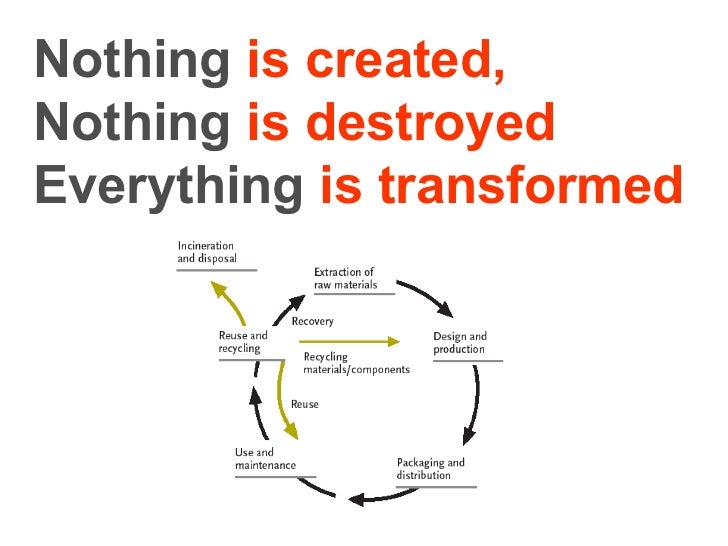
What I have drawn for you here is the cycle of life. it's the carbon cycle *. ( *Click here to learn more about Carbon Cycle.) (Study 2 , click here) There's a basic law of science that sates, "Nothing is created, nothing is destroyed."
Image result for "Nothing is created, nothing is destroyed"

It just changes form. These are the performers in the cycle of life. These are the players in the cycle of life. That's their role. 

Florence Nightingale understood this very clearly , Antoine Berham understood it very clearly. And both of them amongst with also Claude Bernard, when they heard Pasteur's theory which blamed germ to be the cause of disease, they just thought this guy is crazy. This germ theory defies common sense. 

As a gardener I have three compost bins.. Why do I have three? One I'm adding to, one is sitting and one I'm taking from. What's happening in the one that I'm adding to? I'm putting all my breakdown from my food in there. And the little micro organisms that were once part of building up carrot, now the damage has happened in the death of the carrot, now, it starts to break down the carrot. The one sitting bin, I'm letting these micro organisms do their job. But in my garden I had help. It's called worms. And then the compost bin which I'm taking from, I put the fork into one day, it all breaks apart like beautiful dirt. All the matter has now been brought back to dust. Then I put that dust into my garden. What sort of garden if I got when I have got compost in my garden? My thing. People has say to me , why isn't anything eat your cabbages. I said, " I don't know." Nothing does. There are little moths everywhere.

Do you know a healthy strong plant body, nothing eats it. Have you noticed? What you see in the garden is what you'll see in human beings.

One time, Antoine Berham, took a dead cat and wrapped it up in an airtight container and let it sit for four months. After four months, he came back, opened it airtight container. What did he find? Dust. Maybe a few bones. Takes a bit longer to degrade. What brought cat back to dust? The micro organisms that were part living running cat, upon cell damage , and death is the ultimate cell damage, took their suit of clothes off, so to speak, put their rubber gloves and apron on and became the cleanup team. Evolved into the exterminators, down to the undertakers, so by the time Antoine Berham opened his airtight container, it was just dust inside. With great excitement he took the dust, put it under his microscope. What did he see?  In the dust it was alive. With micro organisms. They finish their role, now they are waiting for their next role. You know there is no waste in nature. If something dies, does it stay there? No. It all breaks down and goes back into dust.  

What is the preacher say at the funeral? "Ashes to ashes, dust to dust." He is referring to what's going to happen to that dead body in the coffin, is going to come back to dust. Do you know what this means, ladies and gentlemen? The micro organisms that were part of running ancestors of ours are still here. Nothing's created, nothing's destroyed.

So, when I put my compost that is now totally back to dust, earth, and I put it in my garden , what am  I doing? Let's have a look. This is a plant. 
Image result for plant roots

Here are the roots of plant. I put my compost in. What am I putting into the garden? I'm putting probably millions of micro organisms.
Image result for microorganisms in soil

Image result for microorganisms in soil

Image result for microorganisms in soil

Now they play another role. Now they break down the heavy metals in the soil and make them available for the roots of the plant. But not only that, they protect the plant from harmful pathogens. And the plant loves those micro organisms. 

Image result for pathogens

The plant knows the health of the plant is dependent on them , so fifty percent of the fuel that the plant makes from photosynthesis , it sends back down to feed those micro organisms. it's almost like , " please stay, I 'll feed you, I give you something nice to eat" Beautiful illustration of giving and receiving, bio symbiosis .

Image result for bio symbiosis of plant with microorganisms

Image result for bio symbiosis of plant with microorganisms

Image result for bio symbiosis of plant with microorganisms

Image result for bio symbiosis of plant with microorganisms

That's why organically grown fruit and vegetables has a far higher nutrient content because of the micro organisms in the soil break down the minerals and the heavy metals in the soil and make them available for the roots of the plant. So, my cabbages, my cauliflower were so high in nutrients because of the micro organisms that are in my soil , nothing ate my plants. 

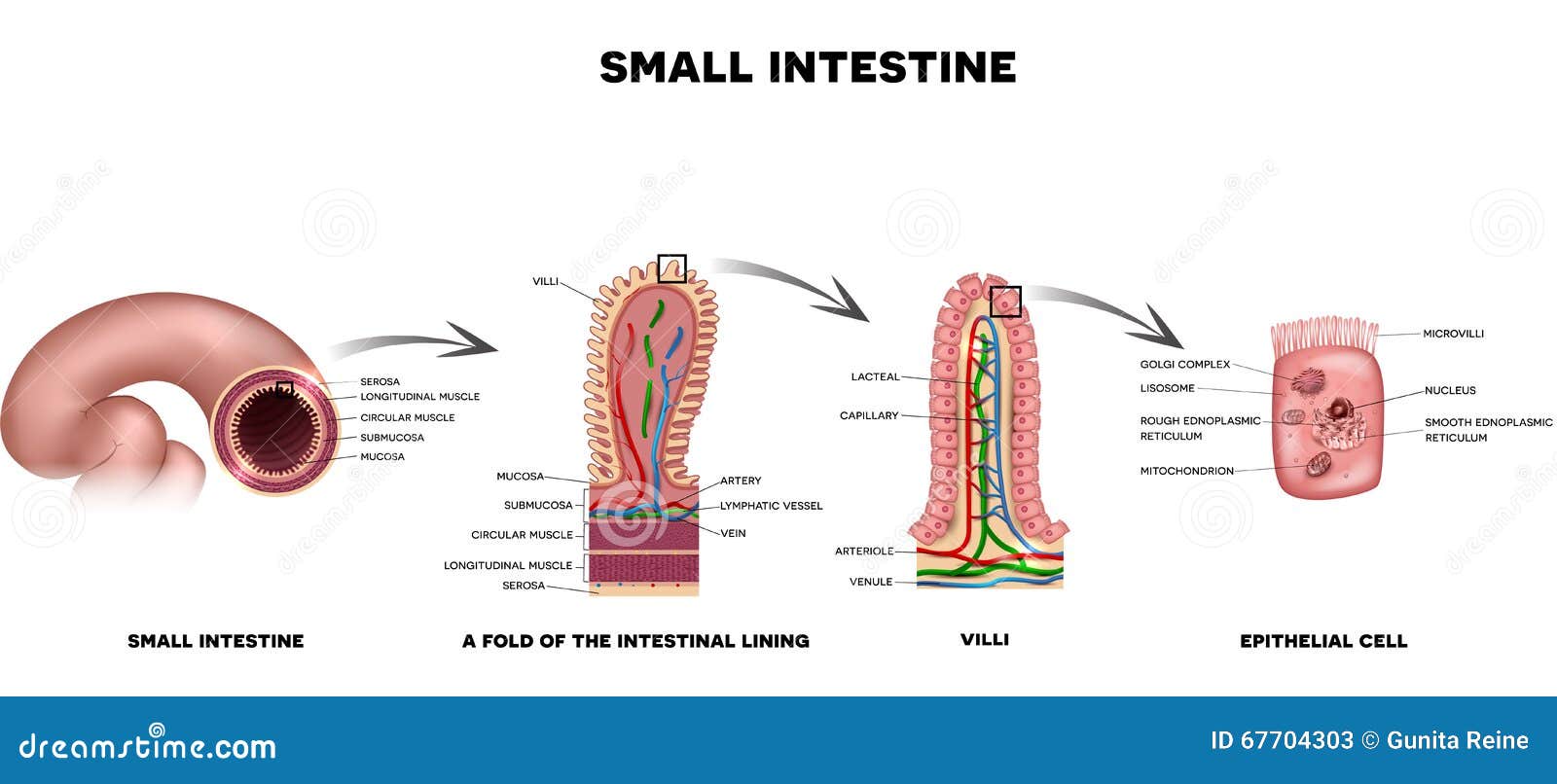
A similar things happens in our human guts. In our gut, small intestine, it's lined with little things that look just like the roots of a plant.

Image result for human gut


Image result for human gut

Image result for human gut

In our gut, small intestine, it's lined with little things that look just like the roots of a plant. And do you know they play a similar role to the roots of a plant. They're called villi. 


Image result for small intestine lining

Image result for small intestine lining

Image result for small intestine lining

Image result for small intestine lining


And instead of a green blood network going over it as in the roots of a plant, it's red. Last night we talked  about how similar chlorophyll is to human blood. 

In the gastrointestinal tract this is where the food comes down. There are little micro organisms. Did you know that the microorganisms in our guts, they're the largest amount of micro organisms in the whole of the human body. Here they are. Their name is the most common are lactobacillus acidophilus and bifidus baterium. 

Image result for human gut

I was giving a lecture in Fiji, they started laughing. And I said, "Can you speak English?" Lactobacillus acidophilus and bifidus bacterium, they're the two min one. They're the two permanent ones that live in in the gastrointestine tract. Do you know that play a similar role as to the ones in the soil? They break down some of the nutrients in the food which is already digested in the stomach, and make them available for your 'roots' - your villi. 

Image result for intestine villi

Image result for intestine villi

Image result for intestine villi


Enzymes in the mouth break down starch. Enzymes in the stomach break down proteins. Enzymes in the small intestine do the final break down of starch, protein and fat. So, what are the lactobacillus acidophilus and bifidus baterium do? They release something out of the food that those other enzymes don't. They release the B vitamins (vital minerals) . Wow!

That's why in your cultured foods like your sourdough bread, like your yogurt, like a sauerkraut, they're high in B-vitains.  

~Sourdough bread is made by the fermentation of dough using naturally occurring lactobacilli and yeast.
~Yogurt, yoghurt, or yoghourt is a food produced by bacterial fermentation of milk. The bacteria used to make yogurt are known as "yogurt cultures".
~Sauerkraut is finely cut cabbage that has been fermented by various lactic acid bacteria, including Leuconostoc, Lactobacillus, and Pediococcus. Like kimchi, sauerkraut is so easy to make, and homemade kraut is packed-full of probiotics and beneficial bacteria.

Because that's what these healthy bacteria do. How important are B-vitamins? Well, we have to magnify inside the cell again to understand better. 

Inside the cell, you know there's a 'whole city' inside that cell. Inside the cell , there are little furnaces , maybe two or three, where the glucose and the oxygen are burnt as fuel. Let's magnify into that little furnace into the little energy cycle. It's called the Krebs*cycle. . 
Image result for kreb Inside the cell

[*The Krebs cycle (or citric acid cycle) is a part of cellular respiration. Named after Hans Adolf Krebs, who discovered it in 1937, it is a series of chemical reactions used by all aerobic organisms to generate energy. Its importance to many biochemical pathways suggests that it was one of the earliest parts of cellular metabolism to evolve.]

Image result for krebs cycle

Image result for kreb Inside the cell


So, the glucose goes in and there are approximately nine (9) little chemical reactions before the energy comes out. We've got a hundred trillion cells in the human body. So, that's the magnification we're looking at. Every single one of those chemical reaction requires a B-vitamin.

 Image result for krebs cycle  

Okay, let's put all this into perspective. Let's say someone is low in lactobacillus acidophilus and bifidus baterium, they won't be getting their B-vitamins. And if they're not getting their B-vitamins, the energy cycle in their cell isn't going to be running efficiently. And what are their energy levels going to be like? Tired easily. It's the most common complaint that I get from people , "I've just got no energy."  Hmm? Why?

Ladies and gentlemen , we should leap out of bed in the morning, whether when nine or 90. If you don't, put the detective hat on, ask "Why not?" Is it because you're low in B-vitamins? Why you're low in B-vitamins? Or is it because you're low in lactobacillus acidophilus and bifidus baterium? Why are you low in lactobacillus acidophilus and bifidus baterium? Well, let me tell you some of the things that wipe them out. Refine sugar does a great job. Caffeine, alcohol, tobacco, they all do a very