Saturday, October 26, 2019

Cure Cancer Cases

Any stage of cancer can be cured without drugs prescription proven by 3 Nobel prize winners.

1. Cancer cells cannot survive in Oxygen environment -- Dr. Otto Warburg, 1931 Nobel Prize winner. So, insert more Oxygen in the body by body movements exercise daily. Balanced Swing Hands Exercise works wonders for anyone. And plain water intake is best way to re-oxygenate a body.

2. Blockages in the arteries can be removed with Nitric oxide by eating raw vegetables and fruits. -- Dr. Freud Murad, 1998 Nobel Prize winner. So, eat plenty of fruits and raw vegetables to widen and remove the blockage from the arteries for proper blood supply to healthy cells.

3. Dr. Yoshinori Ohsumi, the 2016 Nobel Prize winner, discovered Autophagy ( Hungry body eats the damaged and cancer cells) 
So fasting increases immunity and kill cancerous cells. So, fast regularly, go on a fasting period of at least one day in a week  to increase body immunity.

4. Water Cure Protocol Formula keeps the body well rehydrated daily. Unintentional prolonged dehydration proven to cause healthy cells to mutate and cancer cancer cells development in an acidic environment. In a liter of water, there are 1,00.10*26 atoms of Oxygen.

Do you get oxygen from drinking water?
Water molecules or H2O are made of two hydrogen atoms and one oxygen atom. Drinking enough water will help you stay hydrated. When you're hydrated, it's easier for your blood to deliver nutrients and oxygen to the rest of your body
5 tips to increase your blood oxygen naturally repost

5 Tips to Increase your Blood Oxygen Naturally

For those suffering from low blood oxygen levels due to lung disease, every little bit counts. Increasing one’s oxygen intake any way possible seems like a good idea. If your blood oxygen level is low and you’re finding it difficult to breathe, try these five tactics for increasing the amount of oxygen your body absorbs:
  1. When the weather allows, open your windows. Access to fresh air is essential for breathing more easily. However, remember it’s important to monitor your local air quality. If you live in an urban area and can’t open the place up because of smog, consider investing in an indoor air filtration system, or items which purify air at home naturally. But Choose electronic air purifiers carefully—many of them produce lung-irritating ozone.
  2. Grow green things. Introducing live plants into your home will increase available indoor oxygen. Ferns are a great option for extra oxygen production in the home. They are relatively easy to keep alive and don’t require a lot of sunshine.
  3. Exercise. Check with your doctor about the type and amount of exercise you should be doing each day. As your breathing rate and depth increases, your lungs absorb more oxygen, and that means you’ll feel better.
  4. Practice mindfulness. Begin a daily meditation or prayer routine that emphasizes deep breathing. Five to ten minutes per day of relaxed and focused breathing can improve your oxygen intake and reduce stress.
  5. Eat fresh, iron-rich foods. Your diet can, to some extent, influence your blood’s ability to absorb oxygen. Certain foods can help improve your oxygen levels in the blood. Focus on iron-rich foods such as meat, poultry, fish, legumes and green leafy vegetables. These dietary choices can correct an iron deficiency, which could increase your body’s ability to process oxygen and make you feel more energetic. Stock up on green vegetables like kale, broccoli and celery.

Friday, September 27, 2019

MEANING IS FOUND IN THE HEART, NOT THE BRAIN

I want to  return to this idea that even atheists who reject the supernatural and scientists who are trained to not rely on teleological explanations of the world do, in fact, engage in teleological thinking. If these types of people consciously reject supernatural explanations of the world and our existence, how could they get meaning from teleological thinking? Well, the short answer is meaning is found in the heart, not the brain.

Many people who reject the supernatural do so through thoughtful reasoning. They think hard about whether there is any compelling reason to believe in forces beyond the scope of our understanding of the laws of nature and then conclude that such beliefs are unwarranted.

Tuesday, September 24, 2019

‘Ken Robinson: How to escape education’s death valley’ – Ted Talk Summary

He fired off by mentioning how ironic the slogan ‘No child left behind’ since this approach is doing the exact opposite by leaving millions of children behind. According to Robinson, the proof of the inefficacy of this approach is the high dropout rates in some parts of America – 60% – and in the Native American community – 80%. He continued that, if these dropout rates were halved, it is estimated that a trillion dollars will be added to the American economy in ten years. Furthermore, it costs more to fix the problems caused by the drop out crises than this potential gain. Robinson pointed out that there are a lot of kids in schools who aren’t going to drop out but are disengaged from and disinterested in learning. The reason being the wrong direction of educational spending and efforts.

According to Robinson, there are three principles on which human life flourishes and these are contradicted by the educational system of America.

First, humans are naturally diverse and different from one another. Under ‘No child left behind’, education is based on conformity rather than diversity. An extension of this conformity is the apparent focus on STEM disciplines. Real education according to Robinson, has to give equal weight to all disciplines – arts, humanities, physical education, etc. He reiterated that kids prosper best by having a broad curriculum that exercises their various talents.

Second, curiosity in kids have to be allowed ready expression. Robinson remarked that this is against the culture of ‘No kid left behind’ which deprofessionalizes the teaching profession. He remarked that teachers don’t just pass on information. They engage, listen to, respond to and stimulate the minds of students while fulfilling the role of a teacher which is to facilitate learning. He commented that under the culture of ‘No kids left behind’, there is an inordinate focus on testing which, though important, should not be the dominant culture of education. He agreed that there is a place for standardized testing, but not to the point where it obstructs rather than support learning.

Third, human life is inherently creative. He asserted that education should encourage creativity and not stifle it. He noted that the culture of standardization stifles creativity and used Finland to support this point. In Finland, there are almost no standardized testing and the teachers are given a lot of latitude and discretion. The results are a non-existent dropout rate and the highest scores in the International student assessment tests. He observed that in Finland, teaching is highly individualize. Also, a high status is attributed to the teaching profession which enables an environment where the best teachers are recruited and trained. Also, the responsibility of teaching and running a school is devolved to the school level rather than a central or state government. Robinson remarked that this allowed Finnish teachers fluidity and discretion in doing their jobs.

Robinson concluded by pointing out that the alternative educational support offered to students who drop out of schools in America are designed to be highly personalized with a diverse curricula and with teachers who have discretionary powers to observe and steer the education of these students as they see fit. He indicated that these students would not have dropped out of school if this system was the primary method of education in American schools.

Thursday, September 19, 2019

FOREST BATHING: HOW NATURE CAN MAKE YOU LESS STRESSED OUT

A small but growing number of people here believe that immersing yourself in nature can boost your mood, reduce anxiety, and make you happier. Now, who wouldn't want that?

You Min first experienced forest therapy during a five-day hiking trip in Kenya. "We were taken through the forest at a really slow pace. I found it difficult to settle into it at first, but by the end of it, I realised I had gained a lot of mental and emotional clarity from taking my time and observing how things in nature unfold," she says. It was the most tranquil she had felt in a long time. 


On returning home, You Min found it hard to recapture what she had experienced. That is, until she chanced on a video about forest bathing on Facebook. It's a Japanese practice where people focus on being present in nature, with the belief that it helps them discover new perspectives and insights. 

Intrigued, she signed up for a training course at the Association of Nature and Forest Therapy Guides and Programs in Melbourne, where she underwent eight days of intensive training, followed by six months of walks, reports and assignments. After the course, she left her job in public service, and in January this year, she founded Xiu Nature Connections.

Among other things, she leads fortnightly forest-therapy walks in parks such as the Singapore Botanic Gardens, Fort Canning Park, and the Japanese Garden. Each session - which costs $35 and allows a maximum of 12 participants - is two and a half hours long. 

Think of forest bathing as a type of ecotherapy - a term coined by author Howard Clinebell in 1996. Practitioners of ecotherapy believe that spending time in nature has psychological benefits. The research backs it up. A 2013 University of Essex study found that taking a walk in nature reduced depression scores in more than 70 per cent of its participants. 


 But the question is, does it really work? Or is this New Age mumbo? I put on my activewear, slapped on some mosquito repellent, and joined a forest bathing session at the Japanese Garden led by You Min. We began by holding "worry stones" in our hands. These smooth gemstones are used for relaxation or anxiety relief, and the process helped me let go of negative thoughts and fears. After that, You Min worked on "opening up our senses". She told us to walk slowly, feel the breeze, watch the dragonflies, and listen to what was going on around us. That was hard, because I'm not the sort to meander, and I had to hold back from overtaking people ahead of me. 

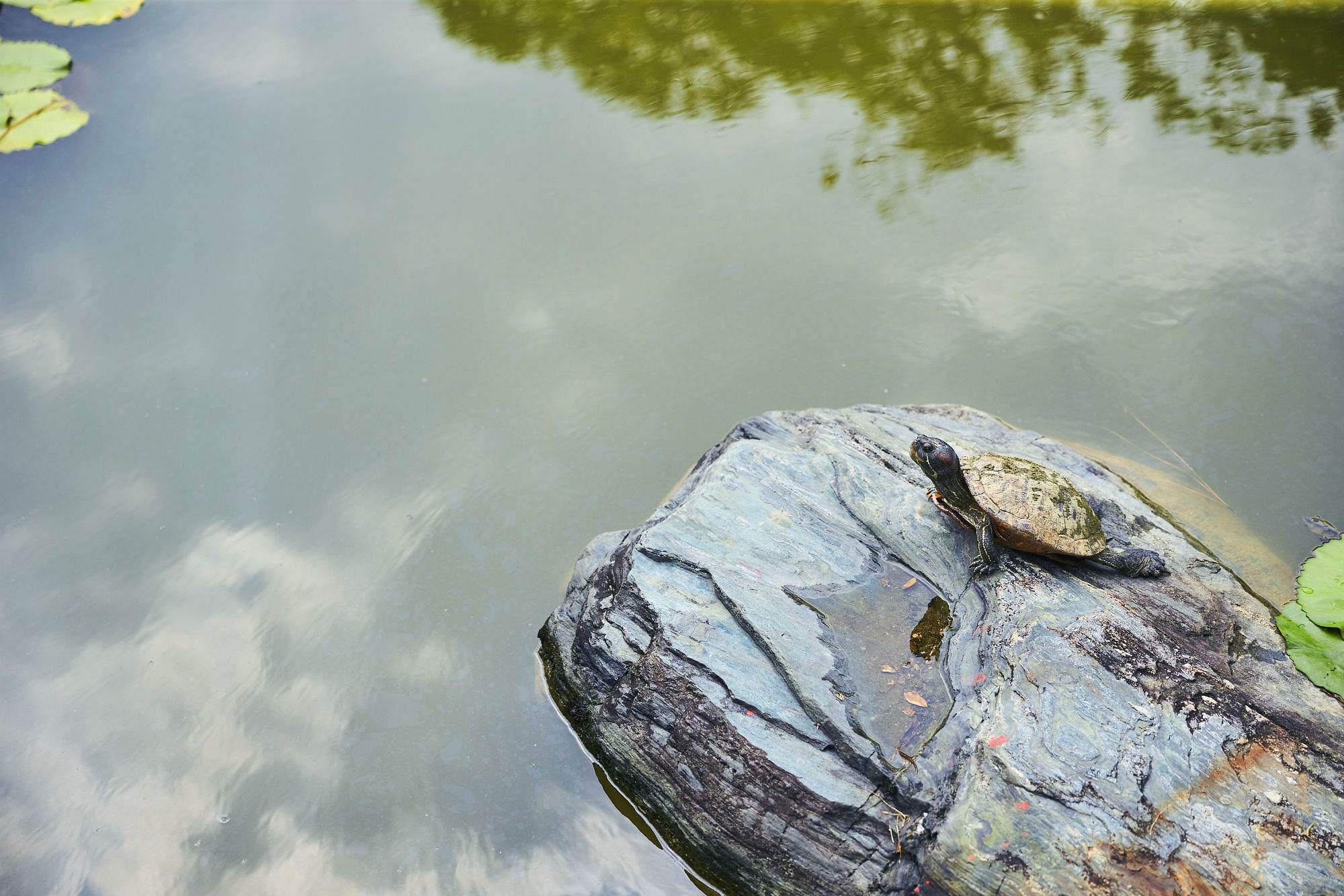
Throughout the session, You Min prompted us to talk about what we had observed. I told her I'd been watching a monitor lizard and turtle, and how comfortable they seemed roaming at their own pace. Articulating my feelings alongside everyone else made me feel less self-conscious, while paying attention to what was going on around me also helped to quieten the noise in my mind. Later, we spent 10 minutes just sitting in one spot and observing our surroundings. 

All in, the guided walk made me feel calm, refreshed, and ready to tackle the rest of the day similar to a good yoga class. 


Taking root in Singapore

Some businesses here are helping people in Singapore ease into ecotherapy. John Holden, founder of executive coaching and organisational consulting practice Mind Odyssey (from $3,000 for a half-day nature-programme workshop), launched a nature-based corporate coaching programme last year. The aim? To help busy professionals reconnect with nature. Singapore, with its reputation as a "garden city", was a perfect fit. 

John, himself a nature lover, structures his programme as a half-day or full-day workshop. Take his Hort Park programme, for instance. The day begins indoors, where participants create art that allows them to reflect on their stressors at work and in other aspects of life. This also gives them a better understanding of their colleagues and their triggers.

After that, the group moves outdoors for a series of activities - for example, looking at objects in nature and sharing memories that are sparked by what they observe. "It's for them to draw connections between nature and their lives, while fostering a bond with the team," says John. 


Get your feet wet


c If forests and parks aren't your scene, immesing in nature can also be done at a beach or reservoir. Try Mindful Paddling. It's a programme run by Ding Kian Seng, co-founder of Splashaxis (from $50 a session), which combines his love of paddling and meditation. 

Participants are encouraged by Kian Seng to be present and aware of their thoughts, emotions and surroundings as they paddle. The session closes with meditation out on the water. You don't need to be an expert kayaker to take part in this. Kian Seng says participants feel the practice de-stresses them and gives them clarity to relook challenges. He adds: "In some cases, participants get so emotional after the session, they tear up." 


Do it yourself 

Ways to immerse yourself in Forest Bathing.

Step 1. Walk in nature trails without your handphone.

Step 2. Move slowly and be aware of your surroundings ,what you are ...
Seeing ...
Smelling ...
Hearing ...
Touching ...


Last Step : Sit down in a comfortable space for 15 minutes each week. 


s

Forest Therapy is a common remedy in countries like Japan and Korea for stress from a fast-paced lifestyle and different kinds of pollution. Shinrin-yoku or forest bathing as it is known in Japan is shown to provide many health benefits, including increased immunity from the inhalation of the essential wood oils from plants.

The idea is less about escaping from the urban jungle and more about connecting, and returning to a natural way of being. Many people now live in an artificial or otherwise depleted environment, bombarded by endless stimulus and information. Conventional work schedules mostly ignore natural rhythms and the body’s needs, whether it is working long hours past sunset, skipping lunch, or working night shifts. Technology, while bringing people afar close together, also changes the nature of human relationship and the relationship between nature and human.

Much of human existence has been in tune with the many different cycles and the natural environment. We looked to the lunar cycles to plant and harvest. We rose and retired with the rising and setting of the sun. We observed days off.

Urbanization on today’s scale is a relatively recent phenomena. The world’s tallest buildings now soar over 2000 feet above ground, disconnecting people from the earth’s beneficial radiation which research has shown is necessary for health.


I went to the woods because I wished to live deliberately, to front only the essential facts of life, and see if I could not learn what it had to teach, and not, when I came to die, discover that I had not lived.

HENRY DAVID THOREAU


Many researchers are interested in the relationship between emotions, behaviour, and the environment, with much written on the emotional health benefits of green spaces. In a study of the urban brain in outdoor activity, researchers used mobile EEG to observe participants who walked for 25 minutes in three types of urban environment in Edinburgh, Scotland. The results showed a lower level of frustration and engagement when inside the green space zone.


Hort-Faber Southern Ridges Singapore


We regularly experience what this type of research finds when we spend time in the woods, the beach, out in the open sea. Nature is healing. Even a brief walk through an urban park helps us de-stress. It is more than the fresh air or having a break from work and responsibilities. The soundscape is soothing, with birdsongs, crickets, rustling of the leaves…The landscape is an undulation of gradations.

THE QUESTION IS HOW DO WE FOREST-BATHE WHEN THERE ARE NO FORESTS AROUND?
Not every city has access to 400 gardens like Paris and it is not everywhere that people own mountainsides as in Norway. Many of us have access to nature reserves, open countryside, running trails through the forests, or maybe cross country ski runs in the summer. Just remembering running through the muddy grounds of the endowment lands in Vancouver brings a smile to my face and a sense of contentment.


SMALL-SCALE FOREST BATHING
PARKS COUNT
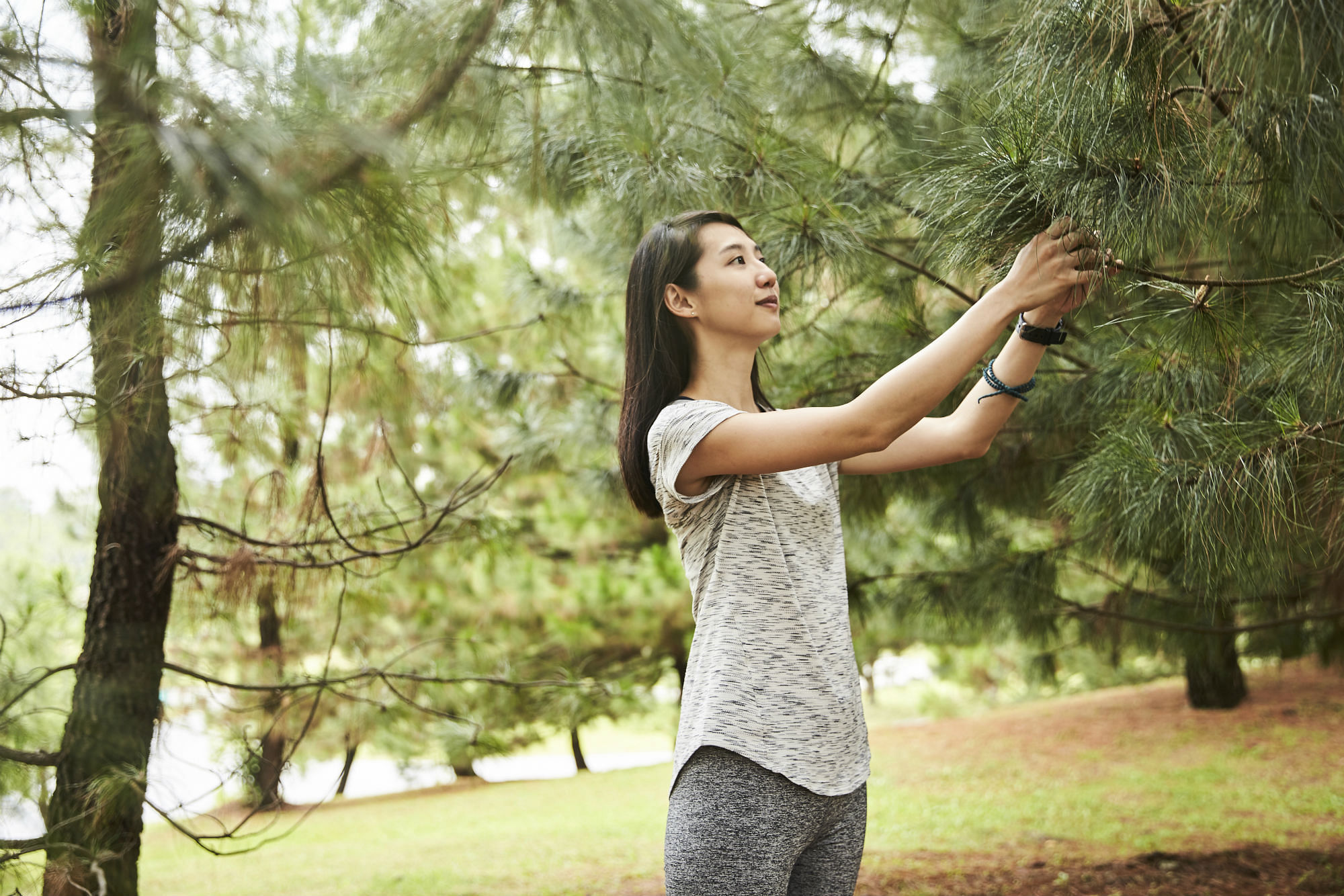
Immersion is key. What about spending some quiet time leaning against a tree? Open up your senses and really take in the entire experience. Allow the variation of all the greens to flood your senses. What do you pick up on the wind? Do you hear any birds? Touch the bark of the tree and the grass beneath your bare feet.

Or try stretching out on the ground and look up at the canopy of trees. Enjoy the flight of bird high above.

EXPLORE
Google new spaces in your city to visit or just explore on foot, wandering with no plan or agenda. Maybe there is some random hill that has been left alone. The importance of green spaces is increasingly being considered in urban planning and redevelopment.

VISIT A NURSERY
A walk through a nursery with all the different plants and flowers can be enough of a boost in between treks out to the woods. We don’t need forests for forest bathing, at least on a daily basis. Check out the Nature Pyramid for daily, weekly, monthly, and annual recommendations of forest bathing and other nature-based dietary suggestions.

The importance of natural environments, forests, and green spaces cannot be understated. They are essential to our well-being in so many ways and on so many levels that supporting conservation efforts is everyone’s responsibility.


Forest Bathing Hort-Faber Southern Ridges Singapore


Forest Bathing Hort-Faber Southern Ridges Singapore 


#GetOutside and schedule in some forest bathing as often as possible. In Singapore, you can check out the reserves, parks, and the Southern Ridges, a 5+mile “trail” that links parks between HarbourFront and Kent Ridge Park. Enjoy vistas and views of the city and nature on the Forest Walk, raised high above the ground.


ABOUT FOREST BATHING, THE LATEST WELLNESS TREND IN SINGAPORE

Taking a walk in nature may just be what your body and soul needs.

When was the last time you truly felt inner peace and calm? In today’s concrete jungle and the omniscience of our digital devices, stress has become a mainstay. And if you’re feeling just a tad bit worn out (we know we are), fret not. There’s a new wellness trend that has slowly taken over Singapore: Forest Bathing, or rather, “Shinrin-Yoku,” to give you that much needed time out, and all it takes it about two hours of your time.


Read on to find out more and the benefits you can reap just by practising this activity.

"I have been to the Gardens before, but I have never really been IN it. Today was a different experience. I feel like I have not taken my time this leisurely for the longest time. This sense of connection… to nature, to myself. I feel recharged, ready to go back to my daughters, my family."

So, what is forest bathing all about?
For starters, forest bathing isn’t so much a bath in the literal sense. Neither is it merely a stroll in the park. The aim of this activity is, rather, to slow down and become immersed in the natural environment by tuning into our senses.

What exactly does this mean? 
Each session will vary per guide and experience, but one guided forest bathing session lasts about two hours, and you will walk about a distance of 800 to 1000 metres at a slow and mindful pace. The guides help facilitate the session by offering purposefully crafted activities for you to interact with and connect with nature through your sensations. For instance, you may touch the bark of the tree, or notice the scents around you. When that happens, you start to become more conscious of all the sensations around you, allowing yourself to be fully present in the moment.

This relaxation and stress management activity originated in Japan in the 1980s and has spread on to Korea, the US, Europe, and now Singapore.

Why has forest bathing taken off?

The idea that spending more time in nature is good for our health is not a new concept. After all, most of human evolution has been spent close to nature. But medical research in Japan has gone as far as to show that the practice can boost immunity, mood, and reduce stress. In fact, one can even go as far as to consider forest bathing a form of medicine.

Furthermore, inhaling tree derived compounds, known as phytoncides, were found to reduce the concentration of stress hormones and enhance the activity of white blood cells, the cells responsible for fighting infections and other diseases.


Curious or ready to give it a try?

Tuesday, September 17, 2019

Why Forest Bathing Is Good for Your Health

Though any kind of nature can enhance our health and happiness, there’s something special about being in a forest.


“Nature deficit disorder” is a modern affliction. With more people living in cities, working in high-rise office buildings, and becoming addicted to their innumerable electronic devices, many of us are indeed experiencing a nature deficit. This is true for children and adults alike.

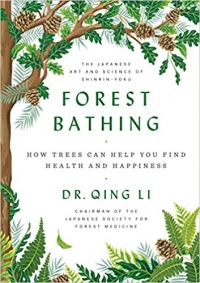
In his new book, Forest Bathing: How Trees Can Help You Find Health and Happiness, Japanese medical doctor and researcher Qing Li presents some sobering statistics: By 2050, according to the United Nations Population Division, three quarters of the world’s people will live in cities. Even now, the average American spends 93 percent of the time indoors, and some ten hours a day on social media—more than they spend asleep.

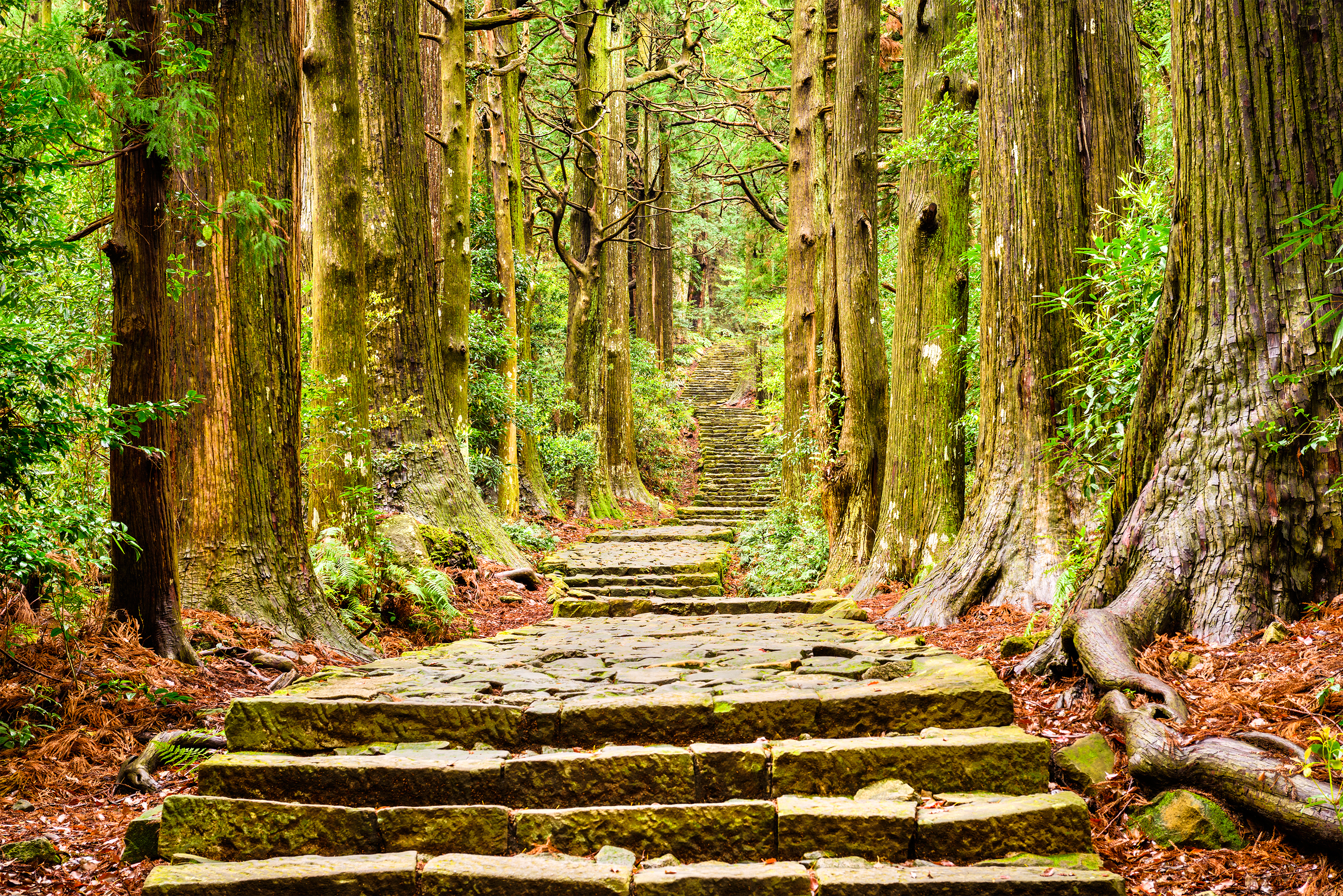
kumano kodo trail in japan

In Japan, there’s enough awareness about this deficit that Li heads up an organization called The Japanese Society of Forest Medicine, which promotes research on the therapeutic effects of forests on human health and educates people on the practice of forest bathing. His book—a companion to the center he runs—explores research on these benefits, while offering a number of techniques we can use to enhance them.

Some people study forests. Some people study medicine. I study forest medicine to find out all the ways in which walking in the forest can improve our well-being,” writes Li.

The history of forest bathing.

Japan is a country that is both urbanized and heavily forested. Trees cover two-thirds of the island’s landmass, and yet a majority of Japan’s people live in crowded city conditions. Li himself lives in Tokyo, a city he describes as “the most crowded city in the world.”

Perhaps that’s why the art of “forest bathing”—shinrin-yoku—began there. Forest bathing involves slowly walking through a forest, taking in the atmosphere through all your senses, and enjoying the benefits that come from such an excursion.

In 1982, Japan launched a national program to encourage forest bathing, and in 2004, a formal study of the link between forests and human health began in Iiyama, Japan—a place particularly known for its lush, green forests. Now, each year upwards of 2.5 million people walk those forest trails as a way to ease stress and enhance health.

Li’s interest in forest research began when he was a stressed-out medical student. He went away for a week of forest camping, and found it restored his physical and emotional health. That inspired him to begin researching the benefits of forests on human health and well-being. In 2004, he helped found the Forest Therapy Study Group, aimed at finding out why being among trees makes us feel so much better.

The healing power of the forest
After years of careful study, Li has found that spending time in a forest can reduce stress, anxiety, depression, and anger; strengthen the immune system; improve cardiovascular and metabolic health; and boost overall well-being.


“Wherever there are trees, we are healthier and happier,” writes Li. And, he adds, it isn’t about exercising—like hiking or jogging—it’s simply about being in nature.

Why would this be? It’s long been recognized that humans have a biological need to connect with nature. Some 20 years ago, American biologist E. O. Wilson noted that humans are “hardwired” to connect with the natural world, and that being in nature had a profoundly positive effect on human health.

Li’s research seems to corroborate this. For example, one of his studies looked at whether forest bathing could improve sleep patterns among middle-aged Tokyo office workers who tended to suffer sleep deficiency due to high levels of stress. During the study, participants walked the same amount of time in a forest that they usually did in a non-forest setting on a normal working day. After a walk in the forest, participants were significantly less anxious, slept better, and slept longer. In addition, researchers found that afternoon walks were even more beneficial than morning walks.

“You sleep better when you spend time in a forest, even when you don’t increase the amount of physical activity you do,” reported Li.

To further assess the effects of time spent in a forest, Li measured people’s moods before and after walking in the woods or in an urban environment. While other studies have shown that walking anywhere outdoors reduces depression, anxiety, and anger, Li found that only the experience of walking in a forest improved people’s vigor and reduced fatigue.

The health secrets of trees seem to lie in two things—the higher concentration of oxygen that exists in a forest, as compared to an urban setting, and the presence of plant chemicals called phytoncides—natural oils that are part of a plant’s defense system against bacteria, insects, and fungi. Exposure to these substances, says Li, can have measurable health benefits for humans. Physiological stress is reduced, for example, and both blood pressure and heart rate are lowered. Evergreens—pine, cedar, spruce, and conifers—are the largest producers of phytoncides, so walking in an evergreen forest seems to have the greatest health benefits.

How to do forest bathing
So, is there a specific art to forest bathing? Or is it just as easy as a walk in the woods?

Connecting with nature is simple, writes Li. “All we have to do is accept the invitation. Mother Nature does the rest.” Here are some of his suggested steps.

Find a spot. Depending where you are, find a good source of nature. One doesn’t need to journey deep into a forest for these benefits. Just look for any green area. It could be an urban park, a nature preserve, or a trail through suburban woods. Forests with conifers are thought to be particularly beneficial.

“Let your body be your guide. Listen to where it wants to take you,” Li says. Some people will respond to sunny glades, others to shadier places. Listen to your own wisdom. For people who don’t have access to a forest, or can’t get outside for some reason, infusing essential tree oils in your home can provide benefits, too.

Engage all your senses. “Let nature enter through your ears, eyes, nose, mouth, hands, and feet,” says Li. Actively listen, smell, touch, and look. “Drink in the flavor of the forest and release your sense of joy and calm.”

Don’t hurry. Slow walking is recommended for beginners. And it’s good to spend as much time as possible. You’ll notice positive effects after twenty minutes, says Li, but a longer visit, ideally four hours, is better.

Try different activities. Try doing yoga in the woods, or Tai chi, or meditation. Take a picnic. Write a poem. Study plants. You can venture alone, or with a companion. In Japan, forest walking therapists are even available.

Appreciate the silence. One of the downsides of urban living is the constant noise. If you’re lucky, you’ll find a wooded area that’s free from human-produced sound. Silence is restorative, and a forest can have its own healing sound—rustling leaves, a trickle of water, birdsong. Spend a few quiet moments with a favorite tree. If nothing else, when we connect with nature we are reminded that we are part of a larger whole. And that, Li notes, can lead us to be less selfish and to think more of others.


Li’s book, which includes illustrations and a map of “40 Beautiful Forests Across the World,” is an invitation and an inspiration to take a walk in the woods, wherever you are.


How to Protect Kids from Nature-Deficit Disorder
Richard Louv explains how parents, educators, and urban planners can help kids reconnect with nature—before it's too late.

Today’s kids spend less and less time outdoors, and it’s taking a toll on their health and well-being. Research has shown that children do better physically and emotionally when they are in green spaces, benefiting from the positive feelings, stress reduction, and attention restoration nature engenders.

No one has brought attention to this issue more than Richard Louv, co-founder and chairman emeritus of the Children & Nature Network and author of Last Child in the Woods, The Nature Principle, and, most recently, Vitamin N: 500 Ways to Enrich the Health & Happiness of Your Family & Community. Louv has written eloquently about the importance of nature for children and what they miss by spending too much time indoors. His books have inspired many parents and educators to more thoughtfully incorporate outdoor experiences into children’s daily lives.

Louv also warns about the consequences for the environment if we don’t raise children who truly have a personal relationship with nature. In our interview, he explains just how dire the problem is and how parents, educators, and urban planners can help kids reconnect with nature wherever they are.


Jill Suttie: You’ve written that today’s kids have “nature-deficit disorder.” What does that mean, and why is it important?


Richard Louv: “Nature-deficit disorder” is not a medical diagnosis, but a useful term—a metaphor—to describe what many of us believe are the human costs of alienation from nature: diminished use of the senses, attention difficulties, higher rates of physical and emotional illnesses, a rising rate of myopia, child and adult obesity, Vitamin D deficiency, and other maladies.

Because researchers have turned to this topic relatively recently, most of the evidence is correlative, not causal. But it tends to point in one direction: Experiences in the natural world appear to offer great benefits to psychological and physical health and the ability to learn, for children and adults. The research strongly suggests that time in nature can help many children learn to build confidence in themselves, calm themselves, and focus.

Studies also indicate that direct exposure to nature can relieve the symptoms of attention-deficit disorders. By comparison, activities indoors—such as watching TV—or activities outdoors in paved, non-green areas leave these children functioning worse. 

Today, children and adults who work and learn in a dominantly digital environment expend enormous energy blocking out many of the human senses in order to focus narrowly on the screen in front of the eyes. That’s the very definition of being less alive, and what parent wants his or her child to be less alive?

JS: How will this trend impact pro-environmental attitudes and behaviors in kids?

RL: If nature experiences continue to fade from the current generation of young people, and the next, and the ones to follow, where will future stewards of the earth come from?

Past research has shown that adults who identify themselves as environmentalists or conservationists almost always had some transcendent experiences in the natural world. What happens if that personal experience virtually disappears?

There will always be conservationists and environmentalists, but if we don’t turn this trend around, they’ll increasingly carry nature in their briefcases, not in their hearts. And that’s a very different relationship.

JS: Are there particular kinds of experiences in nature that seem to have the most impact on kids?

RL: The quality of the nature experience depends on how direct the experience with nature is. Are kids getting their hands wet and their feet muddy? These types of activities can help kids learn to have confidence in themselves and power to make independent decisions. 


One reason for this is the risk-taking inherent in outdoor play, which plays an important role in child development. Without independent play, the critical cognitive skill called executive function is at risk. Executive function is a complex process, but at its core is the ability to exert self-control, to control and direct emotion and behavior. Children develop executive function in large part through make-believe play. The function is aptly named: When you make up your own world, you’re the executive. A child’s executive function, as it turns out, is a better predictor of success in school than IQ.

JS: What can parents do to help increase caring for nature in their kids?

RL: If children are given the opportunity to experience nature, even in simple ways, interaction and engagement follow quite naturally. But parents can sometimes push too hard. Nature time should never be seen by kids as a punishment for, say, spending too much time in the electronic world.

Perhaps the best way to do this is by example. When parents rediscover their sense of wonder, so do most kids. Many parents tell me that the same kids who complained on the way to the camping trip often, when they’re young adults, recall that camping trip as one of their fondest memories—which (as you might guess) causes mixed emotions in the parents! One thing to keep in mind: People seldom look back on their childhoods and recall the best day they ever spent watching TV.

JS: How can parents help kids care about nature when they live in urban environments without ready access to wild spaces?

RL: Any green space will provide some benefit to mental and physical well-being. In urban areas, more natural landscapes can be found in a park, a quiet corner with a tree, several pots with vegetables growing outside, or even a peaceful place with a view of the sky and clouds.

Connection to nature should be an everyday occurrence, and if we design our cities—including our homes, apartments, workplaces, and schools—to work in harmony with nature and biodiversity, this could become a commonplace pattern.

Individually, we can help bring back the food chain and improve biodiversity by transitioning our yards or other properties to native species. Schools, workplaces, and city policymakers can do the same thing. We do know that the greater the biodiversity in an urban park, the greater the psychological benefits to people. Why not think of cities as incubators of biodiversity and engines of human health?

JS: What can parents do if their kids are afraid of nature or if they themselves are disconnected from nature?

RL: Many children and young adults simply don’t know what they’re missing. It’s never too early or too late to teach children or adults to appreciate and connect with the outdoors. 

Rachel Carson often said that a child’s positive connection to nature depends on two things: special places and special people. As parents and educators, we can spend more time with children in nature. We can go there with them. Taking time to do that can be quite a challenge. Getting kids outside needs to be a conscious act on the part of parents or caregivers. We need to schedule nature time. This proactive approach is simply part of today’s reality.


My new book, Vitamin N, includes 500 actions that people can take to enrich the health and happiness of their families and communities—and to help create a future that we’ll all want to go to.

JS: What can schools do better to help kids develop an affinity for nature? 

RL: While many school districts in the U.S. are going in the opposite direction—toward less physical movement and more testing, more hours at desks or in the classroom—a counter trend is growing, toward school gardens, natural play areas, getting kids out of the classroom. We’re beginning to see the true greening of American education. In education, for every dollar we spend on the virtual, we should spend at least another dollar on the real, especially on creating more learning environments in natural settings.

Ultimately, we need to accomplish deep cultural change. We need to incorporate nature education and knowledge of its positive benefits into the training that every teacher receives. We need to credit the many teachers who have insisted on exposing their students directly to nature, despite trends in the opposite direction. Teachers and schools can’t go it alone—parents, policymakers, and whole communities must pitch in.

Recently, I visited a nature-based elementary school in a lower-income region of a county in Georgia. The school is showing more academic improvement than any other school in that county. The kids are generally healthier, as well.

We need, and I believe we see already growing, a cultural movement– what I call a New Nature Movement—that includes but goes beyond great programs that directly connect kids to nature: a movement that includes but goes beyond traditional environmentalism and sustainability, a movement that can touch every part of society. The object is to give children the gifts of nature they deserve, and for all of us to find kinship with the lives around us, and wholeness in the lives we live.

JS: What kinds of environmental education programs make the most difference in increasing a child’s connection to nature and their willingness to protect it?

RL: Programs that infuse education with direct experience, especially in nature, have the greatest impact. For many, the natural environment has been intellectualized or removed. Young people certainly need to know about threats to the environment, but they also need direct experience in nature just for the joy of it. Unless we achieve that balance, many children will associate nature with fear and destruction for the rest of their lives.

Too many students learn about climate change in windowless schools. While including environmental education in the curriculum, many school districts in the U.S. have banished live animals from classrooms, dropped outdoor playtime and field trips, and overloaded classrooms with computers.

Connecting our children directly to nature is a way to both deal with the impact of loss of nature and to plant the seeds, sometimes literally, of a nature-rich future.

JS: What are some more positive trends that you’ve observed?

RL: We’re seeing new appreciation for these issues among parents, educators, pediatricians, mayors, and others.

The National League of Cities (which represents 19,000 municipalities and 218 million Americans) and the Children & Nature Network announced a three-year partnership, the Cities Promoting Access to Nature initiative, to explore how municipalities can connect people with the natural world where they live, work, learn, and play. 

We also see the emergence of biophilic design of our homes and workplaces, reconciliation ecology and human-nature social capital, restorative homes and businesses, eco-psychology and other forms of nature therapy. We see more citizen naturalists, nature-based schools, the Slow Food and simplicity movements, organic gardening, urban agriculture, vanguard ranching, and other forms of the new agrarianism.


As these currents join, they’ll lead us to a different view of the future—a nature-rich future. The barriers are still there, but I do believe there’s more hope in the air, if you look for it.

<a href=“http://www.amazon.com/gp/product/052555985X?ie=UTF8&tag=gregooscicen-20&linkCode=as2&camp=1789&creative=9325&creativeASIN=052555985X”><em>Forest Bathing: How Trees Can Help You Find Health and Happiness</em></a> (Viking, 2018, 320 pages)

Look inside the book,  click here

Communing with nature has health benefits

Communing with nature has health benefits, research shows.

 And yes, he literally writes a prescription for patients to go to a park. "The prescriptions that we do for parks are very flexible," he says. He asks his patients what they like to do. "The activity can be anything. It can be having a picnic outside, or a forest therapy session,'' says Zarr, who is a pediatrician at Unity Health Care and is training to become a certified forest therapy guide.

Research is accumulating on the healthful effects of contact with nature -- even very brief encounters. Among the findings:

1. As little as 20 minutes in a park boosted feelings of well-being, say researchers who surveyed 94 adults before and after visiting an urban park. The participants wore fitness trackers and completed a questionnaire before and after the visit.

2. Walking 15 minutes in a bamboo forest improved mood more in 60 adults than when they walked the same time period in a city area, other researchers report. Attention scores were better after the forest walk, too.

3. Forest bathing tends to lower cortisol levels, a marker of stress, better than taking part in other activities, a review of 30 studies found.

4. Forest therapy appears to lower depression levels in adults, according to a review of 28 studies.

5. Forest bathing also is found to boost the activity of natural killer cells, which help fight off infections and cancer.

6. The aromatic substances produced by plants and trees have been linked with lower inflammation and brain protection benefits.

What Forest Bathers Say

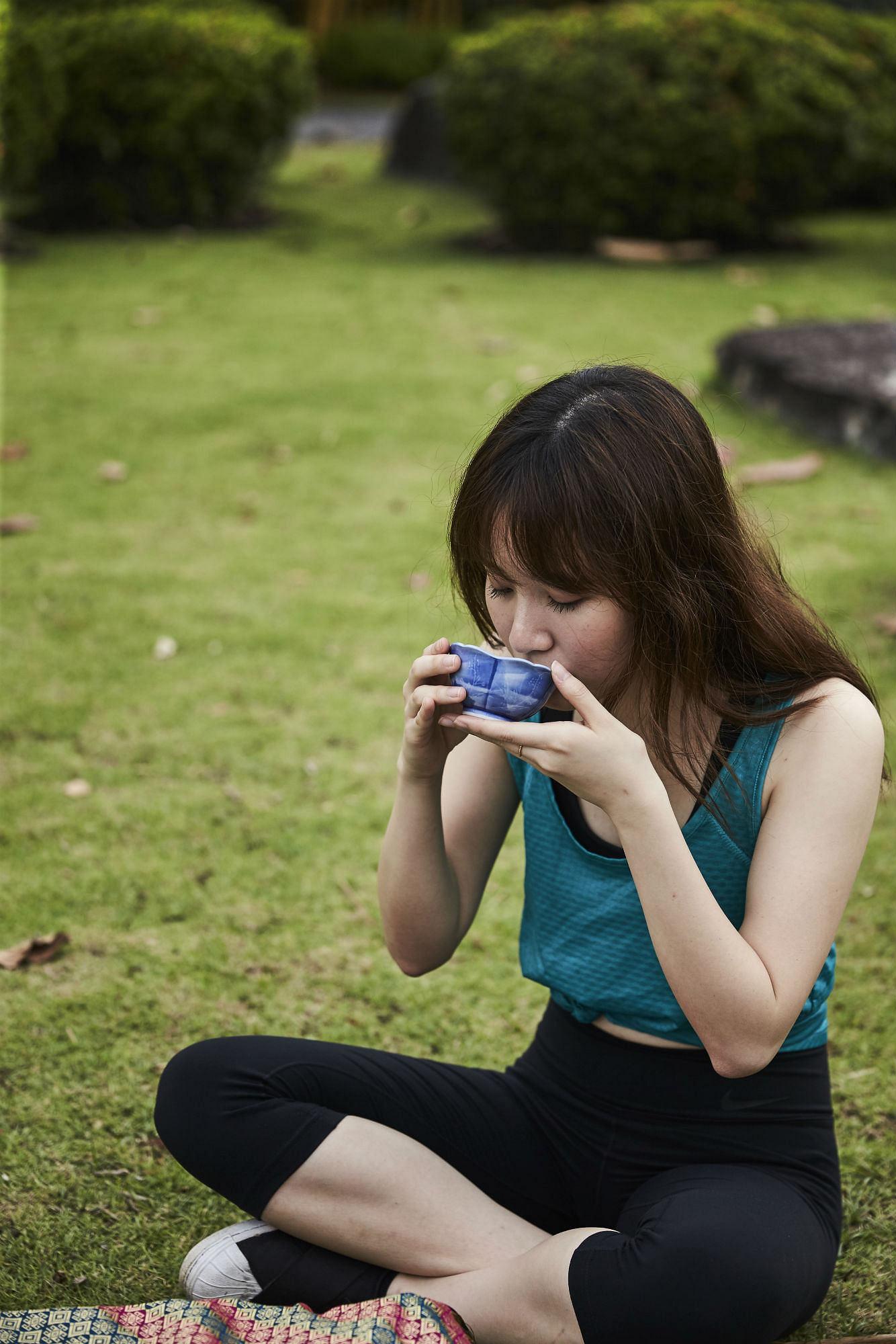
A coyote’s call from the guides brings the arboretum participants together again. This time, they gather in the Coach Barn, built in 1879 and still housing carriages from that era. Participants sit cross-legged on the wooden floor, and the guides pass tiny cups of rosemary tea, inviting all to sip and share their thoughts, if they wish.

Shay Sayani, 39, a Northridge, CA, holistic educator, says this is her third forest bathing experience. Now, she says, ''this is part of my self-care practice."

For Leon Adams, 68, a Glendale, CA, classical pianist, it was a first. "A friend recommended it," he says. "It took me a while to relax," he admits, but then he saw the rewards. "You leave the ‘monkey mind’ behind. You get into spaces in the mind that you can't get into when you are on the cellphone or in traffic."

On the walk back to the arboretum entrance, Kuang says she has introduced her 22-year-old son Chris to forest therapy. "He has autism and limited verbal expressions," she says. Forest walks ease his anxiety and improve his mood quickly. Her goal is to take him at least once a month. When he was asked by family to tell something that made him feel happy during the week, she says, he smiled and said ''forest walk."

What Is Cortisol?

Think of cortisol as nature’s built-in alarm system. It’s your body’s main stress hormone. It works with certain parts of your brain to control your mood, motivation, and fear.

Your adrenal glands -- triangle-shaped organs at the top of your kidneys -- make cortisol.

It’s best known for helping fuel your body’s “fight-or-flight” instinct in a crisis, but cortisol plays an important role in a number of things your body does. For example, it:

1. Manages how your body uses carbohydrates, fats, and proteins

2. Keeps inflammation down

3. Regulates your blood pressure

4. Increases your blood sugar (glucose)

5. Controls your sleep/wake cycle

6. Boosts energy so you can handle stress and restores balance afterward

How Does It Work?
Your hypothalamus and pituitary gland -- both located in your brain -- can sense if your blood contains the right level of cortisol. If the level is too low, your brain adjusts the amount of hormones it makes. Your adrenal glands pick up on these signals. Then, they fine-tune the amount of cortisol they release.


Cortisol receptors -- which are in most cells in your body -- receive and use the hormone in different ways. Your needs will differ from day to day. For instance, when your body is on high alert, cortisol can alter or shut down functions that get in the way. These might include your digestive or reproductive systems, your immune system, or even your growth processes.

Depression: Do You Know the Symptoms?
They include feeling several of the following for at least 2 weeks:

Feeling sad, anxious, or empty

Feeling hopeless or pessimistic

Feeling guilty, worthless, or helpless

Not enjoying things you used to enjoy

Trouble with concentration, memory, or making decisions

Sleeping too much or too little

Appetite changes

Gaining or losing weight

Feeling restless or irritable


Thoughts of suicide or death

'Forest Bathing' May Bust Your Stress

A moment to connect with Mother Nature may be the palate cleanse you need to help ease anxiety and stress.