Showing posts with label Paida. Show all posts

Tuesday, October 31, 2017

Chapter 4. Paida Self-Healing Method


My Health, I Manage!
E-Tao Paida & Lajin Self-Healing

Chapter IV Paida Self-Healing Method

Pai: To pat

Da: To slap

Paida: To pat and slap body parts to draw out and expel poisonous waste in the body and to restore health by facilitating smooth Qi flow in the body’s energy channels (meridians).


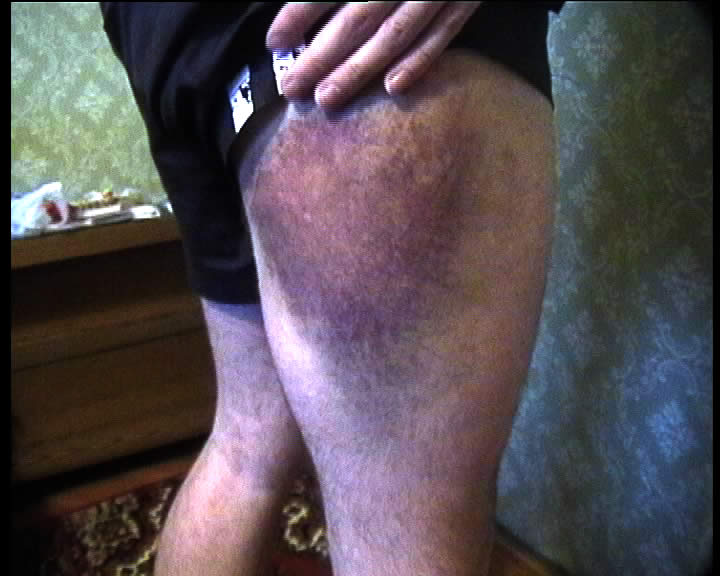
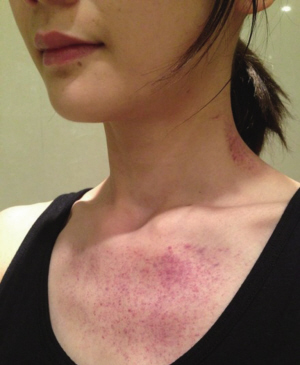
Sha: “poisoned blood” in the body. It is a word unique to the Chinese language, and is used as an indicator for diagnosis and treatment of health problems.
沙:体内的“毒血”。
Shā: Tǐnèi de “dú xiě”.
Sha: “poisoned blood” in the body. 

Qi: Invisible vital energy that flows in the body. 


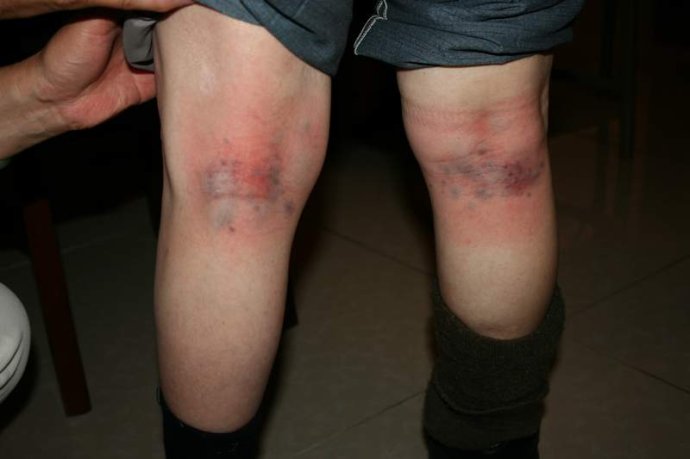
Image result for Sha at the back of the knees

Image result for paida the knees


Sha at the back of the knees ⇧ after Paida


Paida was first practiced by ancient Taoists to “treat old injuries”. It activates the body’s inherent self-healing power to clear vital energy channels (meridians), thus removing stagnant energy and toxins, curing pains and diseases, and improving health.

Paida = Elimination of Poisonous Waste in the Body

Paida is a unique self-healing method which combines Taoist and Buddhist practices and methods of Classical Chinese Medicine (CCM). The key to its success lies in one’s positivity and concentration when practicing Paida by oneself or for others, and the intensity and duration of such practice.

page23image11016

Sequence of Paida
Generally speaking, you can Paida in the following top-down sequence:
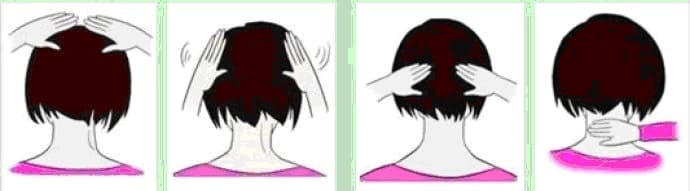

Image result for Paida the top of the head

Step 1: Paida the head⇩
Image result for Paida the top of the head


Paida the top of the head with one hand↑


Image result for Paida the sides of the head with two hands

Paida the sides of the head with both hands↖

Image result for Paida the top of the head
Paida the back of the head with both hands↖

Image result for Paida the back the head with one hands
Paida the back of the neck with one hand ↖


Step 2: Paida the shoulders

Image result for Paida the back the head with one hands


Paida the right side with left hand, and vice versa. Remember to pat all around the shoulders. ↖


Step 3: Paida both armpits⇩

Image result for Paida the back the head with one hands


Those  people with heart, lung and breast problems should pat the armpits more often. ↖


Step 4: Paida the inner sides of the elbow joints⇩


Image result for Paida the back the head with one hands


This covers all the energy channels (meridians) on the inner sides of the elbow joints, i.e. Heart Meridian on the innermost side, Lung Meridian and Large Intestine Meridian at the rim of the outer side, as well as the Pericardium Meridian in the middle. ↖


Step 5: Paida the knees⇩

Image result for Paida the back the head with one hands
Paida the front of the knees with both hands and make sure that the knee is covered by the entire palm. Then Paida the inner sides, outer sides and the back of the knees. This improves all foot and leg problems, including pain, numbness and swelling. When combined with Lajin, it will bring better efficacies. 


Step 6: Paida the feet⇩

Image result for Paida the back the head with one hands
Paida the arches, insteps, ankles and surrounding areas heavily. This not only helps cure foot diseases, but also brings good curative effects for all diseases of internal organs. ↖


Step 7: Paida any body parts where needed
After going through all the six steps, you may Paida any body parts according to your particular condition. 


Image result for Paida any body parts

Related image

Image result for Paida any body parts

Image result for Paida any body parts

Image result for Paida any body parts

Image result for Paida any body parts

Related image

Image result for Paida any body parts

Chapter 3 - The “pain medicine”


The “pain medicine” 


Nobody likes pain, but it is actually a super-medicine. Like diseases, it is a gift from nature. The “pain” here does not refer to the kind caused in accidents or fights, but the sensation felt when proactively practicing Paida and/or Lajin. Of the various recovery responses, pain is the most commonly experienced. Some may refuse to do Paida and Lajin because of the pain. Actually, it is precisely the reason that they should be practiced.

Pain is the secret weapon of their miraculous healing effects. The reasons are as follows:

Firstly, pain is a tool of precise diagnosis, just as an old saying goes, “where there are no blockages in the meridians, no pain will be felt.” Pain indicates the part of the body where an illness lies; and the intensity of pain indicates the severity of a disease. Patients with heart diseases or emotional problems are more afraid of pain than the average person. Heart diseases refer to disorders in the physical organ, the heart; whereas emotional problems refer to disorders of the intangible psyche, spirit, or mind. Heart diseases and emotional problems are interrelated and mutually influential; they are both manifestations of blockages in the Heart and Pericardium Meridians. If a part of the body where a meridian runs through is hurting, it signals that the corresponding organ is having problems.

“Pain” directly stimulates and opens up the heart, triggers willpower, and mobilizes yang-qi (right qi); it is a “medicine for the heart”. The heart, as sovereign of bodily organs, governs the spirit. It stimulates secretion of bio-chemicals that the body needs, i.e. “endogenous medicine”. Without pain, our self-healing power will not be activated, thus the endogenous medicine will not be produced. Our self-healing ability acts like a compound medicine, and pain is the catalyst that triggers generation of this endogenous medicine. Hence, pain is part of the process of producing endogenous medicine; it may even be an integral part of the medicine itself, i.e. the “pain medicine”. Moreover, pain is also the process of pinpointing the location of diseases so that further treatment can be carried out; it reveals its targets very clearly, i.e. at the area where the pain is felt. Hence, the “pain medicine” is a “precision medicine”; persistent pain means continuous treatment with precision medicine. Moreover, this pain is bearable; it can be self-regulated according to one’s condition and tolerance.

As the “pain medicine” is an “endogenous medicine” manifested as self-healing power, it is more accurate, symptomatic, eco-friendly and direct compared to medication. In Chinese medicine, self-healing power is referred to as yang-qi, or right qi; in Western medicine, it is referred to as immunity, repairing ability, hormones, insulin, stem cells, adrenaline, or enkephalin. With the advancement of medical science, new terms will be continually added to the list.

The degree of “pain” is proportionate to the efficacy of this “medicine”, i.e. the more hurting it is, the better the self-healing efficacy. During Paida and Lajin, when more pain is felt, yang-qi rises faster and the entire body immediately warms up and even starts to sweat. The time when most pain is felt is the time when yang-qi is conjured up the fastest; hence the best efficacy is gained. The Qi of diseases is yin-qi (evil qi); when it accumulates, more diseases will break out and life is shortened; on the contrary, when yang-qi is abundant, fewer diseases will break out and life is prolonged. When yang rises, yin will decline. Yang-qi is zheng-qi (or “right qi”), as described in Huang Di Nei Jing, “when zheng-qi is kept in, evils shall not enter”. This sentence sums up the true essence of Chinese medicine.

In case the pain becomes almost unbearable at the early stage of Paida and Lajin, the intensity can be reduced and the duration lengthened.

“Pain” makes us focused. We can experience the state of the body and soul becoming one, the state where giving and receiving is occurring in ourselves. Thus, pain is also a meditation method. During meditation, one may find it hard to concentrate. When you feel pain during Paida and/or Lajin, your mind is unprecedentedly focused; it is impossible at that moment to think about your children, the stock market or other matters. Your thoughts will focus on the part that hurts most, and that is almost invariably where the problems are. The ability to endure pain varies with changing state of mind, and it will be enhanced through continued Paida and Lajin. The ability to endure greater pain is a sign of better health.

“Pain” is our natural protection system that enables us to avoid danger; as such, the “pain medicine” is safer than medication. When the pain exceeds one’s endurance, one will instinctively stop using the “pain medicine”. Beginners, the seriously ill, and the elderly need not start Paida and/or Lajin with high intensity, they also should not anxiously try to gain significant efficacy at one go, but should instead take it one step at a time.

Our ability to endure pain will gradually improve with the increase in intensity and duration of Paida and Lajin. When the tolerance levels for the “pain medicine” and medication are compared, it is found that their effects on the human body are exactly opposite. Greater tolerance of the “pain medicine” indicates alleviation or curing of diseases, whereas greater tolerance of medication implies that the drug has become ineffective, or has even caused side effects.

The “pain medicine” is essentially a “medicine for the mind”; it is the result of interaction between the mind and the body. A person’s attitude towards pain is constantly changing; once you change your mindset and start to view pain as a proactive and positive therapy, you can instantly endure greater pain. Then, pain will no longer be an enemy or a devil, but instead a friend or an angel.

As smooth flowing meridians are considered a nourishing tonic to the body, and pain is the process of clearing meridians, thus the “pain medicine” is considered a tonic as well.