THE ESSENTIAL VITAMIN YOUR BODY NEEDS TO THRIVE
Most experts estimate that between 20 to 90 percent of people don't get enough vitamin D. This deficiency is one of the root causes of a number of dangerous chronic conditions, including cancer, heart disease, stroke, hypertension, diabetes, depression, chronic pain, osteoarthritis, osteoporosis, obesity , and more.
Sunlight is the best source of vitamin D, but recent years people have been avoiding sun exposure or sun experience for fear that it will contribute to skin cancer. However, the latest research shows that survival rates from melanoma can actually be improved with safe exposure to sunlight.
Physician Zoltan Rona explains :
* The role vitamin D plays in disease prevention and the restoration of health ;
* why the sun is still the best source of this vitamin D ;
* misconceptions about the right time of day for sun exposure/experience ;
* what supplements afford the best protection ;
*the pros and cons of sunscreens ;
* and why the recommended dosage of vitamin D is increasing.
This information will enable you to ENJOY THE SUNSHINE SAFELY and PROVIDE a clear understanding of the Powerful Benefits of Vitamin D.
Sun phobia, sunscreens, and spending too much time indoors have all contributed to the problems of vitamin D insufficiency.
Vitamin d From Head To Toe
Vitamin D is needed for optimal health , including the following:
1. adrenal gland health
2. aging prevention and longevity
3. blood sugar control
4. bone metabolism
5. brain and nervous system development and function
6. digestion and nutrient absorption
7. fertility
8. hair follicle health
9. hearing
10. heart and circulation health
11. immune system health
12. mood, mind, memory and behaviour
13. muscle, nerve and athletic performance
14. normal blood pressure
15. pancreatic health
16. respiratory health
17. skin health
18. sleeping
19. vision
20. weight control especially carbohydrate and fat metabolism
All cells, tissues, and organs in the human body have vitamin D receptors, meaning that they await the arrival of the vitamin D to perform various vital functions.
Can you imagine what would happen if a drug company come out with a single pill that reduces the risk of cancer, heart attack, stroke, osteoporosis, PMS, SAD, and various autoimmune disorder? There would be a media frenzy the likes of which has never been seen before ! Well, guess what ? Such a drug exists . . . it is the sun. -MICHAEL HOLICK, physician, researcher, author, and vitamin D expert.
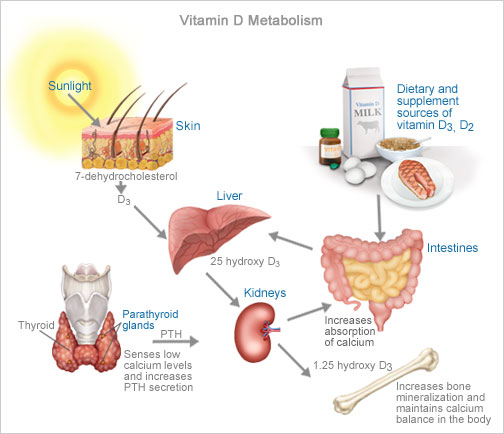
We need exposure to UVB rays to manufacture our own vitamin D.
The truth is that the benefits of ultraviolet light have been underestimated, while its danger have been grossly exaggerated. Evidence in the medical journals and in the news media about the benefits of exposing bare skin to ultraviolet light is reported practically every day. For example, on February 5, 2005, the BBC News reported that more sunshine helps melanoma patients because their tumors become less aggressive. Non-Hodgkin's lymphoma is another type of cancer that can be helped by increased exposure to ultraviolet rays. In this case, the risks of developing the disease are reduced by up to 40 percent with exposure to either the sun or ultraviolet producing sunlamps. The studies concluded that cancer rates decreased because the skin produced much more vitamin D from the increased ultraviolet light exposure.
It is important to realize that it is ultraviolet A (UVA) light and not UVB light that is responsible for skin damage, aging, and wrinkles. UVA rays are also thought to cause cancer, while UVB rays create vitamin D, which protects the body from melanoma and other skin cancers. Additional differences between UVA and UVB are highlighted is a study published by Dianne Godar of the U.S. FDA. For example, UVA light is able to pass through window glass, making you vulnerable even when indoors. UVB light cannot travel through glass. UVB light is strongest between 10:00 AM and 2:00 PM, whereas UVA is stronger at other times. To maximize vitamin D production, most people need ten to twenty(10-20) minutes of sun exposure between 10:00 AM an 2:00 PM. Beyond that, unless your skin colour is fairly dark, you risk some sun damage and even sun burns. Both UVA and UVB can cause sunburn.
There is no plausible evidence that the most dangerous form of skin cancer, melanoma, has anything to do with sun damage.
Since 1940, the incidence of melanoma has increased, mostly occurring in people who work indoors.
Suntanning does not mean sunburning. Never allow yourself to burn.
CHECK SUNSCREEN INGREDIENTS CAREFULLY.
Here are the sunscreen ingredients to avoid:
1. avobenzone
2. dioxybenzone
3. homosalate
4. methyl anthranilate
5. octocrylene
6. octyl methoxycinnamate
7. oxybenzone (2-hydroxy-4-methoxybenzophenone)
8. PABA (para-aminobenzoic acid)
9. padimate A
10. padimate O
11. phenybenzimidazale
12. sulisobenzone
13. trolamine salicylate
14. 2-ethylhexyl p-methoxycinnamate
15. 2-ethylhexyl salicylate, octyl salicylate, and other forms of salicylic acid (aspirin)
By the way, dioxybenzone and oxybenzone are two of the most powerful free radical generators ever formulated in a laboratory. Check labels very carefully.
The best natural ingredients that block UVA and UVB rays are titanium dioxide and zinc oxide. Other ingredients that are often used in 'natural" commercial sunscreen and that are safe to use include the following:
1. aloe vera
2. coconut oil
3. eucalyptus oil
4. glycerin
5. jojoba oil
6. lecithin
7. shea butter
8. sunflower seed oil
9. vitamin E (tocopherol)
Unfortunately , even these natural sunscreens prevent skin from manufacturing adequate levels of vitamin D.
VITAMIN D DOWN THE DRAIN
About getting enough vitamin D from exposure to sunshine: We know that vitamin D is formed when skin is exposed to UVB radiation from the sun or a tanning bed. The vitamin D formed in this way does not immediately travel through the skin into the blood stream. This process takes up to forty-eight (48) hours. Showering and scrubbing your skin within forty-eight hours of exposure could conceivably wash away the vitamin D on the skin's surface and prevent absorption into the blood stream. This may be why so many people are vitamin D deficient despite long hours of sun exposure. They may actually be wiping away the vitamin D long before it can be absorbed.
Showering only every two days is not realistic, particularly if you live in a warmer climate. You can still shower daily, rinsing the entire body with warm water and using soap principally on the underarms, genitals, and feet ; just take care not to scrub off the vitamin D from your arms and legs.
TEST YOUR VITAMIN D BLOOD LEVELS.
As you will be consistently reminded as you read this blog; I highly recommend blood tests for vitamin D levels. Here is the information you need to know about testing for vitamin D levels.
1. Ask your doctor to check your blood level of 25-hydroxy vitamin D, sometimes referred as 25(OH)D. Do not use the 1,25-dihydroxy test, which is not as accurate. In addition , check ionized calcium level. What is normal ionized calcium level?
The plasma level of calcium is closely regulated with a normal total calcium of 2.2-2.6 mmol/L (9-10.5 mg/dL) and a normal ionized calcium of 1.3-1.5 mmol/L (4.5-5.6 mg/dL). The amount of total calcium varies with the level of serum albumin, a protein to which calcium is bound. A serum calcium blood test measures the total calcium in your blood. There are several different forms of calcium in your blood. These include ionized calcium, calcium bound to other minerals called anions, and calcium bound to proteins like albumin. Ionized calcium, also known as free calcium, is the most active form.
Normal Levels
Normal levels of ionized calcium are different in adults and children. In adults, a level of 4.64 to 5.28 milligrams per deciliter (mg/dL) is normal. In children, a normal ionized calcium level is 4.8 to 5.52 mg/dL.
Abnormal Levels
If you have low levels of ionized calcium in your blood, it can indicate:
1.hypoparathyroidism, which is an underactive parathyroid gland.
2.inherited resistance to parathyroid hormone.
3.malabsorption of calcium.
4.a vitamin D deficiency.
5.osteomalacia or rickets, which is a softening of the bones (in many cases due to a vitamin D deficiency).
6.a magnesium deficiency.
7.high phosphorus levels.
8.acute pancreatitis, which is an inflammation of the pancreas.
9.kidney failure.
10.malnutrition.
11.alcoholism.
If you have a high level of ionized calcium in your blood, it can indicate:
1.hyperparathyroidism, which is an overactive parathyroid gland.
2.sedentary lifestyle or lack of mobility.
3.milk-alkali syndrome, which is high levels of calcium and alkali in the body due to having too much milk or antacids over time.
4.multiple myeloma, which is cancer of the plasma cells (a type of white blood cell that produces antibodies)
5.Paget’s disease, which is a disorder that results in deformity due to abnormal bone destruction and growth.
6.sarcoidosis, which is an inflammatory disease that affects the eyes, skin, and other organs.
7.tuberculosis, which is a potentially life-threatening disease caused by the bacterium Mycobacterium tuberculosis.
8.a kidney transplant.
9.the use of thiazide diuretics.
10.certain kinds of tumors.
11.an overdose of vitamin D.
Your doctor will discuss your results with you. They’ll also help determine your next steps if any are needed.
2.Get tested every three months.
3. Optimal 25-hydroxy vitamin D blood levels should be between 100 and 250 ng/ml. Levels below 50 are considered insufficient . levels below 25 are definitely in the deficiency category.
4. As research on vitamin D continues, I predict these numbers will all change, so stay tuned.
My conclusion is that vitamin D2 is as safe and effective as vitamin D3 as a supplement. Blood testing will certainly tell you whether or not you are getting adequate blood levels, regardless of the type and amount of vitamin D supplement you are using.
I consider 10,000 IU to be the optimal daily dose of vitamin D. At that dose, I have never seen anyone run into side effects or toxicity symptoms in over thirty years.
SHOULD YOU MEGADOSE WITH VITAMIN D?
Some of you may be surprised to know that there are many physicians who prescribe as much as 50,000 IU of vitamin D daily as a treatment for a long list of chronic diseases. According to the world research authorities on vitamin D, the Vitamin D Council, fears of high-dose vitamin D are irrational. To quote the Vitamin D Council from their website : " The single most important fact anyone needs to know about vitamin D is how much nature supplies if we behave naturally, e.g., go into the sun. Humans make at least 10,000 units of vitamin D within thirty minutes of full-body exposure to the sun, what is called a minimal erythemal dose. Vitamin D production in the skin occurs within minutes and is already maximized before your skin turns pink."
Reinhold Vieth says, 'Fear of vitamin D toxicity is unwarranted, and such unwarranted fear, bordering on hysteria , is rampart in the medical profession. If there is published evidence of toxicity in adults from an intake of 250 ug (10,000 IU) per day, and that is verified by the 25(OH)D concentration, I have yet to find it."
Physician ad author Jonathan Wright of the Tahoma Clinic in Washington State says, " It's very likely that if you're over forty and supplement your diet with a generous amount of vitamin D, you can lower your your risk of prostate cancer, breast cancer, and bowel cancer, along with your risk of 'essential' hypertension, osteoporosis, and tuberculosis."
I first learn about high-dose Vitamin D therapy fro one of Norm Shealy's newsletters (www.normshealy.com ) Physician Norm Shealy relates, " Recently I had the good fortune to spend a couple of hours with Joe Prendergast, an endocrinologist and diabetologist. he has managed over fifteen hundred (1500) diabetic patients and, in the last decade, not one of his patients has had a stroke or heart attack. Only one has even been hospitalized! His secret -- 50,000 units of vitamin D3 daily."
Joe Prendergast, a California physician and author, further reports these benefits from large doses of vitamin D :
1. control of many cancers, including breast cancer, braintumors, colon cancer, leukemia, myeloma, and prostate cancer
2. cure of amyotrophic lateral sclerosis (ALS)
3. cure of depression and many other mental disorders
4. cure of Hashimoto's thyroiditis
5. cure of Multi Sclerosis (MS)
6. improvement in allergies
7. prevention of influenza
8. regression of rheumatoid arthritis
9. reversal of advanced coronary disease
10. reversal of advanced lung disease, avoiding lung transplant
11. reversal of osteoporosis
Norm Shealy also has this to say : " Most of you know that I personally take 50,000 units of D3 daily and have for eighteen months. I recommend it to most people who weight at least 140 pounds ( 63.6kg) or more and take no calcium supplements. One of my audience informed me that he developed a very high blood calcium that affected his kidneys. I have not been able to learn whether he took calcium supplements. but, if you do the daily D3, I would advise a blood calcium level at three months and at six months intervals. I have not seen this in hundreds of others, but be advised. "
John Cannell, physician and head o of the Vitamin D Council, recommends doses as high as 50,000 IU of vitamin D daily for quickly getting rid of a cold or flu but has not generally advocated such high doses. One of the problems with supplementing with such high doses of vitamin D is the effect it may have on calcium, specifically the deposit of calcium in the arteries and organs. Apparently, this is a problem if you are also taking high calcium doses as a supplement. In any event, if you decide to supplement with high doses of vitamin D, make sure that blood tests are done every three months to check calcium levels.
The treatments needed to reverse vitamin D toxicity are simple : stop taking vitamin D supplements, stay out of the sun, and drink at least four liters of water a day. The clinical symptoms of vitamin D toxicity disappear in several weeks. The blood calcium level becomes normal again after several months. The kidney damage also reverses but takes several more months.
PRECAUTIONS
1. MANY ADULTS use statin drugs -- such as Crestor (rosuvastatin calcium) , Lipitor (atorvastatin), Pravachol (pravastatin sodium), and Zocor (simvastatin) -- to lower blood levels of cholesterol. Since vitamin D is a manufactured under the skin from cholesterol, low cholesterol levels created by statin drugs may actually create a vitamin D deficiency. Anyone taking cholesterol-lowering drugs of any kind should definitely keep getting their blood levels of vitamin D monitored.
2. SOME PRESCRIPTION drugs are known to deplete the human body of vitamin D and lead to bone loss and numerous other diseases. Examples of such drugs are steroids like prednisone, Cortel (hydrocortisone), Decadron (dexamethasone), and dozens pf others. The weight-loss drugs Alli and Xenical (orlistat) block fat absorption and may actually create a vitamin D deficiency. The cholesterol-lowering drug Questran (cholestyramine) has a similar effect. The anti-epilepsy drugs Dilantin (phenytoin) and phenobarbital increase the liver metabolism of vitamin D, making for a speedier excretion of the vitamin from the body. These then lead to both vitamin D and calcium deficiencies.
3. Vitamin D can theoretically interact with antacids containing aluminum and with numerous drugs. this does not mean that antacid users should not supplement with vitamin D. rather, the vitamin should be consumed at least two hours before or after the drug has been administered, and the blood levels of both vitamin D and calcium should be monitored more regularly.
4. For someone with severe kidney disease (renal failure) , vitamin D levels could conceivably escalate to the point that dangerously high calcium levels are achieved.
5. In cases of hyperparathyroidism (overactive parathyroid gland), calcium levels may already be elevated as a result of a tumor of the parathyroid gland. In such cases, vitamin D supplements should be used with caution but may actually cause a normalization of the blood levels of calcium.
6. In cases of lymphoma, vitamin D supplements can raise calcium levels and lead to kidney stone formation. Use vitamin D cautiously.
7. Vitamin D at virtually any supplement level can abnormally elevate blood calcium levels in those suffering from sacoidosis. The same is true for rare disease called histoplasmosis.
Some good news is that there are no known adverse interactions between vitamin D and foods.
Most experts estimate that between 20 to 90 percent of people don't get enough vitamin D. This deficiency is one of the root causes of a number of dangerous chronic conditions, including cancer, heart disease, stroke, hypertension, diabetes, depression, chronic pain, osteoarthritis, osteoporosis, obesity , and more.
Sunlight is the best source of vitamin D, but recent years people have been avoiding sun exposure or sun experience for fear that it will contribute to skin cancer. However, the latest research shows that survival rates from melanoma can actually be improved with safe exposure to sunlight.
Physician Zoltan Rona explains :
* The role vitamin D plays in disease prevention and the restoration of health ;
* why the sun is still the best source of this vitamin D ;
* misconceptions about the right time of day for sun exposure/experience ;
* what supplements afford the best protection ;
*the pros and cons of sunscreens ;
* and why the recommended dosage of vitamin D is increasing.
This information will enable you to ENJOY THE SUNSHINE SAFELY and PROVIDE a clear understanding of the Powerful Benefits of Vitamin D.
Sun phobia, sunscreens, and spending too much time indoors have all contributed to the problems of vitamin D insufficiency.
Vitamin d From Head To Toe
Vitamin D is needed for optimal health , including the following:
1. adrenal gland health
2. aging prevention and longevity
3. blood sugar control
4. bone metabolism
5. brain and nervous system development and function
6. digestion and nutrient absorption
7. fertility
8. hair follicle health
9. hearing
10. heart and circulation health
11. immune system health
12. mood, mind, memory and behaviour
13. muscle, nerve and athletic performance
14. normal blood pressure
15. pancreatic health
16. respiratory health
17. skin health
18. sleeping
19. vision
20. weight control especially carbohydrate and fat metabolism
All cells, tissues, and organs in the human body have vitamin D receptors, meaning that they await the arrival of the vitamin D to perform various vital functions.
Can you imagine what would happen if a drug company come out with a single pill that reduces the risk of cancer, heart attack, stroke, osteoporosis, PMS, SAD, and various autoimmune disorder? There would be a media frenzy the likes of which has never been seen before ! Well, guess what ? Such a drug exists . . . it is the sun. -MICHAEL HOLICK, physician, researcher, author, and vitamin D expert.
We need exposure to UVB rays to manufacture our own vitamin D.
The truth is that the benefits of ultraviolet light have been underestimated, while its danger have been grossly exaggerated. Evidence in the medical journals and in the news media about the benefits of exposing bare skin to ultraviolet light is reported practically every day. For example, on February 5, 2005, the BBC News reported that more sunshine helps melanoma patients because their tumors become less aggressive. Non-Hodgkin's lymphoma is another type of cancer that can be helped by increased exposure to ultraviolet rays. In this case, the risks of developing the disease are reduced by up to 40 percent with exposure to either the sun or ultraviolet producing sunlamps. The studies concluded that cancer rates decreased because the skin produced much more vitamin D from the increased ultraviolet light exposure.
It is important to realize that it is ultraviolet A (UVA) light and not UVB light that is responsible for skin damage, aging, and wrinkles. UVA rays are also thought to cause cancer, while UVB rays create vitamin D, which protects the body from melanoma and other skin cancers. Additional differences between UVA and UVB are highlighted is a study published by Dianne Godar of the U.S. FDA. For example, UVA light is able to pass through window glass, making you vulnerable even when indoors. UVB light cannot travel through glass. UVB light is strongest between 10:00 AM and 2:00 PM, whereas UVA is stronger at other times. To maximize vitamin D production, most people need ten to twenty(10-20) minutes of sun exposure between 10:00 AM an 2:00 PM. Beyond that, unless your skin colour is fairly dark, you risk some sun damage and even sun burns. Both UVA and UVB can cause sunburn.
There is no plausible evidence that the most dangerous form of skin cancer, melanoma, has anything to do with sun damage.
Since 1940, the incidence of melanoma has increased, mostly occurring in people who work indoors.
Suntanning does not mean sunburning. Never allow yourself to burn.
CHECK SUNSCREEN INGREDIENTS CAREFULLY.
Here are the sunscreen ingredients to avoid:
1. avobenzone
2. dioxybenzone
3. homosalate
4. methyl anthranilate
5. octocrylene
6. octyl methoxycinnamate
7. oxybenzone (2-hydroxy-4-methoxybenzophenone)
8. PABA (para-aminobenzoic acid)
9. padimate A
10. padimate O
11. phenybenzimidazale
12. sulisobenzone
13. trolamine salicylate
14. 2-ethylhexyl p-methoxycinnamate
15. 2-ethylhexyl salicylate, octyl salicylate, and other forms of salicylic acid (aspirin)
By the way, dioxybenzone and oxybenzone are two of the most powerful free radical generators ever formulated in a laboratory. Check labels very carefully.
The best natural ingredients that block UVA and UVB rays are titanium dioxide and zinc oxide. Other ingredients that are often used in 'natural" commercial sunscreen and that are safe to use include the following:
1. aloe vera
2. coconut oil
3. eucalyptus oil
4. glycerin
5. jojoba oil
6. lecithin
7. shea butter
8. sunflower seed oil
9. vitamin E (tocopherol)
Unfortunately , even these natural sunscreens prevent skin from manufacturing adequate levels of vitamin D.
VITAMIN D DOWN THE DRAIN
About getting enough vitamin D from exposure to sunshine: We know that vitamin D is formed when skin is exposed to UVB radiation from the sun or a tanning bed. The vitamin D formed in this way does not immediately travel through the skin into the blood stream. This process takes up to forty-eight (48) hours. Showering and scrubbing your skin within forty-eight hours of exposure could conceivably wash away the vitamin D on the skin's surface and prevent absorption into the blood stream. This may be why so many people are vitamin D deficient despite long hours of sun exposure. They may actually be wiping away the vitamin D long before it can be absorbed.
Showering only every two days is not realistic, particularly if you live in a warmer climate. You can still shower daily, rinsing the entire body with warm water and using soap principally on the underarms, genitals, and feet ; just take care not to scrub off the vitamin D from your arms and legs.
TEST YOUR VITAMIN D BLOOD LEVELS.
As you will be consistently reminded as you read this blog; I highly recommend blood tests for vitamin D levels. Here is the information you need to know about testing for vitamin D levels.
1. Ask your doctor to check your blood level of 25-hydroxy vitamin D, sometimes referred as 25(OH)D. Do not use the 1,25-dihydroxy test, which is not as accurate. In addition , check ionized calcium level. What is normal ionized calcium level?
The plasma level of calcium is closely regulated with a normal total calcium of 2.2-2.6 mmol/L (9-10.5 mg/dL) and a normal ionized calcium of 1.3-1.5 mmol/L (4.5-5.6 mg/dL). The amount of total calcium varies with the level of serum albumin, a protein to which calcium is bound. A serum calcium blood test measures the total calcium in your blood. There are several different forms of calcium in your blood. These include ionized calcium, calcium bound to other minerals called anions, and calcium bound to proteins like albumin. Ionized calcium, also known as free calcium, is the most active form.
Normal Levels
Normal levels of ionized calcium are different in adults and children. In adults, a level of 4.64 to 5.28 milligrams per deciliter (mg/dL) is normal. In children, a normal ionized calcium level is 4.8 to 5.52 mg/dL.
Abnormal Levels
If you have low levels of ionized calcium in your blood, it can indicate:
1.hypoparathyroidism, which is an underactive parathyroid gland.
2.inherited resistance to parathyroid hormone.
3.malabsorption of calcium.
4.a vitamin D deficiency.
5.osteomalacia or rickets, which is a softening of the bones (in many cases due to a vitamin D deficiency).
6.a magnesium deficiency.
7.high phosphorus levels.
8.acute pancreatitis, which is an inflammation of the pancreas.
9.kidney failure.
10.malnutrition.
11.alcoholism.
If you have a high level of ionized calcium in your blood, it can indicate:
1.hyperparathyroidism, which is an overactive parathyroid gland.
2.sedentary lifestyle or lack of mobility.
3.milk-alkali syndrome, which is high levels of calcium and alkali in the body due to having too much milk or antacids over time.
4.multiple myeloma, which is cancer of the plasma cells (a type of white blood cell that produces antibodies)
5.Paget’s disease, which is a disorder that results in deformity due to abnormal bone destruction and growth.
6.sarcoidosis, which is an inflammatory disease that affects the eyes, skin, and other organs.
7.tuberculosis, which is a potentially life-threatening disease caused by the bacterium Mycobacterium tuberculosis.
8.a kidney transplant.
9.the use of thiazide diuretics.
10.certain kinds of tumors.
11.an overdose of vitamin D.
Your doctor will discuss your results with you. They’ll also help determine your next steps if any are needed.
2.Get tested every three months.
3. Optimal 25-hydroxy vitamin D blood levels should be between 100 and 250 ng/ml. Levels below 50 are considered insufficient . levels below 25 are definitely in the deficiency category.
4. As research on vitamin D continues, I predict these numbers will all change, so stay tuned.
My conclusion is that vitamin D2 is as safe and effective as vitamin D3 as a supplement. Blood testing will certainly tell you whether or not you are getting adequate blood levels, regardless of the type and amount of vitamin D supplement you are using.
I consider 10,000 IU to be the optimal daily dose of vitamin D. At that dose, I have never seen anyone run into side effects or toxicity symptoms in over thirty years.
SHOULD YOU MEGADOSE WITH VITAMIN D?
Some of you may be surprised to know that there are many physicians who prescribe as much as 50,000 IU of vitamin D daily as a treatment for a long list of chronic diseases. According to the world research authorities on vitamin D, the Vitamin D Council, fears of high-dose vitamin D are irrational. To quote the Vitamin D Council from their website : " The single most important fact anyone needs to know about vitamin D is how much nature supplies if we behave naturally, e.g., go into the sun. Humans make at least 10,000 units of vitamin D within thirty minutes of full-body exposure to the sun, what is called a minimal erythemal dose. Vitamin D production in the skin occurs within minutes and is already maximized before your skin turns pink."
Reinhold Vieth says, 'Fear of vitamin D toxicity is unwarranted, and such unwarranted fear, bordering on hysteria , is rampart in the medical profession. If there is published evidence of toxicity in adults from an intake of 250 ug (10,000 IU) per day, and that is verified by the 25(OH)D concentration, I have yet to find it."
Physician ad author Jonathan Wright of the Tahoma Clinic in Washington State says, " It's very likely that if you're over forty and supplement your diet with a generous amount of vitamin D, you can lower your your risk of prostate cancer, breast cancer, and bowel cancer, along with your risk of 'essential' hypertension, osteoporosis, and tuberculosis."
I first learn about high-dose Vitamin D therapy fro one of Norm Shealy's newsletters (www.normshealy.com ) Physician Norm Shealy relates, " Recently I had the good fortune to spend a couple of hours with Joe Prendergast, an endocrinologist and diabetologist. he has managed over fifteen hundred (1500) diabetic patients and, in the last decade, not one of his patients has had a stroke or heart attack. Only one has even been hospitalized! His secret -- 50,000 units of vitamin D3 daily."
Joe Prendergast, a California physician and author, further reports these benefits from large doses of vitamin D :
1. control of many cancers, including breast cancer, braintumors, colon cancer, leukemia, myeloma, and prostate cancer
2. cure of amyotrophic lateral sclerosis (ALS)
3. cure of depression and many other mental disorders
4. cure of Hashimoto's thyroiditis
5. cure of Multi Sclerosis (MS)
6. improvement in allergies
7. prevention of influenza
8. regression of rheumatoid arthritis
9. reversal of advanced coronary disease
10. reversal of advanced lung disease, avoiding lung transplant
11. reversal of osteoporosis
Norm Shealy also has this to say : " Most of you know that I personally take 50,000 units of D3 daily and have for eighteen months. I recommend it to most people who weight at least 140 pounds ( 63.6kg) or more and take no calcium supplements. One of my audience informed me that he developed a very high blood calcium that affected his kidneys. I have not been able to learn whether he took calcium supplements. but, if you do the daily D3, I would advise a blood calcium level at three months and at six months intervals. I have not seen this in hundreds of others, but be advised. "
John Cannell, physician and head o of the Vitamin D Council, recommends doses as high as 50,000 IU of vitamin D daily for quickly getting rid of a cold or flu but has not generally advocated such high doses. One of the problems with supplementing with such high doses of vitamin D is the effect it may have on calcium, specifically the deposit of calcium in the arteries and organs. Apparently, this is a problem if you are also taking high calcium doses as a supplement. In any event, if you decide to supplement with high doses of vitamin D, make sure that blood tests are done every three months to check calcium levels.
The treatments needed to reverse vitamin D toxicity are simple : stop taking vitamin D supplements, stay out of the sun, and drink at least four liters of water a day. The clinical symptoms of vitamin D toxicity disappear in several weeks. The blood calcium level becomes normal again after several months. The kidney damage also reverses but takes several more months.
PRECAUTIONS
1. MANY ADULTS use statin drugs -- such as Crestor (rosuvastatin calcium) , Lipitor (atorvastatin), Pravachol (pravastatin sodium), and Zocor (simvastatin) -- to lower blood levels of cholesterol. Since vitamin D is a manufactured under the skin from cholesterol, low cholesterol levels created by statin drugs may actually create a vitamin D deficiency. Anyone taking cholesterol-lowering drugs of any kind should definitely keep getting their blood levels of vitamin D monitored.
2. SOME PRESCRIPTION drugs are known to deplete the human body of vitamin D and lead to bone loss and numerous other diseases. Examples of such drugs are steroids like prednisone, Cortel (hydrocortisone), Decadron (dexamethasone), and dozens pf others. The weight-loss drugs Alli and Xenical (orlistat) block fat absorption and may actually create a vitamin D deficiency. The cholesterol-lowering drug Questran (cholestyramine) has a similar effect. The anti-epilepsy drugs Dilantin (phenytoin) and phenobarbital increase the liver metabolism of vitamin D, making for a speedier excretion of the vitamin from the body. These then lead to both vitamin D and calcium deficiencies.
3. Vitamin D can theoretically interact with antacids containing aluminum and with numerous drugs. this does not mean that antacid users should not supplement with vitamin D. rather, the vitamin should be consumed at least two hours before or after the drug has been administered, and the blood levels of both vitamin D and calcium should be monitored more regularly.
4. For someone with severe kidney disease (renal failure) , vitamin D levels could conceivably escalate to the point that dangerously high calcium levels are achieved.
5. In cases of hyperparathyroidism (overactive parathyroid gland), calcium levels may already be elevated as a result of a tumor of the parathyroid gland. In such cases, vitamin D supplements should be used with caution but may actually cause a normalization of the blood levels of calcium.
6. In cases of lymphoma, vitamin D supplements can raise calcium levels and lead to kidney stone formation. Use vitamin D cautiously.
7. Vitamin D at virtually any supplement level can abnormally elevate blood calcium levels in those suffering from sacoidosis. The same is true for rare disease called histoplasmosis.
Some good news is that there are no known adverse interactions between vitamin D and foods.