Showing posts with label benefits. Show all posts

Sunday, October 29, 2017

My Health, I Manage! E-Tao Paida & Lajin Self-Healing (Chapter 1)


Chapter I 

My Journey to Cure

Excerpt from Journey to Cure

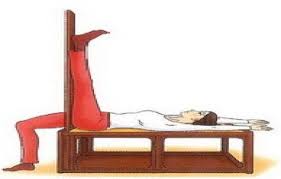
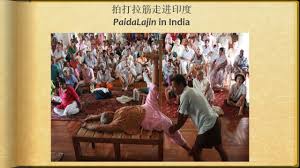
Like yesterday, I put out low tables at the corridor outside for the queuing Tibetans to do Lajin. The number of tables had increased from three to six, on top of each lay a patient, who had one leg straight up against the pole, while someone next to him helped to press his legs. If I noticed that some did not seem to benefit from the practice, I would make them repeat it, with me pressing the leg, and showing those around how painful the facial expression would be when it was done properly. In the end, they realized that their symptoms had gone with the painful exercise. 

Image result for Helping to press legs of the one doing Lajin
Helping to press legs of the one doing Lajin
nImage result for Helping to press legs of the one doing Lajin
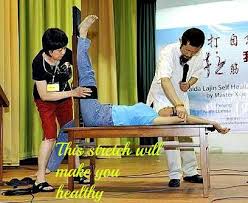
Image result for Helping to press legs of the one doing Lajin

Image result for Helping to press legs of the one doing Lajin


It really made my day when I witnessed the immediate effects of Lajin it not only cured the pain in the torso and limbs, but also eased headaches and pains in internal organs. A woman who had pain in her knees and legs had it eliminated after Lajin, but the pain in her back, chest and stomach remained. There were clicking sounds in her thoracic and lumbar vertebrae when I performed bone-setting on her, after that all her remaining pain disappeared; in another case, I used bone-setting on a middle-aged man with acute stomach pain that radiated from his abdomen to the back. After four popping sounds on his thoracic vertebrae, the pain went away completely. By now I was convinced that pain in the organs such as stomach and liver must be closely related to the corresponding spots on the vertebrae.

It occurred to me that since Lajin could easily be practiced at home or in the office, it should be introduced to the world so that more people could benefit from it, especially the increasing number of office workers who suffer from neck and back pains. Companies could consider installing “Lajin benches” in the office, as part of employee benefits package.

I also discovered some sad truths today. I saw that some Tibetans had spent the night sleeping along the corridor of the monastery, in order to get treated the next day. From this I guessed that the reason why so many Tibetans suffer from diseases such as arthritis might be because a majority of them are nomads used to sleeping out in the fields at night where damp and cold air gets into the body. Since there are hardly any medical services available at remote places in Tibet, people could not get treated when sick; instead, they have to rely on such drugs as painkillers or hormone pills, which they could buy without prescription. Monasteries with many lamas usually purchase boxes of painkillers so as to alleviate various pains. The overdose and/or misuse of these medicines induce a lot of diseases, such as distortion of bones. Deafness, which is a common illness here, is caused by misuse of hormone drugs to treat colds. To make things worse, a lot of drugs sold to the locals here are either counterfeit or of poor quality, which nobody elsewhere would take.

Many illnesses can actually get treated without any medication, including the many eye problems I found among my patients, such as cataract, far-sightedness, inflamed or tearing eyes, because they could all be cured with acupuncture. However, due to poverty and lack of acupuncturists in the area, people either let it worsen, or travel afar to a hospital to get infusions. They seemed to be always getting infusions in hospital, and hardly receiving any other treatments. Sadly, they seemed to always get sicker after the infusions.

Excerpt from Journey to Qinghai

Paida and Lajin in the Sun

After lunch, we went back to the kitchen. Again, it was overcrowded. I had to invite those waiting their turns out. I laid out a few more tables and encouraged them to do Lajin. The first two men about to receive treatment both had lower back pain and hip pain, and were limping. I asked, “Have you done Lajin?” They both answered, “Yes.” “Have you done Paida?” I asked. “Yes.” “Have you patted your hip?” I asked again. “No.” was their answer. As they were men (hence would not be embarrassed to expose the hip), I asked them to take off their pants to have the hip patted.

One of them, while loosening his pants, pointed to his ass and asked, “It was patted yesterday. Doesn’t that count?” I took a look — there was a large area of purple Sha (poisoned blood). I asked, “Is your pain relieved?” “Yes.” He answered. I took the opportunity to explain to him, “The purplish dark Sha shows that Paida is effective on you, and the cold-dampness (chills in the body that induce various diseases) is being cleared. You need to continue receive heavy Paida.” I asked another man to pat his hip. But his Paida was way too gentle. I showed him how to pat vigorously. Everyone laughed. The one helping to Paida took the hint and began to use heavy slaps. The one receiving Paida immediately showed painful expressions.

The other sturdy Kangba man had to follow suit, and took off his pants to receive Paida. Very soon a large area of Sha appeared on his hip. I said to them, “It’s best to pat yourself, as you’ll be both the giver and receiver of this ‘gift’.” In the beginning, they were reluctant to pat themselves. I explained to them why and they began to use genuine slaps. Over time, they got slack, with arms rising and falling slowly and the intensity falling, just like the lazy kowtow machine in an oilfield. From time to time, I had to ask others to give them a few hard slaps. It went on like this for half an 
hour, and indeed their hip pain was greatly eased. I asked them to walk again, and they could basically do it normally. They couldn’t help but feel amazed at the healing method and its wonderful efficacy. 


Helping each other do Lajin
Taken from Mr. Xiao’s blog:
h t tp : / / b lo g . s i n a . c o m . c n / s / b lo g _ 5 dc 9 4 6 a 6 0 1 0 0 h 3 e 5 . h tm l
English version posted at E-Tao website:
h t tp : / / w w w . P a i da L a j i n . c o m / e n / h o m e / m _ p o s t . a s p ? i d = 2 1 3 7 9 5 5 1 8 1 4 9
Editors Note:
Paida in a group
page6image11552 page6image11712
Visit our website at http://www.paidalajin.com/en/home/ to read more of Mr. Hongchi Xiaos Journey to Curestories. You can also get free downloads, watch videos, read FAQs and self-healing stories from around the world. 

Sunday, October 15, 2017

EXCUSE # 18: I'M PREGNANT

(OR PLANNING TO BE PREGNANT)

The good news is that going barefoot adds additional benefits for future mommies to be during pregnancy. Swollen feet are common during pregnancy, and many women find themselves shedding their shoes anyway. Consider these barefoot walking benefits of truly going barefoot:

Minimizes swollen feet. One of the big considerations for pregnant women is circulation. It's known that women's feet get bigger during pregnancy, and a large part of this is fluid gain, often caused by not working our muscles. However, fluid gain goes down as you use muscles more. When you go barefoot your feet have to wok more. That's a great thing when pregnant, because a working foot is like a fluid pump, bringing fluid up out of the foot and the lower leg and delivering it back to the heart.
Image result for pregnant leg secondary heart


Improves overall circulation. The increased circulation doesn't just end with the feet. Your lower legs also do more work when you're barefoot, particularly as you shift your weight toward your forefoot. This increased circulation acts as a fluid pump and helps keep your legs healthier, happier, and stronger. 
Image result for pregnant leg secondary fluid pump heart

Builds balance for less wobbling. One of the greatest benefits of going barefoot is that your feet are closer to the ground, which brings more stability during a time when your center of gravity is shifting. You can also feel the ground beneath your feet, which helps you reawaken and work the stabilizing muscle groups from your  feet to your legs, hips, and up into your core, improving your balance for increased maneuverability and lower chances of falling.

Strengthens core muscles for delivery day. If you think of the human body as a series of interconnected links of a chain, each one connected to the next, you start to get a real sense of the benefits of going barefoot when pregnant. After your legs, the next link in the chain is your core. Now, a stronger core isn't just about the stomach; it includes all the muscles from the pelvis on up. In essence, when you've fully engaged your core, you're doing somewhat of a Kegel exercise, just to hold yourself in place ㅡ muscles essential for an easier delivery day. 

Develops a healthier back for a happier mommy. 
Keeping the back healthy and happy during pregnancy is often a big challenge. After all, you're carrying a growing heavy weight in front, and your back often arches forward.
Image result for pregnant woman back arches forward

Image result for pregnant woman back arches forward

Image result for pregnant woman back arches forward

And by working all of the muscles from your feet on up, you assist the circulation of your cerebrospinal fluid, in essence lubricating your spine and keeping it loose. 

Image result for lubricating your spine

Stand with better posture for more comfort. Since you are working right up the chain and have better body awareness, better circulation, and a stronger core, you also end up with better posture, because you can feel what is going on beneath you ㅡ especially when there comes a time you can't see your feet. 

Image result for pregnant woman back arches forward

Image result for pregnant woman back arches forward

Image result for pregnant woman back arches forward

If you were  already walking barefoot before pregnancy, congratulations ㅡ you've got a leg up here. Keep doing what you're doing if your doctor agrees, and it will serve you well. But if you're already pregnant and would like to experience the benefits of being pregnant and going barefoot, always trust your doctor here, and when in doubt, be safe and ask.

Image result for pregnant woman barefoot walking

Image result for pregnant woman barefoot walking

Image result for pregnant woman barefoot walking

Image result for pregnant woman barefoot walking

Image result for pregnant woman barefoot walking

Image result for pregnant woman barefoot walking

Image result for pregnant woman barefoot walking

Image result for pregnant woman barefoot walking

Monday, September 25, 2017

Health Benefits Of Going Barefoot


Remember the guy in college who went barefoot everywhere? He may have seemed eccentric, but it turns out he was on to something. 

Walking barefoot, also known as "earthing," has gone from being a kooky counter-culture trend, to a scientifically-researched practice with a number of remarkable health advantages, such as increasing antioxidants, reducing inflammation, and improving sleep. 

Earthing means walking barefoot on soil, grass or sand (meaning: any natural surface). So we’ll have to get off the sidewalk. Early studies are showing that the health benefits come from the relationship between our bodies and the electrons in the earth. The planet has its own natural charge, and we seem to do better when we’re in direct contact with it.

Why should you walk barefoot? 

A review published in the Journal of Environmental and Public Health looked at a number of studies that highlight how drawing electrons from the earth improves health. In one, chronic pain patients using grounded carbon fiber mattresses slept better and experienced less pain. 

Another study found that earthing changed the electrical activity in the brain, as measured by electroencephalograms. Still other research found that grounding benefitted skin conductivity, moderated heart rate variability, improved glucose regulation, reduced stress and boosted immunity. 

One particularly compelling investigation, published in The Journal of Alternative and Complementary Medicine, found that earthing increases the surface charge of red blood cells. As a result, the cells avoid clumping, which decreases blood viscosity. High viscosity is a significant factor in heart disease, which is why so many people take blood thinning aspirin each day to improve their heart health. Another study in the same journal found that earthing may help regulate both the endocrine and nervous systems.

O K, I'm sold. What's next?
Even if there were no proven benefits to walking barefoot, I'd still recommend taking frequent walks in nature. Regular walking, as little as half an hour a day, can reduce cancer risk, improve cardiovascular health, moderate weight and prevent diabetes. In addition, walking improves blood oxygenation, circulation, and immune response, removes toxins, and relieves stress.

True, we can get many of these exercise benefits by using an indoor treadmill at the local gym. But without being outdoors in a natural environment, we miss out on many of the mental health benefits that are proven to increase when we spend time in nature.

For one thing, even if we enjoy it, going to the gym tends to be a chore. It’s just something we have to cross off our list. On the other hand, walking in nature is about being in the moment, rather than trying to achieve something. Even more importantly, we are surrounded by fresh oxygen-rich air and beautiful scenery, rather than gym smell and flatscreen TVs. And there’s no membership fee.

Walking also creates physical and emotional rhythms. Unlike running, which is by definition rushed and high impact, walking is gentle, nourishing and gives us space. We have an opportunity to work through the day’s events. In addition, even a light stroll releases endorphins. Most importantly, we breathe deeply. 

As we walk, our breathing starts to synchronize with our motion. We experience a sense of expansion and freedom. Ultimately, walking becomes more than just exercise; it becomes a form of healing, removing our stress and replacing it with wellbeing on every level.

I think we would be hard-pressed to find a better win-win situation. By walking, we exercise our muscles and cardiovascular system, improve our mental health, reduce stress and support our overall wellness. Simply taking our shoes off seems to multiply those benefits by allowing us to synchronize with the earth’s natural electric charge. On an evolutionary level, this all makes complete sense. We evolved close to the earth, and it’s only relatively recently that we have been so keen to remove ourselves from nature.

Perhaps it’s time to take a step back, barefooted.

arefoot Benefits
Top 10 Health Benefits of Going Bare

Going barefoot works by reawakening a light, natural stride in the body, through the feedback we get from our feet touching the ground. There’s less impact and joint torque than in a shoe, it reawakens muscles that have atrophied in our shoes, reawakens nerve endings and our balance system, stimulates reflexology points on the bottom of our feet, and even has anti-inflammatory benefits through grounding. This all means a stronger body, less joint pain, better posture, more mobility, greater health, and greater freedom.

Going barefoot is like discovering a new fountain of youth. When our feet, knees, hips and backs are no longer in pain, we’re more likely to be active again. You’ll feel younger, your body will act as if you’re younger, and you’ll be stronger and more active than you’ve been in many years.  Your mind will become sharper and your concentration better focused.

Here are some of the top health benefits:

1. Greater balance.
By feeling the ground, people begin waking up the vestibular system (balance system) of the brain, stimulating new neural connections and remapping their minds for greater balance. For seniors this is critical, because one fall or hip fracture can lead to a gradual decline in health.

2. Greater strength.
​By going barefoot one begins to wake up new muscles, both for balance and support. Not only that, but if you look at a super-model’s legs, chances are she’s been walking barefoot at the beach, toning ALL of her leg muscles in the process.

2. Healthier feet.
​The body works on the use it or lose it principle. Use something, you get to keep it. Don’t use it, and it atrophies. When people start going barefoot their feet reawaken and begin to strengthen again.

4. The corollary to this is less foot conditions.
​As the feet strengthen, plantar fasciitis diminishes, foot neuromas go away, bunions begin to dissipate and other conditions such as hammertoes go away. Even the arthritic foot begins to slowly heal itself as it develops greater strength, flexibility, and blood flow.

5. Greater circulation.
Going barefoot not only wakes up long-dormant muscles of the feet and legs, but gets more blood flow to the feet and legs to get them going. This increased blood flow means less aches and pains, less varicose veins, and warmer feet and legs in the winter.

6. Better posture.
​We’ve all learned an unhealthy habit, or pronounced pelvic-tilt from a lifetime spent in a traditional shoe. The typical running or walking shoe isn’t just a shoe, it’s a high-heel, sporting a heel of 1-2 inches (if not more) in height. To keep from falling over we’re forced to get our butts back and bend forward at the waist, straining our hamstrings, lower back, upper back, shoulders, and neck. It also puts a lot of force on our hips, knees and feet when we run. Once we’re out of a shoe we can begin to reverse this. By feeling the ground the nerve endings on the bottom of our feet begin to tell us that we’re leaning or tilting forward, or that we’re bending forward at the waist. With practice we run, walk, and even stand with better posture, more like a dancer or a model. Not only do we look better and get taller, but we greatly reduce all of the stress and strain on our bodies. And all without any additional work!

7. Kids get healthier.
​With childhood diabetes and obesity, kids health is at an all-time low. And health begins with the feet. If you have strong feet you can walk, run, bike and more. But with weak painful feet, there’s no desire to exercise. The American Podiatric Medical Association now recommends keeping kids out of shoes for as long as possible, because they know shoes weaken and deform the feet. Keep them out of shoes and kids stay healthy. Not only that, but the act of feeling the ground strengthens their senses and helps remap the brain. According to Dr. Merzenich, one of the nation’s leading neuroplasticians, barefoot stimulation helps improve memory, focus, concentration, and overall intelligence too!

8. Decreased blood pressure.
​Studies show that by stimulating the nerve endings on the bottom of the feet, we can decrease blood pressure and the parasympathetic (cortisol) fight or flight response of the body. In other words, we decrease stress and inflammation throughout the entire body.

9. Reduce inflammation.

​Last, but not least, and perhaps most importantly, going barefoot has been shown to reduce inflammation. According to many new studies, inflammation is the number one cause of disease in the 21st century (from allergies to Alzheimers, arthritis to Autism, cancer, cardiovascular disease, diabetes, asthma, anemia, lupus, MS, and more are ALL related to inflammation). One possible solution may be grounding or earthing, the process of reducing inflammation by walking, standing or even sitting barefoot on the ground.

Studies have shown that free radicals, the pesky buggers responsible for inflammation carry a positive charge. Though these positively charged particles play an important role in our immune system and the healing response, if we don’t have a way to drain them, they build up in our bodies, creating excess inflammation and cell/tissue damage. 

Meanwhile, the earth naturally carries a huge negative charge. (That’s why all of our appliances are grounded.) This difference in polarity or charge between your body and another is why you get zapped in the winter when you touch another object. It’s your body’s way of discharging this unwanted charge. Direct contact with the ground also allows us to discharge free radicals.

10. Reflexology benefits.

​Reflexology is the process of stimulating nerves on the bottom of the feet to stimulate the immune system, reduce inflammation & pain, reduce blood pressure, reduce stress and tension, and to stimulate many other healing processes in the body. Studies have shown great reflexology benefits to going barefoot and stimulating the soles of the feet. 

Getting Started
Before jumping into any high aerobic activity, we always advise warming up first. Our favorite method of warming up is to simply walk barefoot uphill (slowly).  If there are no hills near you, try the exercise below. In our book Barefoot Running, we have dozens of exercises for waking up your muscles. A great one to begin with helps you wake up the arch of your foot. This exercise is called the Tiger Claw and can be done before each of your barefoot runs.

Do the Tiger Claw!

Pretend you have claws at the end of your toes, just like a cat or tiger’s claws. You simply want to walk very slowly for fifty feet with your claws extending, grabbing and pulling on the ground with your toes. Notice how much it builds up the shape of the arch. Do this for 3-5 times your first day, then increase by 1-2 more times every other day.

Doing this strengthens your toes and the arch of your foot, helping you to naturally support and propel yourself forward, rather than relying on the arch support of a shoe. Remember, a support is nothing more than a crutch and doesn’t strengthen you. Our bodies work on the use it or lose it principle, if we don’t work the muscles of the feet, we incrementally need more and more support until we’re in a lot of trouble. Wake up the muscles though and you’ll have years of pain free, healthy running to come!


Baby-Stepping Your Way Into Barefoot Form
Image result for Baby-Stepping
Barefoot Running and Barefoot Running Form means waking up your feet and lower legs. Initially, it’s much harder on your feet, as they’re forced to move 3-dimensionally, rather than 2-dimensionally in a shoe. And the stride is like doing a calf-raise with each and every step. To help the muscles, ligaments, tendons and bones to adapt, we need to begin slowly.

Start fully barefoot – maximum feedback helps you find your lightest stride.

Always go barefoot before you’re shod – think form first, before you fatigue and before your feet get sweaty in a shoe.

Begin with only 200 yards – this gives your feet time to adapt to the new 3-dimensional movement.

Add 100 yards of barefoot time every other day – this gives the muscles, ligaments, tendons and even bones time to rest and recover.

Carry your shoes – these are your hand weights, hold them nice and high to practice proper form.

For the first three months only run barefoot every other day – spend the rest of your running time in your regular shoes and orthotics.

As you slowly increase your barefoot time, you can slowly decrease your time in supportive shoes and orthotics.


Have fun and don’t forget to smile!

Tuesday, September 19, 2017

Barefoot Walking: Benefits and More


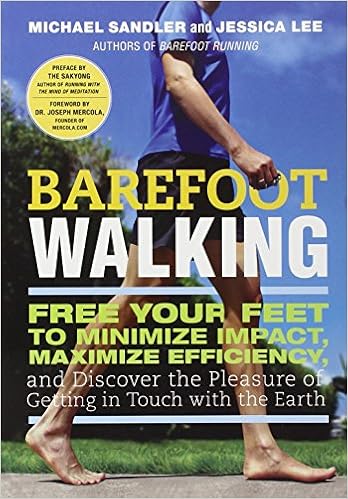
Barefoot Walking: Free Your Feet to Minimize Impact, Maximize Efficiency, and Discover the Pleasure of Getting in Touch with the Earth

Paperback – March 26, 2013