Showing posts with label muscle. Show all posts

Friday, March 31, 2017

Breathing Techniques

Pursed-Lips Breathing


Before starting these techniques, ask your Health Care Provider if they are right for you.

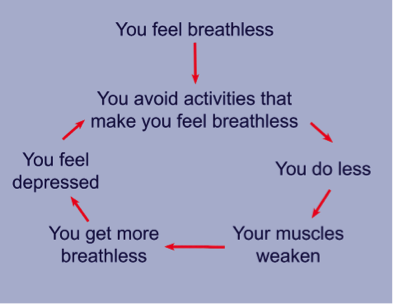
Having COPD makes it harder to breathe. And when it’s hard to breathe, it’s normal to get anxious, making you feel even more short of breath. Chronic Obstructive Pulmonary Disease (COPD) is an umbrella term used to describe progressive lung diseases including emphysema, chronic bronchitis, refractory (non-reversible) asthma, and some forms of bronchiectasis.
Breathing

There are two breathing techniques that can help you get the air you need without working so hard to breathe: Pursed-lips Breathing and Diaphragmatic (also called Belly or Abdominal) Breathing.

Better Breathing Tip: It’s normal to hold your shoulders tense and high. Before starting any breathing technique, take a minute to drop your shoulders down, close your eyes, and relax.

Pursed-Lips Breathing

  • Slows your breathing down
  • Keeps airways open longer so your lungs can get rid of more stale, trapped air
  • Reduces the work of breathing
  • Increases the amount of time you can exercise or perform an activity
  • Improves the exchange of oxygen and carbon dioxide
To do purse-lips breathing:
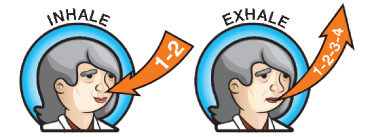
  1. Breathe in through your nose (as if you are smelling something) for about 2 seconds.
  2. Pucker your lips like you’re getting ready to blow out candles on a birthday cake.
  3. Breathe out very slowly through pursed-lips, two to three times as long as you breathed in.
  4. Repeat.
Pursed-Lips Breathing

Diaphragmatic (Abdominal/Belly) Breathing

The diaphragm is the main muscle of breathing. It’s supposed to do most of the work. When you have COPD, the diaphragm doesn’t work as well and muscles in the neck, shoulders and back are used. These muscles don’t do much to move your air. Training your diaphragm to take over more “work of breathing” can help.
Diaphragmatic breathing is not as easy to do as pursed-lips breathing. It is recommended that you get instruction from a respiratory health care professional or physical therapist experienced in teaching it.
 
This technique is best used when you’re feeling rested and relaxed, and while sitting back or lying down.
  1. Relax your shoulders.
  2. Place one hand on your chest and the other on your belly.
  3. Inhale through your nose for about two seconds.
  4. As you breathe in, your belly should move outward. Your belly should move more than your chest.
  5. As you breathe out slowly through pursed-lips, gently press on your belly. This will push up on your diaphragm to help get your air out.
  6. Repeat.

Better Breathing Tip: Stop, Reset, Continue

When you are feeling short of breath during exercise or regular activities, use these 3 steps:
  1. Stop your activity.
  2. Reset by sitting down, relax your shoulders, and do pursed-lips breathing until you catch your breath.
  3. Continue activity, doing pursed-lips breathing as you go. Go at a slower pace if you need to.

Staying Healthy and Avoiding Pneumonia

What is pneumonia?

Pneumonia is an infection of one or both lungs. Organisms settle in the air sacs where they grow rapidly. These air sacs become filled with pus and fluid as the body attempts to fight infection. Young children, cigarette smokers, adults over 65 and people with certain medical problems including COPD are at greater risk for developing pneumonia. COPD is the third leading cause of death, while pneumonia and flu contribute to the eighth leading cause of death in the United States.

What causes pneumonia?

Pneumonia is most commonly caused by bacteria, viruses and less commonly fungi which are more common in patients with suppressed immune systems. Contact with the organisms occurs either through directly touching objects with your hands (which then transmit the organism to your mouth, nose or eyes), or through inhalation of droplets containing the organisms. The causes of pneumonia for which vaccines (shots) are available include:
  • Influenza (Flu)
  • Pneumococcus
  • Measles
  • Pertussis (whooping cough)
  • Haemophilus influenzae type b (Hib)

Symptoms of pneumonia:

There are several symptoms of pneumonia that are similar to those of a COPD flare-up, which are often caused by infection. It is important to recognize these pneumonia symptoms and to call your doctor if you experience one or more of the following:
  • Fever over 100.5 degrees or shaking chills
  • Shortness of breath or more rapid breathing
  • Nausea, vomiting or diarrhea
  • Cough with increased amount of mucus
  • Cough with a change in mucus color
  • More rapid heart rate
  • Pain in one area of the chest with deep breaths

How can I avoid pneumonia?

  • See your health care professional at your regularly scheduled appointment even if you feel fine
  • Get your flu shot every year. Local pharmacies and grocery stores offer these shots at the start of flu season
  • Check if you are due for a pneumonia shot which can greatly reduce your risk of developing pneumonia
  • Wash your hands often and carry a small bottle of hand sanitizer for when you cannot wash your hands
  • Avoid touching your mouth, eyes, and nose in public to help prevent germs from entering your body
  • Stay away from crowds, especially during cold and flu season
  • Use your own pen, especially when signing in at your doctor’s office or other health care appointments
  • Don’t smoke as it makes it harder for the lungs to fight off an infection
  • Get plenty of sleep. When your body is tired, you're more likely to get sick
It is possible to stay healthy, even if you have COPD, at any stage. Watch for early warning signs of COPD flare-ups which may include pneumonia and report them right away. Work with your health care team to avoid pneumonia!

Monday, March 27, 2017

Trigger Points & Myofascial Pain Syndrome

Cartoon of a man stooped over and facing away, with several signs stabbed into his back. The signs have toxic waste hazard waste symbols on them, representing the fact that there is evidence that trigger points are “toxic.”

Does your body feel like a toxic waste dump?
It may be more literally true than you realized! Some evidence shows that a knot may be a patch of polluted tissue: a nasty little cesspool of waste metabolites. If so, it’s no wonder they hurt, and no wonder they cause so many strange sensations: it’s more like being poisoned than being injured. Back pain is the best known symptom of the common muscle knot, but they can cause an astonishing array of other aches and pains. Misdiagnosis is much more common than diagnosis.

Trigger Points & Myofascial Pain Syndrome


Toxic Muscle Knots

Research suggests myofascial trigger points may be quagmires of irritating molecules


What is the chemistry of a muscle knot? Specifically, what’s the condition of the tissue fluids in and around them?

The science of myofascial trigger points has been dominated for years by the theory of a poisonous feedback loop, a vicious cycle. The idea is that knots generate a lot of tissue fluid pollution, waste products of muscle cells that are metabolically “revving” with intense contraction … and those “exhaust” molecules then accumulate, mostly causing pain, which irritates the trigger point even more.

Gerwin RD, Dommerholt J, Shah JP. An expansion of Simons' integrated hypothesis of trigger point formation. Curr Pain Headache Rep. 2004 Dec;8(6):468–75. PubMed #15509461.
The most well-known explanation for the trigger point phenomenon is the “expanded integrated hypothesis,” which was first presented in this 2004 paper. It’s harrowingly detailed and technical, and mostly just filled in some details missing from the original integrated hypothesis (“a possible explanation”), which was put forward by Travell and Simons in 1999, which was in turn an elaboration on the energy crisis hypothesis that debuted in the first edition of their famous red textbooks in 1981. This has been a work-in-progress for quite a while. Here’s a simplified translation of the expanded integrated hypothesis:

Under some circumstances, muscular stresses can cause patches of poor circulation, which results in the pooling of noxious metabolic wastes and high acidity in small areas of the muscle. This is both directly uncomfortable, but also causes a section of the muscle to tighten up and perpetuate a vicious cycle. This predicament is often called an “energy crisis.” It constitutes a subtle lesion. TrPs research has largely been concerned with looking for evidence of a lesion like this.

Ingeniously measuring

muscle knot molecules
 
Starting with a simpler study in 2005, and then a more thorough one early this year, a group of scientists using “an unprecedented, most ingenious, and technically demanding technique” have reported that there really are irritating metabolic wastes floating around the neighbourhood of trigger points: “… not just 1 noxious stimulant but 11 of them,” Dr. Simons explains. “Instead of just a few noxious chemicals that stimulate nociceptors [nerves endings that detect tissue damage] nearly everything that has that effect was present in abundance.”
The researchers analyzed tissue samples from in and around trigger points and compared it with samples from healthy muscle tissue. The differences were significant.
If they are right, the muscle tissue at the location of trigger points appears to be just rotten with irritating molecules: molecules associated with inflammation, with pain, and with immune function.
Diagram of energy crisis hypothesis diagram, very simple.
Extremely over-simplified diagram of the energy crisis hypothesis, which occurs in a tiny patch of muscle. Right or wrong, it’s been kicking around for a decades now.

Feel the burn! Are muscle knots acidic?

Personally, I was pleased to see evidence that trigger points are also strongly acidic. I guessed that this might be the case in about 2002. (The pioneer of trigger point research, Dr. Janet Travell, had already suggested the same thing, but I didn’t know it then.) I often told my patients that trigger points were “acidic,” because it seemed likely to be true and because … well, it just sounded good, I guess. Lucky for me, this new research now gives some strong support to that old opinion. It doesn’t prove it, but it’s certainly noteworthy.
Trigger points really are strongly acidic which means that, for instance, it is actually plausible that deep breathing — which lowers blood acidity slightly — might be relevant to treatment. One of the possible goals of massaging trigger points is to “flush” trigger points by physically pushing stagnant tissue fluids out of the area of a trigger point, sometimes called “blanching.” Perhaps if fresh, less acidic blood re-perfuses the area, the trigger point will recover more easily? It’s a reasonable guess.

On the other hand, all that could be wrong wrong wrong

We shouldn’t accept the results of this experiment at face value simply because it seems to confirm an idea much beloved by massage therapists. Rubbing trigger points is probably not “detoxifying” — that’s not what this research suggests, even if it’s correct. Which it isn’t necessarily.
 
In a complicated and very technical experiment, it is all too easy for researchers to find the result that they want to find.

I think that’s exactly what happened in a popular study supposedly showing that massage reduces inflammation, a related idea. This is why independent confirmation from other experiments is always essential. As of fall 2016, this research has still not been replicated as far as I know. And it has been criticized and dismissed by some. So take it all with a grain of salt for now.

Rubbing trigger points is probably not “detoxifying” — that’s not what this research means, even if it’s correct.

More muscle knot reading (lots more)

Professionals are strongly encouraged to read David Simons’ analysis of both the new evidence about the chemistry of energy crisis in trigger points, as well as another new scientific article on the use of magnetic resonance elastography (MRE) imaging — a promising new way of taking pictures of muscle knots.
Simons writes that this technology “may open a whole new chapter in the centuries-old search for a convincing demonstration of the cause of trigger point symptoms.”

Trigger point therapy is not a miracle cure for chronic pain — but it helps

Trigger point therapy isn’t “too good to be true” — it’s just ordinary good. It’s definitely not miraculous. It’s experimental and it often fails. Good trigger point therapy is hard to find (or even define).

But it’s also under-rated, and self-treatment has the potential to quickly, cheaply, and safely help with many common pain problems that don’t respond well — or at all — to anything else.

For beginners with average muscle pain — a typical case of nagging hip pain or low back pain or neck pain — the advice given here may well seem almost miraculously useful. I get avalanches of email from readers thanking me for pointing out simple treatment options for such irritating problems. Many are stunned by the discovery that their chronic pain could have been treated easily all along.


For veterans who have already tried — and failed — to treat trigger points, this document is especially made for you. You should learn more and try more before giving up. This will get you as close to a cure as you can get; I can give you a fighting chance of at least taking the edge off your pain. And maybe that is a bit of a miracle.

Attention physicians & therapists: This massive tutorial is written for both patients and professionals. It includes analysis of recent research that you won’t find in any text, crafted to suit any skill level. Footnotes add a optional layer of advanced detail that you can take or leave.

Trigger points are more clinically important than most health professionals realize, and body pain seems to be a growing problem. It’s a rewarding topic for doctors and therapists, that makes clear path to helping quite a few people you probably couldn’t help before. Even if you already know about myofascial pain syndrome, you will get new ideas here.

What exactly are muscle knots?

When you say that you have “muscle knots,” you are talking about myofascial trigger points.


There are no actual knots involved, of course — it just feels like it. Although their true nature is uncertain, the main theory is that a trigger point (TrP) is a small patch of tightly contracted muscle, an isolated spasm affecting just a tiny patch of muscle tissue (not a whole-muscle spasm like a “charlie horse”). In theory, that small patch of muscle chokes off its own blood supply, which irritates it even more — a vicious cycle called a “metabolic crisis.” The swampy metabolic situation is why I like to think of it as sick muscle syndrome.

A few trigger points here and there is usually just an annoyance. Many bad ones is a syndrome: myofascial pain syndrome (MPS).


TrPs can be vicious. They can cause far more discomfort than most people believe is possible. Its bark is much louder than its bite, but the bark can be extremely loud. It can also be a surprisingly weird bark (trigger points can generate some odd sensations).

A “muscle knot” is a trigger point: a small patch of muscle tissue in spasm.

A humourous graphical definition/translation of the jargon myofascial pain syndrome.


Why muscle pain matters so much

Muscle pain matters: it’s an important problem. Aches and pains are an extremely common medical complaint, and trigger points seem to be a factor in many of them. They are a key factor in headaches (possibly including migraine and cluster headaches as well), neck pain and low back pain, and (much) more. What makes trigger points clinically important — and fascinating — is their triple threat. They can:

1. cause pain problems,

2. complicate pain problems, and

3. mimic other pain problems.

Muscle just hurts sometimes. Trigger points can cause pain directly. Trigger points are a “natural” part of muscle tissue. Just as almost everyone gets some pimples, sooner or later almost everyone gets muscle knots — and you get pain with no other explanation or issue.

It’s complicated. Trigger points complicate injuries and other painful problems. They show up like party crashers. Whatever’s wrong, you can count on them to make it worse, and in many cases they actually begin to overshadow the original problem.

“It felt like a toothache.” Trigger points mimic other problems. Many trigger points feel like something else. It is easy for an unsuspecting health professional to mistake trigger point pain for practically anything but a trigger point. For instance, muscle pain is probably more common than repetitive strain injuries (RSIs), because many so-called RSIs may actually be muscle pain. A perfect example: shin splints.

The daily clinical experience of thousands of massage therapists, physical therapists, and physicians strongly indicates that most of our common aches and pains — and many other puzzling physical complaints — are actually caused by trigger points, or small contraction knots, in the muscles of the body.

Why are trigger points so neglected by medicine?

“Muscle is an orphan organ. No medical speciality claims it.” Muscle tissue is the largest organ in the body, complex and vulnerable to dysfunction, and the “primary target of the wear and tear of daily activities,” nevertheless “it is the bones, joints, bursae and nerves on which physicians usually concentrate their attention.” Family doctors are particularly uninformed about the causes of musculoskeletal aches and pains — it simply isn’t on their radar. They are busy with a lot of other things, many of them quite dire. As serious as muscle pain can be, it’s minor compared to, say, diabetes or heart disease. And it’s also a harder topic than it seems to be on the surface. So it’s not really surprising that doctors aren’t exactly muscle pain treatment Jedi.

What about medical specialists? They may be the best option for serious cases. Doctors in pain clinics tend to know about trigger points. But they also often limit their treatment methods exclusively to injection therapies — a bazooka to kill a mouse? — and anything less than really epic chronic pain won’t qualify you for admittance to a pain clinic in the first place. This option is only available to patients for whom trigger points are a truly horrid primary problem, or a major complication. Medical specialists may know quite a bit about muscle pain, but aren’t all that helpful to the average patient.


An appallingly high percentage of doctors and other practitioners are still pretty much out of the loop regarding trigger points.


Thursday, February 16, 2017

17 YEARS OF CHRONIC PAIN GONE!

Date: 1-30-08
Subject: Testimonial..RSD.75% cured with Water Cure!
From: D R
To: Bob Butts

My name is D R. I am a 50yr. old LPN disabled with Reflex Sympathetic Dystrophy( RSD )for 17 + years. I have also been diagnosed with fibromyalgia, CFS, TOS, & many other chronic pain syndromes. I was a victim of hospital errors/abuse 12 days at a local Hospital in 2005. Due to all the trauma & Unnecessary life threatening complications my RSD spread throughout my body and was in a major flare-up. I was in bed 20-22 hours a day for the next 2 years. I also developed numerous other health problems such as: constipation & rectal bleeding, weight gain & muscle atrophy of my left leg. Most were caused by medication, inactivity, dehydration & a poor diet (nutritional deficiencies). I was out of the house 3 times...Total. I was like a prisoner trapped in my own body & mind. My body was riddled with intolerable pain & my mind was crippled with depression, guilt & even dark thoughts of suicide.I was Painfully alive...Not living. Thru my 17 + years of horrific RSD pain I have had over 55 Stellate Ganglion Nerve Blocks, 9 ribcage nerve blocks, Intra-Spinal Epidural Catheters, Hundreds of Trigger point injections, Pt, Ot, acupuncture, other therapies & have run the gamut with medications. All with minimal or No relief of pain. I felt helpless & hopeless.

May 19, 2007 I started Dr. Batmanghelidj's Water cure. Within 2 weeks my pain had decreased 75% ! My depression is gone & I lost 28 unwanted pounds in 5 months! I NEVER had 75% relief of pain with any costly medication or painful treatment. All of the other health problems are also relieved or gone! I have now regained much of my life back simply by adding the proper amounts of sea salt & water to a more nutritious diet. I have stopped drinking any caffeine; coffee, soda or alcohol. Caffeine dehydrates our bodies. Dehydration is the cause of most disease, pain & illness. Read the many testimonials of people helped or even Cured of diabetes ,cancer, pain & many diseases. God has truly Blessed me & shown me His mercy. He has given me a second chance...a new less painful life! Yet, the most amazing thing is my 17 + years of extreme pain, suffering & tears has enabled me the spiritual joy of helping others get well too naturally. I don't want anyone to suffer needlessly the way I did. Please Help me Help others obtain pain relief thru the Miracles of the Water cure!

* * * * * * * * * * * * * * * 

Date: Sun, 9 Dec 2007 19:12:50 -0800
From: jenchism420@yahoo.com
Subject: testimony on water cure
To: D R

Dear D R,

I just read your testimony on Bob Butts' website and it thrilled me to hear you praising our Lord for the miracle in your life. I pray that you are still feeling wonderful. I have been suffering with asthma for 30 years and after my 3rd child (born in June) I was severely ill with a lung capacity of an 85 year old. In Faith, I quit all my medicines to try and find natural help. Everything was so costly and skeptical. After a night of using my rescue inhaler numerous times, I got up and prayed for God to heal me. I believe He can. I then felt this prodding to "go and drink water." So I did, 32 ounces of it. My attack went away. I felt great!!!! I googled asthma and dehydration and by God's Grace found the water cure. I was running, not walking, everywhere that day, dancing with my kids and speaking long sentences without having to take a breath! The Lord led me to a scripture in Mark about giving a "cup of water" in His name, and then one, a couple verses later about being "salt" to the world. I know those words have profound spiritual meaning, but my God is also about the simple meanings. I have been asthma symptom free for 8 days, and I have no doubts that the Lord has healed me. I tell people this and they look at me like I am crazy and that has been hard. But then I read your testimony and the scriptures the Lord led you to and my joy is renewed!!! God is Good! I know He must be doing great things through you!

God Bless! Keep sharing your story!

Jenni Chism

From: D R 
To: jenchism420@yahoo.com  
Subject: RE: God Bless! 
Date: Thu, 13 Dec 2007 15:58:26

Dear Jenni, thank you for the beautiful e-mail! God is so Great! He has given me such Blessed pain relief. I always say in God's time & God's way ! The 2 years I spent bedridden with Intolerable pain was for a reason.. His purpose. During those 2 years my body was riddled with pain & my mind was crippled by depression, hoplessness & even dark thoughts of suicide.My faith in God & the love for my children sustained me. During that time I read over 250 books. Many books on religion, spirituality & of most importance the Bible.I became more spiritual & closer to God,my Father. I realize now God was preparing me for my mission to help others get well naturally thru the Miracles of the Watercure and faith in Our Lord!

When I speak with people now who are suffering from severe pain & depression I am Truly speaking from my heart. I have been in that painful,lonely place that they are now at. I have walked a mile in their moccasin. I know Exactly what they are feeling & they know, that I too have experienced the same thing . To many people it is just a relief to talk to me knowing that I am listening with compassion & empathy. God has given me the wisdom of words to help console & guide other people to a healthier,happier life! I am humbled that God chose me to suffer & then made me well so that I can serve Him by helping others. I am thrilled that God has also Blessed you with relief from your asthma.I am sure you will stay healthy by following the watercure & praising God for his guidance! Please do keep in touch . I really care & pray for all who contact me... peace & healing... D R 

Friday, January 20, 2017

Lose Weight With VIBRATIONS?


Machines like this one which vibrate your body while you stand on it or exercise on it have been touted by gyms as fat-busters. Doctors give their take on their effectiveness and warn that long-term use may lead to nerve and organ damage

Yes, vibration works to help you lose fat and weight – but only if you exercise and follow a sensible diet as well.

The vibration plate machine, which has a platform that vibrates while the person stands on it, has been making its presence felt in workout studios and even homes here.

Since one brand called Power Plate was first sold here six years ago, the number of dedicated Power Plate studios here has grown to six, while that of gyms that stock these machines has risen to 10, said its sole distributor Positive Impact.

It has also sold more than 300 such machines to individuals. Each costs between $5,000 and $23,000, depending on the size of the machine.

Health and wellness retail company Oto has also developed a machine based on whole body vibration. A spokesman said it has sold 25,000 units of the FLABeLOS, at $1,198 each, to individuals here since 2007.

The Power Plate studios combine pilates, kickboxing and core, stretch, toning and cardiovascular exercises with the vibration plate machine. Classes cost between $25 per group session and $90 for a one-to-one session. Each session typically lasts 40 to 45 minutes.

The principle behind this is something called “acceleration training”, in which you need a shorter amount of time to burn the same amount of calories.

Exercising on a vibration plate may also have positive effects on strength, stability and bone density, said doctors and Power Plate master trainer Tay Koon Hua.

This can be helpful for, say, those who have been injured. Exercise on the vibration plate is low-impact and lets them build up their injured muscles or joints, they added.

So far, at least two recent studies have shown that it does lead to increased fat loss.

But there are caveats. Furthermore, no long-term studies on the safety of whole body vibration exercise beyond eight months have been done yet.

BUILDING MUSCLE MASS

Medical and physiotherapy experts interviewed said standing on a vibration plate subjects the body to many small vibrations per second.

This causes the small muscles in the whole body to contract more and the tendons and ligaments to stretch more than when a person is standing on stable ground. This is because the body has to adjust constantly to the motion.

This helps build up muscle mass, strength and flexibility, said the medical experts.

Muscle cells burn more calories than other cells because they are responsible for all movements, including subtle ones such as blinking.

So the increased muscle mass will help the body to burn more calories, leading to the loss of fat.

Dr Daniel Wai, director of the obesity and metabolic unit at Singapore General Hospital, said: “The actual amount of calories burnt after one hour of such exercise (on a vibrating plate) is only around 100calories, but as muscles are built up, it helps increase the amount of energy we burn in the resting state.”

Dr Roger Tian, consultant sports physician and deputy medical director at the Singapore Sports Medicine Centre, said exercising on an unstable platform, such as the vibration plate, increases muscle use as the body tries to maintain stability.

This additional muscle use increases expenditure of calories.

Mr Tay, 39, a former physical education teacher who owns a dedicated Power Plate studio and has shares in Positive Impact, said the machine will increase exercise intensity in two ways.

It helps the body to use more than 90 per cent of its muscles. It also increases the gravitational force by two to six times when a person works out on it. Hence, it will be more difficult for a person to perform exercises on the plate than on the ground.

He said: “As more energy is needed to perform the same exercise, more calories are burnt on the vibrating plate.”

For these reasons, more body fat is lost when whole body vibration training is added to a diet or exercise regimen than either programme on its own or together, two studies have shown.

Both studies – one in Belgium and the other in the United States – were done by doctors and published in peer-reviewed journals.

In the Belgian study on 79 overweight patients published last year, doctors looked at the effect of long-term whole body vibration training on visceral fat.

Visceral fat is the fat surrounding the organs in the abdomen. Abdominal fat is made up of visceral fat and subcutaneous fat, which lies between the skin and the abdominal wall.

The patients were randomly divided into four groups. The first group received a low-calorie diet only, the second dieted and did traditional fitness training, including cardiovascular and weight exercises, the third dieted and followed a progressive Power Plate machine training programme, while the fourth was the control group.

After six months, the group which dieted and followed a Power Plate fitness regimen showed the largest percentage drop in body weight and in visceral fat.

Those in the diet and traditional fitness groups showed a slightly smaller decrease in both measurements, while the control group had no significant change.

In measurements taken at the end of the year-long study, after all participants had returned to their usual lifestyle, the group which exercised on the Power Plate machines was found to have maintained the amount of fat loss. However, the diet and fitness groups had reverted to their initial fat level.

The results were similar in the US study on 55 post-menopausal women, published in 2009. It compared the effects of no exercise, resistance training only and resistance training with whole body vibration.

At the end of eight months, the women who did not exercise gained 1.8 per cent of body fat, while those who did only resistance training lost 1.6 per cent and those who did both types of exercise lost 3 per cent.

RISK OF INTERNAL INJURY

The same effect of burning more calories can be achieved without a vibration plate, said Dr Tian. A person can simply increase the duration or speed of his workout, he said.

Ms Loy Yijun, a senior physiotherapist at National University Hospital’s centre for obesity management and surgery, said whole body vibration therapy alone would probably not lead to weight loss.

Her view is that vibration therapy aims to elicit a similar or superior response to resistance exercises by stimulating muscle reflexes and contractions.

Even if more fat is lost, a person’s cardiovascular fitness may not be significantly improved.

The limitation primarily arises from the lack of a cardiovascular workout, which is essential to burning calories, she said.

Moreover, it is important to realise that vibration plate exercise may result in potential harmful effects, doctors said.

Adjunct Associate Professor Hee Hwan Tak, an orthopaedic surgeon at Singapore Medical Group, said: “This exercise should be done with caution in the elderly or those with balance issues, for fear of falls.”

Soft tissues and body organs could be harmed by long-term vibration. For example, workers using vibration tools such as road drills can suffer from nerve damage to the hands due to chronic vibration. This is called “vibration white finger” disease.

It is not known if long-term use of vibration plate machines will create similar problems.

Dr Wai said: “We do not have studies that last longer than eight months, so do keep in mind that long-term safety is unclear.”


Evaluation of Human Response under
Vibration Condition
Hon Keung Yau, Bing Lam Luk, Sum Sang Chan

Abstract - The purpose of this study is to
investigate the human response under different
vibration frequencies. A total of nine
frequencies (1.6, 2.0, 2.5, 3.15, 4.0, 5.0, 6.3, 8.0
and 10.0Hz) were chosen as stimuli for testing in
the experiment. In this experiment, two tests
were conducted: Comparative Test and Feet Supporting
Test. Ten males and ten females were invited to
participate in the experiment. The major
findings revealed that (i) the uncomfortable
feeling increases with an increase of vibration
frequency, (ii) the feet support does have better
influence to the feeling of comfort for females
than males.

Index Terms – comparative test, human
response, supporting test, vibration

Manuscript received November 15, 2011.
H. K. Yau is with the Department of Systems Engineering and
Engineering Management, City University of Hong Kong, Kowloon
Tong, Kowloon, Hong Kong (corresponding author to provide phone:
852-34426158, Fax: 852-34420173. 

B. L. Luk is with the Department of Mechanical and
Biomedical Engineering, City University of Hong Kong,
Kowloon Tong, Kowloon, Hong Kong.

S. S. Chan was with the Department of Mechanical
and Biomedical Engineering, City University of Hong
Kong, Kowloon Tong, Kowloon, Hong Kong .

I. INTRODUCTION
In Hong Kong, most people take the public
transport to various destinations like schools and
offices every day. Common vibrations we can
experience come mainly from the uneven road,
changing of speed, sound produced when a sudden
stop of the bus and train, etc, and these vibrations
can cause damages to us. Different vibrations can
cause different levels of uncomfortable feeling on
males and females. Some past studies have
investigated how vibration affected working
efficiency, safety and health [5]. However, few
studies investigated the gender differences, if any,
in the human response under different vibration
frequencies. Therefore, we fill this research gap in
this study.

II. LITERATURE REVIEW
Vibration interferes with people’s working
efficiency, safety and health [5]. It also causes
discomfort, fatigue and physical pain [3]. Our
health are affected if the strength of vibration is
too large or the duration of vibration is too long
[1]. Past research results showed that feeling of
discomfort increases when the frequency increases
[8]. 5Hz is the resonance frequency for whole-body vibration.
It was also shown that the spine, inner organs and muscle are in
resonance when vibration frequency reaches 8Hz [6], [7]. The
feeling of discomfort increases even higher when more than one
organ of our body are in resonance. The thigh’s stiffness

can only affect little on the feeling of discomfort during vibration [7] while the tensed posture can increase
our stiffness and decrease the feeling of discomfort [4]. In
addition, the posture of tensed upper body
increases the stiffness of body so as to
increase the resonance frequency [2]. Due to
the resonance of spine and inner organs, the
uncomfortable index increases rapidly [6].
Besides, the uncomfortable feeling is much
worse than the relax pose or even cause
damage to our back if the vibration strength
reaches the resonance frequency [3].
III. RESEARCH METHOD
A. Participants
Twenty people (10 males and 10 females)
were invited to participate in the experiment.
They were of average age 21.95 years,
168.1cm tall and 59.1kg weight.
B. Design of experiment
To acquire the data, the following two tests were
conducted:
(i) Comparative test
(ii) Feet supporting test
(i) Comparative Test
 Method of magnitude estimation
1. To take the stimulus of 5Hz as a reference
2. Try other stimuli
3. Give an uncomfortable index comparing with the
reference stimulus
(ii)Feet Supporting Test
 Method of magnitude estimation
1. Try stimulus without feet support/upper body
relax as a reference stimulus
2. Try the same stimulus with feet support/ upper
body tensed
3. Give uncomfortable index comparing to the
reference stimulus
C. Experiment procedure
For the comparative test, participants were
tested under different vibration frequencies to
analyse discomfort effect at different frequencies.
If the test did not mention about the posture, then
the posture was assumed as upper body relax
without feet support. As many literatures pointed
out that 5Hz was the first starting resonance
frequency, a comparative test referencing at 5Hz
was carried out. Firstly, the participants were
asked to take a stimulus of 5Hz for 4 seconds and a
random selected frequency for another 4 seconds.
After the testing of the two stimuli, participants
were asked to fill in an uncomfortable index survey
as 100 was the mark for 5Hz. For example, if the
participant felt that the selected frequency caused
half uncomfortable feeling compared to that at 5Hz,
then he/she should fill in 50. If they think the
uncomfortable feeling is twice, they should fill in
200. Through the test, we could see whether there
were any differences between the male and
female’s responses at the same vibration level.
For the feet supporting test, participants were
exposed under all vibration frequencies with feet
support for 30 seconds. After that, they were asked
to fill in the uncomfortable index survey.
The test and frequency sequence was
randomized and counterbalanced across trials but
each pair of males and females was under the same
sequence for the analysis of difference in males
and females.

IV. RESULTS AND DISCUSSIONS

(a) Comparative test

Table I: Results of Comparative test
Frequency Index combination

Index male

Index female

1.6Hz 32.25 43 21.5
2.0Hz 39 48 30
2.5Hz 42.75 52 33.5
3.15Hz 62.5 70 55
4Hz 80 82.5 77.5
6.3Hz 117.25 119 115.5
8Hz 144.5 144 145
10Hz 184.5 183 186 

From the Table I, the correlation between
uncomfortable index and frequency for male
and female participants are 0.999 and 0.998,
respectively. Feeling of discomfort basically
increased when the frequency increased. This
finding is consistent with the results of Subashi
et al. [8]. Feelings of both males and females were similar
after the resonance frequency 5Hz. The feeling of
discomfort started to increase obviously at 5Hz. That
may be due to the appearance of resonance since 5Hz
which was mentioned by many researchers as the
resonance frequency for whole-body vibration [6], [7]. As
the resonance frequency will make participants feel more
uncomfortable than other frequencies, the feeling may
become similar for both males and females. There is a
large difference for the response of male respondents than
females for all frequencies except 10Hz. Besides, the
difference between males and females in response became
smaller after 5Hz, we can estimate that the vibration
strength may be too large to make both male and female
feel very uncomfortable, so that the response of males and
females are similar after 5Hz. Therefore, it can be
concluded that the resonance made the response in males
and females become similar after 5Hz. At 8Hz and 10Hz,
the uncomfortable feeling increased rapidly, the
uncomfortable index for 10Hz was almost twice of 5Hz.
That may be due to the resonance of our organs. The spine,
inner organs and muscle was in resonance when the
frequency reached 8Hz [6]. If more than one organ of our
body were in resonance, the feeling of discomfort
increased even higher.

(b) Feet Supporting Test

Table II: Results of feet support test

Frequency Index combination

Index male

Index female

1.6Hz 97.5 95 100
2.0Hz 96.5 98 95
2.5Hz 88.5 92 85
3.15Hz 89.25 90 88.5
4Hz 81.5 87 76
5Hz 80.75 84 77.5
6.3Hz 79 84 74
8Hz 72 82 62
10Hz 74.5 88 61

From the results (Table II), we noted that the
feet support does have better influence to the
feeling of comfort for females than males. The
correlation coefficients for males and females are
0.708 and 0.994 respectively. The uncomfortable
index keeps on decreasing when the frequency
increases up to 5Hz for females. This indicates that
the feet support can help to reduce the feeling of
discomfort. We also noted that the uncomfortable
index for females is lower at almost all frequencies
in the condition of using feet support. That may be
due to the difference in strength of buttock for
male and female. Besides, the feet support can decrease
the feeling of discomfort. As mentioned by some
researchers [7], the thigh’s stiffness will affect little
on the feeling of discomfort during vibration. Instead,
tensed posture can increase our stiffness and decrease the
feeling of uncomfortable [4]. Therefore, the difference
in response between male and female becomes
more obvious after 5Hz. Also, the variation of
uncomfortable index at the same frequency is quite
similar for both male and female as shown from the
table 2. The difference in response between males
and females become most significant at 8Hz and
10Hz. The figure shows a significant difference
between male and female at 8Hz and 10Hz. The
uncomfortable index keeps on decreasing but rising
at 10Hz for males, it may be due to the resonance
in organs as mentioned from the comparative test
[6]. But the feet support test is not suitable for all
people as some participants claimed that the feet
support will make them feel more uncomfortable at
some frequencies.

V. CONCLUSION
A series of human factors experiments
concerning the human response under different
vibration conditions was conducted in this study. It
was concluded that the uncomfortable feeling
increased with the increase of vibration frequency.
The difference in response for males and females is 
not significant after 5Hz. Also, the feet
support was more useful for females than
males. It seemed that feet support provided
more help to females than males especially at
8Hz and 10Hz. It may be due to the difference
in strength of buttock because the feet support
increased the loading of the buttock.

REFERENCES
[1] C.M. Byung, C.C. Soon and J.P. Se., “Automatic responses
of young passengers contingent to the speed and driving
model of a vehicle,” Int J Ind Ergon Vol. 29, pp. 187-198,
2002.

[2] Y. Huang, and M.J. Griffin, “Effect of voluntary periodic
muscular activity on nonlinearity in the apparent mass of the
seated human body during vertical random whole-body
vibration,” Journal of Sound and Vibration Vol. 298, pp. 824-
840, 2006.

[3] J.Z. Liu, M. Kubo, and H. Aoki, “A study on the difference
of human sensation evaluation to whole body vibration in
sitting and lying postures,” Appl Hum Sci, Vol. 14, pp. 219 –
226, 1995.

[4] Y. Matsumoto, and M.J. Griffin, “Non-linear characteristics
in the dynamic responses of seated subjects exposed to
vertical whole-body vibration,” Journal of Biomechanical
Engineering Vol. 124, pp. 527-532, 2002.

[5] R.W. Mcleod, and M.J. Griffin, “Mechanical vibration
included interference with manual control performance,”
Ergonomics Vol. 38, pp. 1431-1444, 1995.

[6] Mester, Spitzepfeil, and Yue., “Vibration Loads: Potential for
strength and Power development”, 2003

[7] N. Nawayseh and M.J. Griffin, “Non-linear dual-axis
biodynamic response to vertical whole-body vibration,”
Journal of Sound and Vibration Vol. 268, pp. 503–523, 2002.

[8] G.H.M.J. Subashia, and N. Nawaysehb, Y. Matsumotoa, and
M.J. Griffin, (2008). “Nonlinear subjective and dynamic
responses of seated subjects exposed to horizontal wholebody
vibration,” Journal of Sound and Vibration Vol. 321,
pp. 416–434, 2008 .

Wednesday, December 21, 2016

Do Not 'Kid' Your Kidneys

Kidney Function Blood Test

Routine kidney function is one of the most commonly performed blood tests.

The kidneys

The kidneys regulate the amount of water and salts that we have in our bodies. They do this by filtering the blood through millions of structures called nephrons. The kidneys also pass out certain waste products from the body. Urine is made up of the excess water, salts and waste products passed out by the kidneys down to the bladder.


Routine blood test of kidney function.
The usual blood test which checks that the kidneys are working properly measures the level of urea, creatinine and certain dissolved salts.

Urea is a waste product formed from the breakdown of proteins. Urea is usually passed out in the urine. A high blood level of urea ('uraemia') indicates that the kidneys may not be working properly, or that you have a low body water content (are dehydrated).

Creatinine is a waste product made by the muscles. Creatinine passes into the bloodstream, and is usually passed out in urine. A high blood level of creatinine indicates that the kidneys may not be working properly. Creatinine is usually a more accurate marker of kidney function than urea. The effect of muscle mass needs to be taken into account. A person with a lot of muscle and little fat on their body is likely to have a higher creatinine than a person who has a lot of fat and little muscle.

Estimated glomerular filtration rate (eGFR) provides a guide to kidney function. Although the level of creatinine in the blood is a useful guide to kidney function, the eGFR is a more accurate measure. Blood creatinine can be used to estimate the eGFR using age, sex and race. This is often calculated by computer and reported with the creatinine blood test. The normal value for eGFR is 90-120 ml/min. An eGFR below 60 ml/min suggests that some kidney damage has occurred. The value becomes lower with increasing severity of kidney damage.

Dissolved salts that are routinely measured are sodium, potassium, chloride and bicarbonate. They are sometimes referred to as 'electrolytes'. Abnormal blood levels of any of these may be due to a kidney problem. (Some other conditions may also alter the salt balance in the blood.)

[[Estimated Glomerular Filtration Rate
Various different diseases, conditions and medicines can affect the function of the kidneys. The estimated glomerular filtration rate (eGFR) does not diagnose any kidney disease but is a test to
assess how well your kidneys are working. A reading of greater than 90 ml/min/1.73m2 is normal.

What is the estimated glomerular filtration rate (eGFR)?

The eGFR is a test that is used to assess how well your kidneys are working. The test estimates the volume of
blood that is filtered by your kidneys over a given period of time. The test is called the estimated glomerular
filtration rate because the glomeruli are the tiny filters in the kidneys. If these filters do not do their job properly
then the kidney is said to have reduced or impaired kidney function.

The eGFR test involves a blood test which measures a chemical called creatinine. Creatinine is a breakdown
product of muscle. Creatinine is normally cleared from the blood by the kidneys. If your kidneys are not working
properly, the level of creatinine in the blood goes up.

The eGFR is then calculated from your age, sex and blood creatinine level. An adjustment to the calculation is
needed for people with African-Caribbean origin.

Stages of kidney function

The level of kidney function is divided into five stages:
Stage of Chronic Kidney Disease (eGFR;ml/min/1.73m)

Stage 1: the eGFR shows normal kidney function but you are already known to have some kidney damage or disease. For example, you may have some protein or blood in your urine, an abnormality of your kidney, kidney inflammation, etc.
(90 or more)

Stage 2: mildly reduced kidney function AND you are already known to have some kidney damage or disease. People with an eGFR of 60-89 without any known kidney damage or disease are not considered to have chronic kidney disease (CKD).(60 to 89)

Stage 3: moderately reduced kidney function. (With or without a known kidney disease. For example, an elderly person with ageing kidneys may have reduced kidney function without a specific known kidney disease.) (45 to 59)-(3A); (30 to 44)-(3B)

Stage 4: severely reduced kidney function. (With or without known kidney disease.)  (15 to 29)

Stage 5: very severely reduced kidney function. This is sometimes called end-stage kidney failure or established renal failure.
(Less than 15)

Note: it is not possible to assess the estimated glomerular filtration rate (eGFR) accurately in people with abnormal amounts of muscle and in people who have conditions that can affect the level of creatinine. This includes:

>People with muscle wasting conditions.

>People who have had an amputation of an arm or leg.

>Malnourished people.

>Pregnancy.

>People with acute kidney failure.

>People with a lot of fluid retention (edema).

>Children.]]

Who has a blood test of kidney function?

 Routine kidney function is one of the most commonly performed blood tests. It may be done:

>As part of a general health assessment.

>If you have suspected low body water content (dehydration), when the urea level increases.

>If you have suspected kidney failure.(Read below, Acute Kidney Injury)  The higher the blood levels of urea and creatinine, the less well the kidneys are working. The level of creatinine is usually used as a marker as to the severity of kidney failure. Creatinine in itself is not harmful but a high level indicates that the kidneys are not working properly. So, many other waste products will not be cleared out of the bloodstream. You normally need treatment with dialysis if the level of creatinine goes higher than a certain value.


>Before and after starting treatment with certain medicines. Some medicines occasionally cause kidney damage as a side-effect. Therefore, kidney function is often checked before and after starting treatment with certain medicines.

Other tests of kidney function


The routine kidney blood test is a general marker of kidney function. If the blood test is abnormal it cannot say what is causing the kidney problem. Therefore, if you have an abnormal result you may need further tests to find the cause of a kidney problem. For example: urine tests, other blood tests, scans, X-rays, kidney biopsy, etc.

Acute Kidney Injury

Acute kidney injury is a condition where your kidneys suddenly stop working properly. Usually this happens when you are unwell from another illness. If you have acute kidney injury you are often already ill in hospital. If not, you will usually be sent to hospital to be looked after. The earlier acute kidney injury is picked up, and the more carefully you are monitored, the better the chance of your kidneys recovering.

Acute kidney injury used to be called acute renal failure.


Understanding kidneys: where they are and what they do

The two kidneys lie to the sides of the upper part of the tummy (abdomen), behind the intestines, and either side of the spine. Each kidney is about the size of a large orange but bean-shaped.


A large artery - the renal artery - takes blood to each kidney. The artery divides into many tiny blood vessels (capillaries) throughout the kidney. In the outer part of the kidneys tiny blood vessels cluster together to form structures called glomeruli.

Each glomerulus is like a filter. The structure of the glomerulus allows waste products and some water and salt to pass from the blood into a tiny channel called a tubule. The liquid that remains at the end of each tubule is called urine. The urine then passes down a tube called a ureter which goes from each kidney to the bladder. Urine is stored in the bladder until it is passed out when we go to the toilet.

The main functions of the kidneys are to:

>Filter out waste products from the bloodstream, to be passed out in the urine.

>Help control blood pressure - partly by the amount of water passed out of the body as urine and partly by making hormones which are involved in blood pressure control.

>Make a hormone called erythropoietin, which stimulates the bone marrow to make red blood cells. This is needed to prevent anaemia.

>Control the amount of fluid in the body.

>Help keep various salts and chemicals in the blood at the right level.

What is acute kidney injury (AKI)?

If you have AKI your kidneys suddenly stop working as well as they should. This means the fluid, salts and chemicals in your body can rise or fall to abnormal levels and make you very ill. If there is too much acid, or there are too many salts, in your body your other organs can be affected. For example, your heart, lungs, brain, muscles, eyes, etc, can stop working properly. If the kidneys aren't getting rid of enough fluid, your body can become overloaded with it. This can cause swelling in your legs, or make it difficult to breathe.

It is different from chronic kidney disease (CKD) which is a much more gradual process which can happen over many years.

How common is acute kidney injury (AKI)?

In people who are unwell in hospital, AKI is common. Nearly as many as 1 in 5 people in hospital develop AKI. It is even more common in patients who are extremely unwell in intensive care units.

Who develops acute kidney injury (AKI)?

AKI is more common over the age of 65. People who have another serious illness and are in hospital are more likely to develop it. It may happen to people who are having operations, especially if they are older. It may happen to some people who are having a special X-ray with a dye (contrast) which contains iodine.

Some things make you more likely to develop AKI in these situations - for example:

>Being older.

>Having another illness like diabetes, heart failure or liver disease.

>Being dependent on a carer for fluids.

>Having a bad infection (for example, from a urinary infection, chest infection or skin infection).

>Some medicines - for example:
   -Non-steroidal anti-inflammatory drugs (NSAIDs), such as ibuprofen, diclofenac or naproxen.
    -Some blood pressure pills that work on the kidney.
    -Some antibiotics called aminoglycosides (such as gentamicin).
    -'Water tablets' (diuretics).

>Lacking in fluid in the body (being dehydrated).

>Another problem with your kidneys, such as CKD.

>Having had AKI before.

Children can develop AKI too. This is more likely if they have:

>Severe diarrhoea.

>A cancer of the blood cells.

>To rely on a parent or carer for fluids (more likely to become dehydrated).

>Low blood pressure.

>Another kidney illness such as nephritis.


>A severe infection.

What causes acute kidney injury (AKI)?


There are many things that can cause the kidneys to stop working properly. Sometimes it happens due to more than one cause.

Causes include:

>Severe infections.

>Blockage in the urinary system.

>Lack of fluid in the body (dehydration).

>Heavy bleeding (haemorrhage).

>Low blood pressure.

>Some medicines (see previous section for medicines that can harm the kidneys).

>Kidney diseases.


>The dye (contrast) that is used for some kinds of scans and X-rays.

What are the symptoms of acute kidney injury (AKI)?

There may be no specific symptoms of AKI. Often you already have symptoms of the illness that has caused AKI.

Symptoms that may happen include:

>Passing less urine than usual.

>Feeling sick or being sick (vomiting).

>Poor appetite.

>Breathlessness.

>Swelling in the legs or other parts of the body.

How is acute kidney injury (AKI) diagnosed?

Your doctor would test for AKI with urine tests and blood tests. Your urine will be measured to see how much you are passing. In most people with AKI, this is less than normal. It will also be tested with a 'dipstick' to check for protein, blood cells and sugar, amongst other things. This will help work out the cause. You will have a blood test for a substance called creatinine. This is an indicator for how well the kidneys are working. Higher levels mean that the kidneys aren't getting rid of waste products as effectively as they should.

You may need an ultrasound scan to look for blockages in the urinary system. Ultrasound scans use sound waves to create a picture of the kidneys and urinary system.

You may also need other tests to try to find the cause for AKI. These might include other blood tests, scans or X-rays.

How is acute kidney injury (AKI) treated?

There isn't a specific medicine to treat AKI. The treatment will depend on the cause of AKI and the severity of the AKI.

The treatment is to carefully look after all the things the kidneys usually do. You will normally be in hospital and have blood and urine tests regularly. You may need extra or special fluid through a drip. You may be on a restricted diet to help get the balance of proteins and salts right. Any medicines which might be harming your kidneys would be stopped. The cause of the problem would be treated if this is possible. (For example, you might need antibiotics for an infection or surgery for any blockage if these were the cause.)

Your doctor will keep a close eye on the balance of minerals and salts in your body. You will have regular tests for potassium, sodium, calcium, sugar (glucose), phosphate and creatinine. You may need treatment with medicines or through a drip if the levels are not right.

Sometimes you need to have dialysis if medicines and fluids aren't working and you are becoming more ill. Dialysis is a procedure where your blood is passed through a machine to remove the waste products (as your kidneys would do if they were working). There are different ways this is done. How often it is done and how long each session lasts will depend on the way it is done. You would be referred to a kidney specialist or an intensive care specialist for this. In most people this can be stopped once the kidneys are working properly again.


These decisions would be made after discussion with you and explaining the options to you (and/or your relatives or carers where appropriate).

What is the outlook (prognosis)?

The outlook varies hugely. It depends on how bad kidney function becomes, who is looking after you, the cause of the problem and how ill you were to begin with.

The National Institute for Health and Care Excellence (NICE) has produced guidelines to try to cut the numbers of people who develop acute kidney injury (AKI) and who die because of it. The outlook is better if it is picked up earlier.

Many people who recover from AKI have normal kidney function afterwards. However, some go on to develop chronic kidney disease (CKD). Some need to keep having dialysis. If you have had AKI once, you are more likely to have it again in the future.

How can acute kidney injury (AKI) be prevented?

Prevention is certainly better than cure for AKI. Patients in hospital should be tested for AKI regularly. This is done by frequent blood tests and measuring how much urine they produce (and weight for children). People having scans or X-rays with a dye (contrast) should be checked to see how likely they are to develop AKI. If they are at risk, and if the test is really necessary, the chances of AKI are lower if these patients have a drip with extra fluid first. They should be regularly checked after the test.


Medicines which cause kidney damage should be avoided where it is possible. If they can't be avoided, the lowest possible dose should be used and tests done regularly to keep a check on how the kidneys are coping.