Do No Harm
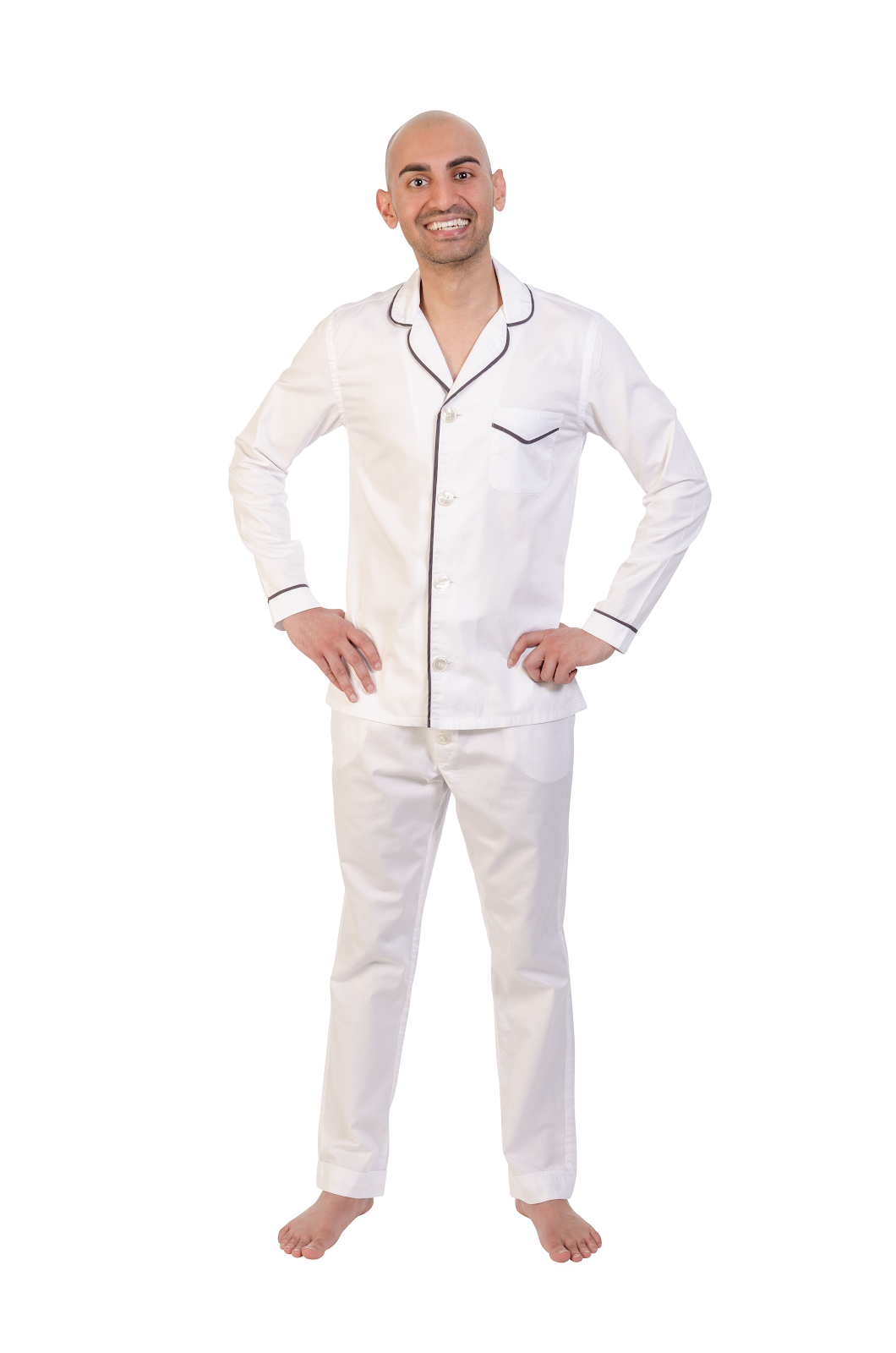
By Dr. Yoshitaka Ohno
Giving people hope in order to enjoy a healthier, longer, and fuller life has been Dr. Yoshitaka Ohno’s mission since he left his medical practice in Japan over 20 years ago. He knew he could not practice the kind of medicine that was causing so much suffering to his patients. Japan’s medical system had become much like other western systems. It involves mostly drugs and surgery. It supplies misery rather than hope.
Dr. Ohno’s journey away from conventional medicine led him to what his mother called "humanitarian medicine." It allowed him to bring together six generations of medicine from his father’s family, and six generations of spiritual leadership from his mother’s family. He felt very fortunate to be the product of what has led him to mind/body/spirit medicine. This new medicine is based on having a close relationship with nature. Unless we pay attention to our natural environment and respect it, there will be no life left for our future generations. We are already killing nature. Soon it will be too late.
This book is the story of one doctor’s struggle to live his vision of humanitarian medicine. It is a journey through the pain of modern medicine, and the arrival at a new way of offering hope to people who are suffering.
DO NO HARM
by Yoshitaka Ohno, M.D., Ph.D.
The Story of a Doctor's Struggle to Live His Vision of Humanitarian Medicine
She looked at me calmly. She was almost too calm. She had surrendered herself totally to her decision. There was no fear in her voice or in her eyes. She was resolved in her conviction to die. She got up from her bed and closed the door quietly, wanting privacy so no one else in the hospital would hear.
"Please help me die, Dr. Ohno. Please show mercy and help me die. I have asked you to stop giving me the anticancer drug. I can't take it anymore! I know you don't want to watch me suffer. Every time you inject me with this drug, I know you are also suffering as you watch me suffer. The other doctors have always ignored me while I struggled with the agony. But your eyes have always shown me such concern. You are the only doctor who has shown me such compassion."
When I decided that my patients were being given too much of a dangerous drug, I decreased the dosage. But other doctors on the staff would change my order and raise the dosage without notifying me, because they knew that would make them look good to the Chief of Medicine.
She continued to talk to me as if I were her son. She stopped and took another sip of her tea. During the silence, I started thinking about what she was saying. It was true that I was struggling and I was showing the fatigue from my internal battle. I was not sleeping well. As tired as I was, I would lie in bed, unable to sleep. Then I would get up and sit at my desk. I would think about her and how I could help her. I often thought to myself, "Why did I become a doctor?"
When I first became a doctor, I seemed to be able to find ways to help my patients. But now, instead of being a healer, I felt more like a murderer. I knew my struggle would continue if I didn't find a better way to help my patients like her, who continued to suffer the pain and indignity of a death that I was causing.
As I watched this woman collapse in sobs while she continued to plead, a part of me was dying. But I knew that I now had to present her with the cruel facts. I spoke to her with tears in my eyes, as honestly and kindly as I could.
"Your cancer has already metastasized through your body, even to your brain. I am sorry but I am recommending that you go to hospice because there is nothing more we can do. The damage is irreversible. The more chemotherapy you are given, the sooner you will die. This drug not only kills cancer cells, but also destroys the healthy cells. You need to stop because the side effects are worse and are causing too much suffering."
Just then the Chief of Medicine of the hospital entered the room. He must have heard me because he said, "Dr. Ohno, I will take care of this patient. I can help her. Please have this patient signed over to my care."
The Chief of Medicine looked firmly at the suffering patient and began. "Dr. Ohno is right, but I think I can save you with a new drug I developed. It is still in the experimental stage, but it kills only cancer cells and has no side effects"
His words were totally unexpected by her. Her expression went from despair to hope. She began to cry with tears of joy. The Chief of Medicine stood there with the same arrogant and smug look I had come to know since arriving at the hospital. However, despite the deep emotion of hope that filled the room, I was both sad and angry. I knew that his anticancer drug had very strong side effects and would cause this poor woman even more suffering.
This was the first of what was to prove to be many rude awakenings for me. After years of medical school and training, of struggling to find humane ways to treat people, I was now facing the grim reality of having to allow my superior to treat patients as though they were experimental animals. It was obvious that he had no empathy for terminally ill people. I wanted desperately to step in and disagree, but I knew it would be futile and would spell the end of my medical career.
As I watched my patients suffer in agony from taking anticancer drugs, I was experiencing my own torment as well. I was becoming consumed with the memory of my mother's words to me after my father's death. The memory of that tragic period of my life started to overwhelm me. My father was a very famous surgeon who died when he was 42 years old. He worked long and hard to keep his hospital operating at its peak. His dedication cost him his life. He died of an aneurism during surgery.
This book is about the times in my life when I had to encounter many struggles in order to gain greater insight and appreciation of the final outcome. While I report the horrors I experienced during my years of practicing medicine in Japan, I also show how I was able to find a way to answer the cries of despair of my patients. This was not easy. It required that I make a decision that would put me at risk and force me to leave my practice. But during this process, I learned to become a better doctor, more concerned about the welfare of my patients rather than the rewards of fame and fortune, which, unfortunately, have become the driving force of modern medicine.
I did not have to take this road. It would have been easier to follow the program and do what my superiors told me to do. I come from a very prominent family in Japan and have always had choices and opportunities. But the values given to me by my family led to my decisions, which, though distressing at first, brought me to what I believe is my destiny.
I believe that there has always been an invisible force within me, guiding my direction and encouraging me to discover my true calling in life. As I have proceeded on my journey, there is one principal factor that has continually surfaced. This factor is contribution, the act of giving to others, directly from one's heart. This affects not only the recipient, but something of equal importance: the essence of our being.
I also believe, more than anything else, that my mission to help humanity is derived directly from giving people the awareness of how vitally important contribution is to the soul of the benefactor. My vision has become a vehicle that can assist people to gain an understanding that, as they direct their energies to give of themselves with a pure and open heart, they will ultimately fill an emptiness that resides deep within their spiritual center.
Through years of study and experimentation in seeking better ways of delivering good health care, I found the significant interrelationship between health and nature, and its impact on the quality of life. The best example is our precious water supply. After you read this book, you will become more knowledgeable about water; all water is not the same. You will learn that the quality, content, and even the structure of the water in your body can make the difference between sickness and health.
In order to test this theory, I tested many water sources. While I was conducting research in Japan, I discovered a naturally magnetized water that was being used by a prominent physician with his patients suffering from serious diseases, many which I had also been treating. As I observed and studied these patients, it became apparent that this water was unique and had therapeutic benefits.
We think of the human body as ...
Yoshitaka Ohno, M.D., Ph.D., Founder and President
Ohno Institute on Water and Health
Dr. Ohno is a native of Osaka, Japan, where he received his education and training in medicine and neuropathology. Early in his medical career, he began searching for ways to stop the suffering of his patients with diseases that could not be treated successfully by standard medicine, and thus had to be managed with multiple drugs. He began to realize that the side effects of these drugs were creating serious chronic problems, as well as increasing the body’s deterioration. After extensive study he became convinced that the condition of the body’s water was directly related to the state of the body’s health.
After leaving his medical practice, he continued his studies but found that the Japanese medical community was not placing much emphasis on chronic diseases found commonly among the aging population. He decided to enter the United States and accept a position at AMC Hospital in Denver, Colorado, where he could continue his research in geriatric pathology, including MRI studies on the relationship of water and cellular degeneration. His work led him to investigate the neuropathology of Alzheimer’s disease. As a result of his work, he received the Community Leadership Award from the Colorado Alzheimer’s Association in 1987 and the Humanitarian Award from the Alzheimer’s Disease International in 1993.
After returning to Japan in 1990, he discovered a naturally magnetized water that was being used by a prominent physician to treat serious, life-threatening diseases. As these patients recovered, Dr. Ohno became convinced that this water was unique. He pursued numerous clinical studies with this water, both in Japan and the United States. In 1998, Dr. Ohno founded the Ohno Institute on Water and Health, a non-profit research and education center for studying the effect of naturally magnetized water on health and aging. He has been requested as a speaker at several health conferences and has published several articles in professional journals on his findings.
Dr. Ohno resides with his wife and three children in Chagrin Falls, Ohio.
I noticed that there were very few books about
water and health. Even in Japan there were many books in bookstores about water. Perhaps it is bacause water in Japan is such a precious commodity that there is much more awareness of water and the environment. In this nation there seems to be a little interest about the importance of clean water in our bodies. It is no wonder that people continue to get sick easily and don't know why. Even when people are aware of the dangers of water contamination, they do not know about the effect water has on the human body.
We think of the human body consisting of muscles, bones and nerves. But everything in our body is made up of almost all water. Our body is made up of 70% water, for average size adult. Too much of our health education is about drugs and the effects certain drugs have on the body. This is based on Solid Paradigm. How often do we hear about water and its effects on our health? All the foods we eat consist of water. Good water produces good crops that keep us healthy. When we eat vegetables that have been grown in a contaminated field from chemicals and polluted soil , we are nor providing our body with nourishment, but poison. When we eat poultry, beef, pork or fish that has been contaminated from a poor water source, are we not poisoned as well?
The awareness in this nation is slowly growing. Since so little is taught about the importance of water in the human body, it is easy for people to contaminate their bodies without being aware of what they are doing. Since we are the unity of a mind-body-spirit relationship, it makes sense that not only is our body contaminated by poor water , but our mind and our spirit as well. When we do not take proper care of our body hydration, the body cannot remain in a balanced state. water helps balance our body, and when we are balanced physically, our emotions are much more stable. We become less irritable and angry, and our spiritual energy is much more alive.
"Danger Past, God Forgotten"
It is amazing to me that is usually takes a life crisis for people to wake up and understand how vital water is . Most people ignore how important our water resources are until they experience a problem in their life. The earth is also made up of 70% water. But 94% of our water supply is salt water. Only 6% of our earth's water is fresh water. Of this 4% is in the form of glaciers. This leaves approximately 2% fresh water on earth for human consumption. If we continue to ignore water as the very precious commodity it is, we are in danger of destroying not just our bodies ; we are in danger of also destroying our home planet, Earth.
Many people have called me the "Water Doctor" , saying that all i know is water. All I want to talk about is water. I try to be understanding, but without knowledge about the importance of water, my words sound too simplistic to have any merit.
I had gotten used to people laughing at me and telling me that my ideas are not reality. I am used to the feeling of alienation and exclusion, so attempts to discourage me have not affected my determination. I continue to focus on the benefits of the water I discovered, and I tell people about this water anytime I have the opportunity to do so. Usually, when I meet someone witha health problem, or they tell me about someone in their family witha health problem, they say they have tried every kind of conventional medical treatment available. But after seeing no improvements, they have lost hope. I am always eager to help them. I will explain the special qualities of the water , and how the water I discovered here can help them. When I get this opportunity , people will isten to me.
One day a woman visited the health center because she was looking for a good facility to care for her sister who had Alzheimer's disease. She toured the facility but was terribly disappointed when she realized she would not be able to afford the cost of care. I was very impressed with her devotion to her sister, and I took a few minutes to talk to her about her sister's state of health.
" I understand that your sister is suffering from Alzheimer's disease. I supposed that even though you have tried to do a good job in taking care of her at home, her symptoms are getting worse. I can see that you look very tired from the strain of taking care of her. I would like to tell you something that can help your sister. It is naturally magnetized water. I have had good results giving this water to Alzheimer's patients,: I explained to her.
"Doctor Ohno, I have tried everything I can think of ! I cannot afford to bring my sister to health center and I cannot take care of her by myself anymore. Let me try your water and see if at least this helps her. Any improvement to her health will be appreciated !"
I delivered a case of the water to her home the next day. i instructed her to have her sister drink one bottle of water each day and to record any differences she saw in her sister's behaviour.
After one month, she reported that her sister's cognitive functioning had improved. Her eyes no longer looked dull, but sharp and alert. Her appetite had improved dramatically and she was able to walk much better. After two months of drinking the water daily, she again began to distinguish people and recognize who they were!
"Who am I ?" she asked when she and her sister visited me.
"You are my sister !" she answered.
"Doctor Ohno ! I cannot tell you what it means to me to have my sister recognize me again ! I have to tell you, i was really skeptical before trying your water . I am so glad you approached me and told me about your water ! I need you to explain what is happening to my sister and why this water is able to help her. "
" I am so happy that your sister is improving so nicely ! Thank you very much for asking this question ! It has not been often since I came here that someone has wanted me to explain to them about this water . I believe that this water can help people with any disease, not just Alzheimer's !
I answered her as simply as I could.
"There are 100 billion cells in the human brain, and the brain is made up of 90% water. One of the reasons Alzheimer's disease occurs is because of contamination of the water which composes the brain. When the brain cells become contaminated, they lose electrons. the brain cells then cease to function and they cannot send the information correctly. This happens because the contaminated cells become disorganized and unstable. SO the signals that normally create impulses that travel from one cell to another cell are no longer in a stable environment and are unable to transfer information correctly. My theory is that if we can improve the water in the brain, we can improve the responses of the brain.
The reason why naturally magnetized water helps to improve cognitive functioning, like memory, is because the water is highly organized. Once this water enters the cells of the brain, the cells become organized and the impulses once again connect. Keep in mind this is a very simplistic explanation , but it helps to give you an idea as to why the water is helping your sister."
She was very surprised to hear my explanation. " I would never have believed your theory until I saw the results ! I am a chemist and I can see where the quality of the water would definitely impact the functioning. I just have never really thought it would affect it to that extent! "
"If you were not a chemist then perhaps you would not have understood my idea, I responded."
"Doctor Ohno, if you have so much trouble getting studies done at Health Center here and they do not appreciate what this wonderful water could do for their patients, why don't you open up your own clinic ? Just think of the people you could help ! "
I was so appreciative of her suggestion. I had met very few people who were as kind and understanding as she was. The compassion she had given to her sister , and the concern she was extending to me was heartfelt.
By Dr. Yoshitaka Ohno
Giving people hope in order to enjoy a healthier, longer, and fuller life has been Dr. Yoshitaka Ohno’s mission since he left his medical practice in Japan over 20 years ago. He knew he could not practice the kind of medicine that was causing so much suffering to his patients. Japan’s medical system had become much like other western systems. It involves mostly drugs and surgery. It supplies misery rather than hope.
Dr. Ohno’s journey away from conventional medicine led him to what his mother called "humanitarian medicine." It allowed him to bring together six generations of medicine from his father’s family, and six generations of spiritual leadership from his mother’s family. He felt very fortunate to be the product of what has led him to mind/body/spirit medicine. This new medicine is based on having a close relationship with nature. Unless we pay attention to our natural environment and respect it, there will be no life left for our future generations. We are already killing nature. Soon it will be too late.
This book is the story of one doctor’s struggle to live his vision of humanitarian medicine. It is a journey through the pain of modern medicine, and the arrival at a new way of offering hope to people who are suffering.
DO NO HARM
by Yoshitaka Ohno, M.D., Ph.D.
The Story of a Doctor's Struggle to Live His Vision of Humanitarian Medicine
She looked at me calmly. She was almost too calm. She had surrendered herself totally to her decision. There was no fear in her voice or in her eyes. She was resolved in her conviction to die. She got up from her bed and closed the door quietly, wanting privacy so no one else in the hospital would hear.
"Please help me die, Dr. Ohno. Please show mercy and help me die. I have asked you to stop giving me the anticancer drug. I can't take it anymore! I know you don't want to watch me suffer. Every time you inject me with this drug, I know you are also suffering as you watch me suffer. The other doctors have always ignored me while I struggled with the agony. But your eyes have always shown me such concern. You are the only doctor who has shown me such compassion."
When I decided that my patients were being given too much of a dangerous drug, I decreased the dosage. But other doctors on the staff would change my order and raise the dosage without notifying me, because they knew that would make them look good to the Chief of Medicine.
She continued to talk to me as if I were her son. She stopped and took another sip of her tea. During the silence, I started thinking about what she was saying. It was true that I was struggling and I was showing the fatigue from my internal battle. I was not sleeping well. As tired as I was, I would lie in bed, unable to sleep. Then I would get up and sit at my desk. I would think about her and how I could help her. I often thought to myself, "Why did I become a doctor?"
When I first became a doctor, I seemed to be able to find ways to help my patients. But now, instead of being a healer, I felt more like a murderer. I knew my struggle would continue if I didn't find a better way to help my patients like her, who continued to suffer the pain and indignity of a death that I was causing.
As I watched this woman collapse in sobs while she continued to plead, a part of me was dying. But I knew that I now had to present her with the cruel facts. I spoke to her with tears in my eyes, as honestly and kindly as I could.
"Your cancer has already metastasized through your body, even to your brain. I am sorry but I am recommending that you go to hospice because there is nothing more we can do. The damage is irreversible. The more chemotherapy you are given, the sooner you will die. This drug not only kills cancer cells, but also destroys the healthy cells. You need to stop because the side effects are worse and are causing too much suffering."
Just then the Chief of Medicine of the hospital entered the room. He must have heard me because he said, "Dr. Ohno, I will take care of this patient. I can help her. Please have this patient signed over to my care."
The Chief of Medicine looked firmly at the suffering patient and began. "Dr. Ohno is right, but I think I can save you with a new drug I developed. It is still in the experimental stage, but it kills only cancer cells and has no side effects"
His words were totally unexpected by her. Her expression went from despair to hope. She began to cry with tears of joy. The Chief of Medicine stood there with the same arrogant and smug look I had come to know since arriving at the hospital. However, despite the deep emotion of hope that filled the room, I was both sad and angry. I knew that his anticancer drug had very strong side effects and would cause this poor woman even more suffering.
This was the first of what was to prove to be many rude awakenings for me. After years of medical school and training, of struggling to find humane ways to treat people, I was now facing the grim reality of having to allow my superior to treat patients as though they were experimental animals. It was obvious that he had no empathy for terminally ill people. I wanted desperately to step in and disagree, but I knew it would be futile and would spell the end of my medical career.
As I watched my patients suffer in agony from taking anticancer drugs, I was experiencing my own torment as well. I was becoming consumed with the memory of my mother's words to me after my father's death. The memory of that tragic period of my life started to overwhelm me. My father was a very famous surgeon who died when he was 42 years old. He worked long and hard to keep his hospital operating at its peak. His dedication cost him his life. He died of an aneurism during surgery.
This book is about the times in my life when I had to encounter many struggles in order to gain greater insight and appreciation of the final outcome. While I report the horrors I experienced during my years of practicing medicine in Japan, I also show how I was able to find a way to answer the cries of despair of my patients. This was not easy. It required that I make a decision that would put me at risk and force me to leave my practice. But during this process, I learned to become a better doctor, more concerned about the welfare of my patients rather than the rewards of fame and fortune, which, unfortunately, have become the driving force of modern medicine.
I did not have to take this road. It would have been easier to follow the program and do what my superiors told me to do. I come from a very prominent family in Japan and have always had choices and opportunities. But the values given to me by my family led to my decisions, which, though distressing at first, brought me to what I believe is my destiny.
I believe that there has always been an invisible force within me, guiding my direction and encouraging me to discover my true calling in life. As I have proceeded on my journey, there is one principal factor that has continually surfaced. This factor is contribution, the act of giving to others, directly from one's heart. This affects not only the recipient, but something of equal importance: the essence of our being.
I also believe, more than anything else, that my mission to help humanity is derived directly from giving people the awareness of how vitally important contribution is to the soul of the benefactor. My vision has become a vehicle that can assist people to gain an understanding that, as they direct their energies to give of themselves with a pure and open heart, they will ultimately fill an emptiness that resides deep within their spiritual center.
Through years of study and experimentation in seeking better ways of delivering good health care, I found the significant interrelationship between health and nature, and its impact on the quality of life. The best example is our precious water supply. After you read this book, you will become more knowledgeable about water; all water is not the same. You will learn that the quality, content, and even the structure of the water in your body can make the difference between sickness and health.
In order to test this theory, I tested many water sources. While I was conducting research in Japan, I discovered a naturally magnetized water that was being used by a prominent physician with his patients suffering from serious diseases, many which I had also been treating. As I observed and studied these patients, it became apparent that this water was unique and had therapeutic benefits.
We think of the human body as ...
Yoshitaka Ohno, M.D., Ph.D., Founder and President
Ohno Institute on Water and Health
Dr. Ohno is a native of Osaka, Japan, where he received his education and training in medicine and neuropathology. Early in his medical career, he began searching for ways to stop the suffering of his patients with diseases that could not be treated successfully by standard medicine, and thus had to be managed with multiple drugs. He began to realize that the side effects of these drugs were creating serious chronic problems, as well as increasing the body’s deterioration. After extensive study he became convinced that the condition of the body’s water was directly related to the state of the body’s health.
After leaving his medical practice, he continued his studies but found that the Japanese medical community was not placing much emphasis on chronic diseases found commonly among the aging population. He decided to enter the United States and accept a position at AMC Hospital in Denver, Colorado, where he could continue his research in geriatric pathology, including MRI studies on the relationship of water and cellular degeneration. His work led him to investigate the neuropathology of Alzheimer’s disease. As a result of his work, he received the Community Leadership Award from the Colorado Alzheimer’s Association in 1987 and the Humanitarian Award from the Alzheimer’s Disease International in 1993.
After returning to Japan in 1990, he discovered a naturally magnetized water that was being used by a prominent physician to treat serious, life-threatening diseases. As these patients recovered, Dr. Ohno became convinced that this water was unique. He pursued numerous clinical studies with this water, both in Japan and the United States. In 1998, Dr. Ohno founded the Ohno Institute on Water and Health, a non-profit research and education center for studying the effect of naturally magnetized water on health and aging. He has been requested as a speaker at several health conferences and has published several articles in professional journals on his findings.
Dr. Ohno resides with his wife and three children in Chagrin Falls, Ohio.
I noticed that there were very few books about
water and health. Even in Japan there were many books in bookstores about water. Perhaps it is bacause water in Japan is such a precious commodity that there is much more awareness of water and the environment. In this nation there seems to be a little interest about the importance of clean water in our bodies. It is no wonder that people continue to get sick easily and don't know why. Even when people are aware of the dangers of water contamination, they do not know about the effect water has on the human body.
We think of the human body consisting of muscles, bones and nerves. But everything in our body is made up of almost all water. Our body is made up of 70% water, for average size adult. Too much of our health education is about drugs and the effects certain drugs have on the body. This is based on Solid Paradigm. How often do we hear about water and its effects on our health? All the foods we eat consist of water. Good water produces good crops that keep us healthy. When we eat vegetables that have been grown in a contaminated field from chemicals and polluted soil , we are nor providing our body with nourishment, but poison. When we eat poultry, beef, pork or fish that has been contaminated from a poor water source, are we not poisoned as well?
The awareness in this nation is slowly growing. Since so little is taught about the importance of water in the human body, it is easy for people to contaminate their bodies without being aware of what they are doing. Since we are the unity of a mind-body-spirit relationship, it makes sense that not only is our body contaminated by poor water , but our mind and our spirit as well. When we do not take proper care of our body hydration, the body cannot remain in a balanced state. water helps balance our body, and when we are balanced physically, our emotions are much more stable. We become less irritable and angry, and our spiritual energy is much more alive.
"Danger Past, God Forgotten"
It is amazing to me that is usually takes a life crisis for people to wake up and understand how vital water is . Most people ignore how important our water resources are until they experience a problem in their life. The earth is also made up of 70% water. But 94% of our water supply is salt water. Only 6% of our earth's water is fresh water. Of this 4% is in the form of glaciers. This leaves approximately 2% fresh water on earth for human consumption. If we continue to ignore water as the very precious commodity it is, we are in danger of destroying not just our bodies ; we are in danger of also destroying our home planet, Earth.
Many people have called me the "Water Doctor" , saying that all i know is water. All I want to talk about is water. I try to be understanding, but without knowledge about the importance of water, my words sound too simplistic to have any merit.
I had gotten used to people laughing at me and telling me that my ideas are not reality. I am used to the feeling of alienation and exclusion, so attempts to discourage me have not affected my determination. I continue to focus on the benefits of the water I discovered, and I tell people about this water anytime I have the opportunity to do so. Usually, when I meet someone witha health problem, or they tell me about someone in their family witha health problem, they say they have tried every kind of conventional medical treatment available. But after seeing no improvements, they have lost hope. I am always eager to help them. I will explain the special qualities of the water , and how the water I discovered here can help them. When I get this opportunity , people will isten to me.
One day a woman visited the health center because she was looking for a good facility to care for her sister who had Alzheimer's disease. She toured the facility but was terribly disappointed when she realized she would not be able to afford the cost of care. I was very impressed with her devotion to her sister, and I took a few minutes to talk to her about her sister's state of health.
" I understand that your sister is suffering from Alzheimer's disease. I supposed that even though you have tried to do a good job in taking care of her at home, her symptoms are getting worse. I can see that you look very tired from the strain of taking care of her. I would like to tell you something that can help your sister. It is naturally magnetized water. I have had good results giving this water to Alzheimer's patients,: I explained to her.
"Doctor Ohno, I have tried everything I can think of ! I cannot afford to bring my sister to health center and I cannot take care of her by myself anymore. Let me try your water and see if at least this helps her. Any improvement to her health will be appreciated !"
I delivered a case of the water to her home the next day. i instructed her to have her sister drink one bottle of water each day and to record any differences she saw in her sister's behaviour.
After one month, she reported that her sister's cognitive functioning had improved. Her eyes no longer looked dull, but sharp and alert. Her appetite had improved dramatically and she was able to walk much better. After two months of drinking the water daily, she again began to distinguish people and recognize who they were!
"Who am I ?" she asked when she and her sister visited me.
"You are my sister !" she answered.
"Doctor Ohno ! I cannot tell you what it means to me to have my sister recognize me again ! I have to tell you, i was really skeptical before trying your water . I am so glad you approached me and told me about your water ! I need you to explain what is happening to my sister and why this water is able to help her. "
" I am so happy that your sister is improving so nicely ! Thank you very much for asking this question ! It has not been often since I came here that someone has wanted me to explain to them about this water . I believe that this water can help people with any disease, not just Alzheimer's !
I answered her as simply as I could.
"There are 100 billion cells in the human brain, and the brain is made up of 90% water. One of the reasons Alzheimer's disease occurs is because of contamination of the water which composes the brain. When the brain cells become contaminated, they lose electrons. the brain cells then cease to function and they cannot send the information correctly. This happens because the contaminated cells become disorganized and unstable. SO the signals that normally create impulses that travel from one cell to another cell are no longer in a stable environment and are unable to transfer information correctly. My theory is that if we can improve the water in the brain, we can improve the responses of the brain.
The reason why naturally magnetized water helps to improve cognitive functioning, like memory, is because the water is highly organized. Once this water enters the cells of the brain, the cells become organized and the impulses once again connect. Keep in mind this is a very simplistic explanation , but it helps to give you an idea as to why the water is helping your sister."
She was very surprised to hear my explanation. " I would never have believed your theory until I saw the results ! I am a chemist and I can see where the quality of the water would definitely impact the functioning. I just have never really thought it would affect it to that extent! "
"If you were not a chemist then perhaps you would not have understood my idea, I responded."
"Doctor Ohno, if you have so much trouble getting studies done at Health Center here and they do not appreciate what this wonderful water could do for their patients, why don't you open up your own clinic ? Just think of the people you could help ! "
I was so appreciative of her suggestion. I had met very few people who were as kind and understanding as she was. The compassion she had given to her sister , and the concern she was extending to me was heartfelt.