Showing posts with label wealth. Show all posts

Tuesday, May 30, 2017

Do You Function to Eat or Eat To Function?

Welcome!  I am the managing director of Healthy Wealth for Functional Survival (HWFS). My approach to survival is called Functional Survival (FS).

In Functional Survival, we don’t just focus on your symptoms. Symptoms are the tip of the iceberg; we go for the whole iceberg! I take a thorough history, listen carefully to your concerns, consider results of lab work, take in who you are, and where you are in your life, and come up with a plan to gradually help your whole body get back into balance so you feel better. I work with you using individually designed survival plans, and individually tailored workable programs to support your body in healing itself. Here are some things you might want to know about Healthy Wealth for Functional Survival (HWFS) if you are considering partnering with us for improving your health.

Let Us Make Health Easier

Healthy Wealth for Functional Survival (HWFS) removes many of the obstacles that make a healthy lifestyle hard to achieve. We know, that simply being handed a list of “do’s and don’ts” doesn’t cut it as far as making permanent, dietary shifts. We focus on helping you go from knowing what to do, to actually doing it, from “information to implementation”.

Let Us Keep Latest Update To Date

We always keep up to date on current research, controversy and practice. Research and experience tells us that most people derive great healthy wealth benefits from reducing or eliminating refined carbohydrates and sugar from their diets, and focusing on a diet of clean, wholesome foods. How one does this depends on individual needs and circumstances.

Let Us Help You Identify Your Unique Body’s Needs
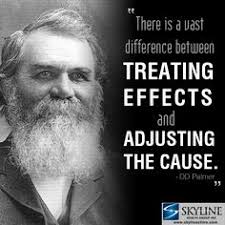
Image result for Dr. Daniel David Palmer
In 1914, Dr. Daniel David Palmer noted that “When Educated and Innate Intelligences are able to converse with each other … (a possibility which a not very distant future may disclose) we shall be able to make a correct diagnosis.”
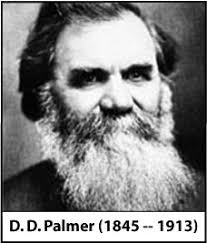
Image result for Dr. Daniel David Palmer
In the statement he referred to two kinds of intelligence available to determine the health status and guide the healing of a person — the “Educated” intelligence and the “Innate” intelligence. The Educated intelligence is what we acquire in school and through life experience. Innate intelligence we are all born with and resides in our body whether we recognize it or not.

Innate intelligence is what allows every living thing to adapt to its environment in order to survive. For example, a plant will turn itself toward the sun if placed on a windowsill. A baby’s heart beats and her small body digests and uses nutrients for growth, without being taught how to do these things.

We can support our innate abilities by eliminating things that are harmful to the body and adopting behaviors that are healing to the body. It’s also important to approach healing in the correct order. If you cut your hand in the garden, you would clean it first, then apply a salve and then bandage it. If these things are done in a different order, the healing process can be impaired.

Let us use laboratory, academic, and research knowledge as the basis for educated intelligence. Nutrition Response Testing allows us to tap into innate intelligence. At HWFS let us use both to determine the root cause of health challenges. Nutrition Response Testing also shows us the exact right order to approach the healing process. It’s exciting to see the amazing successes that our patients report to us every day at Healthy Wealth for Functional Survival (HWFS). If you are not a Nutrition Response Testing patient, the technique likely won’t help you. But if you are a Nutrition Response Testing patient, it is my experience that you can achieve powerful results!

HWFS is natural-based health care that is focused on building health by restoring proper physiological functioning of the body. When you have multiple symptoms, they are clues to the ways in which your body is not functioning the way it should be. Rather than suppress those symptoms with natural or pharmaceutical agents, we want to “read” those symptoms to understand which systems of your body need support to get back on track and get you healthy again.

By looking at your whole picture -- diet, symptoms, illness history, medications, lifestyle, stress, lab work, toxic exposure, history of antibiotic use, etc., we are able to put together an overall plan. That plan serves as a trail map of the nutrition your body needs to regain health and prevent illness.

What can a consultation can do for me?

Help you identify the exact nutrition your body needs to get well and stay well. You are unique and your nutritional plan should fit you, your body, and your situation.

Give you a solution focused, dietary road-map for improved health and well-being.

Provide you with a realistic plan and steps for making changes.

Familiarize you with purchasing and using foods that may be new to you.

Refer you, as needed to other health professionals.

Provide you with the highest quality, concentrated, whole food nutrition products based on your body’s needs.

What health issues can Functional Nutrition help?

Our clients have reported improvements in these and other conditions:

ADHD
Anemia
Arthritis
Brain / memory
Children’s behavioral problems
Chronic digestive problems
Chronic fatigue
Chronic pain
Depression
Diabetes (or risk)

Environmentally induced toxicity
Fibromyalgia
Gastric reflux
Headaches
Hypertension
High cholesterol
Irritable bowel
Joint pain
Lack of energy
Low thyroid
Menopausal changes
Migraines
Mood swings
PMS
Skin conditions
Weight

How to get started

The first step is to make an appointment for an initial evaluation. This is followed 1-3 days later by a “report-of-findings” visit in which we go over the evaluation, your health history and the recommendations.

How much does it cost anyone?

Initial consult & report-of-findings $260
Visits 1-3 (45-60 min, includes lab review) $190 per visit
Follow-up visits (20-30 min) $150 in office
$60 over phone
Extended visits $125 per 1/4 hour
Email consultations $125 per 1/4 hour
Dietary consultations $150 per half hour
$195 per hour
HRV testing & report $120

Dietary consultations

We offer dietary consultations only to our Nutrition Response Testing clients who need additional support in making dietary changes.

Further questions


If you have any questions or are ready to schedule an appointment, please call: 9733 0932


Results
1. Judy, you’re a genius! The supplements you recommended worked. Within a few hours yesterday afternoon my black mood lifted, and today I felt great when I woke up and my joint pain is gone! - J.P.

2. I experienced a lot of inertia, feelings of overwhelm, digestive disturbances, weight gain around my middle, and numerous other symptoms. Judy gave me a program that right away had me feeling like my “real” self again. I have new energy, motivation, and enthusiasm for life. I lost 2” off my middle. When I went back over the symptom checklist 6 months later, I saw how many symptoms I used to have but have no longer. Thanks Judy! - L.M.

3. I am feeling better and better all the time! My digestion has improved and my sinuses are much better - they’ve never felt like this. I’m not getting sinus headaches or burning in my face. I didn’t know what it felt like to be this healthy! - D.C.

4. When I first came to Judy I was in and out of depression, had no motivation to do anything, and had terrible itching on my head and shins. I’d had hot flashes for five years that made it difficult to think and focus. I didn’t feel like exercising. Since working with Judy the hot flashes and itching are gone, I’ve joined an exercise club for women, and have built up muscle and improved my metabolism through exercise. My depression is gone and I have more control over emotional eating. - J.H.

5. I was feeling sluggish and slow, confused, forgetful, unmotivated, depressed—I suspected food allergies but lacked the mental clarity to identify them. After just five weeks, my mind is much clearer. I can get organized, prioritize; accomplish things I could only daydream about before. I have lost weight and feel more fit, and the “brain fog” is about gone! - J.L.


6. I had a bone density test in August of 2009 which showed Osteopenia. My doctor told me to take more calcium. Thank Heavens I made an appointment to see Judy Stone, thinking she could instruct me on foods high in calcium. Judy had me get tested and discovered that I’m Gluten-Intolerant, which (I’ve learned) is a major cause of Osteopenia. She had me start on a gluten-free diet and some supplements tailored for my needs so that I could absorb calcium and other nutrients better. Judy is very patient and makes sure you understand which foods to avoid and which ones will enhance your health. I noticed improvements in my health very soon: Digestive symptoms have improved; my mood is better (and I’m no longer jittery); I have more energy, fewer aches and pains (much decreased use of over-the-counter pain meds); my sinuses are healthier; and I sleep more restfully! -D.H.

7. When I first came to Judy I had low energy, was sluggish, and had a lot of colon and digestive issues. Within six weeks my energy is up, I’m coping with my allergies much better, and my colon is calming down. - A.Z.

8. For the last 4 to 5 months my 10-year-old son was tired, wanting to sleep a lot and had episodes of sudden stomach cramps. He’d get flush, hot and was just miserable. An episode would last 2-3 hours and he’d be even more tired afterwards. Since bringing him to Judy his sleep is much better—deeper and more restful—he’s more alert, has more energy and there’s an overall improvement in his mood and well-being. The stomach cramping episodes have stopped almost completely and if they do arise the episodes are much shorter and less intense and the recovery is much faster. My son says, “I like coming to visit Judy—it’s a good experience”. - R.S.

10. I was trying to eat “good” food but I was hungry all the time; I took vitamins and minerals but wasn’t sure how or if they were absorbing. After working with Judy I feel calmer than I have for years, and I’m not hungry all the time anymore. - S.K.

11. I felt tired all the time and had difficulty doing all I wanted to do, and was having pre-menopausal symptoms. After starting with the recommended supplements and making the suggested dietary changes I noticed an immediate improvement in my energy level. I’ve lost weight and am sleeping better. My pre-menopause symptoms are more manageable. - A.M.


12. I visited Judy for the first time just before Thanksgiving in 2009 with a primary goal of losing weight. After reading my health history, and hearing how my life was controlled by Colitis symptoms (I couldn’t leave the house until late in the morning and couldn’t go anywhere unless I knew there was a bathroom close by) Judy said that my first goal had to be addressing my colitis. She recommended that I avoid all grain products for a period of time so my gut could heal, and several other dietary changes, along with some supplements to calm the inflammation, repair the damage, and support my digestion. Everything she suggested was helpful to me. In three days my symptoms improved significantly which motivated me to continue with the diet. During the next 6 months, I had several setbacks and my colitis symptoms returned, but we worked with those, and each time the flare-ups were less severe and shorter-lasting. I have now been symptom-free for over 3 months but have been able to eat some grains again. For me avoiding gluten has not been too great a sacrifice because of the well-being that has resulted. Now I am used to feeling well and am better able to address my other nutritional goals. - D.D.

Saturday, April 1, 2017

Tapping Into Wealth

Tapping-Into-Wealth-Emotional-Techniques

Click here To Look Inside the Book

Following in the footsteps of New York Times bestseller The Tapping Solution by Nick Ortner, this book from renowned Tapping expert Margaret Lynch teaches us how to use Tapping (Emotional Freedom Techniques) to clear the blocks to achieving greater wealth.

Emotional Freedom Techniques (EFT), also known as Tapping, have become a popular tool for realizing personal goals. For many of us, increasing our wealth is one of our greatest ambitions, but also an area where we feel the most stuck because we have limiting fears and beliefs that sabotage our success. EFT uses the fingertips to tap on acupuncture points while emotionally tuning in to negative attitudes and past experiences, thereby clearing the inner blocks to attracting and managing wealth.

Tapping Into Wealth includes QR codes that link to video demonstrations of Tapping techniques. Discover how Tapping can help you release your old views of money and open the door to more wealth than you ever imagined.


To heal a negative emotion feel it fully. Denied feelings are like hungry ghosts that are never satisfied. They keep coming back till they are truly felt, accepted, forgiven and released. Once the old charge of that emotion is exhausted the healing power of forgiveness takes its place.


As you truly feel a negative emotion, without editing it, love will start to flow in. Be on the look out for this love creeping in, and be open to letting it come in. This is the other side of the story, you have not been willing to entertain.

How the Power of Forgiveness Can Heal Your Life

The healing power of forgiveness is the key to peace, health, and happiness. Certain people deemed "unworthy" of forgiveness such as murderers, rapists, ex-spouses, parents, bad children, etc. are often excluded as candidates for forgiveness. No person is innately bad. What they have are deep, unhealed wounds and so do the rest of us. 

It takes great learning to realize all people and circumstances are worthy of the power of forgiveness. 

I can hear some of you now. "But they don’t deserve to be forgiven after what they did!" Atrocities large and small are calls for help and acceptance. Punishing them does not fix them. It makes them worse, which our failed criminal justice system shows!


You can't heal a negative action with another negative action.

Like many of you my journey through life has been challenging. Like the stock market, I’ve gone up and down to the point where I thought I had LOST IT many times. 

My son got into big trouble as a teenager. He could have been put in jail for more years than I like to imagine, because of untrue hearsay. I allowed myself to sink to the level of a bottom feeder! 

The way I saw it, my son had been wronged, and I was a bad mother! If I had allowed myself to feel these feelings fully, moving them through me, something magical would have happened as stated above. It did, but only after suffering from my own negative thoughts first. 

It didn't take long to realize, I had anger towards my son as well, for allowing this situation to happen. It also needed to be released, not because it was wrong of me to feel this, but because I felt it, and it did not serve me or him. We both had unhealed wounds to heal that this situation triggered. I was ready to go to work to heal this pain through the power of forgiveness.


My son had to release these unfelt emotions in his life. It turned out to be a gift, because it put him on the spiritual path. Now, I ask you...do you think he would have looked inward towards spirituality at seventeen without something traumatic happening to him? Not likely. Over a decade later, he is still committed to his spiritual path. 

Suppressing these emotions does not heal them. It just sets you up for them to revisit you.

I'm sure most of you have lived and relived a stressful situation. Yes, you've played it this way and that way to justify your story about it. The victim within wants to stay a victim to hold onto that story, but, it keeps you in your pain. Byron Katie is a great resource to help you take back your power.

For some the story is more important than freedom from the pain. For those who want to heal, movement through physical workout, crying, shaking, walking, etc. helps move the emotion through you. It also sets you up to use the healing power of forgiveness. 

So why is the power of forgiveness the key to inner peace.


The healing power of forgiveness is more crucial now than at any other time in recorded history! 

What if nothing dramatically changes now that 2016 is past...So what! 


You'll experience more inner peace, love, health and happiness in your life. Nothing can replace inner peace! Without it, nothing else matters!

Conclusion:

I consciously try to let new relationships evolve on their own without prejudging them now. The first thing I ask myself when I meet someone new is, "Why did this person come into my life?" You see...all relationships have a common thread. There’s something both parties have to learn from the other to help them grow spiritually. Welcome these new relationships.

Negative experiences have often shaped me more than positive ones, because I was motivated to change them. But through them, I have gained positive force. The power of forgiveness gave me back control of my life, because it took me out of victim mode.

Still burning brightly under the clouds of negativity is your Spirit, just as God created you. It's always been there, waiting to be reunited with your Will, your intuitive, feeling side. The sooner you learn an important source of your power is your Will, the happier and more fulfilled you'll be. Without it, you are like a ship without a rudder. This process is what the great cycle change it all about.


The healing power of forgiveness is all that is needed to heal the unfelt emotions and feelings in your life so you can know true happiness. 

7 Levels of Wealth Manual

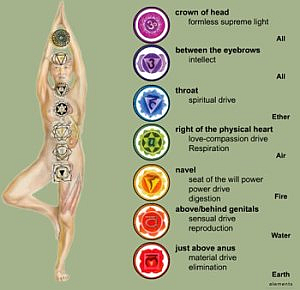
The body, when you are “eating” good “food” in the right amount, your chakra and life purpose are healthy.

Chakras can be open, closed, have blocks or be open too wide. Some examples include the following:
• If a restaurant receives forty pounds of shrimp when they only needed ten pounds, they will lose money.
• If the restaurant cannot get shipments because of bad credit, they will not be able to offer the specialty of the house and will not be as popular.
• If an individual eats junk food or starves themselves to look a certain way, they will not be healthy in their body chakra and will not create energy in their relationships, and so they will create an energetic drain instead. In contrast, the health of a chakra is based on how broadly it allows energy and information to trigger it in positive expressions, which support the life purpose of the host.

Chakras practically represent your energetic circuitry, which allows you to experience every major aspect of your life. How you let energy flow through them tells you how you will live your life and how close or how far from your life purpose you will live. Knowing your individual capacity to move chakra energy through your system teaches you how you experience life and how you are drawn to your life purpose. 

Therefore, by understanding the chakras, you will understand the importance of achieving and maintaining balance with your two primary profiles (RhysMethod® Profiles). This is important because typically each of us will rely more heavily on one profile or the other, which creates an imbalance.

Your Seven Chakra Levels
"The program is designed to transform your ability to attract and amass wealth in 3 steps: Experiencing conscientiousness about the beliefs, programming and vows that have limited and sabotaged your wealth; unprecedented clearing of these limiting beliefs and vows; and learning how to manifest from all 7 Levels of your true brilliance!"

For the purpose of this book we will focus on the seven chakras found inside your physical body. Rhys teaches that you have five more spiritual centers representing “the higher levels of awareness and your calling into your highest purpose as a soul,” and these reside outside your body.

Rhys Thomas explains, “The seven chakras represent everything you do on planet Earth in an embodied, physical way. Tey call you to your human life purpose.” 

They are:
Chakra 1: Your body sense 
Chakra 2: Your feelings, senses and emotions
Chakra 3: Your sense of individual self 
Chakra 4: Your senses that you feel being in relationships and in love 
Chakra 5: How you create yourself in the world and in the minds of others through your language and word 
Chakra 6: Your inner and outer sight, and how you see yourself fitting into the world with purpose
Chakra 7: Your ability to experience the limitlessness of life”

Now let’s jump right in on the very first class for chakra one!

The Seven Chakras and How to Clear Them for Extraordinary Health and Happiness

Image result for seven chakras found inside your physical body.

The seven chakras, when awakened, cause a transformation of consciousness and physical changes in the body. The body will experience ultimate health and the mind will posses a "knowing" not of this world. An awakened chakra spins or turns, and the sensation can be felt in the body. Chakras is a Sanskrit word meaning, "wheels of energy." 

The kundalini energy that travels through the seven chakras of the body is called prana. Prana is the vital life-force energy, the spark of life within us. Without prana, there is no life. 

The visual rendering of the seven chakra symbols was achieved beyond the Earthly senses and came about as a knowing from realized people who had achieved balance in the main chakras. 

Kundalini or Shakti energy is known in all shamanic cultures around the world as the "divinizing" or "spiritualizing" energy in a human being. It is the dormant energy that rests at the base of the spine, waiting for the chakras to align in harmony to awaken it.

When this awakening begins, the kundalini energy activates each of the seven chakras as they are ready. The movement starts at the Root Chakra. Awakening and a new higher levels of consciousness are achieved as this vital energy rises through the other chakras.

"Kundalini has come to mean seat of fire – with the Goddess burning her way through any blocks She finds." Wheels of Life, Anodea Judith

Problems with the seven chakras individually or in conjunction show themselves through physical ailments within the body. 

What causes the blockages in the seven chakras?

The causes could be memories buried deep within the subconscious mind from childhood trauma, abuse, a learned restrictive belief system, emotional injuries that haven’t been forgiven or just lack of attention can cause a chakra to shut down. Tension builds up at one of the chakras from repeated denial, guilt, repression and unfelt emotions. Eventually, everything is affected from posture, metabolism, breathing, and emotional state. Disease in the body is caused by chronically repeated blocked pranic energy.

These seven chakras hold all the good and bad thoughts, deeds, and actions you’ve committed in all of your souls lifetimes here on earth. It’s the repression of emotions that causes pain, suffering, and disease.

Accepting your rejected feelings...feeling them deeply  and forgiving are the keys to healing your soul and dis-ease.

There's a fight going on inside of you. Your spirit, masculine or mind is telling you how great you are, and at times that you are limited and unworthy. Your feminine or intuitive feeling side is trying to keep you safe, and senses things the spirit doesn't. The problem comes when they don't work together in harmony and balance as they are supposed to.

Your beliefs are imprints caused by conditioning that happened in the past. The challenge is to realize the imprints that are running your life through your subconscious mind. You may not even be aware that these imprints have a hold on your decisions and feelings. Imprints are usual past events that were traumatic, and unresolved within us. And, we all have them.

Byron Katie has four amazing little questions for us to resolve negative thoughts. All the suffering that goes on inside our minds is not reality, says Byron Katie. It's just a story we torture ourselves with. She has a simple, completely replicable system for freeing ourselves of the thoughts that make us suffer. "All war begins on paper," she explains. You write down your stressful thoughts, and then ask yourself the following four questions:
4-questions-that-defeat-negative-thoughts
Question 1: Is it true?
This question can change your life. Be still and ask yourself if the thought you wrote down is true.

Question 2: Can you absolutely know it's true?
This is another opportunity to open your mind and to go deeper into the unknown, to find the answers that live beneath what we think we know.

Question 3: How do you react—what happens—when you believe that thought?
With this question, you begin to notice internal cause and effect. You can see that when you believe the thought, there is a disturbance that can range from mild discomfort to fear or panic. What do you feel? How do you treat the person (or the situation) you've written about, how do you treat yourself, when you believe that thought? Make a list, and be specific.

Question 4: Who would you be without the thought?
Imagine yourself in the presence of that person (or in that situation), without believing the thought. How would your life be different if you didn't have the ability to even think the stressful thought? How would you feel? Which do you prefer—life with or without the thought? Which feels kinder, more peaceful?

Turn the thought around:
The "turnaround" gives you an opportunity to experience the opposite of what you believe. Once you have found one or more turnarounds to your original statement, you are invited to find at least three specific, genuine examples of how each turnaround is true in your life.


Only by truly accepting and feeling denied emotions can these imprints be healed so their affects no longer control us, but it isn't easy. Our usual tactic is to suppress them, because we don't want to feel the pain of them. Accept these feelings without stuffing them, find some love in them and God's Light will come in behind your feelings to heal them. 

It's through the healing power of forgiveness that we release these imprints so we don't have to re-live them over and over again, whenever something new triggers them. 

Forgiveness is one of the most important ways to heal blockages in the chakras.

Where do you think those unfelt emotions go? They stay with you and accumulate, not leaving room for anything new to come in. These rejected  feelings become out-pictures played out for your benefit by other people who show you your wounds. Thank these people even in silence, they are your teachers. The greater the emotional-charge, the more there is to heal.

The lower three chakras, the Root, Sacral and Solar Plexus chakras are ruled by the Mother and our intuition. They keep us grounded to the earth. The Heart chakra in the middle is the joining of masculine and feminine.

The upper three, our spirit side, masculine, connect us to God, and are the Crown, Third Eye and Throat chakras governed by divine "inspiration." All chakras are important. Many people today want to live out of just the upper chakras. That doesn't work. Earth is the only place we can do the work to ascend beyond the earth.

We need all seven chakras to be a complete being and in balance. 

Change your thinking and heal suppressed emotions to change your life experience.

To heal the effect...release the cause. Is it really worth the price you are paying to hold onto suppressed negative emotions? You only hurt yourself. Be open to the other point of view you have been rejecting. Your body will rejuvenate itself. But, you have to release that stuck energy with conviction and love.

"A compassionate state of mind brings inner peace, and therefore a healthier body." Tenzin Gyatso, 14th Dalai Lama

The seven chakras described above are energy centers along the spine located at major branching points of the human nervous system. Chakras are considered to be points or nexus' of biophysical energy or prana of the human body.

Other ways to help clear chakras and promote healing of the mind and body

Kundalini yoga and other forms of yoga: Yoga means "union" or "discipline." It’s the yoking together of the mind, body and soul in order to liberate the True Self. Yoga is particularly effective in releasing these energies.

Through movement and stretches, the energy is pushed through the energy centers away from its point of concentration. Often a negative issue will come to mind as this blockage is broken up. It serves to let you know what caused the blockage in the first place so you can mentally let it go.

Acupuncture/Massage/Chiropractic/Reiki/etc.: These healing forms again serve to move the energy in their own ways. If the issue is not resolved mentally, then the problem will return. The relief can be permanent or temporary depending on the person's willingness to forgive and release the cause of the problem or imprint in the first place.

Physical exercise: Again the energy is moved but may not be permanent...this time through exertion.

Heat: Heat relaxes the muscles, allowing the negativity to flow out of the body. Heat can be from a sauna, whirlpool, or any other prolonged heat source.

Conclusion:

At no other time has clearing blockages in the seven chakras been so important. With the new Great Cycle change, the Age of Aquarius, and ascending Kali Yuga, at virtually the same time, the values of the world are changing. We are experiencing these changes now, and they will accelerate and continue for years to come.

The planet as a whole is moving from the solar plexus chakra to the heart chakra. It's all about balance. 

Ancient prophecies by the Classic Maya and even the indigo children, say the planet is moving into alignment and eligibility to become a sacred planet. The process of cleansing has begun. That's why we are experiencing massive economic, financial, governmental, social and ecological trauma.

The only way to clear the seven chakras permanently, is through the power of forgiveness.

Forgiveness releases the charge from old imprints. It starts at the source of the problem in the first place...the way you think.

You ARE in control of your body and your life, because YOU control your thinking. If forgiveness is true and unconditional, amazing healing occurs in all areas of the body. Then and only then can the Shakti or kundalini energy rise uninhibited through the seven chakras to increase awareness and ultimately bring enlightenment.

For a comprehensive look at each chakra with pictures,  on chakra symbols.


References:
The Chakras, Climbing the Ladder of Holiness through Levels of Consciousness, Dehyana Lee Lim (Seminar)
The Chakra Workbook, Anna Voigt
Wheels of Life, A User’s Guide to the Chakra System, Anodea Judith

The Right Use of Will, Ceanna DeRohan

The Subconscious Mind Holds the Key to Lasting Peace and Happiness

The subconscious mind garnishes all the traumas and denied emotions we have felt since the beginning of our existence. These accumulated painful thoughts can be released. The good news is if one of these patterns is cured, all the similar ones will be healed during the same process.

These stressful thoughts are repetitious like a tape on continuous repeat. They're looking for love and acceptance. These denied emotions will keep coming back up from the subconscious mind into consciousness to find it. It's up to us to decide how long we want them to revisit. They can be healed. 

When suppressed feeling are truly expressed, something magical happens. The built up negative charge is released. A lightness will fill your entire being, because a tremendous weight is now lifted. The release will be permanent unless the expresser become overrun by guilt for telling how they really feel. 

The subconscious mind, is just that...not in our realm of consciousness.

The subconscious mind operates in the background, affecting decisions and emotions. Often one doesn't even realize why they react in a certain way to something. It's an imprint caused by an unhealed, unaccepted feeling from the past or even a past life.

Medical professionals and scientist say the subconscious mind represents the largest percentage of our consciousness. They're right. It's in this subconscious mind that we hold the imprints, the ancient patterns that are running our lives today...unconsciously. The knowledge of the ancestors as well is stored here. We  do not yet remember how to access it.

The key is to bring the subconscious mind into consciousness. We were never meant to have a subconscious mind. Everything was meant from the beginning to be conscious and open with no secrets...nothing hidden or unknown. This is where we are headed with the now new great cycle change since the end of 2012. 

Even the values of the new great age show consciousness with no secret subconscious mind. The new values are love, brotherhood, unity and integrity. Once this age, also known as the Age of Aquarius takes full hold, dishonestly will be impossible, because it will be readily perceived by others. The very different children of today have more of this knowing intact then their parents. There will be no secrets, because the subconscious mind will be in full consciousness.

In private, is the best way to express pent up emotions, because the emotions can be expressed without inhibition or interruption.

This isn't about blame. It's not important to confront another directly! This isn't about them. Remember, you let them get away with what they said or did in the beginning. It's time to take back your power, and accept responsibility for your part in this pain! These are your feelings you have suppressed, not theirs.

It's about you and always has been. The resolution has to be within you. It's not important if they agree...you know, and that's all that matters. The most important person this needs to be expressed to, is you.

Every house should have a sound-proof room with lots of pillows, a plastic bat and a punching bag.

A room like this if used to release pent up emotion, would go a long way to increasing the level of happiness in a person and the home. It's the movement of the body and voice that must go along with the verbal expression. Words alone are not enough.

In private, is the best way to express these rejected emotions. Then the emotions can be expressed without inhibition or interruption. Let them rip and win an oscar with your performance.

Through many lifetimes, since the beginning of time we have all repeated the same imprinted patterns over and over again. These imprints or patterns have been performed with different characters, and a different twist, but essentially, nothing has changed. It doesn't have to stay this way.

These imprints are so ingrained we relive them, and take them as truth, but they aren't. They can be changed and have to be changed in order for us to find true happiness and love. As Byron Katie says, "I never believe my stressful thoughts. I have questioned then and found them all to be untrue." She has an amazing process for releasing these stressful thoughts.

The traumatic things that could have happened through our lives are affecting our decisions today. Because the cause is locked in our sub-conscious mind we have no idea why we have these strong feelings.

Denial enslaves emotions in the subconscious mind.

Signs of these denied emotions are unexplained memory gaps in our childhood. This happens when something horrific is rejected, we block whole segments of our past not just the event itself. Another sign is multiple failed relationships, and unexplained fears.

In our society expressing true feelings is often not acceptable, especially the negative ones. This is how negative feelings get blown out of proportion, accumulate, and when they do find expression a bomb goes off!! Why, because of the pent up charge caused by the suppression! This only causes guilt and further suppression, which perpetuates the problem.

When suppressed feeling are truly expressed, something magical happens. The built up negative charge is released instantly, and makes room for love to come in. A weight has lifted.

The gap is the subconscious and it's here that we have to look to find what's preventing the joining between our masculine and feminine aspects.

The gap is the space at the heart where the two energies have not come together. We all have flashes or memories that creep out from the subconscious mind, but often they are too frightening or painful, so we shove them back down into the subconscious. Look at them...it's in their acceptance, loving and healing your happiness lies!

How many men or women do you know who can't handle the expression of their spouses feelings and emotions? Yes, it can be either spouse. Maybe it's your spouse.

One tunes out the other and pretends to listen, while in reality they don't want to hear what their partner is saying. They often already have an opinion they can't wait to express. All the other spouse wants is to be heard and their feelings accepted. They don't have to be agreed to, just accepted.

The receiving partner often denies their partners feelings, and talks over them till they are silenced. Again these feelings become stifled and they go into temporary dormancy...but at a heavy price.

The price is usually compromised mental and physical health, aging, and depression. A further distance is created between the two spouses, because the emotions of one are not considered important to the other. Intimacy suffers, understanding suffers, and a new greater bitterness is established.

One spouse just doesn't understand the other and often doesn't want to.

In most cases all that would have been necessary is for the other spouse to simply listen attentively, with compassion and understanding. 

The intensity, the anger, the bitterness, and content of these unexpressed emotions often shocks or surprises the receiving spouse. Some of these emotions could be from decades ago, and long forgotten by the receiving spouse...but not by the sharing spouse. They have held onto this pain the entire time. They are all calls for love...yes, your love. Also calls for self-love.

Byron Katie is the master at bringing these unquestioned, stressful thoughts to the surface for true healing. Her process is called "The Work." 

If the receiving spouse could look at the situation compassionately, without defensiveness, they would see their part and a healing would be possible. 

Our feminine energy would want to be closer to the masculine, because now she has been heard and her feels accepted. The charge would be released and a new lightness would enter the feminine causing the kundalini energy to move to the sacral chakra...the chakra of intimacy.

We've all had stories from our past that come back to haunt us over and over again. The feminine feeling/emotional aspects of ourselves has affected us all our lives. It doesn't matter if you're a woman or a man. We all have four parts of self. The goal is to balance them so there's harmony.

These imprints or patterns have been performed with different characters, and a different twists but essentially, nothing has changed. 

These are the four parts that exist within each of us.

Spirit - represents the pure Father, masculine side of us. This side is ambitious, visionary, analytical, calculating, progressive, self-serving, stern, cold and narcissistic. When one lives mostly through the spirit, they may be unloving, rigid, driven, but very focused on their goals. The masculine needs the feminine aspect of self to balance it through love and compassion. It's only through balance the kundalini energy can move. The upper chakra colors represent the Spirit and are blue, indigo and purple.

Will - is our feminine side. This is where all emotion begins...love, anger, jealousy, sadness, happiness, fear, warmth, guilt and more. The feminine is movement in all aspects. This part of us needs direction from the masculine, as well as the ability and acceptance to express its feelings to be complete. The lower chakras are the domain of the Mother. Their colors are yellow, orange and red at the base. Red is where the kundalini energy rests waiting for us to evolve to the point where it can move up through the chakras.

Heart - is the joining point or blending of the masculine and feminine energies. If the kundalini energy moves, often it will be stopped at this point because of the lack of alignment between the masculine and feminine. Without heart, this energy can not move safely through to the upper chakras. To achieve a rise in consciousness, you must go through the heart.

You can dwell in the realm of the upper chakras in an unfeeling focused way. But, you would be lacking in love, softness, compassion for others and emotional expression found in the lower chakras. Green in the middle would be the coming together of the our first two aspects. This coming together along with the movement of the Mother drives the kundalini energy upward.

Body - is the physical expression of the joining of the masculine and feminine energies. Without the physical, there could be no true joining or place for the kundalini energy to move. The importance of body has been negated by many in the spiritual community.

Body has consciousness. We all need our bodies or there is no evolution of consciousness. We manifested on this earth because this is where evolution has to take place. To negate the body is to reject our ability to grow spiritually. Self-love is reflected when the body is taken care of... nourished properly nurtured and respected. When the kundalini energy rises through the chakras, body will still be present, but in a much lighter, less dense form. The weight of suppression will be lifted.

Conclusion:

Through many lifetimes, since the beginning of time we have all repeated the same imprinted patterns over and over again. 

There's a gap between the masculine and feminine energies, where heart should be. The masculine or Spirit is represented by the upper three chakras, (crown, third eye, and throat). The Will is the lower three chakras, (root, sacral and solar plexus). The one in the middle, Heart was meant to be the joining of the masculine and feminine energies. But suppression of feelings by the masculine, and the feminine has created what we call the subconscious mind.

Positive thoughts will not release these negative thoughts from the subconscious mind. Only true expression, understanding, acceptance and love will move them to the conscious mind and where they can be healed.

References:

"Right Use of Will" received by Ceanne DeRohan
"Imprinting - A Healing of the Chakras" received by Ceanne DeRohan
"Zero Limits" by Dr. Lui Len and Dr. Joe Vitale

"The Work" by Byron Katie


"Revitalize Your Hormones," by Theresa Dale


Byron Katie and How to Find Permanent Happiness 


Byron Katie was suicidal. One day at a halfway house her victim consciousness died forever. She realized there is nothing negative and everything is positive. Things didn't happen TO us, but FOR us...like there are guiding hands pulling strings to keep us moving in the direction of our hearts. Katie, saw unhappy events as there to show us what we don't like about ourselves. 

The person who hurt you or made you angry is just doing their job by showing you what you don't like about yourself. You should kiss the ground they walk on according to Katie. If you find the root to why they "triggered you," you will find your own freedom from that incidence and all others related to it...for good.

If a comment or deed triggers a reaction out of you, it's an old wound looking for healing within you. Often we've forgotten about the original event, but it hasn't forgotten us. It will keep looking for our acceptance and understanding till it's healed.

"The Work by Byron Katie," gives you the tools to uncover and heal even the deepest and darkest wounds. Find it free of charge on her website. Byron Katie provides helpful videos that often match a stressful thought you may be working on. She says there are no new stressful thoughts. Someone somewhere has had the same thought.

Another source of anxiety and pain is the attempt to fix others. Byron Katie says, "Know the difference between your work, their work and God's work." This means, know your limitations and your place.  Your life experience is your business. What others do with their lives is their business. If something negative happens to someone, it had to happen for that person's personal growth, no matter how horrible. That is God's business.

There are no accidents. Everything happens for a reason, even death.

There have been so many times when Katie has come to my own rescue with her "Four Little Questions," and the turnaround. "The Little Book" is very powerful, and a must read.

My mind sometimes takes me on a joyride at my expense, weaving a story so iron clad I felt justified in my thinking...until I put these four questions and the turnaround against them. These are the four questions you should ask in every stressful situation:

1. Is it true?
2. Can you absolutely know that it's true?
3. How does it make you feel when you think the thought (.....)?
4. Who would you be without the thought (....)?

The turnaround is when you substitute your own name for the other person's name. For instance, the original statements may be: "My husband shouldn't lie to me." The turnaround would be: "I shouldn't lie to me," and, "I shouldn't lie to him." Hmmmm...If you are completely honest with yourself, you will see how these turnaround statements are just as true. 

(click here to watch youtube video)

It's never about the other person. It's always about you.


Everything you need to find your own freedom, can be found on Byron Katie's website: www.thework.com including work sheets, which are highly recommended. It's your story that keeps you in pain and nothing else.

Click Here to watch another youtube video You Need More Money?You Need More Money—Is That True? 

If you have the stressful thought, "I need more money," does that thought help you make more money? Does it motivate you or paralyze you? It just may inhibit you from being in the right mental place to actually see the opportunity to make more money. 


When you take a step towards positive growth God takes a step. Situations will now start to show up for you to accomplish your desire. You put yourself into the position to receive them by starting your search. 

A man reconsiders the cancer growing in his body and makes an astonishing discovery. "You want the cancer to stop growing—is that true?" Byron Katie asks. "Are you sure?" 

Click here to watch youtube video .


Once the man contemplates these questions and considers the effects of believing this thought, he begins to understand the cost of mentally opposing his cancer. And when he willing considers the opposite of that thought, he makes a discovery that only moments before was unimaginable.

Byron Katie says your healing is in your own hands only 100%. You decide if your story is more important than your happiness. Decide what you can control and what you can't. Katie says she doesn't believe any of her stressful thoughts. When they arise, she puts the four questions and the turnaround to them, and finds them to be not true.

Byron Katie represents the great changes happening in 2012, now and in the future both internally and externally. Get ready for more interesting changes for years to come. 

Freedom comes with accepting what is. Reality is the only thing you can count on.

References:


Your Inner Awakening, The Work by Byron Katie

“It's not your job to like me - it's mine

“Life is simple. Everything happens for you, not to you. Everything happens at exactly the right moment, neither too soon nor too late. You don't have to like it... it's just easier if you do.”

“As long as you think that the cause of your problem is “out there”—as long as you think that anyone or anything is responsible for your suffering—the situation is hopeless. It means that you are forever in the role of victim, that you’re suffering in paradise.”

“A thought is harmless unless we believe it. It’s not our thoughts, but our attachment to our thoughts, that causes suffering. Attaching to a thought means believing that it’s true, without inquiring. A belief is a thought that we’ve been attaching to, often for years.” 

“I am a lover of what is, not because I'm a spiritual person, but because it hurts when I argue with reality."

“All I have is all I need and all I need is all I have in this moment.” 

“Don't believe every thing you think.”

“How do you react when you think you need people's love? Do you become a slave for their approval? Do you live an inauthentic life because you can't bear the thought that they might disapprove of you? Do you try to figure out how they would like you to be, and then try to become that, like a chameleon? In fact, you never really get their love. You turn into someone you aren't, and then when they say "I love you," you can't believe it, because they're loving a facade. They're loving someone who doesn't even exist, the person you're pretending to be. It's difficult to seek other people's love. It's deadly. In seeking it, you lose what is genuine. This is the prison we create for ourselves as we seek what we already have.” 

“Placing the blame or judgment on someone else leaves you powerless to change your experience; taking responsibility for your beliefs and judgments gives you the power to change them”

“Our parents, our children, our spouses, and our friends will continue to press every button we have, until we realize what it is that we don't want to know about ourselves, yet. They will point us to our freedom every time.” 

“Nothing comes ahead of its time, and nothing ever happened that didn't need to happen.” 

“When they attack you and you notice that you love them with all your heart, your Work is done.” 

“If you put your hand into a fire, does anyone have to tell you to move it? Do you have to decide? No: When your hand starts to burn, it moves. You don’t have to direct it; the hand moves itself. In the same way, once you understand, through inquiry, that an untrue thought causes suffering, you move away from it.”

“all the advice you ever gave your partner is for you to hear” 

“Seeking love keeps you from the awareness that you already have it—that you are it.” 

“The miracle of love comes to you in the presence of the uninterpreted moment. If you are mentally somewhere else, you miss real life.” 

“When we stop opposing reality, action becomes simple, fluid, kind, and fearless.” 

“Don't be careful. You could hurt yourself.” 

“You are your only hope, because we're not changing until you do. Our job is to keep coming at you, as hard as we can, with everything that angers, upsets, or repulses you, until you understand. We love you that much, whether we're aware of it or not. The whole world is about you.”
“Peace doesn't require two people; it requires only one. It has to be you. The problem begins and ends there.” 

“Peace doesn't require two people; it requires only one. It has to be you. The problem begins and ends there.” 

“When you argue with reality, you lose, but only 100% of the time.” 

“You move totally away from reality when you believe that there is a legitimate reason to suffer."

“Since the beginning of time, people have been trying to change the world so that they can be happy. This hasn’t ever worked, because it approaches the problem backward. What The Work gives us is a way to change the projector—mind—rather than the projected. It’s like when there’s a piece of lint on a projector’s lens. We think there’s a flaw on the screen, and we try to change this person and that person, whomever the flaw appears on next. But it’s futile to try to change the projected images. Once we realize where the lint is, we can clear the lens itself. This is the end of suffering, and the beginning of a little joy in paradise.” 

“An unquestioned mind is the world of suffering.” 

“Hurt feelings or discomfort of any kind cannot be caused by another person. No one outside me can hurt me. That's not a possibility. It's only when I believe a stressful thought that I get hurt. And I'm the one who's hurting me by believing what I think. This is very good news, because it means that I don't have to get someone else to stop hurting me. I'm the one who can stop hurting me. It's within my power.


What we are doing with inquiry is meeting our thoughts with some simple understanding, finally. Pain, anger, and frustration will let us know when it's time to inquire. We either believe what we think or we question it: there's no other choice. Questioning our thoughts is the kinder way. Inquiry always leaves us as more loving human beings.”

“Being present means living without control and always having your needs met.” 

“I love what I think, and I'm never tempted to believe it.”

“We don't attach to people or to things; we attach to un-investigated concepts that we believe to be true in the moment.”

“The only way I can be angry at you is when I have thought, said, or done something that is unkind in my own opinion.” 

“Whatever it takes for you to find your freedom, that's what you've lived.” 

“It is easy to be swept away by some overwhelming feeling, so it’s helpful to remember that any stressful feeling is like a compassionate alarm clock that says, “You’re caught in the dream.” Depression, pain, and fear are gifts that say, “Sweetheart, take a look at your thinking right now. You’re living in a story that isn’t true for you.”

“I am a lover of what is, not because I’m a spiritual person, but because it hurts when I argue with reality. We can know that reality is good just as it is, because when we argue with it, we experience tension and frustration. We don’t feel natural or balanced. When we stop opposing reality, action becomes simple, fluid, kind, and fearless.” 

Monday, January 30, 2017

Act Like a Success, Think Like a Success

“If you never did, you should. These things are fun and fun is good.” Dr. Seuss

Act Like a Success, Think Like a Success by Steve Harvey

When Steve Harvey was thirty something, he was living in his car. It was a sacrifice he was willing to make to give it his best shot at becoming a comedian. After several months of this lifestyle-washing in public bathrooms, eating fast food-he had considered giving up.

Before calling his mother to ask if he could stay with her, he checked his voicemail. The Apollo Theatre wanted him to perform! Great opportunity, but Steve did not have enough money for gas to get from Tennessee to New York.

He prayed about it, as he was too proud to ask for money. The following day he had a message from a club in Florida. The audience loved him so much they asked Steve back for a second night. The gig provided him enough money to fly to New York. Although he had no place to stay, walking around all night with a bag that held everything that he owned, it did not get him down.

In his new book, Act Like a Success, Think Like a Success, Steve explains this as a “Pushback, Pushforward” moment. He believes we all have these kinds of situations in life when we have to make a conscious decision to move forward with our dream or walk away.

He also believes that anyone aspiring for a better life should be prepared for accidents. This means that one should constantly work on developing their gift, the gift that God has given each of us, so that when opportunities arise we will be ready.

Steve addresses discipline-sleeping a maximum of five hours a night. Anyone who sleeps more is not serious about getting the rewards life has to offer. He also discusses concepts of work versus effort and rich versus success. He focuses on taking the lid off the jar. In other words, remove messages from yourself and others that will limit dreams.

Act Like a Success, Think Like a Success is a book about success that is rich with anecdotes from Steve’s life—from sleeping in his car to becoming the $40 million dollar man! This invaluable guide is written for everyone, whether you are just beginning your career or are well situated in the c-suite.

THE 1000 PERCENT
SOLUTION

• CEOs are different in how they can
and need to act.

•You need to do what the good ones do
if you want to become one yourself.

Tomorrow will be different when you wake up,”
says John McCains, campaign manager on the eve 
of the New Hampshire primary.

You will be scrutinized like a President.
And that’s the way it will go for you as you move 
up whatever track you are on.

Whether you’re a CEO now or on your way to
becoming one, you want to be a good one. No, a
great one! That’s wonderful. That’s what is 
needed in the businessworld. Your employees, 
customers, investors, community, and competitors
will demand it. But most importantly you want to
be the best because that’s the kind of person you
are. Like California winemaker, Robert Mondavi
says, “Even when I played marbles as a child, I 
wanted to be the best.”

You are who I like to work with. You have basic 
ambition, drive, and talent. You’ll put the effort 
in, and you’ll make a difference in the world for 
all the people around you. You’ll be what Super 
bowl Champion Denver Broncos coach, Mike 
Shanahan, wants on his team, “A difference maker.”

“Some people grow up with a certain hunger to 
excel. They aren’t always sure what form that 
hunger will take. Whether they will end up in law, 
business, acting, or racecar driving. But they 
develop a desire to excel and succeed and through 
sheer hard work and continuous improvement get 
there,” says Ed Liddy, CEO of Allstate. “If you’re 
in business it helps if you’re fortunate to work for
a great CEO. Then be watchful and observe what 
works and doesn’t work. And be open to modify 
your style. But be careful who you hang around with.”

Truth is, as good as you are now you probably 
could do about 1000 percent more than you 
thought you could. And you can do it starting 
today. “Some CEOs think the day they become 
CEO is the high point of their career. They 
ought to feel they’re just beginning,” says Jack 
Welch, CEO of General Electric. And really,
every day you are beginning anew and what is 
required to be the best today is to beat the best.

Being ambitious, you (and I) pretty much have to 
make one of two choices in our quest for career 
goals. Either to

-Run.

-Or, run faster—and more efficiently.

A web-based start-up CEO says, “It’s like you pass
the finish line of the marathon and people say, 
‘Thanks a lot, but you still gotta run.’” And as 
Gabrielle Saveri writes in Business Week, “So they
take a deep breath, another step, and don’t even 
think about stopping.”

Your race to become a champion has started if 
you’ve come far enough in your career to be 
interested in reading this blog. You’re likely 
described as “a very strong contributor where 
people have a belief that you can ‘get things 
done’ and you enable others to also.”
You may or may not be the CEO of your company
right now but you are the CEO of your job and 
your family (well maybe co-CEO). As good as 
you are, wherever you are, you could still 
improve 1000 percent more I bet! So how, you ask....

Well I wanted to know too. I’ve experienced some 
success. Maybe not as much as a lot of you 
reading this but considering what I’ve been given 
in life I’ve done pretty well. But not enough. Like 
you, I want to do more. Not so I get more but so 
that I don’t waste what I was given.

You likely have heard the sentiment from the late 
President John F. Kennedy that much is expected 
from those to whom much is given. And I believe that.

He wasn’t alone in his thinking. I can’t ever recall 
talking with a CEO anywhere in the world who 
chooses to sit back and pronounce, Now, I have 
made it. I no longer have to put out effort. I can 
stop trying.” Or to echo a popular movie, “I’m the 
king of the world.” No. The good ones, the ones 
you and I like to be around, would never say that.

Every CEO I’ve talked to, and there have been a 
lot, feel the skyscraper they are on top of just 
gives them a better view of the next building. Not 
necessarily in terms of more money, power, title, 
but in terms of more challenge and personal 
growth. After all, what else is there to life than 
fighting the never-ending battle against giving-up, 
giving-in, and losing-out?

ln my years of consulting to companies and 
executives around the world I’ve found there 
are two things necessary to improve,

Hard work on your part

The right hard work which is learned from the 
successful people already doing it.

HARD WORK

There is no denying that the oldest “secret in the 
book” to success is hard work. One CEO put it 
simply, “In my early years I did whatever 
anyone asked of me and ten times more. 
Unfortunately, I haven’t been able to let up like 
I thought I could.”

You and I must continuously build up our skills 
and  experience in the never-ending fight against 
laziness by putting the extra effort into our work. 
It takes steady, reliable, disciplined effort over 
time.We are not talking here about the Italian 
expression loosely translated that says, “I come 
when the cake is all made and I put the cherry on top.”

Hard work requires passion—that is, a deep 
affinity and a deep affection—for what you’re 
doing, for the sake of doing it. If your drive is 
to mainly make money you won’t inspire, lead, 
or motivate the way you’ll need to. Now you 
may make money but you had best invest it so 
you have it for your future because without the 
passion, you won’t have  followers to help you 
continue to make it. The CEOs I’m writing 
about, who add value to society have passion. 
“The CEO for the millennium has a  deep 
passion for people and the organization,” says 
Steve Milovich, chief people officer for 
Walker Digital West. “Passion is putting your 
mission in your heart not on your wall. It’s 
moving it off the sheet of paper into your inside.”

If you don’t wake up at 3 a.m. and want to do 
your work you’re wasting your time,"—Harold 
Edgerton (slow motion photographer)

If you think you’ll just dabble in this extra effort 
stuff, you’re making a mistake. To compete you 
have to jump in and kick like heck to do and 
learn you can or else you’ll very quickly discover
that, “Learning a little every day soon puts you 
far behind whoever is learning a lot every day,”
 as writer Asleigh Brilliants puts it. Even one day
without doing extra is gone forever.

Every day that you aren’t getting stronger and 
better, you’re getting weaker and worse.

Sometimes older people look at younger people
who’ve struck it rich, say, in the Intemet world, 
like they haven’t worked hard enough yet to 
achieve such financial success. Wrong. Any 
success involves hard work—those 28-year-old 
multimillionaires also just had some good luck 
and timing along with their hard work.

I received an e-mail message from one young CEO
who knew I was trying to reach him. “I’m usually 
in my midtown New York office from 10 a.m. until
the next day where around 7 or 8 a.m. I run home 
to shower and change and get back to the office. 
In otherwords I don’t sleep. Being a young, hungry 
, entrepreneur especially in an environment that 
presents so many opportunities, I don’t feel I can 
afford to miss anything,” wrote Glen McCall, CEO 
of Global Venture Associates. He also gave me his 
COO’s phone number“that I could use 24 hours a
day to reach him too”. 

(Some say CEOs and CEO wannabees aren’t 
normal. “They,” say good CEOs, don’t want it 
easy or simple but always want difficult problems 
and more complicated work. I’ve even heard the 
word “maniacal”. Hmm. “They” may be right. 
But so!?)

Let me insert a side note to the e-commerce 
kazillionaires who are reading this blog who 
might have dreamed up or invented something, 
took it public, and now in your twenties or 
thirties have made it financially—or are on the
verge. It’s good to remember the thinking of the 
late Greek tycoon, Aristotle Onassis, who said,
“After you reach a certain point, money becomes 
unimportant. What matters is success.”

Whether you achieve exorbitant wealth or not, the
race is not over. You’re just guaranteed the ability
to afford good running shoes for the rest of your
life. The race to create or build a dream, bond 
with and lead a group of driven human beings is 
where the challenge is. Every time I ask a season
-ed (nice word for an older person) executive,
“What do you know now that you wish you had 
known 20 years ago?” The answer always reflects 
some aspect of dealing with fellow human beings. 
(Now a lot of them also say they wish they’d 
known the significance of technology 20 years 
ago but the first response is always about the people.)

Regardless of your age or job level, as good as you
are, get betterThat’s what the good ones do. 
But get better in the right areas. Those areas are 
what you will find in this book. But first, I reiterate. 
The best work on getting better every day.

Professional football players have practice and 
scrimmage all week long between Sunday games. 
Opera and rock musicians rehearse and practice 
their choreography for their performance every
day. Newsweek magazine wrote about Tiger 
Woods, “As good as he was, he’s gotten that 
much better.” Pros in every field work on getting
better but in business too often we just “go with 
the flow” instead of seeing the next job up, all 
the way to the top, requires similar practice.

Bill FitzPatrick writes in 100 Action Principles of the Shaolin
you begin to fulfill your own personal and financial goals, you will find that you
will have the resources, time and peace...

“Many people only work up to expectations. Some 
work just hard enough to not get fired. Some 
people actually work as little as half the time 
they are at work. These people create a window of 
opportunity for you to succeed. Don’t worry about 
being obligated to work more hours to beat the 
competition. You probably don’t have to. Instead, 
if you commit to working all the time you are at 
work, you will probably come out well ahead of 
your competition.”


I, like you, really do want to be a better individual 
on every level. Sometimes it’s blurry though to 
decide where to put my emphasis today and then 
every day after that. Again, that’s why I went to 
the source. To find out. You see I’m a big believer 
in getting mentored by the best—whether or not 
they know they are doing it is insignificant. What 
counts is that I pay attention and then take action.


So you have to work hard, but you have to work on
the right stuff. How do you find out the right stuff?
By experiencing it through trial and error yourself,
which will take a career lifetime, or go talk to the

people already successfully doing it. Then take on
the best actions from them. That’s what I chose to
do in this book.

MY—AND YOUR—MENTORS

I swear by mentoring, both giving and receiving.

Some people let the word “mentor” bother them,
thinking it is for junior people. If it bothers you,
use “outside confidant” instead. You can even
call them “grays” or “virtual grays”—but call
them.

Whatever, and whenever, you call them, make
sure they are all-stars who are better in some
area(s) than you. Your current job demands are
great and will only became greater, so you don’t
havetime to go out and “try out” a lot of people.
Be careful and get some good ones. Then ask
them for advice; ask them to be frank, candid
and direct—and always to push you.

“Nothing makes me madder than being called a
maverick who is unwilling to listen to more
experienced board members. I just choose who
I listen to. I’ve built my entire career on the
philosophy of mentoring. I just choose my
mentors very carefully,” says Mike Moniz,
CEO of VR.1.
Michael Moniz
[Michael J. Moniz is the co-founder, President, and CEO of Circadence and has established the company as a leader in Mobile Network Optimization. His commitment to financial viability, strategic acquisitions, and the development of innovative intellectual property has driven Circadence’s strong, continued growth in the WAN solutions market. Notably, in 2008, he led the company to a first place ranking in the Deloitte Fast 50. Under his direction, the company has secured 20 patents.

Mr. Moniz is also a Managing Director at Paladin Capital Group a DC based PE Firm with over $1B under management.

Mr. Moniz has been a two-time finalist for Ernst and Young’s prestigious Entrepreneur of the Year Award, and he is featured in the New York Times best-selling book How to Act Like a CEO by Debra Benton. Mike has been an invited speaker at several national and international conferences, including the NATO Bioterrorism Conferences in Madrid, Spain and the TRC of the Sultanate of Oman for Research, Innovation and Entrepreneurialism.

Mr. Moniz shares his business expertise and contributes guidance as a board member on several corporate and non-profit organizations including the Atlas Institute at CU Boulder and the Fund for Peace in Washington, DC. He was educated at the University of Colorado and Harvard University. He attended the Aresty Institute of Executive Education at the Wharton School.

Always pursuing ever-greater challenges, Mr. Moniz, an avid alpinist, co-holds the world speed record for his ascent of the 50 highest mountains in the U.S. in 43 days, has summited five of the Seven Summits, including Mt. Everest and is one of the few individuals to hold the distinction of summiting two 8,000 meter peaks (Mt. Everest and Lohtse) within 24 hours. In 2010, National Geographic named Mr. Moniz one of their Ultimate Adventurers.]

“I’ve been fortunate in life because I’ve had great
mentors,” says John Bianchi, CEO of Frontier
Gunleather. “They all had values and style. I
looked up to them because they had the qualities I
admire.” Good mentoring means learning from the
best. This blog is one more mentor for you.

A good mentor is anchored with similar values but
not necessarily similar perspectives.

(Note: A real bonus of utilizing mentors well is
that it takes away from the loneliness factor at
the top—both yours and theirs.)

“Learn from others. Find a mentor. Find two
mentors. Study them. Observe their good
qualities and their bad qualities. What makes
them effective? What trips them up? Absorb
the lessons,”says Dan Burnham, CEO of Raytheon.

You want mentors from several walks of life that
way you’ll get“intellectual diversity”. You want
mentors from diverse geographic areas too.
Mentoring with people close to you can result in
tight lips whereas people in a different state or
country will be more open. The people in your
mentor loop should include the 57-year-old gray-
haired-wisdom-filled curmudgeons and the 24-
year-old technology whizzes.

As you read this blog, you’ll notice the diverse
group of CEOs I chose to interview. The chiefs
come from a broad group: Dow Chemical,
Allstate, Ingersoll-Rand, Colgate, Myway.com,
America Inc., FileNET, Coors, e-merging
technologies, Open Pantry, and Frontier
Gunleather--different in industry type and sizes
of organizations--but not different in terms of
passion and hard work from the CEO. The list
was selected so it would have great diversity in
industries, sizes of companies, geographic
locations, and backgrounds of individuals. If
you were to meet any of the people I interview
-ed, you would see immediately that I chose
that person because of his or her integrity,
leadership, creativity, financial acumen,
personal power, and being a genuinely “good”
person. The type you and I like to be around.

I reiterate, don’t mistakenly think this advice is
from the “thick waistline, thin hairline” crowd.
It is the 24-, 42-, and 74-year-old CEOs who
hunger for new technologies, master new
situations quickly, and who build enterprises
for the future. And whether they have 50,000,
5,000, or 50 employees, they don’t vary in their
desire to constantly better themselves. It is one
of the common bonds among these pretty great
CEOs. Each tries to perform better every day.

To be the best, learn from the best. That is
what you’ll get in this blog. In the time it takes
to read these 180 some pages you’ll be mentor
-ed by the “best” in their field and save 8 to 16
precious years of experimenting on your own to
be an exceptional player.

Besides, it’s fun to see how others do it well. “I
like to take advice from people who live a life I’
d like to live,” says Joyce Scott, CEO of
Strategy Consultants Corsortium.

I set out to find those mentors for me, and for
you, so I could leam to do more, better. I didn’t
try to learn from them so I could copy them.
That would probably be impossible and
definitely be stupid. Today, more than any time
in life’s existence, fresh thinking and quick
action is a basic requirement for success.
Regardless of their experiences (and there was
plenty of variety) there was consistency in how
they performed certain actions of the job.

I distilled the conversations to the important
things I heard themsay over and over. Many
times I’ll share specific quotes with you from
those conversations. Sometimes I’ll just say
“says one CEO”.The reason is that I appreciate
their willingness to talk to me and I respect
them as individuals. If a quote was interesting
but not necessarily something they wanted
attributed to them I chose to make it anony-
mous. All of the advice came from someone
I interviewed but I tried to avoid tedium over
always using names, which sometimes gets in the way of flow.

WHAT I LEARNED THAT YOU AND I CAN BOTH
BENEFIT FROM

From the different worlds come the fundamentals.
And whatever your age or stage in life, it’s an
uphill fight if you don’t start work with the right
fundamentals.

(Note: Fundamentals does not mean basic or
simplistic; it means the necessities.)

From the fundamentals you can adapt, improvise,
and learn as you go to do what’s best for the
situation and the time. The purpose of the funda-
mentals is to prepare you for whatever you will
be called upon to do. Because you see, that is
what will happen. You will be responsible for
surprises for which there is no (or little)
preparation. If you fail any of it, you’ve failed it
all. So you and I will rely on developing skill in
these “essential areas” and then we can use “free
thinking” to add value.

Every CEO’s job requires some comparable
elements to execute it effectively. The lexicon
which you’ve repeatedly heard in conversations
with colleagues: integrity, vision, strategy, 
operations, people skills, financial acumen, 
leadership, salesmanship, social responsibility,
and personal balance. It’s sort of like sports. Each
team and individual player has the same rules—
the elements of the game—but the execution
varies tremendously from player to player. And
that’s true in the sport of business; each player’s
performance varies.

“Elements of being a good CEO are straight-
forward. You do it or you don’t do it well.
You have it or you don’t,” says Stephen
Metzger, CEO, of SPC (SPecial
Communities). “Your actions have to
magnify what you’re thinking and
producing rather than subtracting from it.”

Your substance—the essential fundamentals of the
job—has to match your style—the way you 
uniquely execute—and vice versa. If your
manner of execution supersedes the substance,
you have a great deal.

Regardless of your present title, the elements of
the CEO job, which we’ll discuss in this blog,
must also become the elements of your life. You
need to have non-negotiable integrity, be able to
envision your future, have the approach to get
there, manage the plans, deal with all kinds of
people, stay financially solvent, display leader-
ship, constantly influence and persuade, be a
part of a community, and sustain some balance
for personal sanity. In terms of professional and
personal application those key areas make up
the chapters in this blog.

Good CEOs know a lot. Sometimes they act
modestly act like it’s not a big deal but it is.
In fact things obvious to them can be a
blazing revelation to others. The task is in sorting
out what they know into simple, workable advice.
To act like the best CEOs act out there, I
condensed what they have to say into 10 CEO
rules to help you on your trip to the top. You—
tomorrow’s CEOs—should have these 10 rules
tattooed onto your forearm, to adhere to and work
on improving every day of your life

*Be yourself, unless you’re a jerk (integrity—Chapter 1).

*See around corners (vision—Chapter 2).

*Make dust or eat dust (strategic planning—Chapter 3).

*Make the big play (operations—Chapter 4).

*Keep good company (people—Chapter 5).

*Be the number one fundraiser and fund protector
(money—Chapter 6).

*Act like a good CEO even when you don’t feel like
it (leadership—Chapter 7).

*Evangelize the world (sell—Chapter 8).

*Go big or go home (social citizen—Chapter 9).

*Cut through the crap (balance —Chapter 10).

Utilizing these actions results in a comfortable,
competent, confident chief—one who would make
a statement like the following, “Yes, I am the
company president. I am comfortable in my
position and confident that I know what I am
doing. You can trust me. And I want you to
know I trust you and I like you. I do not know
everything, but I am confident that together we
will find the right answers.”

So let’s go forward to find the right answers for you.

I want you to read this blog feeling like you are
sitting on the back porch (or more likely the
deck of a sailboat) in a conversational exchange
with a bunch of CEOs. You are part of their inner
circle hashing out the CEO job. Trading war
stories, and offering helpful information that will
make the difference in your own life.

So let’s get to it—it’s a good day for you to go 
kick some derriere.
Debra A. Benton, President
Benton Management Resources, Inc.
Fort Collins, Colorado

CHAPTER 1

BE YOURSELF,
UNLESS YOU’RE A JERK

*Why integrity is so important.

*How to improve yours.

*The test—a crisis.

My parents had always drummed into me that all 
you have in life is your reputation; you may be 
very rich but if you lose your good name, then 
you’ll never be happy.
— Richard Branson, 
CEO of Virgin Group, Ltd.

Most everyone says integrity is “rule number one”
in acting like the best CEOs—more so than being
a brilliant individual, a visionary, or a leader.
Personal integrity is the cost of entry to this
position. That’s right: How you do your work is
more important than what your work is. Everyone
can nod his or her head and claim, “Oh yeah, I’m
definitely a good citizen.” But are we moral,
upright, principled, honest, proper, decent,
virtuous, straightforward, high-minded, noble,
kind, considerate, and fair all of the time with
everyone? Pretty tough standard. Yet it is the
standard to which you can aspire. If you can’t,
who will? And if you do, you just might set a
model of excellence for those around you. The
least of it is you will “sleep like a baby” (that
being a healthy baby, not a colicky baby!)
feeling good about yourself. And it will get
you some percents on that 1000 percent more
a day goal!

One month after getting the CEO job I was the 
most popular guy in town. It takes some guys 
ten years to realize that everyone patting them 
on the back is because of their position, not 
themselves.— Dan Amos, CEO, Aflac

Regardless of your job title, this good character
stuff is for everyone at any level in the
organization so people “pat you on the back”
based on who you are not what you are.
Obviously, the best CEOs have the best
“makeup” long before they get into the CEO
position—that’s partially how they got there.
They practice it, not just praise it.

Good character is an evolving quality based on
early values that you were exposed to along
with what finally sticks in your consciousness.
The result is an internal alarm system that goes
off when you are crossing the line between
right and wrong.

I’ve always tried to live by looking at “what is the
right thing to do here?” It’s not right, no matter 
how attractive it appears in the short term, if it’s 
not the best thing to do.
— Nimish Mehta, CEO, Impresse

What’s “right” is relative to your own system of
values—your own exposure. It’s perceptual.
Other people’s character, although formed the
same way yours was, may end up with different
boundary lines to set off their “alarm” at
different times. For instance, members of the
Mob have different boundary lines than the
Dalai Lama. Consequently, both are going to
view issues differently and choose different
actions. But in general, the Western perspective
is fairly homogenized as to what is right and
wrong.

(Several CEOs said to me, “I think, ‘How do I want
to read about this on the front page of The Wall 
Street Journal’; that shapes right or wrong pretty
quickly.”)

You must have a tolerance for varying 
perspectives. But an intolerance for what is 
considered irreprehensible. — Rev. Jim
Forbes Senior Minister, Riversi Cathedral.

You set your own standard of behavior. Live it
consistently. Teach it to those who want to
follow the same standard. And understand that
not everyone is exactly like you. In reality, their
“view” can be different from your “view” while
both of you pledge you are acting “right or wrong.”

Sometimes people think the arena with the least
ethics is politics. I asked Rick O’Donnell,
Director, Governors Office of Policy and
Initiatives for Colorado Governor Bill Owens,
about it.

Politics is a microcosm of population. There is not 
a higher percent of bad people in politics. They 
are just exposed. If a CEO says he’s going to go 
in a certain direction then a year later it didn’t 
happen that way, no one knows unless it’s mention
-ed in the annual report. Whereas, if a politician 
says something the media is going to remember. 
The politician is scrutinized every time he changes 
his mind simply because people see it. The fact is 
people grow and change their mind regardless of 
their work. 

Integrity is not as black and white as you’d like it
to be. Particularly when you add the diversity of
today’s workforce where different cultures,
religions, history, and exposure all affect the
makeup.

In other words, you can’t be judgmental about
your “right” being more “right.” They just may
feel the same about you.

So you average it out: on balance, you act—and
make—decisions not just for your good but for
the common good. You sacrifice your own
aspirations for the common good. You decide to
act like integrity is nonnegotiable while, at the
same time, tolerantly understand that people
view the same truth differently. You choose to
be credible beyond reproach and accept that
others try to also. You act this way not just to do
things in a legal manner but because it’s your
private code of behavior. And you consistently
follow through on these beliefs all of the time
even during times of crisis. You are the kind of
person who will be a good CEO like these four
have a reputation for being.

Integrity is a supreme requirement. And I consider 
trust to be the greatest motivator.
— Bob Galvin
Chairman of Motorola’s executive committee

And trust takes a lot of moxie and commitment to 
build. It takes a long time, and you can lose it 
overnight.
— Max Depree, Former Chairman of Herman Miller

I think there are two essential things. The first is 
the value of people, the second is the 
importance of values.
— Bob Haas, CEO, Levi Strauss

Ethics are an invaluable intangible that each 
successful leader bases their actions on. One 
of the things that my firm prides itself on is 
the ethical values that run deep in our blood. 
It’s something that is worn on our sleeves. 
We look to our core values in hiring, client 
selection, and everyday decisions. Even our 
firm by-line is: “ethics fed brainware.” 
Ethics is something that has been deeply 
seeded in all successful organizations and
their leaders and will continue to be for as
long as successful business will exist.
— Brian McCune
Managing Partner,
e-merging technologies group

Although it might be obvious that integrity is rule
number one, let me reinforce that conclusion
with reasons why it is.

It’s a basic requirement for leadership

People follow you because of your character, not
your job title. “A really good way to lose
leadership is to be thought of as having lost
integrity,” says Curt Carter, CEO of Gulbransen,
Inc. and America, Inc. “CEOs jealously guard
their good name. They’ll pay ransom for their
good name—like paying a bill they don’t owe.”

General Schwarzkoff says leadership boils down to
competence and character, and more often the
differentiator is character.

(Throughout this entire blog you’ll read that every
aspect of the CEO’s job is fundamentally guided
by his or her character regardless of industry, size,
or anything else.)

Ethical behavior turns out to be the easiest to 
do

When you have an “unwavering constitution,” you
can be yourself and not work so hard trying to be
something you aren’t. You don’t run the risk of
people discovering artifice. Like you’ve heard
people say, it’s so much easier to tell the truth;
then I don’t have to try to remember all my lies.

BE YOURSELF, UNLESS YOU’RE A JERK

When you try to “do right,” it alleviates stress of
decisions. It softens setbacks and disappointments.
It takes care of ingratitude. And it turns out to be a
good business strategy because nothing baffles
someone full of tricks and lies more than simple,
straightforward integrity.

People sense when you are guided by deeply held
values or when you aren’t and they sense when
you aren’t but act like you are.

“The first things our parents taught us about right
and wrong are true. They still work even in the
complexity of today’s business,”says Nancy May,
CEO of The Women’s Global Business Alliance.

Sets standard of expectation

People mirror those around them. Your people are
a reflection of you. If you dip your toes in the
pool of nonethical behavior, even a little, it starts
a whirlpool. “The CEO needs to be the personi-
fication of the company’s values to his
organization, customers, suppliers, and outside
world,” says Daryl Brewster, President of
Planters Specialty Foods. “It’s that simple.”

When the elephant sneezes, everybody catches
a cold. (Gross expression, huh?) But you get
it, everything gets passed around.

“The CEO is a role model, his major responsibility
is to bring honesty and openness into it but it has
to be his own personality. I had high standards and
felt if I set the example people would live up to
them and the company would benefit greatly,”
says Duane Pearsall, retired CEO of Columbine
Venture Capital. “I had an individual that I wanted
to promote. He was bright, energetic, a good
thinker, did an outstanding job but he had a
character flaw he couldn’t get over. I tried to help
and sometimes he did better. But he couldn’t quite
make it. So I ended up not promoting him.”

You truly demonstrate and prove your integrity in
your actions.One small example is that you have
to do what you’d expect your people to do:
“When I was visiting the field I’d schedule a flight
home at 6:00 p.m. so I could work with my people
until 5:00 p.m. If I expect a full day from them
they have to see me do the same. You either live
by the rules or don’t live by the rules,” says Paul
Schlossberg, CEO of D/FW Consulting.

And sometimes you have to inconvenience your
-self to remain that “person with integrity.” If
your people can’t spend more than $150 a night
for a hotel room than you can’t either. Play by
the rules, whatever they are.

If you provide a constant example and application, 
that will run the company when you aren’t there
to tell people what to do. That becomes part of
your corporate culture.

“The person I believe is the executive secretary,”
says Nancy Albertini, CEO of Taylor-Winfield.

We had a phone call from a CEO who wanted
us to do a search for him. I returned the call.
His secretary semisnarled, ‘who are you, what
are you calling about, and he’s too busy to talk
to you.’ I just said, ‘Fine. Just explain to him
why he hasn’t heard back from me was
because you explained he was too busy to talk
to me.’ Well the man did call back and was
overly pleasant to me because he needed me
to do the search. When I started to work with
him I discovered that his manner was to be
nice when it served him and not to be the rest
of the time. It only reinforced my commit-
ment to paying attention to the CEO’s
secretary. If she is nice and helpful it tells me
about his management style. If she isn’t, that
tells me something too. I make sure in my
own office that everyone treats anyone who
calls like they are the Queen of England.”

Creates and leaves a legacy

You can’t always bet on technology, can’t bet on
the numbers, and can’t bet on the economy.
What you can bet on at the end of the day is
management. People track your performance.

It’s called your reputation while you’re here and
your legacy when you’re gone.

The way to gain a reputation is to endeavor to be
what you desire to appear. — Socrates

People see through you when you aren’t honest
and ethical—either right away or eventually.
The truth will come out. You can’t misstate.
You can’t shape the truth a little. You can’t even
be coy. There is no exit. Eventually, you’ll be
faced with the facts. Again, that creates your
legacy.

Pick your guiding principles and apply them
religiously to hiring, building an organization,
or dealing with customers. Even in the
exploding technology world where anything
goes, you can’t risk betraying other
employees or businesses. It will come back
to haunt you eventually.

Evidence over time creates your reputation and
legacy. “Previous integrity. That’s your road
map to follow when evaluating someone,”
says Lawrence Land, attorney-at-law.

Talk about legacy! “I’d rather have a ‘handshake
deal’ with a person of integrity, than a forty page
document with a person who embraces a
‘Clintonesque’ personality,”says Dave Powelson,
CEO of TRI-R Systems.

It pays off financially

“I’ve always put principle before profit,” says
John Bianchi, CEO of Frontier Gunleather.
“Principles in the short term guarantee profits
in the long term.”

Sure, I know it’s not always financially rewarding
to do what’s right. It’s not easy to be the person
you’d like to be or as one person put it, “the
person my dog thinks I am.”

You will easily find ways to cut costs and increase
the bottom line but you can also end up cutting
into your principles. Perhaps the financial payoff
is that you stay in business with a good reputation.
“We had consultants reviewing our business
several times over the years and they’d always
report that ‘You are overstaffed.’We did hire too
much help and that costs us. But that followed
our two guiding principles: provide quality care
and put what was best for our patients first. Our
pay was self-satisfaction,” says Dr. Kelvin Kesler, Chief of Ft. Collins Women’s Clinic.

It keeps you out of jail

People choose to do the right thing because it fits
their self-image or they fear temporal or spiritual
punishment. It’s like the line in the old movie Rogue River,

{ SYNOPSIS: You can’t outrun family

REVIEW: From the opening scene, director Jourdan McClure had completely grasped the audience’s attention with a tattered and blood covered protagonist putting a gun to her head. As the scene fades to black, a single gunshot is heard and the audience feels as if they are in for a gruesome ride.

Mara, Michelle Page (Miss Congeniality 2), is driving to where her father had taken her many times in her youth, to the famed Rogue River in order to scatter his ashes into it. While there, a seemingly nice enough older gentleman named Jon, Bill Moseley (House of 1000 Corpses), kindly informs her that it is unlawful to do so and he walks her back to her car, which has been towed leaving her stranded. He offers to take her into town, but must stop by to check on his terminally ill wife Lea, Lucinda Jenney (Rainman and Thelma & Louise), first. This is where the film’s oddness begins to creep in, enhanced by the more than adequate soundtrack.
Jon and his wife live deep off the beaten path, far from town and it’s obvious that Mara is somewhat concerned. At the home, Jon invites Mara in to meet Lea and she hesitantly accepts. Lea learns of Mara plans to stay at a motel in town and invites her to spend the night with them instead, which Mara accepts.

After dinner, in one of the goriest scenes of the movie, Mara mishandles a plate while handing it to Lea and it shatters on the floor. Mara makes an attempt to pick up the large sharp pieces and Lea firmly grabs hold of Mara’s hand, inadvertently causing (and maybe even forcing) her to slice her palm wide open. The following scene is even more disturbing with Jon holding Mara down while Lea stitches up the gapping and glistening wound. It has now become clear to the audience that this couple is considerably more than just whacked.

After awakening to Jon, standing at the foot of her bed clad only in underwear, Mara is more than just a little freaked, especially when Jon informs her that he has been talking to her father’s ashes and just watching her sleep. She decides to make a break for it, gathers her things and begins walking down the desolate highway. Jon comes out of the shadows, sneaks up behind her and strikes the back of her head with the butt of his rifle, rendering her unconscious. When she awakes, back in the home’s bed, she finds her ankles locked tightly by a leather strap and realizes that she is now being held against her will.
Throughout the rest of the film she is chronically tormented (not even close to the Hostel series) and forced into a demented sexual act with an unconscious fellow captive that is being kept in a basement trunk. Eventually she escapes; we know that from the beginning of the film, and the predictable woman running barefoot through the woods ensues before she goes on to inflict retribution in a half-hearted take on the movie I Spit on Your Grave.
While the film generates and maintains suspense all the way up until the final credits, it never seems to let the ride hit its peak and a viewer won’t realize this until the end.
The casting was certainly there, however, the limited dialogue coupled with the actors not fully conveying the character they portrayed makes this film mediocre at best. For example, Mara, finding herself in a terrifying situation that would typically cause anyone to basically go off the deep end, seemed to only be able to muster a few whimper filled tears which weren’t all that believable. Bill Moseley, and maybe this opinion is due to his similar cast type of roles, was fine as a yelling and sometimes hapless, bordering stupid, would be kidnapper. But, he could have easily enhanced the role, making the character much more chilling. Lucinda Jenney, in my opinion, stole the show with her quirky irrational actions and chemotherapy thinned hair giving her the impression that she was some sort of wicked old witch.
As far as cinematography is concerned, specifically, the camera shots from the floor height looking back down a hallway were impressive and fully implied fear. But, there were too few to maintain the terror and therefore, the fright was not fully harbored.
The set choice was well considered and deserves mentioning, but Rogue River certainly had the potential to be a much better film. While it may appeal to hardcore fans of the subgenre, most horror seeking fans will probably find it hard to sit through and might end up looking for the stop button.}
“Every man is a potential criminal, only
fear stops him.”

The fact is, the higher you go up, the more
freedom and power you have. With that comes
self-pride in accomplishment and feeling good
about what you’ve done. That’s all good and
normal. When taken to the extreme, it becomes
bad. Extreme means “I’m special, I’m different,
the same rules no longer apply to me. I have a
right to get away with more—just look at who
I am.” This kind of look-down-your-nose-
superiority may work in Hollywood but not in
the real world.

It is probably the nature of people to do what they
can get away with. Comedienne Chris Rock puts
it, “A man is basically as faithful as his options.”
And at the top of the skyscraper, you can get
away with more. But don’t. It’s back to your
standard every day. You get more options
(mental and monetary) as CEO. Be careful how
you take them. You can go to jail.

Michael Wise, CEO for the former Silverado
Banking who was sentenced to 3-years in a
federal prison camp after pleading guilty
to stealing $8.75 million from investors is
quoted in the Denver Post, “I’ve been blessed,
with a lot of talent and people who trusted me
…I misused both of them.”

Do not give yourself the permission to be even a
little questionable– despite the option to do so.
As some historian put it, “Empires cracked
before they crumbled. Even when the first
cracks seemed easily mended.”

Good people will be willing to work with you

In business, we generally have options in terms of
whom we choose to do business with. “If I’m
dealing with someone I sense lacks integrity, I
distance myself quickly. If they work for me they
don’t last long. Integrity is fundamental to our
corporate culture,” says Ted Wright, CEO of Ampersand.

Does it take longer than a second to answer
whether, if given a choice, you’d work for
someone who demonstrates integrity over
someone questionable? Well, the same goes
for who would work for you.

If the boss’ motive, character, and ability are 
something you don’t respect, quit. If you 
have a subordinate who has a motive,
character, or ability you can’t accept, fire 
him or her.
— Curt Carter, ‘Carter’s Law’
CEO Gulbransen Inc. and America Inc.

There was a sign on one publisher’s wall for years,
“We rip off the other guy and pass the savings on
to you.” Now do you think that was a successful
recruiting poster?

This is a biggee. If you don’t have good people
working for you, you will fail despite your effort,
intelligence, actions, etc. Good people don’t work
for bad bosses (at least not for long). If you are a
boss who’s experienced recent success and you
think you “hold a hot hand” and can therefore
slip and slide a little because of your “power,”
you will eventually find out differently.

Power comes from integrity

Power is duty that comes from integrity.

The truth is that at the CEO level there are many
opportunities to do wrong. The CEO has a very
long leash. There’s little scrutiny above that
level in many business situations.

And when you clearly have the option—but choose
not to take it—you have personal power because of
how you handled yourself and people will see,
understand, and respond accordingly.

We like movies with some version of a hero
overcoming a hurdle—a time where he could lie,
cheat, or steal—but instead he ends up more
powerful because of not doing it. Well, that
opportunity comes to you every day to be a hero at the office.

“People felt I’d be fair and compassionate. And I
got devoted employees because of it. I didn’t
need to worry about standing in the doorway at
5:00 and be trampled by exiting employees,” says
Dr. Kelvin Kesler, Chief of Ft. Collins Women’s Clinic.

(Author’s Note: Throughout this chapter, I’ve
pretty liberally interchanged words here such as
integrity, ethics, character, values, and honesty.
I know the dictionary definition is different for
each but I’m going to continue interchanging
them because you get my point when I use them
that it’s all about being a good person. I could
even add moral, trustworthy, upright, authentic,
sincere, and “does the right thing.” Whatever
word you choose to use is fine—to describe
right or wrong—as long as you never try to
fool yourself.

You have to be truly true to yourself. As the CEO,
no matter how hard you try, you won’t please
everyone and some will feel you lack integrity.
That’s a price you pay for being in the spotlight.
You’ll have enemies. When they appear, listen to
what they criticize you for. Change if they are
right and be grateful for them—they help you
get better.

Integrity is the goal but not always the reality.

The fact is that sometimes integrity takes a back
seat to keeping a CEO going in the direction of
a target. More than one CEO has stepped over a
few marginal hurdles without spending 2 seconds
of thought on people he’s hurting. There is a lot
done “in the dark, not in the public light,” as one
CEO put it.

He explained, “A company starts up a project,
adds people, and builds up an infrastructure.
Then every 3-5 years they clip it off to make
it economically viable. They don’t spend a
lot of time thinking about the division full of
people who have to relocate or the 20-year
employee who’s losing her job. Companies
trim back and see what raises its ugly head.
The goal is to gain efficiencies. To get what
is good for them in the long term. They give
a financial package to people of six or nine
months for an early out, help to re-educate
them and so forth. It’s patchwork. They do it
because it’s demanded of them or there
would be an outrage.”

(But, on the one hand, you could make the case
that the smaller operation was shut down for
the common good of the bigger operation.
It can get pretty gray out there as you can tell.)

CEOs have superordinate goals. They don’t start
out to not be ethical. But with pressure from
outside sources, timing issues, things can start
to slip and slide. Unfortunately, there will always
be many times and many companies who do not
reward integrity if it gets in the way of getting
things done.

“The CEO is still a person. There is no such thing
as a perfect person. A CEO may slip from time to
time when he sees a chance to do something a
little unethical to help make things look better to
stockholders or whatever. One time I had a
supplier give me a pretty valuable gift but I gave
it right back to him. I didn’t want to be indebted
to him if things turned sour. To hell with it, do
what’s right, I always say,” says Ernie Howell,
retired president of WPM Systems. “You don’t
have to live with the stockholders or your
employees. You stay ethical more for yourself,
because you have to live with yourself….
There have always been con artists, in any field,
the only difference now is that they can just
communicate faster today.”

I was in Japan during their worst nuclear accident
in recent history. The television news carried
coverage of the Japanese company president
whose plant had caused the nuclear leak. He was
literally on his knees in front of his employees
asking for forgiveness, with the words, “We
apologize from the bottom of our hearts.” True,
it’s partially a cultural thing, but can you imagine
a U.S. president on his or her knees asking for
forgiveness? I don’t think so!

The same television show had an interview with a
U.S. company CEO who had been fired from his
highly visible, big company job, and was going to
head an Internet start-up. The reporter asked if
his departure had been a humbling experience.
He avoided the question so the reporter asked
again. After being pressed to answer, all the CEO
would admit was,“I do not wish to repeat the
experience. ” Known for his arrogance while
CEO, he continues it in his new venture.

These two individuals didn’t start out to do
anything questionable. Things happen. The
best you can do is to listen when the alarm
goes off in your head:

Every person is the architect of his or her own character.

Integrity—character—affects absolutely every
other part of your life.

It’s the one thing no one can take away, and we
can’t lose it unless we choose to.

This is your reality; your reputation is what others
think, but this is reality.

It’s the result of your own effort and endeavors;
no one gave it to you other than early exposure
from parents and society.

It’s the area to work on the most for it will serve
you the best (J. P. Morgan considered the best
bank collateral to be “character”).

To create something of value, you must be someone of value.

I have to, and you have to, be careful not to judge
—“there but for the grace of God go I” and “walk
a mile in my moccasins” are expressions that have
lasted for a reason. It’s our responsibility to
seek to understand, not judge.

However good you are, get better

As good as you are, check on what you need to
work on to get even better. You should try to get
better on every skill part of your job — try to improve the integrity side too.

It seems a little silly. You could say you have it or
you don’t. I know myself pretty well and I work
on being the person my dog thinks I am but I also
know I could be better. And in your heart I bet
you feel similarly.

“Most people who attain the CEO level have values
early on in their career. You can improve
management skills but integrity is one thing that has
to get stronger. At the end of the day, the other party
has to believe in and trust the other party. Trust is
most important with the CEO,” says Larry
Dickenson, senior vice president, of Boeing.

You can reinvent yourself every day (or every
month or everyyear) as necessary. You do not
have to rely on what has worked to date. You
can change frequently and still be yourself—
but always a better self!

And by changing yourself I don’t mean like Dustin
Hoffman quipped, “I want to be as I always
envisioned myself to be: taller, smaller nose,
handsome, better teeth.”

Everyone needs periodic review. “As you get older
you have more information about yourself and
what you’re good at,” says John Sculley, former
CEO of Apple. Don’t wait until you’re older,
have more time, have a problem, or a “change in
life.” Do it now.

First you have to do a little self-reflection. If you
wait until you are at the top to try to be self-
reflective, you won’t be able to because you’ve
not developed the habit. Or more likely you won’t
want to because you don’t want to “jinx what got
me here” as one CEO put it. (You might want to
review these **)

Think of five important situations you’ve been involved with recently
that turned out “just okay,” not “great.” Isolate each one and
ask yourself:

How could I have handled that better?

Where did I disappoint myself a little?

What negative impact did I have on people and what can I do
about that now?

What do I want to remember when it happens again so I handle
it better?

What can I do about it now?

Sound like beating yourself up? Wrong. Sound like a waste of
time? Wrong.

I just took a recent situation that happened in my own life through
these questions. What I learned about it upon self-reflection: I
should have kept emotional reaction out of it. I shouldn’t have listened
to other parties with an “agenda”. I’m a little embarrassed
that others saw me “less than the image I like people to see.” I now
have an enemy, at least temporarily, until I fix it. In hindsight I
would not have done this and instead engaged with a more open
point of view with the person involved. What I want to remember
next time is not to be so high and mighty about how right I was because
I wasn’t as right as I thought I was! And what I have to do
about it now is swallow my pride and apologize.

The higher the altitude, the lower the feedback. Self-reflection
is to provide your own tough feedback before you get it from others.

I, like you, hate to disappoint myself so by doing this little exercise,
I’ve thought it through with enough intensity that I will likely
not repeat it. Or if I do, I’ll catch and correct earlier on. (For those
curious about the situation that I didn’t handle well, no, I’m not
going to tell you any more!)

You can do self-reflection on your drive to the office, in between
appointments, while resting after exercise, or any other time you
have 5 minutes of concentrated thought to focus with.

Simply decide what’s right for you. Write it down, date it, keep it.
Refer to it later. (Don’t turn the page and just make a mental note.
Do it now. It won’t take that long. You can do it again when you have
more time. Someday is right now.)

“Every year I go off to the mountains in Utah and revisit what is
important to me. I write it down. I carry it around in my briefcase,
put it by my phone on my desk, share it with people I value. I ‘declare’
myself and basically say ‘judge me’ against what I say. I’ve
done this for 10 years. It’s made me grow and have more insight into myself. Every year I make revisions but I’m the same essential person.
The way to authenticity is to work at understanding where you
are. Network with people who help you develop insight into yourself.
I use a graphologist, a retired CEO 80 years old, and some
friends and family. I periodically check in with them. I’m alert to
their insights. Once I declare it, I feel like the emperor with no
clothes. I’m obligated to keep at it,” says Doug Conant, President of
Nabisco Foods Company. “I initially didn’t share my goals with
people but now I do. I’ve found it helps me live up to them.”

As I wrote earlier, ethics is a word that is frequently brought up.
There’s the dictionary definition of the word: a principle of right
or good conduct. And then there is Bill Daniels’, CEO of Daniels
Cablevision, working definition, “If you make a deal and it doesn’t
feel right chances are it’s unethical.” Bill, who was frequently on the
business magazine’s income lists of the “top 400” in the country,
proudly gave me a copy of his company’s code of conduct since
1958. Although written as the company code, I’ve rewritten it for a
personal code:

1. I will exemplify the highest standards of honesty, integrity, and
personal conduct, and adhere to all legal and ethical principles.

2. I will deal with all constituents in an honest, courteous, respectful,
and polite manner.

3. I will work with all in an honest, civil manner, and will show
respect to my colleagues and to their opinions.

4. I will not knowingly disseminate false or misleading information
and will act promptly to correct any erroneous communications
for which I am responsible.

5. I will not engage in practices which corrupt the industries I
serve or damage the business community.

6. I will scrupulously safeguard the right of privacy of present,
former, and prospective associates and treat information obtained
in a confidential manner.

7. I will base my professional principles on the fundamental
value and dignity of the individual.

8. I will take responsibility for my actions.

“Can you do business without this code of ethics?” I asked
Daniels. “Yes, but not for long. Anyone who does not live up to his
integrity, ethics, and character will eventually be found out. Can you
learn to be better at it? The answer to that is yes.”

The purpose of the self-reflection questions earlier is to give you
experience in shaping your personal code. Then write it down.

A couple of chiefs let me share theirs with you:
It is my continuing resolve to be:
Financially secure and independent of outside influence.
A source of positive influence and example with those I meet.
Confident all friends will be served and cared for according
to their needs and my abilities.
Vigilant that my business and personal affairs are conducted
in a manner which will enrich those involved.
Balance in my business and personal goals so each will be
successful and fulfilled.
— John Krebbs
CEO, Parker Album Company

(Note: When Krebbs gave me this I wanted to use it but wanted
his permission to attribute it to him. “Yes, use my name, I’m proud
of it. It took me five years to come up with it and I’ve stuck by it
for twenty years.”)

My mission is to raise my family, teach my children, lead my
organization, be a good friend, feel good about myself, continue
to grow, and help others to grow.
To be bold in my pursuits, but balance courage and consideration.
To be a great companion to my wife, love her and care
for her, not caretake her.
To provide a home that is loving and caring and mentors interdependence.
To have good friends to share our lives with.
To always keep learning. To be responsible and accountable
to me first, and society second.
And finally, to live so when my children think of Fairness,
Caring, and Integrity…they think of me.
— Michael Trufant,
CEO, G&M Marine Inc.

And one CEO’s code of conduct was simply, “I put myself in the
other person’s shoes. It’s my constant compass.”
“We put our values down on one sheet of paper, enclose them in
plastic and keep them on our desks. We eat our sandwiches on it.

We
post them at the workplace. And I put my support behind it. Any time
we send a message that is different than on the statement people tell
me about it. Some companies have strong cultures and some have
weak cultures. The CEO decides which it’s going to be. People want
to be part of an organization with a strong culture they can commit
to,” says Sam Ginn, Chairman, of Vodafone Airtouch. At the Frank
Russell Company, they laser their business code into a wood cube:

We value integrity, in an environment of mutual trust and
respect, including fairness, teamwork, tolerance, family,
and community, in our process of providing added value to
our clients We value our associates, families and clients, who are critical
to our success. We especially appreciate our associates’
commitment to the Company, and in return seek to provide
opportunities for them to develop.

We require honest profitability for continued success, and we
reward our associates accordingly. We seek to exceed client
expectations. We aspire to a higher set of values than required
by law.

A code of ethics can be personal one or it can be corporate. The
point is to have one that works personally and professionally for you.

Think carefully, purposefully, and seriously about what really
matters to you—for your own growth and development

“A couple of weeks ago I went through a re-evaluation: where I
am and what I’m doing. I found I’m extremely happy, and satisfied.
I value and enjoy life and my friends, “says John Krebbs, CEO of
Parker Album Company. If you’re lucky, you may come up with a
similar conclusion but I want you to go through the exercise to
check it out. (Remember, he’s one of the people who had written
down a code. You’re more likely to meet it if you know what it is and
can refer to it on a regular basis.)

There is no separation, in my opinion, between who we are at
work and who we are away from work—so work on improving both.

Conduct yourself in a manner that if whatever you say or do
gets back to your wife, children, parents, grandparents,
friends, parish priest, etc., you’re okay with it. If you “spit
up” on yourself do not hesitate to apologize to those you offended,
hurt, or humiliated.
— Ron Brown
CEO, Maximation

Live your code: where you falter, alter

Be self-disciplined to the extreme when it comes to living your
code. Any honest self-evaluation results in areas for development so
do something about your weaknesses. Where you falter, alter.
You wouldn’t be reading this book if you didn’t have the goal to
be better. Like a lot of things in life, it’s not how talented you are, it’s
deciding what you want and wanting it bad enough to be self-disciplined
in getting it.

Every day I get the difficult things done first thing in
the morning.
— Rick Pitino
Boston Celtics coach

The ABC news show 20/20 reported on a nationwide study that
determined self-control was an indicator of success. Previously it
was thought that self-esteem was the key success factor. But no, it’s
self-discipline.

The study concluded that self-esteem comes out of self-discipline.
Self esteem, like self-discipline is one of those personality
traits prevalent in effective CEOs. You feel good about yourself
when you’ve accomplished something and you accomplish something
through self-discipline.

You and I both know we are more capable than we act on many
occasions. If we will discipline ourselves to go further, faster, we
can do more. A good foot racer runs past the finish line. When you
run through the goal, not to it, you won’t fall short of it. Like anything
in life: If you go on, you win. If you stop, you lose.

The CEO test—a crisis

The real test of integrity is when something goes wrong. A
crisis. Or, to put it nicely, a nonroutine situation. There is no better way to observe someone than during a crisis. If you change
your integrity when times are bad, you had no integrity to begin
with.

As one CEO put it, “set them to simmer and take off the scum.”

A crisis is where your character really shows up. The test isn’t
during the good times where you’re just keeping a steady helm in
the storm. The behavior you exhibit during a crisis—whether you
panic or cave or play a little dirty—that’s what people look at as the
real person.

“A crisis is when you are challenged the most. You grow the
most. And you find out who you really are. How you behave at
those times is as important as what you do today or every day,”
says Leo Kiely, CEO of Coors. “People won’t work for submarine
captains.”

The CEO must have the ability to stay on deck while the wind
is blowing at gale force.
— Thome Matisz
CEO, Solotec

People with an ethical reputation can guide others through
a crisis. Those without, simply won’t be trusted and therefore
cannot get others to follow them to turn things around. Even
as the CEO, in a crisis, you have to rely on others, put faith
in others. And, those others will only be reliable if they feel
you are reliable.

There are varying levels of crisis. From losing a major customer,
to finding out the computer failed and you’ve gone offline, or your
health insurance company goes bankrupt and in 30 days your employees
will be out of coverage. (One CEO described a crisis situation
he was in, “I felt like I was in deep water and was caught in a
wave in a cave.”)

Then there is the manufacturing plant that blows up, or the food
product that was tainted or the airplane crash, or someone shoots up
the workplace. (“Foxhole religion,” is what Jack Falvey CEO, calls
it. “Leaders have a better prayer life.”)

You can’t control 99 percent of the stuff in business life. There
are steps to deal with in a crisis which I will lay out. The steps, although
important, aren’t as important as the tone and manner in
which you carry them out. The mantle of integrity must pervade in
every single detail in every way.

Take charge. You must call the shots. You can direct a public
relations person or vice president to help relay information to
the media, public, shareholders, whomever—just remember
you are in charge and responsible for the crisis management,
not anyone else. “When things are down you have to be out in
front. You’re the captain, it’s your problem,” says Lee Roberts,
FileNET

Choose someone to collect information. You need to have as
much available data as possible to make decisions. Few crises
start at the CEO level, but rather way down the line. You don’t
have a lot of control but you can have lots of information.

Ensure the crisis is over. The CEO usually cannot fix the problem
directly and most likely doesn’t even have the technical
knowledge to know what needs to be done. Hopefully, the
frontline workers are trained well enough and have the attitude
of integrity, inspired by the CEO, to do the right thing and get
the situation resolved or at least under control as efficiently
and effectively as possible.

Assess damage. As soon as possible review the ramifications of
all parties involved.

Delegate who is the person to develop the recovery plan. You
want someone with integrity as we’re discussing in this chapter.
At this time, more than ever, you need someone who will “keep
his or her head about them when others are losing theirs.”
Be visible. Above all, don’t become paralyzed with fear about
whether what you’re doing is right. Go out and show concern
and compassion. While the frontline troops are fixing the problem,
you must be boosting their morale, comforting families,
and letting everyone know that this is a leader and an organization
that cares about its employees and their welfare and will be
with them in a time of crisis.

That’s a more formal crisis management approach but all day
little ones pop up that require the CEO’s intuitive creativity. If
you truly trust and understand your integrity, you’re able to use it
in emergency situations intuitively. When your 6-year-old falls off
his bicycle, you don’t race to the library to pick up a book or search
the net to decide what to do. You react instantly and you react
intuitively.

Similar minibusiness crisis occur all day long. You don’t know
when one of them is going to occur and at the time you experience
it you react with the right call that comes from your character. So
you: (1) gather facts, (2) get your mind over the fact you’ll never
have enough facts, (3) take the shortest amount of time for #1 and
#2, and (4) then do it—act!

One CEO gathered his legal team in a borrowed conference
room, threw a key onto the center of the table, and said, “This is
the key to the restroom. After we figure out this problem, who’s
going to do what, when’s it going to be done, what will be the cost,
you can have it.” Two and a half hours later the plan was on the
white board.

Michael Trufant, CEO of G&M Marine Inc., offered his five-step
approach to dealing with a “test”:

1. Keep your head when others are losing theirs (credited to
Kipling).

2. Be strategic, unless the building is on fire, and take the time to
think beyond the first steps and consider the good and bad
consequences of action.

3. Maintain a broad perspective over time versus looking at an
“event” in time. (Something he learned from his father.)

4. Have faith and do the right thing which is usually the easiest
to know, yet often hard to do.

5. Communicate well: keep a cool head, think strategically,
keep perspective, decide on the right thing to do…and communicate
all of this to those to whom it is important and
relevant to know.

Craig Watson, Vice President of FMC, says, “I like the Marine
Corps definition of integrity: doing the right thing when no one’s
looking. Then when a crisis hits—something that tests whether you
believe the end justifies the means—you’re face-to-face with your
values that you’re supposed to hold sacrosanct. Some additional
steps: (1) since you understand your deeply held values, (2) use this
understanding to rank order what’s important in a given situation,
(3) if you have to give something up in the process of dealing with
a crisis, start at the bottom of the list.”

For life to be meaningful you must have a challenge. It feels
satisfying to overcome a crisis and it gives you strength for the
next time.

Sometimes you’re going to lose.

Regardless of preparation, effort, and good intent, you don’t always achieve the outcome you desire. That’s another crisis, when
you lose.

For most CEOs if you aren’t winning, you’re miserable. And it’s
little consolation that losing makes you better. But it does. Losing is
Nothing but education
The first step to something better
Closer to victory the next time…if you turn up the 1000
percent effort

And besides “winning” is easy and you don’t need easy!

You can temporarily feel a little sad about things not working
as you hoped. But you just keep going. That’s another test of integrity,
when you get knocked down, do you get back up? Again,
and again, and again, as necessary? “I remember a guy I counted
on who was corrupt. I can still see him as he drove out of town in
a yellow Porsche owing $90,000 in unpaid bills that I had to pay,”
says one CEO. “Yeah, I feel a little sad about that but we had to
keep going.”

Terry Bradshaw asked John Elway, former quarterback for the
Denver Broncos, if he learned more from his losses or his wins.
“Losing the Super Bowls made me mentally tougher and makes the
win that much more special.” As another sports legend put it, Rick
Pitino, “Losing is fertilizer for my growth.”

We know that but it still is miserable while it’s happening.

“I had set up a $48 million contract with Moscow. It was 2 years
of effort, building trust and getting to know the right people. I had
the solution to their problem. My partner in the deal came over for
the final meeting. He blew it. Two years worth of work wiped out,”
says Jim McBride, CEO of ATMO. “I took him to the airport to
send him home the next morning at 5 a.m. I admit, I was totally inebriated. The taxi driver looked at me and said ‘you start somewhat
early for an American.’ If you just lost $48 million wouldn’t you
get drunk?” I said, “Yeah, I guess so,” he said.

How you lose is another test of character. So when you have a
setback, crisis, or a failure, don’t be a jerk:
Don’t be overly convinced of your own importance.
Don’t think you are the “exception to the rule” in doing
whatever you feel like.
Don’t act only to please yourself.
Don’t break your word.
Don’t be dishonest.
1
Don’t be mean or nasty.
Don’t kick people in the face anywhere along the way.
Don’t yell and scream.
Don’t embarrass others.
Don’t turn supporters into road kill when the going gets tough.
Don’t be arrogant no matter how much of a right you think you
have to be arrogant.
Don’t get good at being bad.

If you follow these steps, you still might make it to the top but it
cuts your shelf life down in staying there. And you better have very
good people who mend a lot of fences for you.

Addressing 800 lawyers at the Waldorf Astoria, Jerry Spence
said, “Don’t act like me. Don’t act like someone you know. Be
yourself, unless you’re an asshole.” (All I can say is, pretty good
advice!)
Final advice on integrity: Exceed other’s expectations.

When wealth is lost, nothing is lost; when health is lost,
something is lost; when character is lost, all is lost.
— German motto

NOTE 1 Did you know you can go to jail for these dishonest acts:

-5 years: For exaggerating your symptoms to a doctor so that your insurance
company will pay for a checkup it wouldn’t otherwise cover.

-10 years: For taking a confidential list of your firm’s clients and their phone
numbers with you to a new job.

-1 year: For copying a friend’s computer game instead of buying it yourself.

-5 years: For eavesdropping on your neighbor’s cordless phone conversation
and then gossip about what you heard.


(CLICK HERE FOR MORE)


Warren Buffett
Chairman and CEO—Berkshire Hathaway
Advice for young women: “You do the same thing a male will do. You follow your passions. You find something you love. The truth is, so few people really jump on their jobs, you really will stand out more than you think. You will get noticed if you really go for it.”


Mary Barra
CEO—General Motors
Do something you are passionate about, do something you love. If you are doing something you are passionate about, you are just naturally going to succeed, and a lot of other things will happen that you don’t need to worry about. There are so many opportunities and choices that women can make or anyone can make about what they do. Do something you are passionate about. Life is too short.


Marc Andreessen
Co-Founder—Andreessen Horowitz
From Steve Martin, in his amazing book Born Standing Up: "Be so good they can’t ignore you."


Helena Foulkes
Executive Vice President—CVS Caremark Corporation
So I love to run. I like to run long distances. And part of it for me is sort of the joy of feeling the pain and the grit and knowing you have to dig deep. And I think a lot of times making business decision is like being a marathoner. In other words, you know what the finish line is that you really want to get to but, along the way, it’s not always pure joy. There are really hard moments. But if you keep your eye on the prize, it’s part of what drives you to get there.