Story at-a-glance
- St. Louis County, Missouri hospital employees are required to get a flu shot, or they will become ineligible for a raise in 2013, as well as face corrective action in the form of a written warning.
- In Switzerland, some health care workers are not only personally refusing to get vaccinated for the flu, but they’re reluctant to offer the vaccine to their patients either, due to lack of effectiveness data and side effect concerns.
- The flu vaccine is, at best, only effective against influenza A and B, which represents only about 10 percent of all circulating viruses. This means that even if you get a flu shot, and it happens to be effective for you, you’re still completely vulnerable to 90 percent of the flu-like viruses that are circulating in your area…
-
State
health department officials are increasingly joining with medical trade
association lobbyists in many states to severely restrict or eliminate
medical, religious and conscientious belief vaccine exemptions for not
only health care workers but all children and their parents.By Dr. Mercola
An employee of Mercy Hospital in West St. Louis County, Missouri recently spoke with CNN about her frustrations surrounding their flu shot policy.1
Employees are required to get a flu shot, or they will become ineligible for a raise in 2013, as well as face corrective action in the form of a written warning.
Despite being happy with her job otherwise, this particular employee noted well-founded fears over proven adverse reactions linked to the shot, and feels her personal freedoms are being violated.
It's a sentiment echoed not only across the United States, but also around the globe, as health care workers are increasingly being asked to get a flu shot against their will – or forfeit their jobs.Health Care Workers Are Refusing Flu Shots and Are Hesitant to Offer Them
In Switzerland, some health care workers are not only personally refusing to get vaccinated for the flu, but they're reluctant to offer the vaccine to their patients either. Teaching hospitals in Geneva, Switzerland led a study last year that found many health care workers viewed the seasonal flu as "a benign disease not really requiring any special [prevention] effort."
Others believe the risks and lack of proven effectiveness raise questions over the flu shot recommendations. As Swissinfo reported:2
"Pascal Büchler is a homeopathic physician in Yverdon-les-Bains and a member of a group that offers "nuanced and critical" thoughts on vaccines.
'I'm certainly not a dogmatic anti-vaccinist,' he says. 'But vaccines against seasonal flu have been shown to be ineffective for elderly people, who are also the greatest risk group.'
A Swiss-German gynecologist explained to swissinfo.ch that he refuses to vaccinate pregnant women against influenza, as ordered by the Federal Office of Public Health, 'because we cannot rule out the risk of resulting fetal abnormalities.'"
A Needle in a Haystack...
Even if you were to overlook the risk of side effects, which I'll discuss below, getting a flu shot to prevent the flu is very much like finding a needle in a haystack. There are over 200 viruses that cause influenza and influenza-like illnesses. Both produce the same symptoms, such as fever, aches and pains, headache, cough and runny nose, so the only way a physician can tell what is actually the flu and what is another viral illness is with laboratory testing.
The flu vaccine is, at best, only effective against influenza A and B, which represents only about 10 percent of all circulating viruses.3 This means that even if in the best case scenario you get a flu shot, and it happens to be effective for you, you're still completely vulnerable to 90 percent of the flu-like viruses that are circulating in your area...
If you happen to come down with symptoms of the flu, it's actually far more likely that you have a flu-like illness than the actual "flu" for which the flu shot is designed against. And that doesn't even mean you're definitely protected against all flu viruses.Major Medical Journal Questions Flu Drug Tamiflu's Effectiveness
Tamiflu is one of two drugs (the other is Relenza) that the U.S. Centers for Disease Control and Prevention (CDC) recommends for treating the flu. The drug has also been included in a list of "essential medicines" put out by the World Health Organization (WHO).
The CDC claims Tamiflu can shorten the duration of flu symptoms and lower your risk of complications and hospitalization, but a British Medical Journal (BMJ) open data campaign is calling on Roche, the drug's maker, to release full clinical trial reports to prove it.4
In 2009, the British Medical Journal (BMJ) conducted a major review of available data and found no evidence Tamiflu can prevent healthy people with flu from suffering complications such as pneumonia.5 Tamiflu may shorten the bout of illness by a meager day or so, the investigators said, but it was impossible to know whether it prevents severe disease, because the published data was insufficient. In October 2012, BMJ editor in chief Fiona Godlee sent a letter to Roche board member John Bell,6 noting that the findings in their 2009 report could not be relied upon because:
- Eight of the 10 Tamiflu trials upon which its effectiveness claims were based were never published
- The two that had been published were funded by Roche and authored by Roche employees and Roche-paid external experts
"The Cochrane reviewers now know that there are at least 123 trials of Tamiflu and that the majority (60%) of patient data from Roche Phase 3 completed trials remain unpublished. There are concerns on a number of fronts: the likely overstating of effectiveness and the apparent under-reporting of potentially serious adverse effects."
Roche made a promise to release full clinical trial reports in 2009, but has yet to do so, hence BMJ's most recent request for the full data. Meanwhile, the European Medicines Agency is investigating Roche for improper reporting of side effects, including deaths, related to Tamiflu and 18 other drugs.7 Side effects of Tamiflu include convulsions, delirium and delusions. Deaths in children and adults have been reported, as have neuropsychological effects such as altered behavior and nightmares. Other rare side effects such as toxic epidermal necrolysis and blindness have also been reported.You Might be Surprised by the Science Surrounding Flu Shots' (Lack of) Effectiveness
The evidence against flu vaccines is rapidly mounting as well. Most people simply assume that flu shots "work," but even a cursory review of the science shows otherwise. A review published earlier this year, for instance, found that the elderly, in particular, do not appear to receive measureable value from the flu shot,8 which is the same conclusion reached by several previous studies. According to the authors:
"Influenza vaccines can provide moderate protection against virologically confirmed influenza, but such protection is greatly reduced or absent in some seasons. Evidence for protection in adults aged 65 years or older is lacking."
In essence, if you're a senior, you're taking a health risk for a theoretical health benefit that can't be confirmed and, if you're a healthy adult, it's truly a shot in the dark. Trivalent inactivated influenza vaccines also didn't offer much protection to children over the age of 7, while the effectiveness of inactivated flu vaccine for children under 2 has also been questioned.9 In the latter study, only one study on flu vaccine in children under 2 could be found, despite the fact that it is now a standard recommendation. The author noted:10
"It was surprising to find only one study of inactivated vaccine in children under two years, given current recommendations to vaccinate healthy children from six months old in the USA and Canada."
Further, the notion that giving health care workers the flu shot will protect hospital patients from the flu is another unproven case of wishful thinking. A Cochrane Database Review—which is the gold standard for assessing the scientific evidence for the effectiveness of commonly used medical interventions – concluded:11
"There is no credible evidence that vaccination of healthy people under the age of 60, who are HCWs [health care workers] caring for the elderly, affects influenza complications in those cared for."
As for the general adult population, Cochrane published the following bombshell conclusion last year:12
"Influenza vaccines have a modest effect in reducing influenza symptoms and working days lost. There is no evidence that they affect complications, such as pneumonia, or transmission. WARNING: This review includes 15 out of 36 trials funded by industry (four had no funding declaration). An earlier systematic review of 274 influenza vaccine studies published up to 2007 found industry funded studies were published in more prestigious journals and cited more than other studies independently from methodological quality and size. Studies funded from public sources were significantly less likely to report conclusions favorable to the vaccines.
The review demonstrated that reliable scientific evidence confirming that influenza vaccines are effective is thin and there is plenty of reason to suspect that there may be a manipulation of conclusions when the studies are funded by drug companies. The content and conclusions of this review should be interpreted in light of this finding."
No One is Exempt From Flu Shot Risks
Forcing a health care worker to receive a flu shot or face disciplinary action is not only an assault to their personal freedom, especially given the startling lack of proven effectiveness, but it's also a potential risk to their health.
While infants and young children are at greatest risk, NO ONE is exempt from the potential serious complications of vaccination, one of which is Guillaine-Barre syndrome (GBS). In the video above, Barbara Loe Fisher, co-founder and president of the non-profit National Vaccine Information Center (NVIC), interviews a Connecticut artist and her mother, a former professor of nursing, who developed GBS after getting a seasonal flu shot in 2008 and today is permanently disabled with total body paralysis.
This family has chosen to share their heartbreaking story to help those who have had the same experience feel less alone, and to educate others about what it means to be vaccine injured. What happened to this family is a poignant reminder of just how important it is to make well-informed decisions about vaccinations.
The inactivated influenza vaccine has been associated with development of GBS since 1976, when an inactivated "swine flu" shot given to millions of healthy Americans caused GBS in several hundred previously healthy Americans and there were 30 deaths.13
Not to mention, research published in the Journal of Virology14 in November of last year also confirmed that the seasonal flu vaccine may actually weaken children's immune systems and increase their chances of getting sick from influenza viruses not included in the vaccine, which is to say all but three! And in September, the Canadian press broke the story that new research confirms initial findings that the flu vaccine appeared to actually increase people's risk of getting sick with H1N1 "swine flu," and cause more serious bouts of illness to boot.Your Right to Choose is Under Attack
It is not only health care workers who are being pressured into making a health care decision they oftentimes don't agree with...
In the states of Connecticut and New Jersey, mandates are already in place that force parents to give their 6-month-old babies a flu vaccine or be banned from daycare. And state health department officials are increasingly joining with medical trade association lobbyists in many states to severely restrict or eliminate medical, religious and conscientious belief vaccine exemptions for all children and their parents, notes Barbara Loe Fisher.
The partnership between government health agencies and big Pharma, based on ideology, profit-making and bad science, is moving closer and closer to discriminating against those who want to exercise their right to informed consent and abstaining from participating in an ever-expanding vaccine schedule. This is a pressing issue for health care workers in the immediacy, but it's one that is quickly snowballing into the general population as well.Is Diabetes Triggered by the Flu Virus?
Although most cases of diabetes (type 2) are caused by diet and lifestyle choices that cause your cells to become insulin resistant, some cases of diabetes (type 1) occur when the immune system destroys pancreatic cells needed to produce insulin.
Because type 1 diabetes often seems to "appear" after an infection, it's been suggested a virus may trigger the disease, and cause the immune dysfunction that leads to diabetes. Now researchers have determined that the flu virus may play a role in causing both pancreatitis and diabetes in humans and animals.15 The press is using this as another scare-tactic for why you should get the flu shot... but rest assured, there is another way.How to Stay Flu-Free, Naturally
Fortunately, avoiding a serious case of the flu doesn't require a flu vaccination. By following these simple guidelines, you can help keep your immune system in optimal working order so that you're far less likely to acquire the infection to begin with or, if you do get sick with the flu, you are better prepared to move through it without complications and soon return to good health.
- Optimize your vitamin D levels. As I've previously reported, optimizing your vitamin D levels is one of the absolute best strategies for avoiding infections of ALL kinds, and vitamin D deficiency may actually be the true culprit behind the seasonality of the flu – not the flu virus itself. This is probably the single most important and least expensive action you can take. Regularly monitor your vitamin D levels to confirm your levels are within the therapeutic range of 50-70 ng/ml. Ideally, you'll want to get all your vitamin D from sun exposure or a safe tanning bed, but as a last resort you can take an oral vitamin D3 supplement. According to the latest review by Carole Baggerly (Grassrootshealth.org), adults need about 8,000 IU's a day.
- Avoid Sugar and Processed Foods. Sugar impairs the function of your immune system almost immediately, and as you likely know, a healthy immune system is one of the most important keys to fighting off viruses and other illness. Be aware that sugar (typically in the form of high fructose corn syrup) is present in foods you may not suspect, like ketchup and fruit juice.
- Optimize Your Gut Flora. The best way to do this is avoid apply the step above by avoiding sugars, processed foods and most grains, and replacing them with healthy fats and taking regular amounts of fermented foods, which can radically improve the function of your immune system
- Get Enough Rest. Just like it becomes harder for you to get your daily tasks done if you're tired, if your body is overly fatigued it will be harder for it to fight the flu. Be sure to check out my article Guide to a Good Night's Sleep for some great tips to help you get quality rest.
- Have Effective Tools to Address Stress. We all face some stress every day, but if stress becomes overwhelming then your body will be less able to fight off the flu and other illness. If you feel that stress is taking a toll on your health, consider using an energy psychology tool such as the Emotional Freedom Technique, which is remarkably effective in relieving stress associated with all kinds of events, from work to family to trauma.
- Get Regular Exercise. When you exercise, you increase your circulation and your blood flow throughout your body. The components of your immune system are also better circulated, which means your immune system has a better chance of finding an illness before it spreads. Be sure to incorporate high-intensity interval exercises like Peak Fitness into your routine.
- Take a Good Source of Animal-Based Omega-3 Fats. Increase your intake of healthy and essential fats like the omega-3 found in krill oil, which is crucial for maintaining health. It is also vitally important to avoid damaged omega-6 oils that are trans fats and in processed foods as it will seriously damage your immune response.
- Wash Your Hands. Washing your hands will decrease your likelihood of spreading a virus to your nose, mouth or other people. Be sure you don't use antibacterial soap for this – antibacterial soaps are completely unnecessary, and they cause far more harm than good. Instead, identify a simple chemical-free soap that you can switch your family to.
- Tried and True Hygiene Measures. In addition to washing your hands regularly, cover your mouth and nose when you cough or sneeze. If possible, avoid close contact with those, who are sick and, if you are sick, avoid close contact with those who are well.
- Use Natural Antibiotics. Examples include oil of oregano and garlic. These work like broad-spectrum antibiotics against bacteria, viruses, and protozoa in your body. And unlike pharmaceutical antibiotics, they do not appear to lead to resistance.
- Avoid Hospitals. I'd recommend you stay away from hospitals unless you're having an emergency and need expert medical care, as hospitals are prime breeding grounds for infections of all kinds. The best place to get plenty of rest and recover from illness that is not life threatening is usually in the comfort of your own home.
Protect Your Right to Informed Consent and Vaccine Exemptions
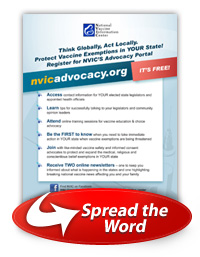
With all the uncertainty surrounding the safety and efficacy of vaccines, it's critical to protect your right to informed consent and to abstain from vaccinating by exercising vaccine exemptions in state public health laws. The best way to do this is to get personally involved with your state legislators and the leaders in your community.
Add Internet Marketing Business Opportunities
BE EMPOWERED NOW!


