Showing posts with label Singaporean. Show all posts

Sunday, March 3, 2013

Who Is Singapore Punggol East Member of Parliament Ms Lee Li Lian

The N is not the end
Susan Long | The Straits Times | Sun Mar 3 2013
The N is not the end

SINGAPORE - New Workers' Party (WP) MP Lee Li Lian sees her life's meaning in toppling stereotypes.

She hopes to eradicate "stigma" in many forms. She yearns to illustrate that N-level students can make it, that joining the opposition is no longer a career-killer, and that a woman of reproductive age is not a workplace liability but, given support, can juggle it all.

Well, the 34-year-old certainly proved, in the recent Punggol East by-election, that gender, youth and less lustrous credentials are no impediments to clinching a single-seat ward.

The Jan 26,2013, polls saw her trouncing the People's Action Party's candidate, colorectal surgeon Koh Poh Koon (43.7 per cent), Reform Party's Mr Kenneth Jeyaretnam (1.2 per cent) and Singapore Democratic Alliance's Mr Desmond Lim (0.57 per cent), and sailing into Parliament with 54.5 per cent of valid votes.

She hopes people's takeaway from Punggol East 2013 is the "power of unity".

"Together, everyone can achieve more. I hope the takeaway for Singaporeans is the power of their votes, that they do have a say in the future and direction of their country," says the financial institution trainer in her first one-on-one interview unchaperoned by party bigwigs. Her answers are artless, served straight-up with folksy charm and toothy grins.

Does she see this as the beginning of more "non-elite" candidates stepping up?

After all, Prime Minister Lee Hsien Loong has said that the ruling party needs to field more personable candidates who can connect with the ground to reclaim ground lost to the opposition.

More candidates from different backgrounds who represent a broader swathe of Singaporean concerns can only be "a good thing", she says. Then adds: "I think Singaporeans also realise that there's no perfect and ideal candidate who fits everything. What matters most, in my opinion, is to have someone with the heart to serve and the ability to relate to Singaporeans."

A month into her new role, the newly trim MP, who lost some 4kg on the campaign trail, is busy building up her grassroots team and getting to know residents. Most evenings, she is in Punggol East attending wakes, holding Meet-the-People Sessions, briefing volunteers.

Her Punggol East Town Council is currently being merged with the Aljunied-Hougang Town Council, which will have seven wards under its ambit.

After being sworn in as MP, she championed in her maiden speech in Parliament better work-life balance in the Population White Paper debate.

She is now perusing the Budget to prepare for next week's debate on it.

She now sleeps five hours a night, juggling "immediate and long-term priorities", acutely aware she has only half a term left to prove herself. She's set herself the target of knocking on every door in her 31,649-voter-strong constituency by the next general election, due in 2016.

"I just need to get everything done faster," concludes the MP who famously announced the venue and timing of her first Meet-the-People-Session on victory night.

She is still on annual leave from her company but may quit to become a full-time MP.

She says her plans to have a baby with her husband of three years, telecommunications consultant Jacky Koh, 36, are continuing apace.

They were derailed earlier by the 2011 GE, where she was fielded in Punggol East and held her own against PAP's Michael Palmer and SDA's Desmond Lim, garnering 41 per cent of the votes.

Mr Palmer became the Speaker of Parliament before he quit in December over an extramarital affair.

Meanwhile, Ms Lee was made legislative assistant to Aljunied GRC MP Pritam Singh, and helped him with Meet-the-People Sessions and volunteer recruitment.

She has had plenty of time to think about the kind of Singapore she wants her children - she hopes to have two - to grow up in. Having come from the Normal (Academic) stream, where students are told they "can't do well in life", she wants her progeny to walk tall and enjoy "equal opportunities" in education and work.

"I hope for a Singapore they are proud of, which takes care of its elderly and disadvantaged. Such that when they go overseas, they will tell people: 'In my country, elderly folks above 80 get free public transport'," she says, revisiting a theme she pushed passionately on the stump.

Elbow grease years

If there is one thing she yearns to implement, it is flexi-work arrangements that help more housewives return to work.

For years, she watched her father slog long hours doing piling work as the family's sole breadwinner.

Her mother quit as a garment factory worker shortly after she was born in 1978.

Every month, pay day was accompanied by budgeting in hushed tones in their spartan three-room Lorong Lew Lian flat.

From a young age, she assumed a "da jie" (big sister) caretaker role.

At age six, her mother found her trying to change the cloth nappies of a younger cousin.

She slept atop a double-decker bed shared with her two younger sisters, whose homework and whereabouts she supervised.

She even attended the youngest one's parent-teacher meetings as her mother spoke little English.

At home, they nattered in Mandarin, Cantonese and Hokkien.

She picked up English from her largely Nepalese classmates at the now-defunct Elling Primary, located next to a Gurkha camp in Bartley Road. By nine, she was taking the public bus to school herself.

At 12, she was one of a few unaccompanied pupils who collected their PSLE results on their own. She rated herself "slightly above average" and was devastated to be posted to the Normal (Academic) stream in secondary school.

Her first thought was for her parents - that it would "make them lose face".

Plus, studying one more year would be a further financial "burden" on them.

Sobbing into the public phone, she called home and blurted out her news. Her mother fell silent for a moment, then reassured her it was fine as she had done her best.

"It made me feel even worse. I cried even louder," she recalls.

She entered Holy Innocents High in the last class, determined not to "feel inferior in any way" and disciplined to do better.

There, she met uplifting teachers, one of whom enlisted her and other students to decorate the chapel for her wedding day.

Ms Lee, who had taken community centre art classes since she was four, was roped in to illustrate the guest book, which the teacher later framed and hung on her wall. "It meant a lot to us that she asked us to help in the most important event in her life," she remembers.

Determined to improve her O-level English, she handed in a composition every other day to her teacher for marking.

In return, she helped the teacher, who lived near her, carry her books home. She also organised a group of N-level students to take private tuition in Additional Mathematics and sit it at the O levels to "improve our prospects".

Eventually, she did well enough to study business administration at Ngee Ann Polytechnic.

To finance that, she dabbled in all kinds of part-time work from age 15 to help out with family expenses.


She had little time for extra- curricular activities, joining only the Art Club and Audio-Visual Club so she could help her father install electronic items at home.

For years, she was a shoe salesgirl on a "permanent part-time" contract, working four hours a day, then a hospital receptionist and assistant nurse.

She witnessed many things, including Singaporeans who anguished over paying medical bills.

She went on to complete a distance-learning degree in marketing with Australia's Curtin University of Technology, largely paying her own way, except for her fees which her parents helped out with.

At 23, she graduated, while holding her first full-time job selling commercial laundry equipment. She discovered her strength was in selling, building rapport with people, hosting corporate events and giving presentations.

Two years later, she met her "introverted" husband at a sales seminar.

They went out for seven years before tying the knot in 2010. He took her, then a first-time voter, to her first WP rally during GE 2006.

She says she was wowed by the hordes who came despite having to wipe mud off their footwear later.
They both volunteered to be polling agents at Aljunied GRC, and she joined WP as a member shortly after "to give back to society because there are others who didn't get the opportunities I was lucky enough to get".

"I also wanted to get rid of the stigma that by associating with opposition, you cannot get your flat, your children will be disadvantaged, your career will be over," says the Upper Serangoon condominium dweller.

Two months later, in August 2006, she became the WP Youth Wing organising secretary.

In 2008, she was elected to its central executive committee and appointed deputy treasurer. WP chairman Sylvia Lim observes:

"What strikes me most about her is her 'can-do' attitude, deep commitment to own any task she is assigned and her unbridled sense of living life to the fullest."

There was zero objection from her parents and sisters (one is an auditor, the other a bank compliance officer) - "they knew I would be responsible" - who help out with her grassroots events.

There were no repercussions on the job front either. She has worked in financial advisory, brokerage, recruitment and training with top companies here.

In 2008, she told her prospective employer, Great Eastern Life Assurance, that she was a WP committee member. They made her an offer the very next week.

She never missed a promotion. When she ran as a candidate in GE 2011, her "very supportive" bosses and colleagues helpfully covered her duties.

She now lives by this simple dictum, which governs all her interactions:
 "People don't care how much you know until they know how much you care."

"I'm not someone very ambitious," she adds, half-apologetically.

"I want to be remembered as a filial daughter to my parents, a supportive partner to my husband and a loving mother to my children. Last but not least, a friend people can count on." Lee Li Lian, Member of Parliament for Punggol East .


Saturday, November 24, 2012

We Remember Ong Teng Cheong (1936 - 2002)

In 1992, Mr Ong Teng Cheong who was then Deputy Prime Minister, was diagnosed with lymphoma, cancer of the lymphatic system.

Republic of Singapore Very First  Former Elected President Ong Teng Cheong died at 8.14 pm local time, Friday, 8 February 2002.
 
He was 66 years old.

Member of Parliament, Labour Chief, Deputy Prime Minister, Elected President.

A man whose first loyalty was to the people of Singapore.

Mr Ong Teng Cheong is remembered as a gentleman, one with a passion for the arts, and an even greater passion for the people's welfare.

It was this sense of service that first brought him (*age 36) into politics as MP for Kim Keat in 1972.

While many Singaporeans may recall his contributions to the union movement, Mr Ong was also the man behind the Mass Rapid Transit system which many take for granted today.

Appointed Communications Minister in 1978, he had pushed for its construction.


"This is like a 20-year affair from conception 
to delivery. 
Now that the baby is born, to say 
that I am happy and
pleased is an understatement!"
Ong Teng Cheong
Ong Teng Cheong
In 1992, Mr Ong who was then Deputy Prime Minister, was diagnosed with lymphoma, cancer of the lymphatic system. 

But this did not keep him down. 

"I intend to live every minute 
of it as fully as I can,
and press on with the work.
There are so many
 things to be done!"
Ong Teng Cheong 


"I intend to live every minute 
of it as fully as I can,
and press on with the work.
There are so many
 things to be done!"
Ong Teng Cheong 
Ong Teng Cheong
Senior Minister Lee Kuan Yew once said Mr Ong "had shown a special knack, the ability to get on with ordinary people, and empathise with them."

This special quality helped Mr Ong become Singapore's first Elected President."Some people still ask whether my long previous association with the PAP will stop me from acting independently. The answer is "no". My loyalty is first and foremost to the people of Singapore. It has always been so and it will always remain so."
Ong Teng Cheong


"Some people still ask whether my long previous association with the PAP will stop me from acting independently. The answer is "no". My loyalty is first and foremost to the people of Singapore. It has always been so and it will always remain so." 
Ong Teng Cheong

And he displayed this conviction a year after becoming President.

This was when he made public his disagreement with the PAP government's interpretation of the Constitution on the powers of his office.

He then asked for the matter to be referred to a special High Court Tribunal, chaired by the Chief Justice.

When the Tribunal ruled in favour of the PAP government, President Ong graciously accepted the decision.

Mr Ong also left his mark on the Singapore arts scene.

As Acting Minister for Culture in the late 1970s he was determined to transform Singapore from a perceived cultural desert to a city of the arts.

This led to the first Singapore Festival of the Arts, now an established event.

An accomplished musician himself, Mr Ong also lent a hand to various welfare causes.
In 1993, he launched the President's Star Charity, an event that has raised millions of dollars for local charities annually.

Six weeks before his term was up in 1999, President Ong announced that although his health was fine, he would not seek re-election.
"I find no compelling reasons to do so.
 Six years is a long time.
 I've achieved what I've set out achieve 
when I took office 6 years ago." 

Ong Teng Cheong
"I find no compelling reasons to do so. Six years is a long time.
 I've achieved what I've set out achieve when I took office 
6 years ago." 
Ong Teng Cheong
In a tribute to him, Prime Minister Goh Chok Tong spoke of Mr Ong's contributions as Singapore's first Elected President. 

He commented, "Singaporeans now know better how our system of a President with custodial powers works, and how decisions and actions have to be publicly justified whenever questioned. Mr President, you have discharged your responsibilities well and fully. You have upheld the standing and prestige of the Presidency. We and our fellow Singaporeans will long remember your many contributions to our nation and society."


"I hope I have not disappointed the people
of Singapore who elected me to this office.
 I have enjoyed their concern and support
 for the past six years, and I want to thank
 them." Ong Teng Cheong


"I hope I have not disappointed the people of Singapore 
who elected me to this office. I have enjoyed their
 concern and support for the past six years, and I 
want to thank them."
Ong Teng Cheong

Ong Teng Cheong (Chinese: 王鼎昌; pinyin: Wáng Dǐngchāng; Pe̍h-ōe-jī: Ông Tíng-chhiong; 22 January 1936 - 8 February 2002) was the first directly elected President of the Republic of Singapore. He was the nation's fifth President, and served a six-year term from 1 September 1993 to 31 August 1999.

Global Empower Network Bloggers and Netizens reading about The Legacy of Ong Teng Cheong

http://theinnozablog.blogspot.sg/2012/05/lymphoma-cancer.html


All the Presidents of Singapore to date have been men. Nonetheless, in a 2008 poll of 1,256 Singaporeans conducted by MyMailMoment.com, a lifestyle research portal run by SingTel, 63% of women respondents and 58% of male respondents said they would vote for a female president. Those aged 50 and older were the most receptive to the idea.
1.Yusof bin Ishak
2.Benjamin Henry Sheares
3.Devan Nair Chengara Veetil, also known as C. V. Devan Nair
4.Wee Kim Wee  黄金辉 
5.Ong Teng Cheong  王鼎昌
6.Sellapan Ramanathan செல்லப்பன் ராமநாதன், Cellappaṉ Rāmanātaṉ 
7.Dr.Tony Tan Keng Yam 陈庆炎 
 
http://theinnozablog.blogspot.sg/2008/09/price-versus-value.html

Thursday, June 7, 2012

Barefoot Dr Tan Lai Yong Inspiring Humankind

This post, we bring to you a local doctor who spent the last 15 years helping villagers in China.
At 50, doctor Tan Lai Yong counts himself fortunate that neither he nor his wife feel the pressing need to do “something significant” with the rest of their lives.
But that’s because they have already led a “full life”, having spent the last 15 years in rural China, where Tan ran a village doctors training programme and worked with disabled people.
In 1996, Tan, his wife and one-year-old daughter moved to Xishuangbanna, a small Thai-speaking town in the southern tip of Yunnan. There, he spent four years training doctors and working with the disabled before relocating to Kunming, the capital of Yunnan.
Tan then joined the Kunming Medical University and trained village doctors and hospital doctors.  He also led medical work with non-governmental organisation Bless China International, which is based in Yunnan.
“The past 15 years have been a sweet dream,” described Tan, who studied medicine in Singapore before making the leap to work in a developing country. 
Tan’s experiences have been featured in several publications. Most recently, he was interviewed for the Singapore Medical Association’s (SMA) magazine and conferred the SMA lectureship, which is awarded to distinguished people who have made significant contributions to medicine and the community.

his briefing to students, Tan tries to get them to understand and empathise with the villagers.

The doctor, who moved his family back to Singapore in 2010, is now studying full-time at the National University of Singapore Lee Kuan Yew School of Public Policy. He’s on a scholarship to do a master’s degree in Public Administration.Tan continues his outreach to the less fortunate by volunteering at local voluntary welfare organisation HealthServe, which provides help to migrants, and the disadvantaged and poor in the local community.
He also gives talks to other Singapore groups who plan to go to China to help villagers. Recently, he coordinated among 10 volunteer groups to take turns to help build a school in Longling County in the Yunnan province over two years. 
Tan acknowledged that some people may argue: Should teams be doing this, spending all this money to go overseas? Is this a kind of charity tourism?
“It is, but since they’re already doing it, it’s not my job to fight the tide and say ‘Don’t go, we are wasting people’s money,” he said. “(My job is) to say, “Since we’re doing this, let’s do this best practice, do it safely, sensitively, do it sweetly.” 
Inspiring the younger generation
When Yahoo! Singapore met with the doctor, he was at Temasek Junior College (TJC) briefing students who were going to Yunnan and Cambodia as part of the school’s overseas outreach programme.
“I love interacting with students, teaching. I would like to go into teaching of some sort (in the future),” he said. 
The TJC alumni bantered with them, shot questions at each student and prepared them for what to expect. Importantly, he provided these students with a deeper understanding of villagers they may encounter.
For instance, it’s a common saying that villagers may be poor but they are happy. That’s not necessarily true – they may be friendly and full of smiles but it doesn’t mean they are happy, he told them.
Tan has been helping TJC with its overseas community projects for the last few years.
And there will be challenges as a volunteer.
Sharing the difficulties he encountered, Tan said his Mandarin used to be so bad he even wrote his Chinese name wrongly when he was in JC. He had to get a tutor when he went to China.
As a newcomer to the community, there were times he felt “useless” because he was not part of the “information flow” and villagers also questioned his “agenda”.
They would ask, “What’s in it for you?” he said, sharing the frustration in such a situation.
And even after he managed to win over their trust, getting them to make the changes he recommended was another hurdle because they were used to the old ways of doing things. 
There are times too when a volunteer may feel moved to help someone but for practical reasons, such as budgetary constraints, it is not possible, he added.
What matters is helping in a way that is sustainable, like planting trees, he said.
“You can really tell that he believes in what he is doing,” observed 17-year-old Sarah Tan, who met Tan for the first time at the briefing.
“He’s very engaging. He knows how to connect,” she added, glad to have gleaned greater insight on the Yunnan villagers.

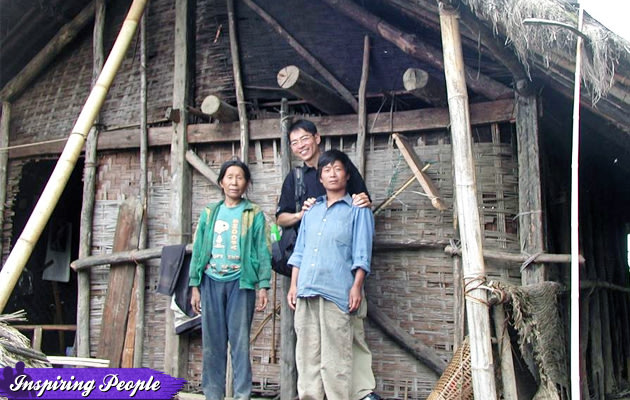
Tan hiking with his daughter along irrigated fields in Yunnnan. (Photo courtesy of Tan Lai Yong)

It’s apparent that Tan still has a heart for the villagers, so why did he leave China?The health conditions were changing, he told Yahoo! Singapore later.

There was growing concern over lifestyle diseases (Tan focused on infectious disease) and there was a need for stronger protocols, technical language, all of which were not his strong suits. 


In addition, he felt it was time for him to step down as team leader after one incident two years before he left.


Tan explained that his team had been debating if they should head over to “town A” or “town B” and when Tan suggested the team visit the former because he knew the mayor would back them, the team agreed.
It was a signal for Tan to step down.  
“On the basis of my connection, on the basis of my words, it swayed the decision. And I felt this was really unhealthy for the team. … If my words supercede due diligence, supercede the basic facts, sooner or later we will get into trouble,” he shared.

Tan's wife and children in their younger days. (Photo courtesy of Tan Lai Yong)
 And there was one more reason for Tan to pack his bags and head home. He wanted his children – a 13-year-old boy and 17-year-old girl – to get the chance to develop lifelong friendships in their home country, he said.
“It’s the parents’ job to invest in their children’s friendship,” believes Tan.