Everyone who self-heals with PaidaLajin inevitably experiences some healing reactions, including the most common sensations of pain, soreness and swelling. These reactions are good signs of recovery. The general law is: The stronger the healing reactions are, the more accurate the diagnosis is, and the better the self-healing effects are.
Normally, diseases and their symptoms will temporarily worsen during PaidaLajin sessions, for instance, hypertensive patients may have higher blood pressure, diabetics may have higher blood glucose, patients with various pains may feel greater pain, etc. The more diseases you have, the more healing reactions you could experience during Paidalajin sessions. These are all good signs. There is no need to panic. Instead, you should feel lucky and be grateful. Your body is responding and detoxifying itself.
The healing reactions that each of us experiences is different, due to age, physical condition, lifestyle background and other factors. Even for people with the same disease signs and symptoms, they could have different healing reactions. This is because all diseases are complex ones, and behind a disease with a particular name are more known and unknown diseases. As a result, the healing reactions that different people experience are not comparable.
Whatever healing reactions a person has, the top priority is to protect the heart, for according to Chinese medicine, Heart is the King in charge of everything pertaining to our well-being. The first measure for dealing with most healing reactions is to slap on the inner elbows and Neiguan acupoint, for the Heart, Pericardium and Lung Meridians run through these areas and important acupoints along these meridians are located there.
Neiguan Point↓

Pericadium Meridian ↓

Lung Meridian ↓

(1) Common healing reactions include pain, chills, cramps, hunger, fatigue, nausea, vomiting, dizziness, insomnia, itchiness, etc. And the most severe ones are dizziness and coma. When these symptoms appear, slap on the inner elbows and Neiguan acupoint. In severe cases, slap heavily. If the symptoms are not yet relieved, slap all along the inner side of each arm. When someone is in a coma, two people can simultaneously slap on the patient’s inner elbows and Neiguan acupoint on both arms.
(2) Cramps: Slap on the inner elbows, the back of feet, at and around the affected areas.
(3) Stomach ache, tummy ache and nausea: Slap on Zusanli acupoint, inner elbows, Neiguan acupoint, and the back of hands.

(4) Headache: Slap on the affected area and the entire head, the back of hands, inner elbows and Neiguan acupoint.
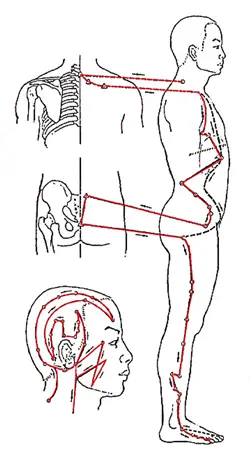
(5) Gall bladder pain: Slap along the Gall Bladder Meridian on the outer side of each leg, inner elbows and Neiguan acupoint.
Acupressure - The Gallbladder meridian - rigid thought patterns, inability to decide, hormonal imbalances.... and lateral side of the head in addition to mental illness and fever. They are also recommended for symptoms along the meridian's pathway.

Gall-bladder-meridian-route ⇳
(6) Itchiness: Slap on the affected areas, inner side of each knee, inner elbows and Neiguan acupoint.
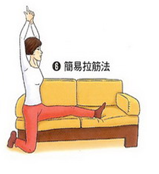
These Paida measures produce better effect when the patient also stretches on a Lajin bench.
When you experience healing reactions during PaidaLajin practice, it is best to eat less or go fasting. This way, most of the self-healing energy activated by PaidaLajin can be used to burn wastes and toxins in the body and turn them into treasure, producing energy that the body needs. Otherwise, the energy will be used to digest the food. The result can be more loss than gain.
When you experience healing reactions, and feel weak and fatigued, you can drink some ginger and jujube tea (cut ginger into slices, add over a dozen red jujubes and boil them in water for 20-30 minutes. Add some brown sugar when the tea is ready) to nourish Qi (chi) and blood. Please remember, drink it when it is warm. Warm is yang energy.
Mr. Hongchi Xiao’s Comment:
You see, this article helps to explain why PaidaLajin is so effective. Isn’t it a sign of hope for Chinese medicine? If you practice PaidaLajin diligently, you are bound to experience healing crises, i.e. healing reactions. Why did the late TCM master Li Ke support the promotion of PaidaLajin? Mostly because of the healing crises and self-healing effects. When Dr. Li Ke himself used medicine to treat patients, they would soon feel healing crises.
During one of my seminars in Switzerland, I met with a number of Swiss TCM doctors who used medicinal herbs to boost Yang energy in patients. They loved PaidaLajin. And I told them, “Both Paida and Lajin help boost Yang energy. The only difference is, we are not using ginger, cassia twig or monkshood (medicinal herbs hot in nature), but the ‘medicine’ produced in the human body.”
What is the core function of PaidaLajin? To boost Yang energy.
I. Generally, a healing reaction goes through the following three stages:
(1) Looking for (potential) illnesses
When Qi flow is hindered by greater resistance from blockages in the body and cannot go through a problem area, it will find an alternative route to go around it. Such a process will repeatedly kick in when Qi encounters other blockages at the alternative routes. These continuous attempts can help remove minor problems, while revealing more severe ones which the body has yet to gather enough energy to expel.
(2) Revealing illnesses
Most of the meridian blockages will have been cleared in the first stage. The energy level is enhanced through persistent practice. The stronger energy will focus on the identified blockages and charge at them with a greater force. As a result, various symptoms will worsen, followed by revelation of all sorts of illnesses.
This is the stage when the body is fighting against illnesses and experiencing agonies, and it is also the most critical one. During this process, there will be obvious “discomforts”, and the symptoms will aggravate. If you were to do a medical check-up then, the test results would most likely indicate a temporary state of abnormalities. That is why this stage is always dubbed as the “dà sǐ dà huó” (大死大活, death and revival) stage—indeed, to some extent, this is the darkness before dawn breaks. Unfortunately, many fail to understand this healing cycle and stop their practice half way through. Without going through this dire state of suffering, it is impossible to embrace new lease of life, let alone the effects of “body overhaul” and “rejuvenation”.
(3) Fighting off illnesses
After Qi’s repeated attempts to go through the problem areas, the body’s energy is continually boosted with continuous practice. Under the constant pressure of stronger Qi flow, the problems (i.e. major areas of Qi and blood stagnation) will gradually recede and eventually disappear. And you will feel the symptoms subsiding and eventually going away.
II . Three types of illnesses discovered and cured during healing reactions
The process of looking for and revealing illnesses does not go according to a person’s will or perception. The Qi flow follows a law of its own. It reveals both known and unknown illnesses. This may cause confusion and even anxiety in those who do not understand how it works. Some people may even think that their practice has gone wrong—the existing illnesses are still there, and more “new” diseases are produced through the practice. In actual fact, these are natural, desired effects of the practice. And you cannot just resolve the existing problems, but need to have the body go through a thorough, comprehensive healing process. Only then can such a process be considered complete overhaul of the body.
This process targets the following three types of illnesses:
(1) Past injuries and illnesses
This type refers to past injuries and illnesses, some of which may have been cured years ago. However, during the healing process, relevant tissues underwent certain changes (tissue adhesion, scars, etc.), and there existed meridian blockages. When Qi is trying to go through these blockages, the person feels pain, soreness, swelling and other sensations. It appears to be the “relapse” of past injuries and illnesses, but they are uncovered for thorough healing.
(2) Existing illnesses
This type refers to existing illnesses that you are aware of. When Qi hits right at the problem areas, you may suffer more severe symptoms.
(3) Future illnesses
Future illnesses fall into three sub-categories:
a. Existing illnesses that you are unaware of and are left undetected due to lack of obvious symptoms;
b. Illnesses that do not manifest symptoms at the early stage (e.g. deficiency of Kidney energy, stagnation of Liver energy, excess of Heart fire, etc.);
c. Latent illnesses that could break out in future.
Despite the fact that we might be unaware of these problems in the body or that they even cannot be detected in medical check-ups, you will be able to feel their presence when healing reactions occur.
To conclude, persistence is essential for those who want to self-heal through the practice. Experiencing healing reactions is an important and necessary step towards recovery. Only when you go through this stage, can you get healed from all past, existing, and latent health problems and be more assured of future health.
Healing crisis: A sign of recovery from a major illness
This is an excerpt from an article by Mr. Liu Xiyan, a researcher of Traditional Chinese Medicine (TCM). To have a grave, chronic illness cured, the patient could feel worse symptoms and other discomforts after taking Chinese medicine, i.e. he/she will experience healing crises before full recovery.
If you are very sick or have been sick for long, and have never experienced a healing crisis after taking much Chinese medicine, then most likely your illness will not be cured, for you are not treated by a genuine TCM doctor; if you are a TCM doctor and have given countless prescriptions to your patients, but none of them have felt any healing reactions, then you will most likely think that Chinese medicine indeed works slowly, for you are not a genuine TCM doctor.
The concept of healing crisis first appeared in ancient Chinese classic Shangshu over two millennia ago. In the section On Life, it says, “A grave, chronic illness will not be cured if no healing crisis is felt after medication.” Later Chinese texts explained that healing crises refer to discomforts felt during treatment.
In his book Shang Han Lun (also known as Discussion of Cold-Induced Disorders), Zhang Zhongjing, revered as Sage of Chinese Medicine, included several entries on healing crisis.
For instance:
“After medication, the symptoms will be slightly relieved, and the patient will feel dizzy and restless. In severe cases, the nose will bleed. After nose-bleeding, the illness will be cured.”
“After taking three prescriptions of Chinese medicine, the patient will feel dizzy and listless. Do not panic. White atractylodes rhizome and monkshood (Chinese medicinal herbs) are taking effect beneath the skin and haven’t fully driven out dampness.”
“After taking Chai Hu Tang (a Chinese medicinal soup with Radix Bupleuri as the main ingredient), the patient will tremble and then have warm sweats. After that comes recovery.”
Dr. Hu Xishu (1898-1984, a renowned TCM doctor in contemporary China) repeatedly stressed that a patient could easily experience healing crises after taking Chai Hu Tang. Specifically, the patient could shiver with chills and then sweat a lot.
Dr. Hu said, “If a patient is not weak, there won’t be healing reactions. And after these reactions, the disease will soon be cured.”
Dr. Hu cautioned doctors and patients to be aware of this healing cycle. He himself had been woken up at midnight because of a patient’s healing crisis. The diarrhea patient was a child, and after drinking Dr. Hu’s prescribed medicine, the diarrhea became even worse. His family members knocked on Dr. Hu’s door at midnight, insisting that he should go and see the child. When Dr. Hu arrived there, the child’s condition was already much improved.
Then Dr. Hu said, “Give the child the medicinal soup again.”
Initially, the child’s mother was afraid to do so. But after drinking the soup, the child got fully recovered the next day.
In case of healing crises, the doctor needs to stand firm and should not easily change the prescription. And the doctor needs to explain it clearly to the patient; otherwise, if the patient is scared at the healing reactions and go for emergency treatment, all the efforts will be wasted.
Healing crises are detox reactions or recovery responses during disease treatment. When the medicine is fighting off a disease, positive and negative energies in the body are engaged in the fight. Various discomforts can appear. When the positive energy is winning the battle, the negative energy will gradually recede. For patients with a grave, chronic illness, it is very likely for them to experience healing crises, which are signs of improvement leading to recovery.
Healing crises can last for a while or several days. Some healing reactions are mild, and some are very severe. The forms and severity of healing crises vary from person to person. The sicker and weaker a patient is, and the longer the disease has been, the more likely the patient is to experience strong healing reactions after taking the right medicine.
In my clinical practice, I have encountered such healing crises as rashes, sweating, dizziness, drowsiness, diarrhea, dry mouth, stomach ache, stomach bloating, etc. Sometimes, soon after a patient with stomach ache takes Da Chai Hu Tang or Danggui Shaoyao San (whose main ingredients are Angelica sinensis and Chinese herbaceous peony), the stomach can hurt more. Other patients could cough harder after taking medicine, but will feel better afterwards. It is another healing crisis.
Antibiotics are mostly cold in nature. When they enter a patient’s body along with much fluid (water itself is cold in nature), it could make the patient even colder. People who have had infusions should know it from their personal experience: Whether fever, coughing or inflammation of the tonsils, you will feel much better when you have infusion. But after a few days’ treatment, your body can be too weak and cold. Genuine TCM doctors treat such diseases by resuming the Yang energy in the patient’s body. This is the only way to change the very nature of the cold-induced diseases.
I believe that the real hope for Chinese medicine does not depend on more and more drugs or prescriptions. These have never been lacking in the history of Chinese medicine. Nor does it rely on more and more TCM doctors and clinics. In a sense, the real sign of hope for Chinese medicine is this: More and more patients experience healing crises after taking Chinese medicine; and more and more TCM doctors have patients who feel healing reactions.
Normally, diseases and their symptoms will temporarily worsen during PaidaLajin sessions, for instance, hypertensive patients may have higher blood pressure, diabetics may have higher blood glucose, patients with various pains may feel greater pain, etc. The more diseases you have, the more healing reactions you could experience during Paidalajin sessions. These are all good signs. There is no need to panic. Instead, you should feel lucky and be grateful. Your body is responding and detoxifying itself.
The healing reactions that each of us experiences is different, due to age, physical condition, lifestyle background and other factors. Even for people with the same disease signs and symptoms, they could have different healing reactions. This is because all diseases are complex ones, and behind a disease with a particular name are more known and unknown diseases. As a result, the healing reactions that different people experience are not comparable.
Whatever healing reactions a person has, the top priority is to protect the heart, for according to Chinese medicine, Heart is the King in charge of everything pertaining to our well-being. The first measure for dealing with most healing reactions is to slap on the inner elbows and Neiguan acupoint, for the Heart, Pericardium and Lung Meridians run through these areas and important acupoints along these meridians are located there.
Neiguan Point↓
Pericadium Meridian ↓
Lung Meridian ↓
(1) Common healing reactions include pain, chills, cramps, hunger, fatigue, nausea, vomiting, dizziness, insomnia, itchiness, etc. And the most severe ones are dizziness and coma. When these symptoms appear, slap on the inner elbows and Neiguan acupoint. In severe cases, slap heavily. If the symptoms are not yet relieved, slap all along the inner side of each arm. When someone is in a coma, two people can simultaneously slap on the patient’s inner elbows and Neiguan acupoint on both arms.
(2) Cramps: Slap on the inner elbows, the back of feet, at and around the affected areas.
(3) Stomach ache, tummy ache and nausea: Slap on Zusanli acupoint, inner elbows, Neiguan acupoint, and the back of hands.
(4) Headache: Slap on the affected area and the entire head, the back of hands, inner elbows and Neiguan acupoint.
(5) Gall bladder pain: Slap along the Gall Bladder Meridian on the outer side of each leg, inner elbows and Neiguan acupoint.
Acupressure - The Gallbladder meridian - rigid thought patterns, inability to decide, hormonal imbalances.... and lateral side of the head in addition to mental illness and fever. They are also recommended for symptoms along the meridian's pathway.
Gall-bladder-meridian-route ⇳
(6) Itchiness: Slap on the affected areas, inner side of each knee, inner elbows and Neiguan acupoint.
These Paida measures produce better effect when the patient also stretches on a Lajin bench.
When you experience healing reactions during PaidaLajin practice, it is best to eat less or go fasting. This way, most of the self-healing energy activated by PaidaLajin can be used to burn wastes and toxins in the body and turn them into treasure, producing energy that the body needs. Otherwise, the energy will be used to digest the food. The result can be more loss than gain.
When you experience healing reactions, and feel weak and fatigued, you can drink some ginger and jujube tea (cut ginger into slices, add over a dozen red jujubes and boil them in water for 20-30 minutes. Add some brown sugar when the tea is ready) to nourish Qi (chi) and blood. Please remember, drink it when it is warm. Warm is yang energy.
Mr. Hongchi Xiao’s Comment:
You see, this article helps to explain why PaidaLajin is so effective. Isn’t it a sign of hope for Chinese medicine? If you practice PaidaLajin diligently, you are bound to experience healing crises, i.e. healing reactions. Why did the late TCM master Li Ke support the promotion of PaidaLajin? Mostly because of the healing crises and self-healing effects. When Dr. Li Ke himself used medicine to treat patients, they would soon feel healing crises.
During one of my seminars in Switzerland, I met with a number of Swiss TCM doctors who used medicinal herbs to boost Yang energy in patients. They loved PaidaLajin. And I told them, “Both Paida and Lajin help boost Yang energy. The only difference is, we are not using ginger, cassia twig or monkshood (medicinal herbs hot in nature), but the ‘medicine’ produced in the human body.”
What is the core function of PaidaLajin? To boost Yang energy.
I. Generally, a healing reaction goes through the following three stages:
(1) Looking for (potential) illnesses
When Qi flow is hindered by greater resistance from blockages in the body and cannot go through a problem area, it will find an alternative route to go around it. Such a process will repeatedly kick in when Qi encounters other blockages at the alternative routes. These continuous attempts can help remove minor problems, while revealing more severe ones which the body has yet to gather enough energy to expel.
(2) Revealing illnesses
Most of the meridian blockages will have been cleared in the first stage. The energy level is enhanced through persistent practice. The stronger energy will focus on the identified blockages and charge at them with a greater force. As a result, various symptoms will worsen, followed by revelation of all sorts of illnesses.
This is the stage when the body is fighting against illnesses and experiencing agonies, and it is also the most critical one. During this process, there will be obvious “discomforts”, and the symptoms will aggravate. If you were to do a medical check-up then, the test results would most likely indicate a temporary state of abnormalities. That is why this stage is always dubbed as the “dà sǐ dà huó” (大死大活, death and revival) stage—indeed, to some extent, this is the darkness before dawn breaks. Unfortunately, many fail to understand this healing cycle and stop their practice half way through. Without going through this dire state of suffering, it is impossible to embrace new lease of life, let alone the effects of “body overhaul” and “rejuvenation”.
(3) Fighting off illnesses
After Qi’s repeated attempts to go through the problem areas, the body’s energy is continually boosted with continuous practice. Under the constant pressure of stronger Qi flow, the problems (i.e. major areas of Qi and blood stagnation) will gradually recede and eventually disappear. And you will feel the symptoms subsiding and eventually going away.
II . Three types of illnesses discovered and cured during healing reactions
The process of looking for and revealing illnesses does not go according to a person’s will or perception. The Qi flow follows a law of its own. It reveals both known and unknown illnesses. This may cause confusion and even anxiety in those who do not understand how it works. Some people may even think that their practice has gone wrong—the existing illnesses are still there, and more “new” diseases are produced through the practice. In actual fact, these are natural, desired effects of the practice. And you cannot just resolve the existing problems, but need to have the body go through a thorough, comprehensive healing process. Only then can such a process be considered complete overhaul of the body.
This process targets the following three types of illnesses:
(1) Past injuries and illnesses
This type refers to past injuries and illnesses, some of which may have been cured years ago. However, during the healing process, relevant tissues underwent certain changes (tissue adhesion, scars, etc.), and there existed meridian blockages. When Qi is trying to go through these blockages, the person feels pain, soreness, swelling and other sensations. It appears to be the “relapse” of past injuries and illnesses, but they are uncovered for thorough healing.
(2) Existing illnesses
This type refers to existing illnesses that you are aware of. When Qi hits right at the problem areas, you may suffer more severe symptoms.
(3) Future illnesses
Future illnesses fall into three sub-categories:
a. Existing illnesses that you are unaware of and are left undetected due to lack of obvious symptoms;
b. Illnesses that do not manifest symptoms at the early stage (e.g. deficiency of Kidney energy, stagnation of Liver energy, excess of Heart fire, etc.);
c. Latent illnesses that could break out in future.
Despite the fact that we might be unaware of these problems in the body or that they even cannot be detected in medical check-ups, you will be able to feel their presence when healing reactions occur.
To conclude, persistence is essential for those who want to self-heal through the practice. Experiencing healing reactions is an important and necessary step towards recovery. Only when you go through this stage, can you get healed from all past, existing, and latent health problems and be more assured of future health.
Healing crisis: A sign of recovery from a major illness
This is an excerpt from an article by Mr. Liu Xiyan, a researcher of Traditional Chinese Medicine (TCM). To have a grave, chronic illness cured, the patient could feel worse symptoms and other discomforts after taking Chinese medicine, i.e. he/she will experience healing crises before full recovery.
If you are very sick or have been sick for long, and have never experienced a healing crisis after taking much Chinese medicine, then most likely your illness will not be cured, for you are not treated by a genuine TCM doctor; if you are a TCM doctor and have given countless prescriptions to your patients, but none of them have felt any healing reactions, then you will most likely think that Chinese medicine indeed works slowly, for you are not a genuine TCM doctor.
The concept of healing crisis first appeared in ancient Chinese classic Shangshu over two millennia ago. In the section On Life, it says, “A grave, chronic illness will not be cured if no healing crisis is felt after medication.” Later Chinese texts explained that healing crises refer to discomforts felt during treatment.
In his book Shang Han Lun (also known as Discussion of Cold-Induced Disorders), Zhang Zhongjing, revered as Sage of Chinese Medicine, included several entries on healing crisis.
For instance:
“After medication, the symptoms will be slightly relieved, and the patient will feel dizzy and restless. In severe cases, the nose will bleed. After nose-bleeding, the illness will be cured.”
“After taking three prescriptions of Chinese medicine, the patient will feel dizzy and listless. Do not panic. White atractylodes rhizome and monkshood (Chinese medicinal herbs) are taking effect beneath the skin and haven’t fully driven out dampness.”
“After taking Chai Hu Tang (a Chinese medicinal soup with Radix Bupleuri as the main ingredient), the patient will tremble and then have warm sweats. After that comes recovery.”
Dr. Hu Xishu (1898-1984, a renowned TCM doctor in contemporary China) repeatedly stressed that a patient could easily experience healing crises after taking Chai Hu Tang. Specifically, the patient could shiver with chills and then sweat a lot.
Dr. Hu said, “If a patient is not weak, there won’t be healing reactions. And after these reactions, the disease will soon be cured.”
Dr. Hu cautioned doctors and patients to be aware of this healing cycle. He himself had been woken up at midnight because of a patient’s healing crisis. The diarrhea patient was a child, and after drinking Dr. Hu’s prescribed medicine, the diarrhea became even worse. His family members knocked on Dr. Hu’s door at midnight, insisting that he should go and see the child. When Dr. Hu arrived there, the child’s condition was already much improved.
Then Dr. Hu said, “Give the child the medicinal soup again.”
Initially, the child’s mother was afraid to do so. But after drinking the soup, the child got fully recovered the next day.
In case of healing crises, the doctor needs to stand firm and should not easily change the prescription. And the doctor needs to explain it clearly to the patient; otherwise, if the patient is scared at the healing reactions and go for emergency treatment, all the efforts will be wasted.
Healing crises are detox reactions or recovery responses during disease treatment. When the medicine is fighting off a disease, positive and negative energies in the body are engaged in the fight. Various discomforts can appear. When the positive energy is winning the battle, the negative energy will gradually recede. For patients with a grave, chronic illness, it is very likely for them to experience healing crises, which are signs of improvement leading to recovery.
Healing crises can last for a while or several days. Some healing reactions are mild, and some are very severe. The forms and severity of healing crises vary from person to person. The sicker and weaker a patient is, and the longer the disease has been, the more likely the patient is to experience strong healing reactions after taking the right medicine.
In my clinical practice, I have encountered such healing crises as rashes, sweating, dizziness, drowsiness, diarrhea, dry mouth, stomach ache, stomach bloating, etc. Sometimes, soon after a patient with stomach ache takes Da Chai Hu Tang or Danggui Shaoyao San (whose main ingredients are Angelica sinensis and Chinese herbaceous peony), the stomach can hurt more. Other patients could cough harder after taking medicine, but will feel better afterwards. It is another healing crisis.
Antibiotics are mostly cold in nature. When they enter a patient’s body along with much fluid (water itself is cold in nature), it could make the patient even colder. People who have had infusions should know it from their personal experience: Whether fever, coughing or inflammation of the tonsils, you will feel much better when you have infusion. But after a few days’ treatment, your body can be too weak and cold. Genuine TCM doctors treat such diseases by resuming the Yang energy in the patient’s body. This is the only way to change the very nature of the cold-induced diseases.
I believe that the real hope for Chinese medicine does not depend on more and more drugs or prescriptions. These have never been lacking in the history of Chinese medicine. Nor does it rely on more and more TCM doctors and clinics. In a sense, the real sign of hope for Chinese medicine is this: More and more patients experience healing crises after taking Chinese medicine; and more and more TCM doctors have patients who feel healing reactions.