Vitamin G : The Lost Supplement ..63 (click to read)
GETTING IN SYNC
Our dogs Pumpkin and Sawa (and our new wonder cat, Bam Bam) always wanted their food at exactly the same time everyday. But how did they know it was time to eat? They were not wearing puppy watches or kitty watches, but their internal clocks told the, when to wake, sleep, and even salivate for food. All animals except for humans, with our artificial light, computer screens, and TVs, have synchronized their body clocks with that of the earth. But by exercising regularly, particularly barefoot and feeling the ground, we can reconnect with and reset our internal clocks.
Once you are ready and prepped to go barefoot walking, we recommend walking outside on a regular basis, particularly at sunrise, (best at 8A.M.), and sunset, (best at 5P.M.). Whatever hour of the day you choose, at your convenience , try to go outdoor every day at the same time. The human body will learn when to rise and when to sleep, when to think, and when to go quiet. This body knowledge helps us let go, relax, and get in sync with the earth.
THE PHYSICS OF GETTING GROUNDED
Getting grounded is not merely a spiritual feeling; it has its roots in physics.
Since the beginning of time, we humans have walked, slept, and spent most of our time with our bare feet on the ground, unaware that this physical direct contact transfers natural healing, electrical energy to our bodies.
For the first time in history, our modern lifestyle has disconnected us from the earth's energy , making us more vulnerable to stress and illness. We wear insulating rubber-soled or synthetic-soled shoes, travel around in metal boxes with insulating rubber wheels, and eat, sleep, and work in structures raised above the ground. New research, spearheaded by Clint Ober, is showing that when we reconnect to the earth by way of our bare feet, or by using a grounding device, a myriad of things happen to support health and vitality.
Grounding Helps Thin Dangerously Thick Blood and Fights Inflammation and Disease
Story at-a-glance
When you walk barefoot, free electrons are transferred from the earth into your body, and this grounding effect is one of the most potent antioxidants we know of.
Inflammation thrives when your blood is thick, and you have a lot of free radical stress, and a lot of positive charges in your body. Grounding effectively alleviates inflammation because it thins your blood and infuses you with negatively charged ions through the soles of your feet.
Surfaces that allow for proper grounding include sand, grass, bare dirt, and untreated concrete, brick and ceramic tile. Leather-soled shoes also allow you to ground while walking, whereas rubber-soled shoes disconnect you from the earth and block beneficial electron transfer.
Grounding helps thin your blood by improving its zeta potential, which means it improves the energy between your red blood cells. Research has demonstrated it takes about 80 minutes for the free electrons from the earth to reach your blood stream and transform your blood.
⇿Grounding is contraindicated if you take Coumadin, as it may thin your blood too much.
By Dr. Mercola
Dr. Stephen Sinatra is a prominent cardiologist and an innovative pioneer. He promotes a number of natural strategies as "add-ons" to the field of cardiology, such as grounding or earthing, which is the topic of this interview.
He'd done five years of post-graduate training in conventional medicine when, in 1977, he met Dr. Jacob Rinse, a 91-year old Dutch chemist who exposed him to alternative medicine.
"After that I studied some nutrition," he says, "but I became a psychotherapist. I spent 10 years training in psychotherapy. I studied bioenergetic psychotherapy, which looks at energy blocks in the body.
That really helped launch me even more into alternative medicine. Then I decided that nutrition needed more work, so I studied for the American College of Nutrition exam, a test to certify a nutrition specialist."
Then, 10 years ago, he met Clint Ober, who introduced him to grounding. (Ober is the co-author with Dr. Sinatra of the 2010 book, Earthing: The Most Important Health Discovery Ever?).
"At first I was skeptical," Dr. Sinatra admits.
"I said, 'My gosh, putting my feet on the ground is going to improve my heart, my body; or at least the things that Clint is talking about?' But then... I spoke to him for about an hour, and went from skeptical to being all in! ... [L]ook, the heart is the most electrical organ of the body. We are electrical [beings]."
What Is Earthing?
The terms "earthing" and "grounding" are interchangeable. It is simply the act of placing your bare feet on the earth, or walking barefoot. When you do, free electrons are transferred from the earth into your body, and this grounding effect is one of the most potent antioxidants we know of.
Unfortunately, few people ever walk barefoot anymore to experience it.
Hopefully, as more and more people become aware of the importance of being grounded, this will change, or at the very least spawn a much needed change in the way most footwear is made. Synthetic rubber soles disconnect you from the earth. Leather soles do not. So you can still find shoes that allow you to remain grounded without going barefoot.
Grounding has numerous benefits, aside from creating a general feeling of well-being. For example, walking barefoot can help ameliorate the constant assault of electromagnetic fields and other types of radiation from cell phones, computers and Wi-Fi.
By getting outside, barefoot, touching the earth, and allowing the excess charge in your body to discharge into the earth, you can alleviate some of the stress put on your system. That is the grounding effect. I have personally prioritized grounding myself to the earth as much as possible for over 5 years.
Inflammation -- The Root of Most Disease
One of the primary health benefits of grounding is its antioxidant effect. It helps alleviate inflammation throughout your body.
"I told [Clint Ober] 10 years ago, "What you need to do is show that grounding improves inflammation. If you can show that, then you can show that it improves heart disease. Because the real cause of heart disease is inflammation. It's not cholesterol like everybody believes. It's really inflammation," Dr. Sinatra says. ... [H]is experimental work was just really awesome, and I got involved with research myself. I'm still smack in the middle of it right now, but it took me 10 years."
Dr. Sinatra goes on to tell the inspiring story of a contractor he met about 23 years ago, who at one point worked with a group of Scandinavian carpenters who really understood the benefits of grounding and supported each other in maintaining this healthy habit:
"They all took off their shoes in the morning and walked barefoot on the wet grass," he says. "He came to work as a young carpenter, and the foreman said to him, 'Hey buddy, you better take your shoes off, because if you come to work right now with those shoes on, you're going to be busted up in 10 years. Your joints are going to be aching. Your muscles are going to be aching. Everything's going to be aching...' He told him to take his shoes off for an hour in the morning. Guys slugging sledgehammers, digging and hammering. It's stress to the tissues. But if they put their feet on the ground for an hour and had their coffee breaks with their shoes off, it made a difference."
According to Dr. Sinatra, inflammation thrives when your blood is thick and you have a lot of free radical stress, and a lot of positive charges in your body. Grounding effectively alleviates inflammation because it thins your blood and infuses you with negatively charged ions through the soles of your feet. But beware; not all surfaces allow you to ground.
What Surfaces Will Allow You to Properly Ground?
Good grounding surfaces include:
•Sand (beach)
•Grass (preferably moist)
•Bare soil
•Concrete and brick (as long as it's not painted or sealed)
•Ceramic tile
The following surfaces will NOT ground you:
•Asphalt
•Wood
•Rubber and plastic
•Vinyl
•Tar or tarmac
An interesting tidbit offered by Dr. Sinatra is how to ground while flying. I typically bring a grounding pad with me when I fly, but Dr. Sinatra claims that simply taking your shoes off and putting your feet (bare or with socks) on the steel struts will do the trick.
The Earth Is a Rich Source of Healthful Electrons
The earth is struck by lightning thousands of time each minute, primarily around the equator. Subsequently, the earth carries an enormous negative charge. It's always electron-rich and can serve as a powerful and abundant supply of antioxidant free radical-busting electrons.
The human body appears to be finely tuned to "work" with the earth in the sense that there's a constant flow of energy between our bodies and the earth. When you put your feet on the ground, you absorb large amounts of negative electrons through the soles of your feet. In today's world, this is more important than ever, yet fewer people than ever actually connect with the earth in this way anymore. Free radical stress from exposure to mercury pollution, cigarettes, insecticides, pesticides, trans fats, and radiation, just to name a few, continually deplete your body of electrons.
"We now know that oxidative stress causes disease. It causes inflammation," Dr. Sinatra says. "[But] we have this Earth – Mother Earth, that's going to give us all these free electrons."
Recharge Your 'Batteries' with Grounding
Dr. Sinatra, like myself, is a proponent for CoQ10, as it is a major electron donor and helps turn over ATP, which is the energy generated within each of your body's cells. Amazingly, grounding can also enhance ATP, via another mechanism. How do dietary-derived, oral antioxidants compare to the electrons transferred from the earth through your skin? According to Dr. Sinatra:
"Whether you take antioxidants... or whether you get electron donors through the skin, what you're taking in -- into your skin, and taking in orally -- is going to be synergistic. It's going to help your body... What's a healthy lifestyle? It's eating healthy. It's avoiding sugars. It's avoiding trans fats. It's eating organic much of the time. It's avoiding pesticides, insecticides, and chemicals. It's drinking healthy water, breathing in healthy air, and getting healthy sunlight... In other words, taking in these natural energies is a healing energy. Grounding is another natural energy that everybody should do in their lives, because it just makes sense. It incorporates a healthier lifestyle."
Walking Barefoot Is a Valuable Aspect of a Healthy Lifestyle
Exercising barefoot outdoors is one of the most wonderful, inexpensive and powerful ways of incorporating Earthing into your daily life and will also help speed up tissue repair, as well as easing the muscle pain you sometimes get from strenuous exercise. A review of the available research, published January 2012 in the Journal of Environmental and Public Health, agrees with the concept of reaping health benefits when connecting to the Earth1. According to the authors:
"Mounting evidence suggests that the Earth's negative potential can create a stable internal bioelectrical environment for the normal functioning of all body systems. Moreover, oscillations of the intensity of the Earth's potential may be important for setting the biological clocks regulating diurnal body rhythms, such as cortisol secretion.
It is also well established that electrons from antioxidant molecules neutralize reactive oxygen species (ROS, or in popular terms, free radicals) involved in the body's immune and inflammatory responses. The National Library of Medicine's online resource PubMed lists 7021 studies and 522 review articles from a search of 'antioxidant + electron + free radical.' It is assumed that the influx of free electrons absorbed into the body through direct contact with the Earth likely neutralize ROS and thereby reduce acute and chronic inflammation.
Throughout history, humans mostly walked barefoot or with footwear made of animal skins. They slept on the ground or on skins. Through direct contact or through perspiration-moistened animal skins used as footwear or sleeping mats, the ground's abundant free electrons were able to enter the body, which is electrically conductive. Through this mechanism, every part of the body could equilibrate with the electrical potential of the Earth, thereby stabilizing the electrical environment of all organs, tissues, and cells.
Modern lifestyle has increasingly separated humans from the primordial flow of Earth's electrons. For example, since the 1960s, we have increasingly worn insulating rubber or plastic soled shoes, instead of the traditional leather fashioned from hides. Rossi has lamented that the use of insulating materials in post-World War II shoes has separated us from the Earth's energy field. Obviously, we no longer sleep on the ground as we did in times past.
During recent decades, chronic illness, immune disorders, and inflammatory diseases have increased dramatically, and some researchers have cited environmental factors as the cause. However, the possibility of modern disconnection with the Earth's surface as a cause has not been considered. Much of the research reviewed in this paper points in that direction."
The Sunflower Experiment
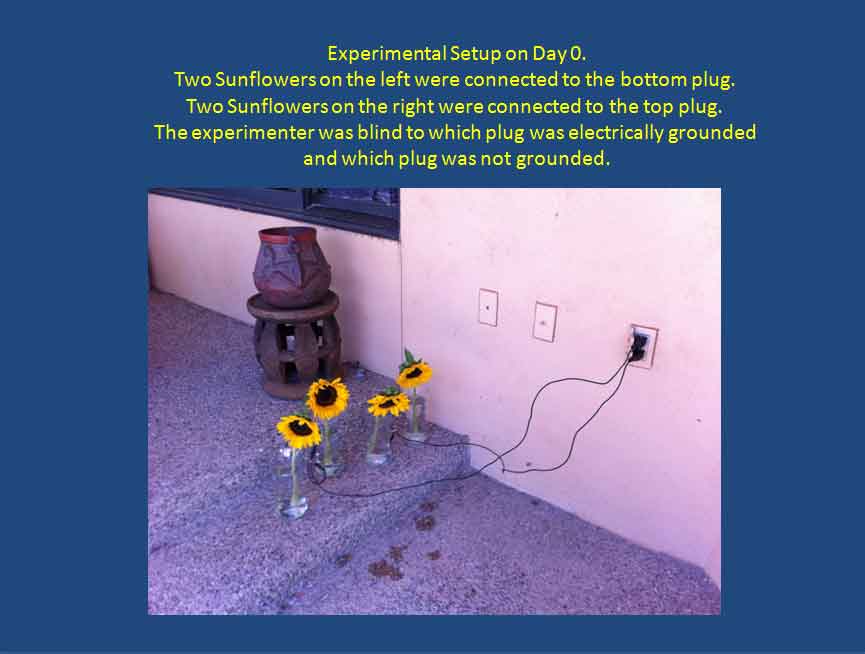
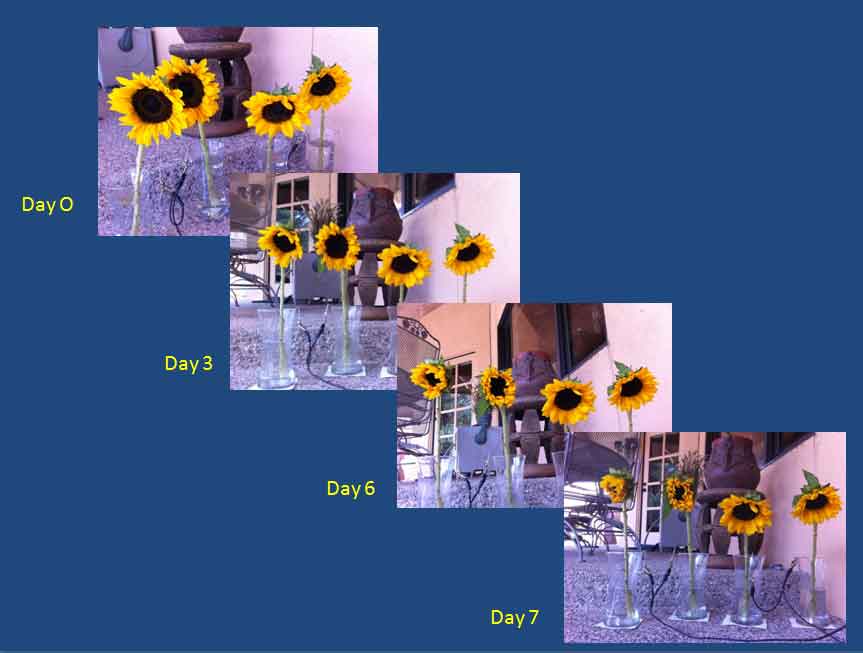
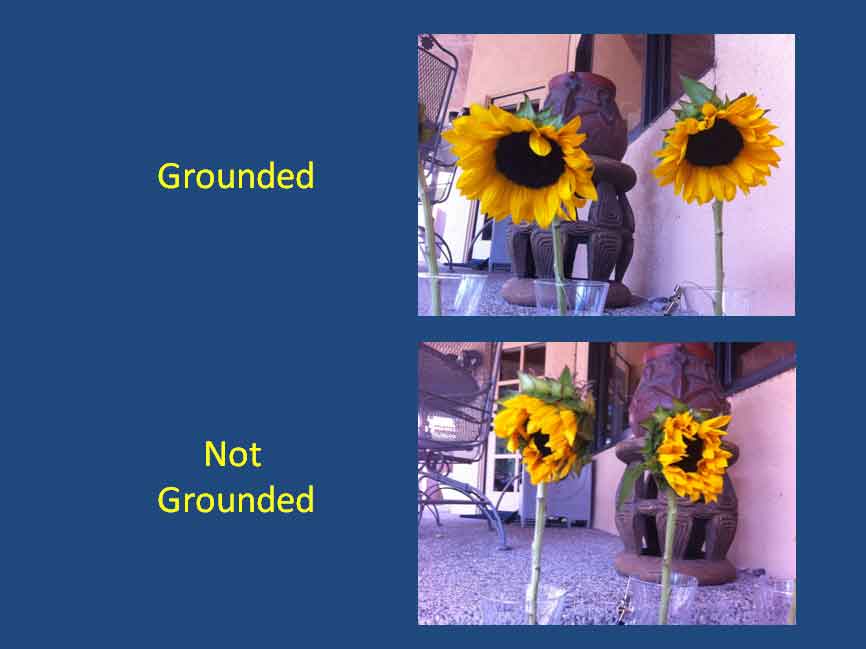
Last year, Gary Schwartz, PhD, at the University of Arizona, performed an elegant experiment with sunflowers to demonstrate the powerful biological effects of grounding. As shown in the photos below, one set of sunflowers were connected to a grounded power outlet via a thin metal rod placed in the vase, connected to a wire.
The second set was connected to an outlet that was not grounded. All of the flowers were freshly picked, from the same area, at the same time, and the water came from the same source and had nothing added. The experiment was blind, so the experimenter was unaware of which outlet had been grounded.
⇧Photos used with permission from Gary Schwartz.
As you can see, by the seventh day, one set is clearly wilting away, while the other still looks plump and fresh. As hypothesized, the set that kept their freshness were connected to the grounded outlet. Even more remarkable was the dramatic difference in overall survival -- the grounded flowers survived for another 10 days after the ungrounded set had shriveled up and died!
According to Clint Ober, this isn't so surprising since flowers growing in the ground receive a continuous supply of energy from the earth. The grounding rod used in this experiment effectively mimics this natural ground connection, allowing them to thrive longer, as if they'd never been plucked in the first place. So, can this concept translate into better health for you? There's compelling evidence it can, and does...
How Grounding Changes Your Blood
Grounding helps thin your blood by improving its zeta potential, which means it improves the energy between your red blood cells. Research has demonstrated it takes about 80 minutes for the free electrons from the earth to reach your blood stream and transform your blood.
Do you know what a high-sugar diet, smoking, radio frequencies and other toxic electromagnetic forces, emotional stress, anxiety, high cholesterol, and high uric acid levels do to your blood?
All of these make your blood hypercoagulable, meaning it makes it thick and slow-moving, which increases your risk of having a blood clot or stroke. Hypercoagulable blood is the essence of inflammation, because when your blood does not flow well, oxygen can't get to your tissues. In fact, grounding's effect on blood thinning is so profound if you are taking blood thinners you must work with your health care provider to lower your dose otherwise you may overdose on the medication.
Zeta potential is the electrical potential of solids and liquids, also referred to as electrokinetic potential. Your red blood cells repel each other and function at the speed of light, traveling through your body at an astounding 186,000 miles per second. Grounding actually increases zeta potential by an average of 280 percent. According to Dr. Sinatra:
"This is the most incredible discovery, because if you can increase the thinning of your blood naturally by grounding, you can fight off disease. Not only heart disease and stroke, but I'm thinking cancer, Alzheimer's, multiple sclerosis, or any illness that requires good oxygenation to the tissues."
Similarly, anything that lowers zeta potential of your blood will promote disease. For example, early (and some current) birth control pills were notorious for causing heart attacks in women. One of the mechanisms that causes this increased risk is that synthetic estrogens and progesterones increase blood viscosity, i.e., they decrease the zeta potential of your blood... There are currently studies being performed at the University of Arizona which will objectively document grounding effect on the zeta potential. They are anticipated to be completed this year.
Other Beneficial Changes Caused By Grounding
Animal experiments have also shown that ungrounded rats had higher blood sugar compared to their grounded counterparts, despite being fed identical diets. If disconnecting from the earth disrupts human sugar metabolism, we may have identified yet another contributing cause for the dramatic rise of diabetes in children.
"... I think the reason why we have a generation of diabetic kids is because we took away the ground, gave them a lot of sugar, and no exercise. That's the perfect storm," Dr. Sinatra says.
Experiments in Poland, the U.S. and Canada, using both animal and human models, show that grounding improves the human physiology. Other biochemical alterations caused by grounding include changes in:
•Phosphorus
•Calcium metabolism
•Fibroid metabolism
•White blood cells
Grounding also calms your sympathetic nervous system, which supports your heart rate variability. And, when you support heart rate variability, this promotes homeostatis, or balance, in your autonomic nervous system. In essence, anytime you improve heart rate variability, you're improving the entire organism -- in this case, your entire body and all its functions.
"In other words, we're there -- we're in a health mode, as opposed to disease mode. Grounding does that," Dr. Sinatra explains.
Contraindications and Other Warnings
While walking barefoot is clearly one of the most natural things you can possibly do to improve your health, there are still some contraindications and situations in which you may want to use caution.
"I don't like people to ground when they're taking Coumadin," Dr. Sinatra warns. "It's a relative contraindication because we have had people ground, taking Coumadin at the same time, and their blood became like water. It was like red wine and then it got really thin. That could be dangerous. If you have high blood pressure, [or]... if you had a stroke and you have thin blood, it's a disaster. We basically tell people that if you're on Coumadin, you must work with your doctor, because your doctor's going to have to reduce the Coumadin."
Depending on your health status and toxic load, your health may also get worse before it gets better when you start grounding on a regular basis. This is a classic detox reaction, which you may also experience with other detox methods.
"Some patients with polyneuropathy would get worsening of their limb pain on grounding, and some would get better. I want to make that clear that grounding is not a panacea," Dr. Sinatra says. "But what I've learned with grounding is that the sicker you are, the more you need to ground."
GETTING IN SYNC
Our dogs Pumpkin and Sawa (and our new wonder cat, Bam Bam) always wanted their food at exactly the same time everyday. But how did they know it was time to eat? They were not wearing puppy watches or kitty watches, but their internal clocks told the, when to wake, sleep, and even salivate for food. All animals except for humans, with our artificial light, computer screens, and TVs, have synchronized their body clocks with that of the earth. But by exercising regularly, particularly barefoot and feeling the ground, we can reconnect with and reset our internal clocks.
Once you are ready and prepped to go barefoot walking, we recommend walking outside on a regular basis, particularly at sunrise, (best at 8A.M.), and sunset, (best at 5P.M.). Whatever hour of the day you choose, at your convenience , try to go outdoor every day at the same time. The human body will learn when to rise and when to sleep, when to think, and when to go quiet. This body knowledge helps us let go, relax, and get in sync with the earth.
THE PHYSICS OF GETTING GROUNDED
Getting grounded is not merely a spiritual feeling; it has its roots in physics.
Since the beginning of time, we humans have walked, slept, and spent most of our time with our bare feet on the ground, unaware that this physical direct contact transfers natural healing, electrical energy to our bodies.
For the first time in history, our modern lifestyle has disconnected us from the earth's energy , making us more vulnerable to stress and illness. We wear insulating rubber-soled or synthetic-soled shoes, travel around in metal boxes with insulating rubber wheels, and eat, sleep, and work in structures raised above the ground. New research, spearheaded by Clint Ober, is showing that when we reconnect to the earth by way of our bare feet, or by using a grounding device, a myriad of things happen to support health and vitality.
Grounding Helps Thin Dangerously Thick Blood and Fights Inflammation and Disease
Story at-a-glance
When you walk barefoot, free electrons are transferred from the earth into your body, and this grounding effect is one of the most potent antioxidants we know of.
Inflammation thrives when your blood is thick, and you have a lot of free radical stress, and a lot of positive charges in your body. Grounding effectively alleviates inflammation because it thins your blood and infuses you with negatively charged ions through the soles of your feet.
Surfaces that allow for proper grounding include sand, grass, bare dirt, and untreated concrete, brick and ceramic tile. Leather-soled shoes also allow you to ground while walking, whereas rubber-soled shoes disconnect you from the earth and block beneficial electron transfer.
Grounding helps thin your blood by improving its zeta potential, which means it improves the energy between your red blood cells. Research has demonstrated it takes about 80 minutes for the free electrons from the earth to reach your blood stream and transform your blood.
⇿Grounding is contraindicated if you take Coumadin, as it may thin your blood too much.
By Dr. Mercola
Dr. Stephen Sinatra is a prominent cardiologist and an innovative pioneer. He promotes a number of natural strategies as "add-ons" to the field of cardiology, such as grounding or earthing, which is the topic of this interview.
He'd done five years of post-graduate training in conventional medicine when, in 1977, he met Dr. Jacob Rinse, a 91-year old Dutch chemist who exposed him to alternative medicine.
"After that I studied some nutrition," he says, "but I became a psychotherapist. I spent 10 years training in psychotherapy. I studied bioenergetic psychotherapy, which looks at energy blocks in the body.
That really helped launch me even more into alternative medicine. Then I decided that nutrition needed more work, so I studied for the American College of Nutrition exam, a test to certify a nutrition specialist."
Then, 10 years ago, he met Clint Ober, who introduced him to grounding. (Ober is the co-author with Dr. Sinatra of the 2010 book, Earthing: The Most Important Health Discovery Ever?).
"At first I was skeptical," Dr. Sinatra admits.
"I said, 'My gosh, putting my feet on the ground is going to improve my heart, my body; or at least the things that Clint is talking about?' But then... I spoke to him for about an hour, and went from skeptical to being all in! ... [L]ook, the heart is the most electrical organ of the body. We are electrical [beings]."
What Is Earthing?
The terms "earthing" and "grounding" are interchangeable. It is simply the act of placing your bare feet on the earth, or walking barefoot. When you do, free electrons are transferred from the earth into your body, and this grounding effect is one of the most potent antioxidants we know of.
Unfortunately, few people ever walk barefoot anymore to experience it.
Hopefully, as more and more people become aware of the importance of being grounded, this will change, or at the very least spawn a much needed change in the way most footwear is made. Synthetic rubber soles disconnect you from the earth. Leather soles do not. So you can still find shoes that allow you to remain grounded without going barefoot.
Grounding has numerous benefits, aside from creating a general feeling of well-being. For example, walking barefoot can help ameliorate the constant assault of electromagnetic fields and other types of radiation from cell phones, computers and Wi-Fi.
By getting outside, barefoot, touching the earth, and allowing the excess charge in your body to discharge into the earth, you can alleviate some of the stress put on your system. That is the grounding effect. I have personally prioritized grounding myself to the earth as much as possible for over 5 years.
Inflammation -- The Root of Most Disease
One of the primary health benefits of grounding is its antioxidant effect. It helps alleviate inflammation throughout your body.
"I told [Clint Ober] 10 years ago, "What you need to do is show that grounding improves inflammation. If you can show that, then you can show that it improves heart disease. Because the real cause of heart disease is inflammation. It's not cholesterol like everybody believes. It's really inflammation," Dr. Sinatra says. ... [H]is experimental work was just really awesome, and I got involved with research myself. I'm still smack in the middle of it right now, but it took me 10 years."
Dr. Sinatra goes on to tell the inspiring story of a contractor he met about 23 years ago, who at one point worked with a group of Scandinavian carpenters who really understood the benefits of grounding and supported each other in maintaining this healthy habit:
"They all took off their shoes in the morning and walked barefoot on the wet grass," he says. "He came to work as a young carpenter, and the foreman said to him, 'Hey buddy, you better take your shoes off, because if you come to work right now with those shoes on, you're going to be busted up in 10 years. Your joints are going to be aching. Your muscles are going to be aching. Everything's going to be aching...' He told him to take his shoes off for an hour in the morning. Guys slugging sledgehammers, digging and hammering. It's stress to the tissues. But if they put their feet on the ground for an hour and had their coffee breaks with their shoes off, it made a difference."
According to Dr. Sinatra, inflammation thrives when your blood is thick and you have a lot of free radical stress, and a lot of positive charges in your body. Grounding effectively alleviates inflammation because it thins your blood and infuses you with negatively charged ions through the soles of your feet. But beware; not all surfaces allow you to ground.
What Surfaces Will Allow You to Properly Ground?
Good grounding surfaces include:
•Sand (beach)
•Grass (preferably moist)
•Bare soil
•Concrete and brick (as long as it's not painted or sealed)
•Ceramic tile
The following surfaces will NOT ground you:
•Asphalt
•Wood
•Rubber and plastic
•Vinyl
•Tar or tarmac
An interesting tidbit offered by Dr. Sinatra is how to ground while flying. I typically bring a grounding pad with me when I fly, but Dr. Sinatra claims that simply taking your shoes off and putting your feet (bare or with socks) on the steel struts will do the trick.
The Earth Is a Rich Source of Healthful Electrons
The earth is struck by lightning thousands of time each minute, primarily around the equator. Subsequently, the earth carries an enormous negative charge. It's always electron-rich and can serve as a powerful and abundant supply of antioxidant free radical-busting electrons.
The human body appears to be finely tuned to "work" with the earth in the sense that there's a constant flow of energy between our bodies and the earth. When you put your feet on the ground, you absorb large amounts of negative electrons through the soles of your feet. In today's world, this is more important than ever, yet fewer people than ever actually connect with the earth in this way anymore. Free radical stress from exposure to mercury pollution, cigarettes, insecticides, pesticides, trans fats, and radiation, just to name a few, continually deplete your body of electrons.
"We now know that oxidative stress causes disease. It causes inflammation," Dr. Sinatra says. "[But] we have this Earth – Mother Earth, that's going to give us all these free electrons."
Recharge Your 'Batteries' with Grounding
Dr. Sinatra, like myself, is a proponent for CoQ10, as it is a major electron donor and helps turn over ATP, which is the energy generated within each of your body's cells. Amazingly, grounding can also enhance ATP, via another mechanism. How do dietary-derived, oral antioxidants compare to the electrons transferred from the earth through your skin? According to Dr. Sinatra:
"Whether you take antioxidants... or whether you get electron donors through the skin, what you're taking in -- into your skin, and taking in orally -- is going to be synergistic. It's going to help your body... What's a healthy lifestyle? It's eating healthy. It's avoiding sugars. It's avoiding trans fats. It's eating organic much of the time. It's avoiding pesticides, insecticides, and chemicals. It's drinking healthy water, breathing in healthy air, and getting healthy sunlight... In other words, taking in these natural energies is a healing energy. Grounding is another natural energy that everybody should do in their lives, because it just makes sense. It incorporates a healthier lifestyle."
Walking Barefoot Is a Valuable Aspect of a Healthy Lifestyle
Exercising barefoot outdoors is one of the most wonderful, inexpensive and powerful ways of incorporating Earthing into your daily life and will also help speed up tissue repair, as well as easing the muscle pain you sometimes get from strenuous exercise. A review of the available research, published January 2012 in the Journal of Environmental and Public Health, agrees with the concept of reaping health benefits when connecting to the Earth1. According to the authors:
"Mounting evidence suggests that the Earth's negative potential can create a stable internal bioelectrical environment for the normal functioning of all body systems. Moreover, oscillations of the intensity of the Earth's potential may be important for setting the biological clocks regulating diurnal body rhythms, such as cortisol secretion.
It is also well established that electrons from antioxidant molecules neutralize reactive oxygen species (ROS, or in popular terms, free radicals) involved in the body's immune and inflammatory responses. The National Library of Medicine's online resource PubMed lists 7021 studies and 522 review articles from a search of 'antioxidant + electron + free radical.' It is assumed that the influx of free electrons absorbed into the body through direct contact with the Earth likely neutralize ROS and thereby reduce acute and chronic inflammation.
Throughout history, humans mostly walked barefoot or with footwear made of animal skins. They slept on the ground or on skins. Through direct contact or through perspiration-moistened animal skins used as footwear or sleeping mats, the ground's abundant free electrons were able to enter the body, which is electrically conductive. Through this mechanism, every part of the body could equilibrate with the electrical potential of the Earth, thereby stabilizing the electrical environment of all organs, tissues, and cells.
Modern lifestyle has increasingly separated humans from the primordial flow of Earth's electrons. For example, since the 1960s, we have increasingly worn insulating rubber or plastic soled shoes, instead of the traditional leather fashioned from hides. Rossi has lamented that the use of insulating materials in post-World War II shoes has separated us from the Earth's energy field. Obviously, we no longer sleep on the ground as we did in times past.
During recent decades, chronic illness, immune disorders, and inflammatory diseases have increased dramatically, and some researchers have cited environmental factors as the cause. However, the possibility of modern disconnection with the Earth's surface as a cause has not been considered. Much of the research reviewed in this paper points in that direction."
The Sunflower Experiment
Last year, Gary Schwartz, PhD, at the University of Arizona, performed an elegant experiment with sunflowers to demonstrate the powerful biological effects of grounding. As shown in the photos below, one set of sunflowers were connected to a grounded power outlet via a thin metal rod placed in the vase, connected to a wire.
The second set was connected to an outlet that was not grounded. All of the flowers were freshly picked, from the same area, at the same time, and the water came from the same source and had nothing added. The experiment was blind, so the experimenter was unaware of which outlet had been grounded.
⇧Photos used with permission from Gary Schwartz.
As you can see, by the seventh day, one set is clearly wilting away, while the other still looks plump and fresh. As hypothesized, the set that kept their freshness were connected to the grounded outlet. Even more remarkable was the dramatic difference in overall survival -- the grounded flowers survived for another 10 days after the ungrounded set had shriveled up and died!
According to Clint Ober, this isn't so surprising since flowers growing in the ground receive a continuous supply of energy from the earth. The grounding rod used in this experiment effectively mimics this natural ground connection, allowing them to thrive longer, as if they'd never been plucked in the first place. So, can this concept translate into better health for you? There's compelling evidence it can, and does...
How Grounding Changes Your Blood
Grounding helps thin your blood by improving its zeta potential, which means it improves the energy between your red blood cells. Research has demonstrated it takes about 80 minutes for the free electrons from the earth to reach your blood stream and transform your blood.
Do you know what a high-sugar diet, smoking, radio frequencies and other toxic electromagnetic forces, emotional stress, anxiety, high cholesterol, and high uric acid levels do to your blood?
All of these make your blood hypercoagulable, meaning it makes it thick and slow-moving, which increases your risk of having a blood clot or stroke. Hypercoagulable blood is the essence of inflammation, because when your blood does not flow well, oxygen can't get to your tissues. In fact, grounding's effect on blood thinning is so profound if you are taking blood thinners you must work with your health care provider to lower your dose otherwise you may overdose on the medication.
Zeta potential is the electrical potential of solids and liquids, also referred to as electrokinetic potential. Your red blood cells repel each other and function at the speed of light, traveling through your body at an astounding 186,000 miles per second. Grounding actually increases zeta potential by an average of 280 percent. According to Dr. Sinatra:
"This is the most incredible discovery, because if you can increase the thinning of your blood naturally by grounding, you can fight off disease. Not only heart disease and stroke, but I'm thinking cancer, Alzheimer's, multiple sclerosis, or any illness that requires good oxygenation to the tissues."
Similarly, anything that lowers zeta potential of your blood will promote disease. For example, early (and some current) birth control pills were notorious for causing heart attacks in women. One of the mechanisms that causes this increased risk is that synthetic estrogens and progesterones increase blood viscosity, i.e., they decrease the zeta potential of your blood... There are currently studies being performed at the University of Arizona which will objectively document grounding effect on the zeta potential. They are anticipated to be completed this year.
Other Beneficial Changes Caused By Grounding
Animal experiments have also shown that ungrounded rats had higher blood sugar compared to their grounded counterparts, despite being fed identical diets. If disconnecting from the earth disrupts human sugar metabolism, we may have identified yet another contributing cause for the dramatic rise of diabetes in children.
"... I think the reason why we have a generation of diabetic kids is because we took away the ground, gave them a lot of sugar, and no exercise. That's the perfect storm," Dr. Sinatra says.
Experiments in Poland, the U.S. and Canada, using both animal and human models, show that grounding improves the human physiology. Other biochemical alterations caused by grounding include changes in:
•Phosphorus
•Calcium metabolism
•Fibroid metabolism
•White blood cells
Grounding also calms your sympathetic nervous system, which supports your heart rate variability. And, when you support heart rate variability, this promotes homeostatis, or balance, in your autonomic nervous system. In essence, anytime you improve heart rate variability, you're improving the entire organism -- in this case, your entire body and all its functions.
"In other words, we're there -- we're in a health mode, as opposed to disease mode. Grounding does that," Dr. Sinatra explains.
Contraindications and Other Warnings
While walking barefoot is clearly one of the most natural things you can possibly do to improve your health, there are still some contraindications and situations in which you may want to use caution.
"I don't like people to ground when they're taking Coumadin," Dr. Sinatra warns. "It's a relative contraindication because we have had people ground, taking Coumadin at the same time, and their blood became like water. It was like red wine and then it got really thin. That could be dangerous. If you have high blood pressure, [or]... if you had a stroke and you have thin blood, it's a disaster. We basically tell people that if you're on Coumadin, you must work with your doctor, because your doctor's going to have to reduce the Coumadin."
Depending on your health status and toxic load, your health may also get worse before it gets better when you start grounding on a regular basis. This is a classic detox reaction, which you may also experience with other detox methods.
"Some patients with polyneuropathy would get worsening of their limb pain on grounding, and some would get better. I want to make that clear that grounding is not a panacea," Dr. Sinatra says. "But what I've learned with grounding is that the sicker you are, the more you need to ground."